REVIEW · POMPEII
Ancient Pompei in the afternoon
Book on Viator →Operated by Glauco Messina · Bookable on Viator
Pompeii after the crowds left is the sweet spot. You’ll wander through major excavated streets and buildings in the afternoon when things are generally calmer and the weather feels kinder than earlier in the day. It’s a guided walk designed to make the site easier to read, not just a checklist of stones.
I especially like two things about this tour. First, the small-group size (max 10) keeps the pace human and the questions coming. Second, Glauco Messina’s guidance has a knack for keeping younger minds interested, including families with teens who want facts, not speeches.
One thing to consider: tickets are not included, so you’ll need to sort admission on your own. Also, you’ll be walking in an open-air archaeological park, so bring sun protection and comfortable shoes even if the afternoon helps.
In This Review
- Key things to know before you go
- Pompeii at 3:30 pm: why the afternoon works
- Meet at Piazza Immacolata, finish at Piazza Porta Marina
- Your guided route through Pompeii’s signature stops
- Gymnasium: where people trained and social life mixed
- Amphitheater: entertainment as city life
- Abundance Road and tavern spaces: street-level Pompeii
- Thermopolium and public spaces: food, drink, and daily routines
- Public Spa: hygiene as a social scene
- Forum: the city’s center of power and public life
- Small-group value: what you’re paying for at $254.07 per group
- Who this afternoon Pompeii tour is best for
- A quick practical checklist before you go
- Should you book Ancient Pompei in the afternoon?
- FAQ
- What time does the Ancient Pompei in the afternoon tour start?
- Where do I meet for the tour?
- Where does the tour end?
- How long is the tour?
- Is the Pompeii admission ticket included?
- How big is the group?
- What’s included and what’s not?
Key things to know before you go
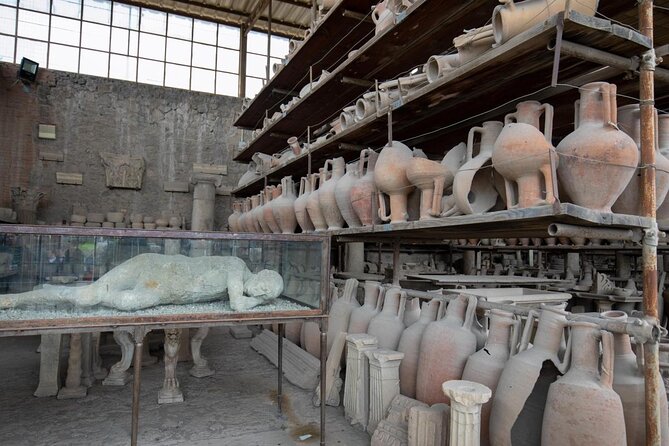
- Afternoon timing helps you dodge some of the worst crowd pressure and heat.
- Small group up to 10 keeps the guide-to-you ratio friendly.
- Glauco Messina guides the route through the big, readable highlights of Pompeii.
- Admission tickets aren’t included, so plan for that extra step.
- Route runs between two piazzas: Piazza Immacolata to Piazza Porta Marina.
Pompeii at 3:30 pm: why the afternoon works
If you’ve ever tried to enjoy a huge archaeological site during peak hours, you know the feeling: you move fast, you look fast, and you remember very little. This tour flips the timing. Starting in the mid-afternoon (3:30 pm), you get a better shot at seeing the ruins without the constant crush.
The payoff is simple. Pompeii is not one building you can admire from one spot. It’s a whole neighborhood system—roads, public buildings, shops, and gathering places. When fewer people are around, you can slow down, follow the guide’s explanation, and actually connect the dots between what you’re standing in front of and what it meant to everyday life.
There’s also a practical angle. One of the strongest reasons people rate this highly is the comfort factor: a later start around 4:30 pm can feel noticeably less hot and crowded, which makes the walking easier on legs and patience.
You can also read our reviews of more tours and experiences in Pompeii.


Meet at Piazza Immacolata, finish at Piazza Porta Marina
You’ll start at Piazza Immacolata (80045 Pompei, NA) at the 3:30 pm meeting time. The tour ends at Piazza Porta Marina, same area (80045 Pompei, NA). That matters because Pompeii is big enough that backtracking can waste energy.
For logistics, I like that it’s not buried in some obscure side street. You’ll be in the main Pompeii area, and the meeting point is listed as near public transportation, which helps if you’re arriving by bus/train and want the day to stay smooth.
Plan on a walking tour format with one guided flow through the highlights. You won’t need to bounce between far-flung points on your own—that’s handled by the route.
Your guided route through Pompeii’s signature stops
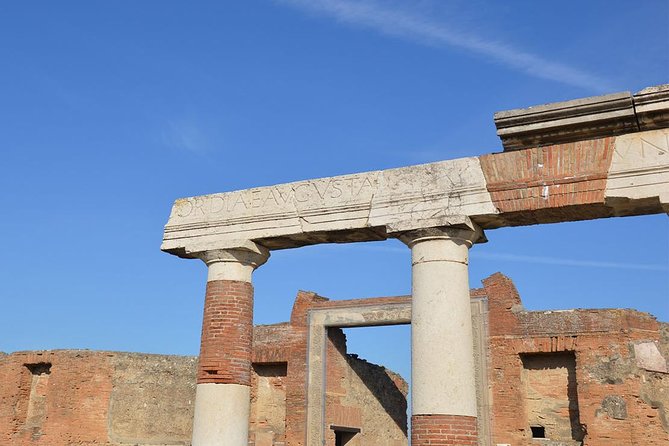
This is a guided tour with a single core plan: spend your time in the Pompeii Archaeological Park focused on major public and street-level areas. The stop list is specific, which is helpful. Instead of meandering, you get a coherent walk that goes from civic spaces to entertainment, daily commerce, and public life.
The main on-site stop is the Pompeii Archaeological Park, with a scheduled time block of about 3 hours. The overall experience duration is listed at about 2 hours. In practice, it usually means you should expect the main viewing and storytelling to take most of your time on-site, and you’ll likely move at a guided pace that feels tighter than an unguided wander.
Here are the stops you’ll cover, in the spirit of seeing how Pompeii functioned as a city:
- Gymnasium
- Amphitheater
- Abundance Road
- Tavern
- Thermopolium
- Public Spa
- Forum
The route is built for context. You’ll see what people did for training and leisure, where they ate and drank, how commerce sat along daily streets, and where politics and power played out.
Gymnasium: where people trained and social life mixed
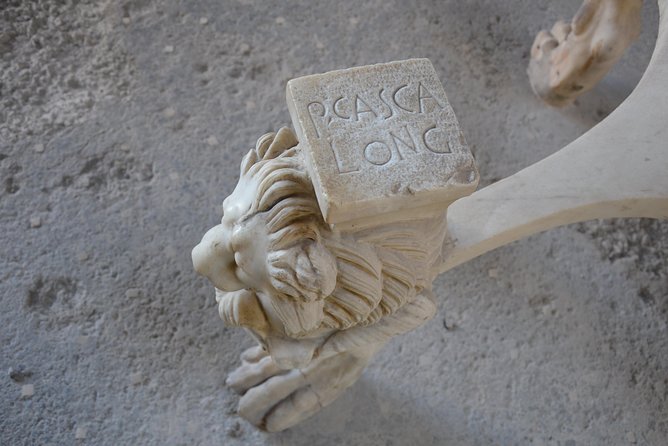
The first big “you’re in Pompeii now” moment often comes when you step into sites that show regular routines, not just dramatic ruins. The Gymnasium is one of those places. Even if you’re not a sports history person, it helps you picture Pompeii as an organized daily environment.
A guided explanation here is valuable because ruins can look like broken walls until someone connects them to a use-case. You’re walking through a space associated with physical training and community life. That makes the next stop—public entertainment—land better, because you start to see how Romans structured leisure.
Also, the afternoon timing helps. Early in the day, you can feel rushed in open areas like this. Later, you can slow your pace, listen longer, and take in details without constantly turning your head to dodge other groups.
Amphitheater: entertainment as city life
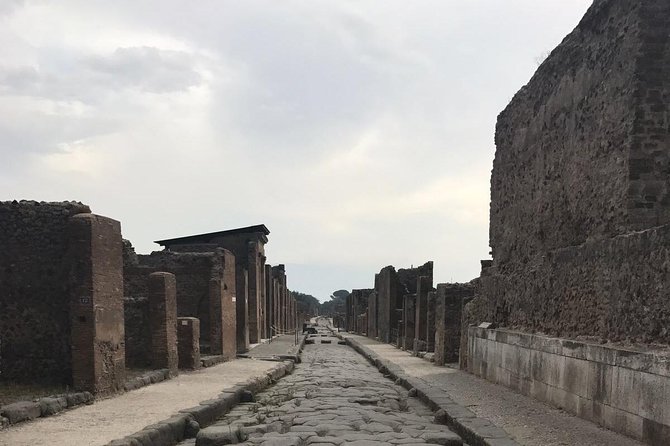
The Amphitheater is one of Pompeii’s most recognizable dramatic spaces, and it also does a good job of explaining power and spectacle. What I like about including it in a guided route is that it’s not just a photo spot. Your guide can help you understand what kinds of events it held and why the city invested in spaces like this.
If you’re traveling with teens (or anyone who struggles to stay patient at ruins), the Amphitheater often works because it’s visual and immediate. Even simple storytelling about audience life and performance helps people stay engaged. One highlight in the recent feedback about Glauco is that his explanations can match the energy level of the group, and the Amphitheater is a perfect place for that approach.
Practical tip: wear shoes you trust. You’ll be moving through uneven terrain and stone edges. Even if you’re fit, it’s the footing that decides how much you enjoy the stop.
Abundance Road and tavern spaces: street-level Pompeii
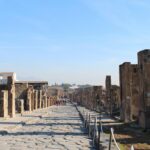
After the big public buildings, you shift into the street rhythm. Abundance Road is a key part of reading Pompeii like a real place rather than like a museum. Streets tell you how people walked, where they paused, and how the city flowed.
This tour also includes small but revealing stops tied to everyday eating and gathering: a Tavern and a Thermopolium. These are the kinds of locations that turn Pompeii from impressive into relatable. You start asking: Who worked here? Who ordered what? How did neighbors meet?
When a guide connects those dots, you get more than visuals—you get habits. And habits are what stick in your memory.
One more benefit of afternoon tours: with fewer people around, you can actually stand at a street junction and let the guide’s explanation play out. In the morning crush, it’s easy to miss how buildings face the road and how entrances align with movement.
Thermopolium and public spaces: food, drink, and daily routines
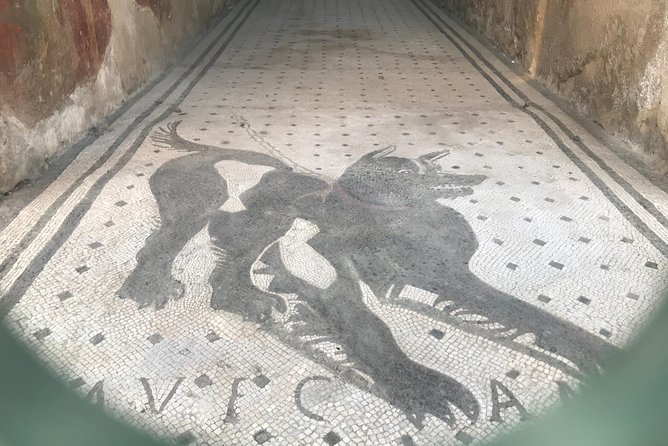
The Thermopolium is especially useful for understanding Pompeii’s everyday culture. These were places for quick meals and local commerce, not formal dining for special occasions. When you see one as part of the tour, you understand the city’s pace: people didn’t just live for public monuments. They lived for practical routines—grabbing food, chatting, meeting up.
The guided value is that Pompeii’s details can be confusing at first glance. Someone on the ground can help you interpret what you’re looking at and what to notice, from layout to function. With a small group, it’s easier to hear those cues because you’re not stuck at the back.
And yes, it’s also a great stop to cool down mentally. If you’re traveling with kids or teens, food-and-daily-life topics tend to land better than abstract architecture. Glauco’s style appears to hit that sweet spot.
Public Spa: hygiene as a social scene
The Public Spa is where Pompeii gets even more “human.” Baths and spa spaces weren’t only about cleanliness; they were social systems where people chatted and kept up routines.
A guided walkthrough helps you understand the logic of the space: how people moved through it, why different areas mattered, and how bathing fits into broader civic life. Even if you don’t know Roman terms, a good guide translates. That’s the real benefit of a guided tour here—Pompeii is big, and the story is easier to follow with a narrator who knows what to point at.
If you’re sensitive to walking for long stretches, this stop can be a breather because it often draws you into a specific area rather than constant linear movement. It’s still outdoors, though, so the practical “comfort” rules still apply.
Forum: the city’s center of power and public life
The Forum is the big closing chapter of the city story. This is where civic life happened—public decisions, gatherings, and the kinds of spaces where authority showed itself in plain sight.
What I like here is that the Forum is a natural endpoint in an afternoon route. By the time you reach it, you’ve already seen training and entertainment, street-level commerce, and public routines. The Forum then becomes the “how the city coordinated” piece.
In short: you’re building the city in your head as you walk. The Forum gives you the final structure.
And because it’s the center of action, it’s also where you can make quick sense of what Pompeii was. You might not remember every stone, but you’ll remember the idea that Pompeii was organized around shared public life.
Small-group value: what you’re paying for at $254.07 per group
Price is listed at $254.07 per group, up to 8 people. The tour also notes a maximum of 10 travelers, so you should think of this as a tight group by Pompeii standards. Either way, the value hinges on guided interpretation and a manageable pace.
Here’s the practical way I think about value:
- You’re paying for a guide who helps you read Pompeii as a city, not a pile of ruins.
- The group is small enough that you’re not just following instructions shouted from far away.
- The route includes the most important “readable” stops, so you don’t have to plan a day and play map games.
Two important cost realities:
- Admission tickets aren’t included, so your day’s total cost will be higher once you add Pompeii entry.
- The tour is timed for an afternoon slot, which can reduce the hassle of peak crowding. That comfort factor is worth real money if it means you enjoy the walk more.
If you’re traveling with a small group (friends, family), this pricing model can feel efficient. If you’re solo, it’s usually still a good choice because you’re not paying per person for a huge bus crowd experience.
Who this afternoon Pompeii tour is best for
This tour fits a few types of travelers especially well:
- Families with kids or teens who want facts but also need engagement. Glauco’s approach has been highlighted as particularly good at keeping younger people interested.
- Anyone who prefers a more intimate walking experience over joining a larger crowd.
- Visitors who want the highlights—Gymnasium, Amphitheater, street commerce areas like a Thermopolium, and the Forum—without having to design a route from scratch.
- People who like afternoon comfort. The timing is the whole point here.
If you’re the type who loves long unguided wandering with no structure at all, you might feel a guided pace is limiting. But if you want Pompeii to make sense quickly, this tour is built for that.
A quick practical checklist before you go
This is a park setting, so bring basics that protect your time:
- Comfortable walking shoes (Pompeii surfaces aren’t always forgiving)
- Sun protection (even in the afternoon)
- Water, since you’re outside for a long stretch
- If you need it, plan for your own admission ticket since tickets are not included
And when you arrive, aim to be at Piazza Immacolata on time. A late start can throw off the flow, especially when the tour ends at Piazza Porta Marina and you’re covering a full set of stops.
Should you book Ancient Pompei in the afternoon?
I’d book this if you want Pompeii with less stress. The afternoon timing, the small-group limit, and the guiding style (notably Glauco’s ability to keep younger minds engaged) are strong reasons to choose it over a basic rush-through option.
You should think twice only if you already have Pompeii entry sorted and you’re comfortable self-guiding, or if you dislike walking a structured route. And remember: you’ll need to add the separate admission ticket to your budget.
FAQ
What time does the Ancient Pompei in the afternoon tour start?
It starts at 3:30 pm.
Where do I meet for the tour?
You meet at Piazza Immacolata, 80045 Pompei NA, Italy.
Where does the tour end?
The tour ends at Piazza Porta Marina, 80045 Pompei NA, Italy.
How long is the tour?
The experience duration is listed as approximately 2 hours, and the Pompeii Archaeological Park stop is scheduled for about 3 hours.
Is the Pompeii admission ticket included?
No. Tickets are not included, and you’ll need an admission ticket separately.
How big is the group?
The tour has a maximum of 10 travelers. The price is per group (up to 8).
What’s included and what’s not?
Included: a guided tour. Not included: tickets.