REVIEW · POMPEII
Small Group Guided Walking Tour of Ancient Pompeii Highlights
Book on Viator →Operated by Private Tours of Pompeii · Bookable on Viator
Pompeii can feel overwhelming fast. This small-group walking tour keeps it focused, with skip-the-line access and a guide who walks you to the most important ruins. What I like most is the tight 2-hour route that hits big moments without turning the day into a maze, and the included entrance tickets so you’re not juggling paperwork at every stop. One thing to consider: the group moves on a schedule, so you’ll want to arrive early and be ready to walk on original ancient streets in your comfortable shoes.
With a maximum of 18 people, the pacing stays human. You’ll get enough time at each highlight—like the theatres, Roman baths, and the Lupanar—to actually notice details that most big groups steam past.
In This Review
- Key Pompeii Highlights in This 2-Hour Walk
- Pompeii Highlights in 2 Hours: The Value Math That Actually Helps
- Meeting Point, Timing, and the One Rule That Can Trip You Up
- Stop 1: Your Entry Setup and the UNESCO Context You’ll Want
- Teatro Grande: A 5,000-Seat Stage in the Open Air
- Odeon and Teatro Piccolo: The Smaller Theatre That Explains More
- Terme del Foro Baths: Everyday Life Buried Under 79 A.D. Ash
- Lupanar: The Brothel Stop With Frescoes You Should Be Ready to Notice
- How the Small Group Experience Changes Everything
- What’s Included, What’s Not, and What to Bring
- Who This Pompeii Tour Fits Best (and Who Might Want Another Option)
- Should You Book This Pompeii Highlights Small-Group Tour?
- FAQ
- How long is the Small Group Guided Walking Tour of Ancient Pompeii Highlights?
- What is the meeting point for the tour?
- Is there an English guide?
- Does the tour include skip-the-line entry?
- Are entrance tickets included?
- How many people are in the group?
- What should I wear and bring?
- Is this confirmation a ticket to the ruins on its own?
Key Pompeii Highlights in This 2-Hour Walk
- Guaranteed skip-the-line entry with your guide handling the timing
- Max 18 people, which makes it easier to move and ask questions
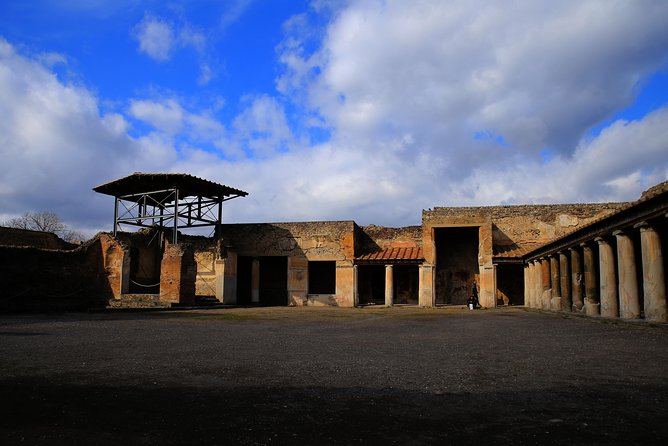
- Teatro Grande (5,000 seats), one of Pompeii’s most dramatic spaces
- Terme del Foro baths, tied to everyday life and the eruption of 79 A.D.
- Lupanar (brothels), with frescoes that help you understand the “work” behind the imagery
- Radio-style communication in the group so you can hear the guide clearly
Pompeii Highlights in 2 Hours: The Value Math That Actually Helps
Let’s talk value, because Pompeii ticket prices can add up quickly. At $107.23 per person, what you’re paying for is not just a walk through ruins—it’s a guided route, professional guidance, and entrance tickets included. For many people, the biggest cost is time. A guided “hits you the classics” plan means you spend less time searching and more time seeing.
The route is also built for reality. You’re not doing Pompeii’s whole city in two hours. You’re doing the key stops that explain the city’s personality: performance, bathing, and the street-level business you don’t usually get in “only big monuments” tours.
Small-group size matters here. With a maximum of 18 people, you’re less likely to get stuck behind a wall of hats and shoulders. That changes how much you can notice—especially inside outdoor theatre spaces and along narrow ancient lanes.
You can also read our reviews of more tours and experiences in Pompeii.


Meeting Point, Timing, and the One Rule That Can Trip You Up
Your start point is Coffee Shop Vittoria, Via Mare, 80045 Pompei NA, Italy. The tour ends back at the same place, so you don’t have to figure out a second pickup spot.
Here’s the one rule you should take seriously: be there 10 minutes early. If you show up late, the guide will not wait, because entrance tickets are booked for a specific time and this is a group tour. That’s not them being strict for fun. It’s how skip-the-line works without turning into a scheduling mess.
Dress code is smart casual, but the real requirement is footwear. Wear comfortable shoes because you’ll be walking on the original ancient streets, which can be uneven underfoot. Also keep a light plan for water and sun—drinks and lunch aren’t included.
Stop 1: Your Entry Setup and the UNESCO Context You’ll Want
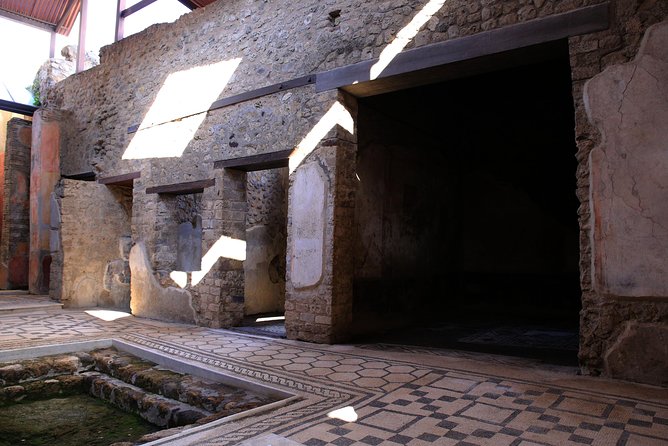
The tour begins with a first stop at Private Tours of Pompeii for about 30 minutes, including an admission ticket. This is where your guide sets the stage—what you’re about to see, why these spots matter, and what details to look for as you move.
This “set-up” moment matters more than it sounds. Pompeii isn’t one single building. It’s a whole city. When you understand how the ruins fit together, the rest of the walk feels like a story instead of a list of photos.
You’ll also get a quick sense of what’s ahead, so you’re not just reacting to crowds. In a place this large, having your guide’s roadmap early helps you see instead of just wander.
Teatro Grande: A 5,000-Seat Stage in the Open Air

Next up is Teatro Grande, an open-air theatre with around 5,000 seats. Expect to spend about 20 minutes here, including admission.
What makes this stop powerful is how visible the design is. Outdoor theatres show you the logic of Roman entertainment: where people sat, how the space directed attention, and how performances worked in an open setting. Your guide helps you connect architecture to the everyday social life of Pompeii.
Also, this is a great place for timing. If you’re visiting in hot months, an outdoor theatre stop can be easier to handle than long indoor museum sessions. You get big payoff without huge fatigue—just remember you’re still outside, and you’ll still be walking between areas.
Odeon and Teatro Piccolo: The Smaller Theatre That Explains More
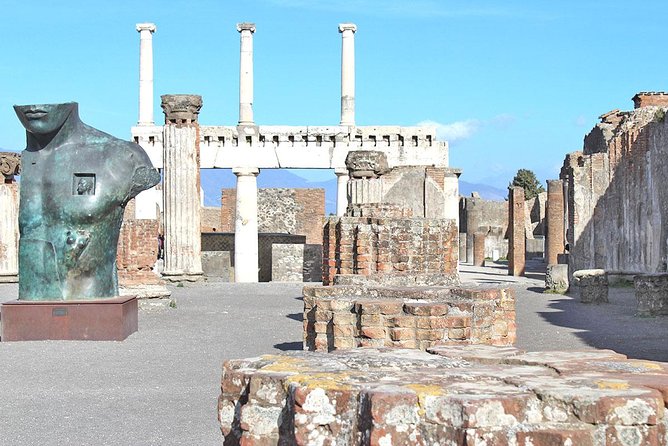
After Teatro Grande, you’ll visit Odeon – Teatro Piccolo, another open-air theatre, this one with about 800 seats. Plan on roughly 20 minutes.
This is where you start seeing Pompeii’s “menu” of public life. The smaller theatre helps you understand that entertainment wasn’t only giant spectacles. It also worked in scaled-down venues for different kinds of performances.
Your guide can also help you notice the differences between these spaces. That contrast makes the architecture feel intentional, not random. When you can compare sizes and layouts, the ruins start teaching you.


Terme del Foro Baths: Everyday Life Buried Under 79 A.D. Ash
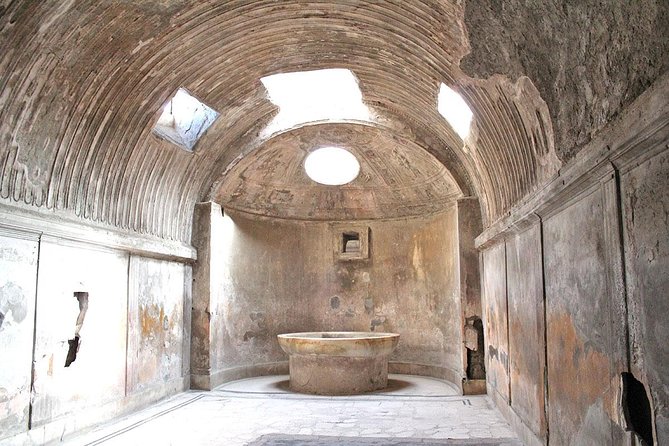
Then comes a very different kind of landmark: Terme del Foro, a Roman bath complex. You’ll have about 20 minutes here, with admission included.
Baths are one of the best ways to understand daily Roman life because they weren’t just for washing. They were social spaces. In Pompeii, the eruption that buried the city in 79 A.D. froze those routines in time, turning everyday habits into archaeology.
This stop is also a good reminder that Pompeii wasn’t just “cool ruins.” It was functioning city life—people moving through spaces, meeting, relaxing, and doing business of all kinds. A bath complex shows you the city’s rhythm in a way that monuments alone can’t.
If you like details, this is where you’ll feel your guide’s value. Without guidance, bath complexes can blur together. With a guide, you start recognizing what each area likely meant and how people used the space.
Lupanar: The Brothel Stop With Frescoes You Should Be Ready to Notice
The final highlight is Lupanar, an appointment-house area often translated as brothels. You’ll spend about 30 minutes here with admission included.
This stop is not for everyone, but it’s important for understanding Pompeii as a real city. The buildings served a specific social function, and the frescoes still visible help communicate what worked there—especially the way imagery ties to the women’s roles and the trade’s message.
You’ll likely find this stop most memorable because it’s specific. It’s not a vague ruin. It’s a place with recognizable purpose and surviving decoration. Your guide can help you interpret what you’re seeing without turning it into sensational gossip.
Tip for your brain: give yourself a few seconds to look before you rush to the next corner. This is one of those areas where slowing down a bit makes the details click.
How the Small Group Experience Changes Everything
The tour caps at 18 people, and that number matters. In larger groups, you often lose the ability to stop, ask a question, and hear the guide without shouting. Here, the pace stays coordinated.
One detail that really helps is the use of a radio system with a small ear piece. That means the guide’s voice comes through clearly without you constantly craning your neck or fighting for position. It’s a simple tool, but in ruins with lots of echo and open space, it makes your experience feel smoother.
You’ll also notice the guide’s style. In past departures, the guides have ranged from archaeologists to lively storytellers, including guides named Lello and Italo. That matters because Pompeii isn’t just facts. It’s interpretation—what to notice, what connects to what, and how to read the stones like they’re still part of a living city.
At the end, the tour returns you to the meeting point area. From there, you can keep exploring on your own if you want, but you’ll have the advantage of knowing what you’re looking at.
What’s Included, What’s Not, and What to Bring
Included:
- Professional guide
- Guaranteed skip-the-line access
- Entrance tickets
- Mobile ticket
- English tour
Not included:
- Drinks
- Lunch
- Hotel pickup and drop-off
That’s why I suggest you plan like a walker, not like a museum attendee. Bring water, wear sunscreen if you’re in strong sun, and pack a small bag you can keep with you comfortably.
Also, don’t assume your confirmation is your entry ticket by itself. This is a guided tour confirmation. You use it with the guide, and your entrance timing is handled for you under the tour plan.
Who This Pompeii Tour Fits Best (and Who Might Want Another Option)
This works best if you want Pompeii’s main highlights without doing a full-day crawl. It’s ideal for:
- First-time Pompeii visitors who want the “you’ll actually remember this” stops
- Families with kids who can handle a couple of hours and want a clear route
- People who dislike long lines and want the entrance timing managed
It’s less ideal if:
- You hate schedules and don’t want to arrive early
- You want the entire site, not a curated walk
- You’re hoping for a slow museum-style experience with lots of optional detours
Should You Book This Pompeii Highlights Small-Group Tour?
If you’re trying to make Pompeii practical, this one earns its place. You’re getting skip-the-line entry, entrance tickets included, and a route that covers major anchors: Teatro Grande, Odeon – Teatro Piccolo, Terme del Foro, and the Lupanar. For the money, it’s a smart way to buy time and guidance.
I’d book it if you want clarity and momentum—especially if you’re visiting during busy periods or hot weather. I’d think twice only if you need maximum freedom to wander at your own speed, because this experience is built around a fixed tour flow and timed entrances.
FAQ
How long is the Small Group Guided Walking Tour of Ancient Pompeii Highlights?
It lasts about 2 hours.
What is the meeting point for the tour?
The tour starts at Coffee Shop Vittoria, Via Mare, 80045 Pompei NA, Italy.
Is there an English guide?
Yes, the tour is offered in English.
Does the tour include skip-the-line entry?
Yes. The tour includes guaranteed skip-the-long-lines access.
Are entrance tickets included?
Yes. Entrance tickets are included with the tour.
How many people are in the group?
The tour has a maximum of 18 travelers.
What should I wear and bring?
Smart casual is the dress code, but bring comfortable shoes for walking on original ancient streets. Drinks and lunch are not included.
Is this confirmation a ticket to the ruins on its own?
No. This is a guided tour confirmation, and you can use it only with the guide.