REVIEW · POMPEII
Discover the Ancient Ruins of Pompeii: Day Trip from Rome
Book on Viator →Operated by Greenline Tours · Bookable on Viator
Pompeii feels like a time machine on wheels. This day trip pairs a guided walk through the UNESCO ruins with a structured route out of Rome, so you spend your energy where it counts: understanding AD 79 and seeing what survived. You’ll also get a comfort-first approach with an air-conditioned coach, plus time built in for a real lunch stop.
Two things I really like: Pompeii comes with a local guide and admission included, and the lunch is handled by the tour so you’re not guessing where to eat after hours of walking. The main drawback to plan for is language and timing—this is a multilingual setup, and some portions of the day can feel rushed or slow because the guide has to cover more than one language.
In This Review
- Key highlights worth your attention
- Why Pompeii as a day trip can be the smart choice
- The coach ride out of Rome: comfort plus real regional context
- Pompeii time: what your guided 2 hours can realistically deliver
- What to look for inside the ruins (so the guide’s work clicks)
- Lunch in Pompeii: included, local, and a place to plan for allergies
- Vesuvius and the eruption lesson: the emotional payoff
- The Naples portion: useful context or wasted time, depending on what you want
- Group size, pacing, and language: the part that can make or break your day
- How to pack and plan for a 13-hour Pompeii day
- Who this day trip suits best (and who might prefer another plan)
- Should you book this Pompeii day trip from Rome?
- FAQ
- How long is the Pompeii day trip from Rome?
- Is Pompeii admission included?
- Do I need to speak Italian or will there be English?
- What’s included in lunch?
- Where do I meet in Rome, and where do I end?
- What’s the cancellation policy?
Key highlights worth your attention
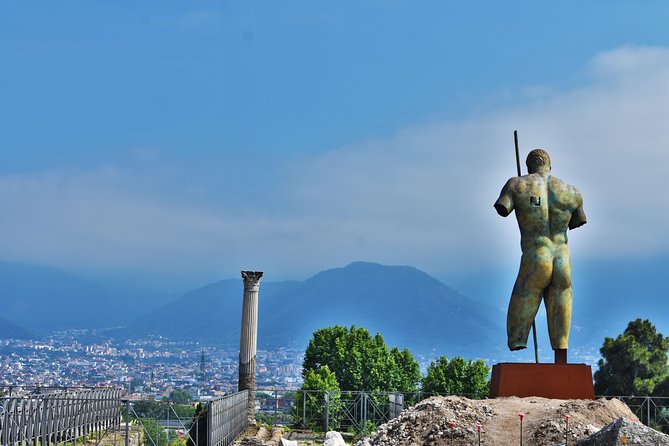
- UNESCO Pompeii with a guided archaeologist-style tour so you’re not just wandering ruins
- Admission included plus a mobile ticket, which makes entry smoother
- Scenic coach route through the Campania region with stops that add context
- Lunch in Pompeii at a local restaurant, with drinks not included
- Heat and walking reality check for a 13-hour day and uneven ground
- Extra Naples side stops that can be hit-or-miss depending on your priorities
Why Pompeii as a day trip can be the smart choice
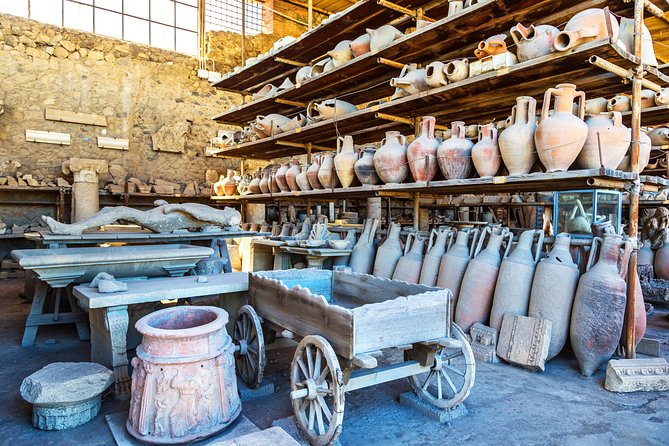
Pompeii is one of those places where being there without structure can still feel magical—but you’ll miss the connections. The city is huge, and the details matter: what you’re seeing only fully clicks when someone explains how everyday life worked, and how the eruption changed the city’s story.
That’s where this format helps. You’re on a coach from Rome, you get a guide once you’re in the ruins, and you have lunch arranged so you can focus on the experience instead of playing logistics roulette. For many people, that’s the tradeoff that makes Pompeii doable in one day.
Is it perfect? No. This tour runs long—about 13 hours—and parts of the day are shared with a broader itinerary. Still, if your goal is to see Pompeii and learn the eruption-era narrative without planning a transfer day, this is one of the easiest ways to do it.
You can also read our reviews of more tours and experiences in Pompeii.


The coach ride out of Rome: comfort plus real regional context

You start early (the start time is 7:15 am), and the trip south is part sightseeing, part transport. You can either catch the group with hotel pickup at select locations or meet near Rome Termini / Via Giovanni Amendola 32 depending on your departure plan.
Along the way, you’ll pass through the Campania region and get context that helps Pompeii make more sense. One standout stop is the Abbey of Montecassino—a dramatic Benedictine monastery perched on a hill in the Castelli Romani area. Even if you’re not a “church architecture” person, you’ll likely appreciate the big, visible sense of geography. It’s hard to explain, but the view anchors the whole region in your head.
Practical tip: the ride is long enough that bring something simple for comfort. Expect a full day of sitting, then a long walking block in Pompeii. If you’re sensitive to heat, plan for it early. The tour notes a moderate fitness level, which is usually code for: you’ll walk on uneven surfaces and you shouldn’t expect long, flat, fully shaded pathways.
Pompeii time: what your guided 2 hours can realistically deliver
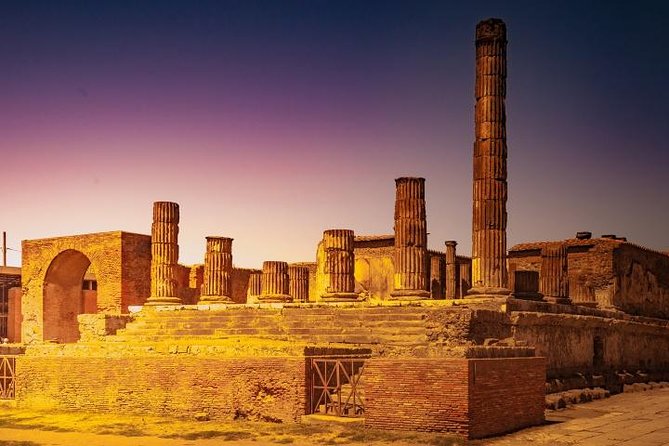
The Pompeii stop is where the value lands. You’ll get around 2 hours in the archaeological park, with admission included. That time constraint is real, so the guide’s job becomes selecting what matters most—and pushing you toward the core sections that teach the city’s layout and the eruption impact.
Some of the specific sites mentioned for the visit include:
- Villa dei Misteri
- Temple of Apollo
- House of the Fauno
You’ll also hear about the eruption—Mount Vesuvius in AD 79—and what it means that so much of Pompeii was preserved under volcanic ash. This is the big “aha” moment: Pompeii isn’t just ruins, it’s a snapshot of daily life frozen in time.
One more detail that helps the experience: Pompeii’s Teatro Grande, a massive 5,000-seat theater, is part of the spectacle you’ll likely see. A theater like this wasn’t built for private entertainment—it shows how public culture worked in Roman cities.
A drawback to know upfront: because Pompeii is so large, 2 hours is never “everything.” It’s “the best teaching sample.” If you want a slower, pick-your-own-route day, you may feel you’re sprinting. If you want the site explained and prioritized, you’re in the right place.
What to look for inside the ruins (so the guide’s work clicks)
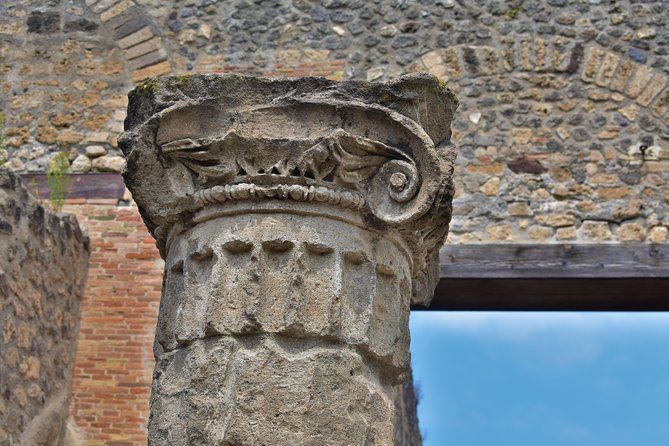
When you’re walking Pompeii with a guide, you’ll get the most out of it if you focus on patterns, not just individual rooms.
Here’s how to think about what you’re seeing:
1) Ordinary life before the eruption
The guide’s explanation helps you connect spaces—how people moved, where commerce happened, how homes and civic buildings related. This is why the tour’s selection of houses and temples matters. They’re not random stops; they’re a way to show how the city worked.
2) The eruption story behind the preservation
The big learning point is simple: ash and debris didn’t just destroy the city. They sealed it. That’s why what survives looks so specific. If you pay attention to the surfaces and structural remnants, you’ll understand why Pompeii is so emotionally powerful even from a distance.
3) Public spaces as a window into society
A theater like Teatro Grande isn’t just impressive. It tells you what kinds of events mattered, who could attend, and how the city organized gatherings.
If you want to ask questions, do it early in the Pompeii walk. With a multilingual setup, sometimes the guide repeats explanations in more than one language, which can reduce how much time you have to linger.
Lunch in Pompeii: included, local, and a place to plan for allergies
Lunch is included, and it’s served at a traditional Italian restaurant in Pompeii. For most people, this is a real benefit—you avoid the common trap of arriving hungry, then spending time hunting for food while everyone else is already eating.
In terms of food expectations, the included lunch has been praised as delicious, and in one case described as a full, well-run restaurant experience with Italian music. That said, there’s a clear consideration: menu clarity for seafood allergies. Since the tour doesn’t list dietary options in the provided details, you should treat lunch as “ask first” territory.
Practical advice:
- Tell the staff about allergies before you order.
- If you’re sensitive, consider asking what seafood is used or what’s on common ingredients.
- Remember drinks are not included, so budget for water or coffee separately.
If your ideal day trip includes long, stress-free browsing time afterward, 2 hours inside Pompeii can already feel tight. Lunch duration and the walk to the restaurant therefore matter. Plan to keep moving through the day without expecting tons of slack.


Vesuvius and the eruption lesson: the emotional payoff
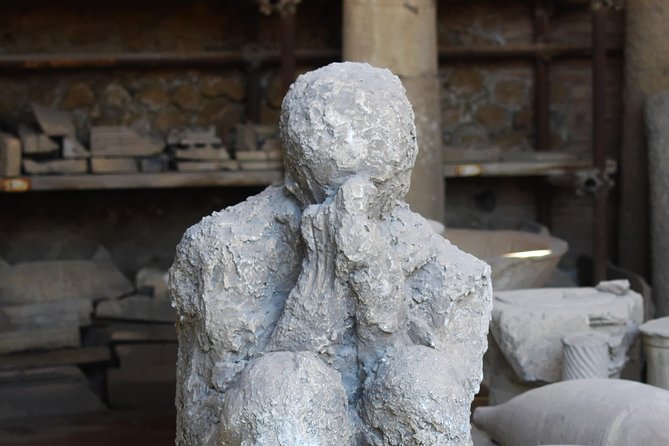
This is the main reason Pompeii is worth your early start. Vesuvius isn’t just a background fact—it changes how you read everything in front of you.
You’ll hear the eruption story, and you’ll likely come away with a sharper mental image of what it must have felt like to watch the city transform overnight. Even if you already know the basics, Pompeii has a way of making the timeline real. The ruins show that this wasn’t a distant event. It was an immediate catastrophe that left an imprint you can still see.
Some guides also encourage perspective by pointing out how the site is arranged. That helps you avoid the common disappointment of “I saw buildings; now what?” If you leave with your questions answered, this is where the day trip earns its keep.
The Naples portion: useful context or wasted time, depending on what you want
Not every hour is pure Pompeii. The tour builds in time around the Naples area and passes through towns like Ercolano (connected to Herculaneum) as you travel south. There are also stops where the day can split in practice, such as groups going to Capri.
This is where the experience can vary the most.
Some parts are meant to give you context, but there are also side stops that feel commercial:
- A cameo/coral carving shop stop has shown up in the itinerary.
- A limoncello bar/store stop also appears.
If you love craftsmanship, these can be interesting. If you’re not looking to buy souvenirs, they can feel like time pulled away from either Pompeii or Naples itself.
The most important takeaway: treat the Naples portion as a bonus, not as the centerpiece. Your day’s core value is Pompeii—the coached walk, the admission, and the guided explanation of what you’re seeing.
Group size, pacing, and language: the part that can make or break your day
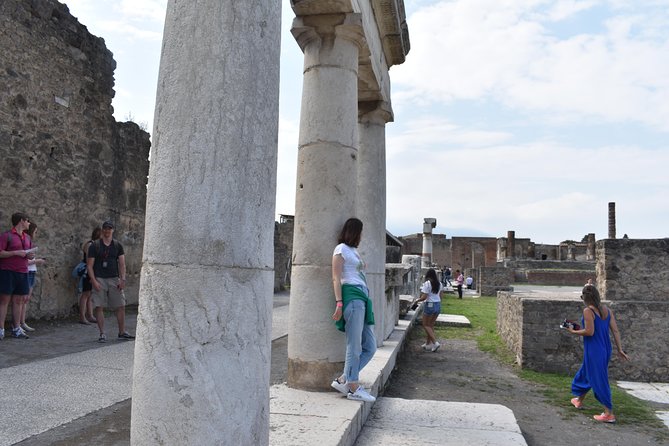
The coach is described as air-conditioned with a cap of up to 50 people, and the maximum travel count on this activity is listed at 25 travelers. Either way, you should expect a group rhythm: on/off the bus on schedule, then a guided pace through the ruins.
The multilingual nature is another big factor. The tour is noted as multilingual, and some groups report that explanations are slowed because the guide covers more than one language. That affects your time on site. If you speak English and want the guide’s full flow without repetition, you may find the pacing less efficient than you’d hoped.
You can reduce frustration by doing two things:
- Wear breathable clothes and comfortable shoes. Pompeii is uneven underfoot.
- In Pompeii, focus on the landmarks the guide is steering toward. Don’t try to “catch everything.” You won’t.
How to pack and plan for a 13-hour Pompeii day
This is a long day. Here’s how I’d set yourself up for comfort based on the type of schedule this trip follows.
Footwear and heat
Bring shoes that can handle uneven stone. The day can involve sun exposure, and there may be limited shade depending on where the guide stops and how long you’re walking between points.
Time and patience
You’ll spend time on the road, and you won’t control traffic. Plan your expectations around that. The best strategy is to treat the coach time as rest and use Pompeii time as your active learning block.
Money and drinks
Lunch is included, but drinks are not. Shops along the way can also tempt you, especially if you’ve got an interest in local crafts.
Photo strategy
If photos matter, you’ll want to shoot quickly and move. Pompeii is too big to freeze in every doorway. Work with the guide’s pace, not against it.
Who this day trip suits best (and who might prefer another plan)
This tour is a strong match if you want:
- Guided Pompeii without figuring out train schedules or buses
- A single-day structure that includes entry ticket + lunch
- Early access to Pompeii while you’re still fresh
It may be less ideal if you want:
- Lots of free time inside the ruins to roam independently
- An all-English experience with no repeated explanations
- A Naples itinerary that prioritizes Naples itself over side stops
If you’re the type who loves museums, then a museum day plus a shorter Pompeii visit can sometimes feel more satisfying. But if your goal is simply: see Pompeii, learn why it matters, and get back to Rome without hassle—this package is built for that mission.
Should you book this Pompeii day trip from Rome?
I’d book it if Pompeii is your priority and you want the simplest route from Rome with coach comfort, a guided UNESCO visit, admission included, and lunch arranged. The tour’s best moments tend to happen when the guide is actually in Pompeii explaining AD 79 and connecting sites like Teatro Grande, the houses, and the temples into one clear story.
I’d skip or switch tours if you’re very sensitive to language repetition or you know you’ll get annoyed by extra stops like cameo/coral carving or limoncello shopping. In that case, you might end up feeling you spent too much time moving around and not enough time slowing down inside Pompeii.
FAQ
How long is the Pompeii day trip from Rome?
The tour runs for about 13 hours, with a morning start around 7:15 am and a return to Rome afterward.
Is Pompeii admission included?
Yes. The entrance ticket to the Pompeii ruins is included, and you’ll receive a mobile ticket.
Do I need to speak Italian or will there be English?
The tour is described as multilingual and offered in English. In practice, this may mean explanations are covered more than once in different languages, depending on the group.
What’s included in lunch?
Lunch is included at a traditional Italian restaurant in Pompeii. Drinks are not included, so you should budget for beverages separately.
Where do I meet in Rome, and where do I end?
The meeting point is listed as Via Giovanni Amendola, 32, 00185 Rome (Roma RM, Italy). Some departures may include pickup at select Rome hotels, and the tour ends back at the meeting point.
What’s the cancellation policy?
You can cancel up to 24 hours in advance for a full refund. If you cancel less than 24 hours before the start time, you won’t receive a refund. The experience also depends on good weather and a minimum number of travelers.