REVIEW · POMPEII
Skip-the-line Exclusive Private Full-Day Complete Ancient Pompeii Guided Tour
Book on Viator →Operated by Private Tours of Pompeii · Bookable on Viator
Pompeii is overwhelming fast. This private full-day style tour is built for focus: skip-the-line entry, a customizable itinerary, and a guided route through the big emotional hits of the UNESCO ruins. The format is designed so you don’t just shuffle through ruins—you learn how the city worked and why certain buildings mattered.
What I like most is the feel of a private experience where you can steer the emphasis toward what interests you, not what fits someone else’s checklist.
I also love the guide lineup. You get a local guide plus a professional art historian guide working with a professional tour guide, which is a rare combo in a short visit. Guides like Italo/Itilio and Clelia are praised for making the buildings make sense, and for keeping the route moving so you spend less time lost and more time looking closely.
One thing to consider: the schedule is tight for a site this big. Even though it’s listed at about 4 hours, you should plan for a day that can feel compressed, and there can be timing hiccups that squeeze how much you see. Add that there’s no lunch, and you’ll want to manage your energy so you don’t get grumpy halfway through.
In This Review
- Key points worth knowing
- Why a private, skip-the-line Pompeii tour works better than winging it
- Price and value: what $347.21 buys you (and what it doesn’t)
- Meeting point logistics at Piazza Esedra: keep your start time clean
- The 4-hour Pompeii route: what each stop is really for
- 1) Anfiteatro Romano (about 1 hour)
- 2) Pompeii Archaeological Park (about 1 hour)
- 3) Foro de Pompeya (about 15 minutes)
- 4) Casa del Menandro (about 20 minutes)
- 5) Casa di Ottavio Quartione (about 15 minutes)
- 6) Stabian Baths (about 15 minutes)
- Your guide really sets the tone: Italo/Itilio and Clelia as examples
- Skip-the-line reality: how to protect your time
- What you’ll feel leaving: “I get it” Pompeii, not “I saw it”
- Who this tour fits best (and who might want a different option)
- Should you book this Pompeii private tour?
- FAQ
- FAQ
- How long is the tour?
- Is skip-the-line access included?
- Does the tour include admission tickets?
- Where do we meet and where does the tour end?
- Is lunch included?
- Is this a private tour?
- What kind of fitness level is required?
- What’s the cancellation policy?
Key points worth knowing
- Private-only group: you and your people, not a shared herd.
- Skip-the-line access: designed to save time at the entrances, which matters in Pompeii.
- Admission included at multiple stops: you’re not juggling tickets for each building.
- Art historian + local guide + tour guide: stronger context than a basic walk-through.
- A compact hit-list itinerary: amphitheater, main park area, forum, and select domus plus the Stabian Baths.
- Time pressure is real: 4 hours can feel short once you stop to really look.
Why a private, skip-the-line Pompeii tour works better than winging it
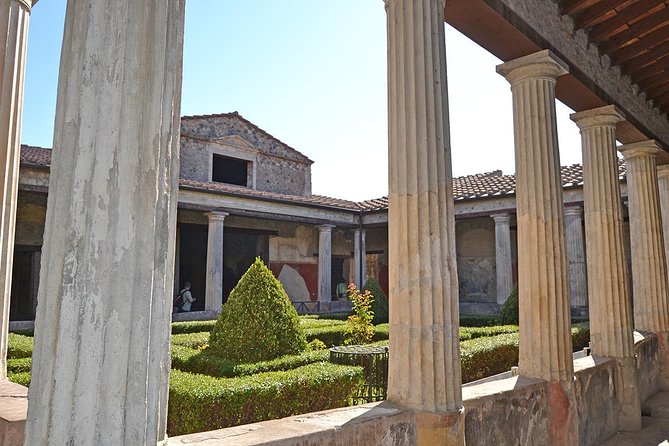
Pompeii rewards slow looking, but most visitors arrive ready to sprint. A private guided format is the practical middle ground: you get direction, pacing, and interpretation without being trapped in a large group shuffle.
The real win here is skip-the-line access. Pompeii’s lines can eat your morning. Even if you’re a confident planner, waiting at entrances is wasted time—especially on a tour that’s only about 4 hours. When the entry goes smoothly, you can turn your saved time into better viewing: standing where the layout makes sense, noticing street-level details, and understanding what you’re seeing instead of just naming it.
The second big advantage is control. This isn’t a rigid, one-size-fits-all circuit. The itinerary is built around major sites (so you won’t miss the must-sees), but it’s also presented in a way that you can adjust focus as you go.
You can also read our reviews of more tours and experiences in Pompeii.


Price and value: what $347.21 buys you (and what it doesn’t)
At $347.21 per person for a private tour, the math is simple: you’re paying for speed, focus, and one-to-your-group interpretation.
Here’s where the value comes from:
- Skip-the-line / guaranteed entry effort helps you protect time.
- Multiple admission tickets included are part of the price, so you avoid a piecemeal ticket hunt.
- The guide team includes both a local guide and an art historian guide, which can make the difference between seeing ruins and understanding how people lived there.
Here’s what it doesn’t include:
- Lunch (so you need a plan).
- Hotel pickup/drop-off (you’re meeting at Piazza Esedra and returning there).
- A long, wandering, hours-and-hours museum day. This is a “high-intent highlights” visit.
So, is it worth it? If you care about context and want to keep your time efficient, yes. If you’re hoping for an unhurried, museum-and-town deep day with zero schedule pressure, you may feel rushed.
Meeting point logistics at Piazza Esedra: keep your start time clean
You’ll start and end at Piazza Esedra, 80045 Pompei NA, Italy. No hotel pickup is included, so you’ll want to arrive ready to walk—no last-minute waiting for a guide to find you at the wrong corner.
A practical trick: arrive a few minutes early, even when the tour advertises skip-the-line access. Pompeii runs on timing, and small delays can cascade in a compact itinerary. Also, pack water and a snack plan since lunch isn’t included. Even if you don’t feel hungry, ruins days can wear you down faster than you expect.
This tour is also listed for moderate physical fitness. Pompeii involves uneven ground and lots of walking between stops, so wear shoes with real grip.
The 4-hour Pompeii route: what each stop is really for
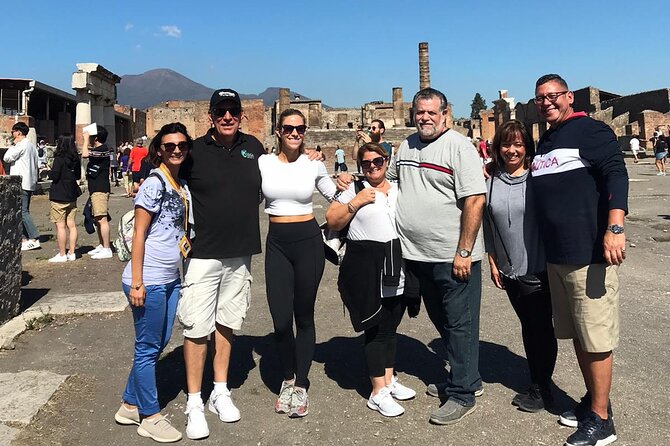
This tour runs about 4 hours and moves through six main segments, each with admission included (except the smaller, timed stops where entry is still included in the tour setup).
1) Anfiteatro Romano (about 1 hour)
The Roman amphitheater is the dramatic opener. It’s where you start understanding social life in Pompeii: entertainment, status, and how crowds were managed in a town that was both ordinary and highly organized.
Why it matters on a short tour: it sets the tone. Once you know how big public spaces worked, the rest of the buildings feel less random.
Potential drawback: because it’s timed to about an hour, you’ll need to decide early if you want extra time asking questions versus keeping the flow.

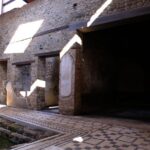
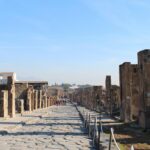
2) Pompeii Archaeological Park (about 1 hour)
This is the “you need the map in your head” block. The goal is to connect streets and building layout to what you’re seeing, rather than treating the ruins like disconnected photos.
Why it matters: Pompeii can feel like one long ruin. This segment helps you build a mental grid so later stops click faster.
Watch-outs: you may be tempted to stare at everything. In 4 hours, that’s a fast way to run out of time before the best stops.
3) Foro de Pompeya (about 15 minutes)
The forum is the main market area—politics, commerce, and the daily movement of people doing everyday business.
Why the time is short: it’s one of the most central emotional sites, but it’s also easy to overstay. A tight stop works if the guide helps you see the layout and what the space meant.
Trade-off: if you’re the type who loves reading every inscription or lingering on architecture, you might want more than 15 minutes here.
4) Casa del Menandro (about 20 minutes)
This is one of the more beautiful domus stops, with frescoes and details that help you understand how wealth and art show up in domestic life. You’ll also see elements of the home layout, including private spaces and a calidarium (a warm room).
Why it’s a highlight: domus tours can turn into a blur, but this one is set up for interpretation—so you’re not just looking at painted walls, you’re learning how rooms fit together and what daily routines would have looked like.
Consideration: 20 minutes is enough for key features, but not enough for deep, slow wandering.
5) Casa di Ottavio Quartione (about 15 minutes)
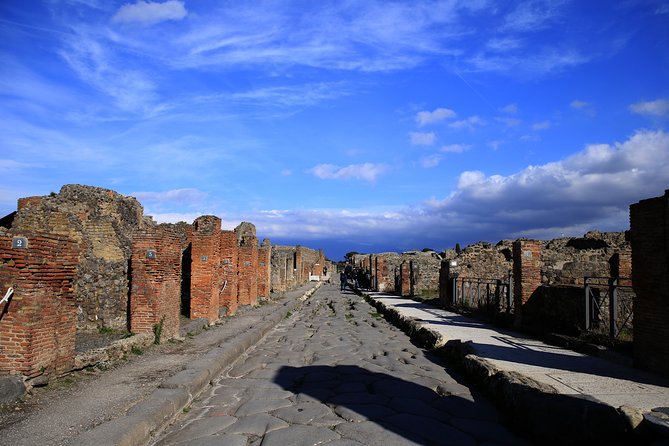
This is another large house on via dell’Abbondanza, the main road of Pompeii.
Why it’s valuable: it connects private life to public street life. The main road is the spine of the city, and seeing a big home along it helps you picture how residents interacted with the city around them.
Drawback: you’ll get a focused look, not a full-room-by-room inspection.
6) Stabian Baths (about 15 minutes)
The Stabian Baths (Terme Stabiane) are a great closing stop because they’re so human. Bathing wasn’t just hygiene; it was social time, routine, and a place where people processed their day.
Why it’s a strong finale: it gives you a different kind of architecture than houses and streets. You end with how the body and mind met in public spaces.
Time reality: 15 minutes is quick, but it’s often enough to understand what you’re looking at—especially with a guide steering you.
Your guide really sets the tone: Italo/Itilio and Clelia as examples
Pompeii guides aren’t all the same. The best ones act like translators, not reciters. This tour’s structure leans on that idea: a local guide, plus a professional art historian guide, and a professional tour guide working together.
In particular, Italo/Itilio is praised for clear explanations and for trying to avoid the worst crowds. That matters because Pompeii isn’t just about standing in front of ruins. It’s about being able to see what’s important without being squeezed into someone else’s shoulder-to-shoulder moment.
Clelia is another name that comes up with strong energy and clear teaching. If you like the idea of the tour feeling like a real conversation—with room for questions—that’s what you should expect to hunt for.
Skip-the-line reality: how to protect your time

Skip-the-line is the heart of the pitch. And in an ideal world, it means less waiting and more site time. But Pompeii isn’t a single queue system; there can be admin steps and ticket processing that still take a few minutes.
Here’s what I’d do if you’re time-sensitive:
- Arrive early at Piazza Esedra so any small delay doesn’t domino your whole morning.
- Ask your guide at the start what the plan is for the final stop and whether any parts might depend on closing times.
- Keep your expectations aligned with the format: 4 hours for Pompeii is an intense highlights run, not an all-day museum marathon.
This tour includes multiple admission tickets at set stops, which helps reduce last-minute friction. Still, if you’re someone who wants every optional museum component, you may find yourself wishing you had a longer window.
What you’ll feel leaving: “I get it” Pompeii, not “I saw it”
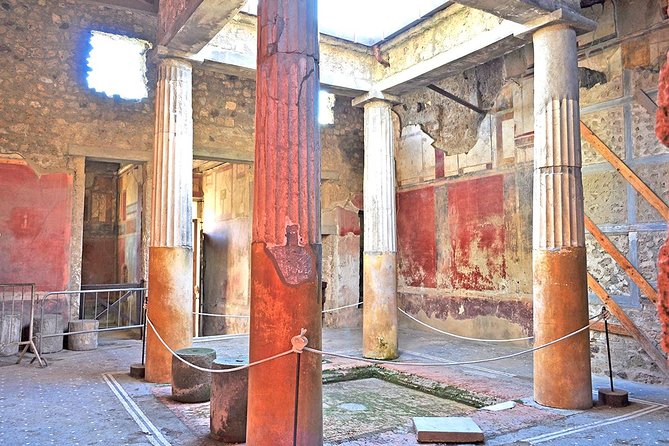
A good Pompeii tour changes your mental picture. Instead of just ruins, you leave with:
- the shape of public life (amphitheater + forum)
- how elite domestic space worked (the domus stops)
- how routine and society mixed (the Stabian Baths)
The best version of this tour is when your guide keeps you moving through the right kinds of rooms and buildings so you understand the city’s rhythm.
If you’re prone to getting overwhelmed, the private pacing can be a lifesaver. Smaller groups also tend to make it easier to step away from crush points and take in details without losing the thread.
Who this tour fits best (and who might want a different option)
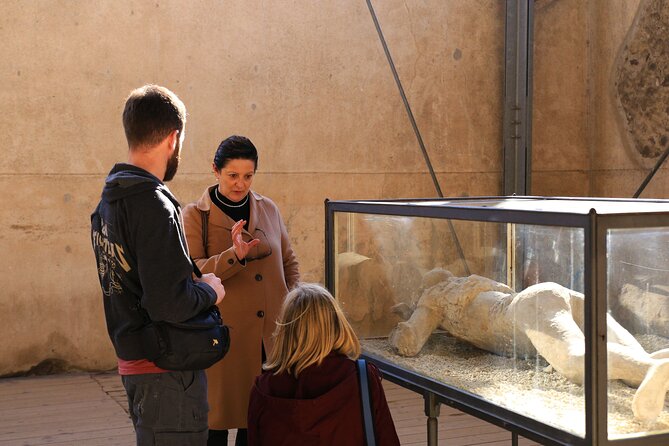
This tour is a smart match if you:
- want a private experience without the hassle of planning stops yourself
- like architecture and art details, but also need someone to connect the dots
- want a focused Pompeii visit with admission built in
- enjoy learning from a guide who can explain how buildings link to daily life
It may not be the best match if you:
- want a long, unhurried day across every possible museum room
- are counting on lunch included (you’ll need to plan)
- need very flexible timing throughout the day, because this is built as a tight route
Should you book this Pompeii private tour?
If your goal is to understand Pompeii in a tight time window, I’d say yes. The private format, admission included at key stops, and the art historian angle are the sort of choices that turn a short visit into something you remember for more than the photos.
Book it if:
- you want efficient highlights with strong interpretation
- you’re okay with a compact 4-hour structure
- you’re traveling with someone who’d rather ask questions than just wander
Pass or consider alternatives if:
- you’re looking for an all-day Pompeii experience with lots of optional museum time
- you need hotel pickup or a built-in meal
- you’re very sensitive to schedule slippage (because the itinerary is tight and timing matters)
FAQ
FAQ
How long is the tour?
The tour is listed at about 4 hours.
Is skip-the-line access included?
Yes, skip-the-line access is guaranteed in the tour features.
Does the tour include admission tickets?
Yes. Admission tickets are included for the amphitheater, the Pompeii Archaeological Park, the forum, the domus stops, and the Stabian Baths.
Where do we meet and where does the tour end?
You meet at Piazza Esedra, 80045 Pompei NA, Italy and the tour ends back at the same meeting point.
Is lunch included?
No, lunch is not included.
Is this a private tour?
Yes. It’s a private tour/activity, and only your group will participate.
What kind of fitness level is required?
A moderate physical fitness level is recommended. The site involves walking and uneven ground.
What’s the cancellation policy?
You can cancel for a full refund up to 24 hours in advance. If you cancel less than 24 hours before the start time, the amount paid is not refunded.