REVIEW · ROME
Ancient Rome Guided Tour: Colosseum, Forum and Palatine & Pick Up
Book on Viator →Operated by Gray Line I Love Rome by Carrani Tours · Bookable on Viator
Three monuments, one efficient half-day plan. This guided loop packs Palatine Hill, the Colosseum, and the Roman Forum into about 3.5 hours, with hotel pickup for an easier start and mobile ticket entry. I also like that you get wireless audio headsets, so you can actually hear the stories without craning your neck through crowds.
The main drawback to plan for is physical comfort. Expect a fair amount of walking on uneven surfaces (cobblestones and marble slabs) in sun, and the sites are open—so bring solid shoes, sun protection, and water.
In This Review
- Key highlights worth planning for
- Palatine Hill first: the view that explains the Forum
- Entering the Colosseum: reserved entry and real scale
- Roman Forum stop: where power lived and crowds moved
- How pickup works (and why timing matters)
- What the guide adds: clarity, stories, and pacing
- Price and value: what $98.86 really buys
- Practical tips that will make your day smoother
- Who should book this Colosseum–Forum–Palatine tour?
- Should you book this tour?
- FAQ
- What’s included in the tour price?
- How long is the Ancient Rome tour?
- Is hotel pickup offered?
- Where do I meet if my hotel isn’t covered by pickup?
- What ID do I need to bring?
- Will I use a mobile ticket?
- How big is the group?
- Is this tour suitable for children?
- Can I cancel for free?
Key highlights worth planning for
- Hotel pickup saves you from figuring out buses and lines before your first landmark.
- Reserved Colosseum entry helps you get moving without wasting time at the entrance.
- Palatine Hill views give you that big-picture sense of how the Forum worked.
- Via Sacra focus ties the Colosseum and Forum together with one main “sacred road” story.
- Wireless audio headsets make it easier to follow your guide when crowds get loud.
- Small group size (max 20) can make the tour feel calmer and more manageable.
Palatine Hill first: the view that explains the Forum
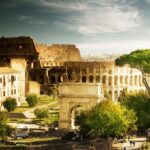
Starting at Palatine Hill is smart, because it gives you elevation before you step into the ruins. Palatine is one of the oldest parts of Rome and sits about 40 meters above the Roman Forum. That height matters: you get a sense of where Augustus-era power clustered and how the city’s big moments played out below.
Your guide will point out that Palatine became a showpiece for imperial life starting with Augustus, including palace building here. From the hill, you look down toward the Forum on one side and toward the Circus Maximus direction on the other. It’s the kind of perspective that helps the Forum stop being a random scatter of stones.
You’ll also get historical context around ceremonies such as the Roman triumph—when Rome publicly celebrated (and sanctified) a victorious commander. It’s a good “why it mattered” bridge before you move to the Colosseum, because it connects politics, religion, and public spectacle.
Practical note: Palatine Hill involves real walking over uneven ground, and it’s not a place to treat like a quick photo stop. Wear shoes you trust.
You can also read our reviews of more tours and experiences in Rome.
Entering the Colosseum: reserved entry and real scale
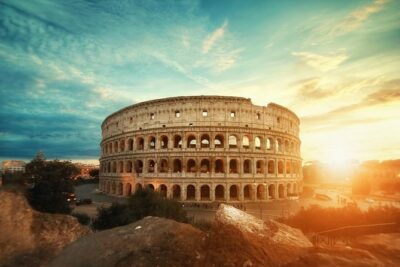
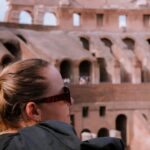
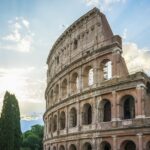
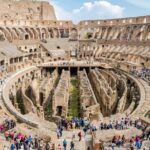
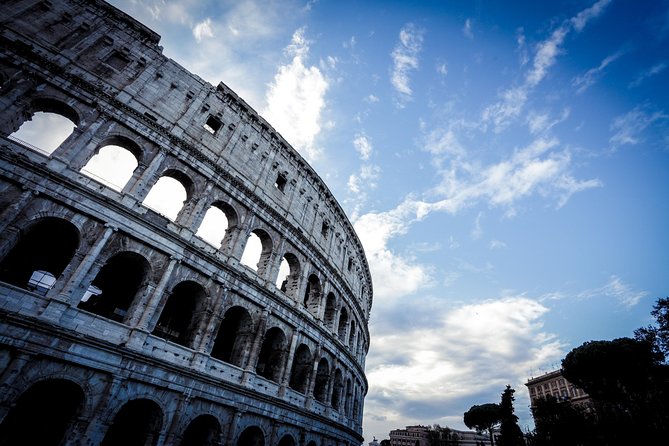
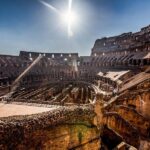
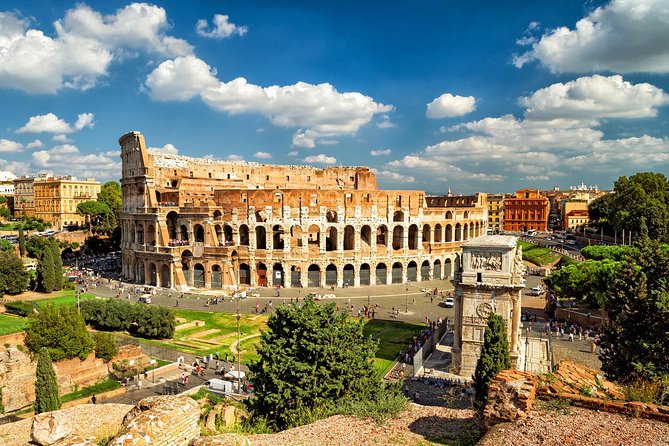
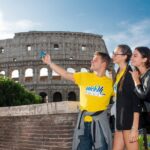
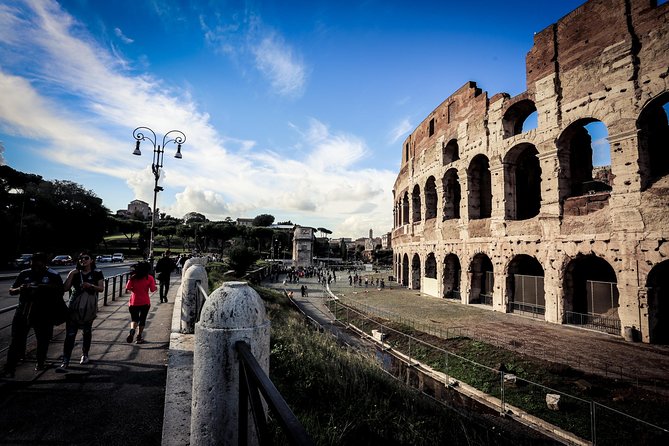
The Colosseum is the star for a reason. It’s an oval amphitheater built with materials like travertine, tuff, and brick-faced concrete—and it was the largest amphitheater ever built. Even when you’ve seen photos, it still hits differently when you’re standing in front of it.
What I like here is the practical side. You’re not just “going to the Colosseum.” You’re going with admission included and a reservation fee that’s built into the tour price. In practice, that means you spend less time stuck at the entrance and more time with your guide inside the archaeological area.
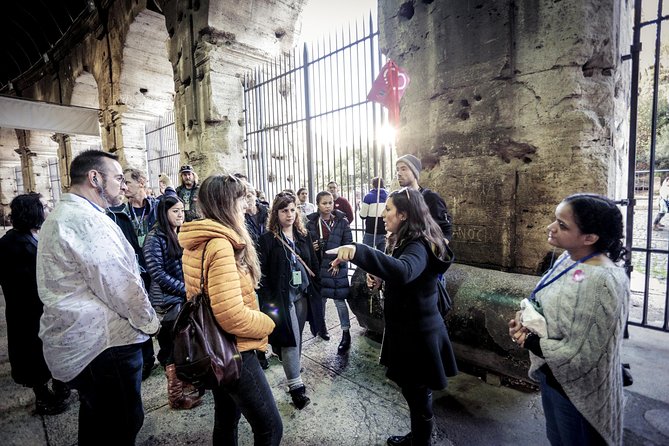
Your guide also helps you understand the building beyond the postcard version. The tour focuses on how the Colosseum connects to the rest of ancient Rome—especially the route people traveled to get there. One of the key stories is the Via Sacra, the Sacred Road. It’s the main street of ancient Rome that led from the top of the Capitoline Hill through major religious sites in the Forum and onward to the Colosseum, where it becomes especially prominent as you approach.
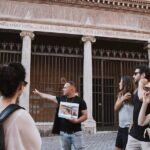
If you get a guide with strong storytelling and good crowd-handling, this stop can feel like a timeline you can walk through. Some guides on this tour are known for efficiency and clear instructions; others lean into explanations with extra context and photo-friendly moments. Either way, the headsets help you keep up.
Heat tip: the Colosseum area can feel brutally sun-heavy. Even if your guide tries to manage shade breaks, you should assume you’ll be exposed at times.
Roman Forum stop: where power lived and crowds moved

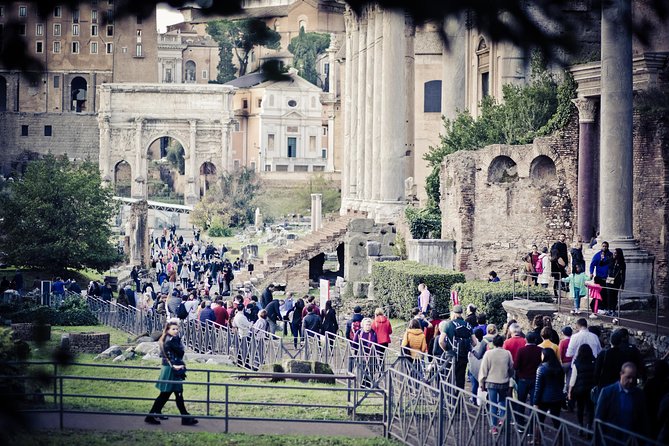
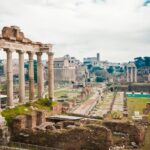
Next comes the Roman Forum, the political and civic center of ancient Rome. It’s essentially a rectangular plaza surrounded by ruins of major government buildings. In ancient times it functioned as a marketplace too, and citizens used it as a daily meeting point—so it wasn’t just ceremonial. It was practical, loud, and important.
The tour’s structure helps you understand why the Forum and Colosseum belong together. The Via Sacra story continues because it’s the connective tissue: the sacred processional road runs through the heart of the Forum and leads toward the Colosseum. Once you know that route, the ruins start to feel less random.
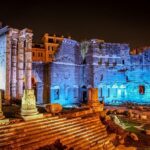
There’s also a modern layer you might notice while walking: Via dei Fori Imperiali is the straight road that runs from Piazza Venezia to the Colosseum. It crosses over parts of several imperial forums—Trajan, Augustus, and Nerva—and since the 1990s there’s been major excavation on both sides. Even without going into deep technical detail, it helps to realize these areas still reveal new layers underneath the streets.
At this stop, I’d watch for how your guide handles pacing and group control. The Forum is big, and crowds can slow anyone down. If your group moves well, you’ll have time to read key features, take pictures without sprinting, and actually absorb the layout.
How pickup works (and why timing matters)
This tour offers hotel pickup, which is a big deal in Rome. Traffic and narrow streets can make transit slow, and the last thing you want is to arrive sweaty and stressed. Pickup is designed to get you to the start point efficiently.
Here’s the key timing detail: you should be ready 45 minutes before departure in the hotel lobby (or 60 minutes for non-central hotels). If your hotel isn’t covered, you’ll need to reach the meeting point yourself.
The backup meeting point listed is Colle Oppio Park, Via delle Terme di Tito (corner of Via Nicola Salvi), inside the park.
Two practical takeaways:
- Ask reception for the exact lobby pickup point. “Lobby” can mean different things at different hotels.
- Double-check your pickup window the day before. On-site issues happen, and being early helps you avoid confusion.
What the guide adds: clarity, stories, and pacing
The difference between an okay tour and a great one usually comes down to your guide’s flow. On this particular route, a good guide does three things well: connects the stops, keeps the group together, and manages time in heat.
You’ll see this in the kinds of comments people make about the guide. Names that come up for this tour include Marcello V, Nicoletta, Rita, Alessa, Daniel, Caro, Eglie, Luciana, Roger, and Letty (Leticia). Across these examples, the praise tends to cluster around:
- clear explanations (history plus what to look at)
- pacing that doesn’t turn into a long slog
- small “comfort moves” like water and shade breaks when it’s hot
- photo opportunities—sometimes with the guide helping families and groups get a clean shot
There are also a few caution flags worth taking seriously. Some people have noted that group management can slip—like not keeping everyone easy to track, or not using a visible flag—so you should stay close to your guide and watch for instructions. Also, walking time and sun exposure can vary depending on how your specific guide handles the route, so don’t count on magic shade.
Price and value: what $98.86 really buys
At $98.86 per person for about 3 hours 30 minutes, you’re paying for more than three entrances. The Colosseum entrance ticket is valued at €18, and there’s an additional Colosseum reservation fee valued at €2. That means the headline attraction isn’t the whole cost.
In plain terms, the money is also covering:
- a professional guide and wireless audio headsets
- transportation associated with the tour
- the reserved timing and ticket handling that reduces friction at the biggest entrance
- coordinated movement between three major sights in one half-day block
Is it the cheapest way to see Rome’s ruins? No. But it’s also not just “pay to enter.” It’s pay for a structured route, audio support, and reduced time wasted figuring things out—especially helpful when the Colosseum area is crowded and time windows matter.
If your Rome itinerary is tight and you want to see the big three without losing half a day to logistics, this pricing starts to make sense.
Practical tips that will make your day smoother
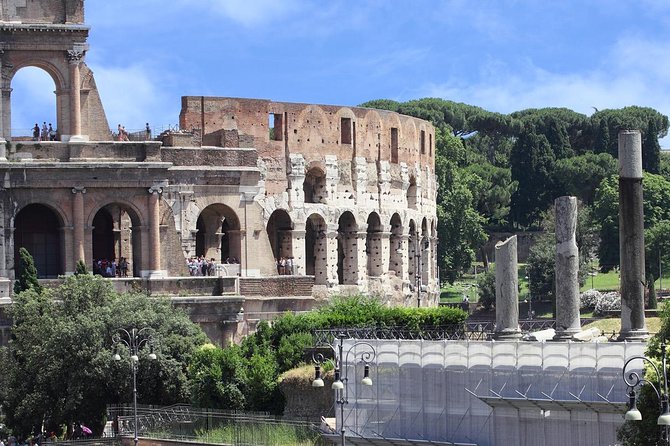
A tour that’s great on paper still needs good prep. Here’s how I’d set you up based on the details that show up again and again with this route.
Wear proper footwear. Cobblestones and marble slabs are real, and they don’t forgive flimsy shoes. You’ll walk more than you think, even if each site has “about an hour” of time.
Bring ID, and match the name you booked with. The tour notes that it’s mandatory to bring your passport or ID card for admission. There’s also a pacemaker rule: you may need to show a certificate to be admitted without being screened. The practical lesson: bring the right document and make sure the name works with your booking details—nicknames and mismatches can cause real headaches.
Expect heat. Multiple guides handle sunny weather differently, but the sites themselves are open. Have a plan: hat, sunscreen, and water. Even when shade exists, you shouldn’t rely on it.
Stay organized for group tracking. Some people report difficulty keeping up when the group gets spread by crowds. If your guide gives clear instructions, follow them immediately. If you get separated, find the next regroup point instead of wandering.
Who should book this Colosseum–Forum–Palatine tour?
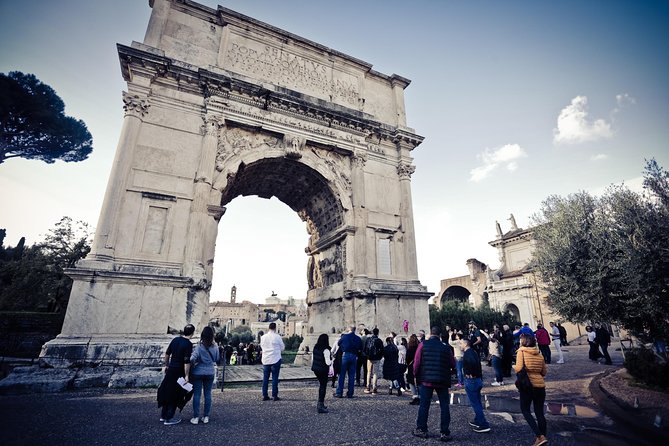
This is a strong fit if you want a focused, high-impact Roman ruins day without turning it into a self-guided maze.
You’ll likely enjoy it if:
- you want the big-picture story fast: Palatine → Via Sacra → Colosseum → Forum
- you like having someone point out what matters, instead of guessing
- you appreciate audio headsets when crowds get loud
- you prefer a smaller group (max 20) over giant bus groups
It may be tough if:
- you have mobility limitations, since the tour isn’t recommended for impaired mobility
- you don’t handle walking on uneven surfaces well
- you strongly dislike sun and exposed walking (this is a real factor here)
Should you book this tour?
I’d book it if your priority is efficiency: three headline Roman sites in one half-day, with reserved entry support and pickup that reduces stress. It’s also a good choice if you want the “how it all connects” angle—especially through the Via Sacra link between the Forum and the Colosseum.
I would skip or rethink if you’re hoping for mostly relaxing time, minimal walking, or lots of guaranteed shade. This route is famous for a reason, but it’s also physically demanding and sun-heavy.
If you’re comfortable with the practical side—good shoes, ID ready, and a heat plan—this tour is a solid value way to hit Rome’s most iconic ruins in one clean sweep.
FAQ
What’s included in the tour price?
You get a guided tour of the Colosseum and archaeological area, plus entrance to the Colosseum, Roman Forum, and Palatine Hill. The tour also includes a professional guide, wireless audio headsets, transportation, and the Colosseum entrance ticket and reservation fee.
How long is the Ancient Rome tour?
The duration is about 3 hours 30 minutes.
Is hotel pickup offered?
Yes. Pickup is offered, and you should be ready 45 minutes before departure in the hotel lobby (or 60 minutes for non-central hotels).
Where do I meet if my hotel isn’t covered by pickup?
If pickup doesn’t cover your hotel, the meeting point is Colle Oppio Park, Via delle Terme di Tito (corner of Via Nicola Salvi), inside the park.
What ID do I need to bring?
It’s mandatory to bring your passport or ID card on the day of the tour. If you have a pacemaker, you’ll need to show a certificate to be admitted without being screened.
Will I use a mobile ticket?
Yes. The tour includes a mobile ticket.
How big is the group?
The tour has a maximum group size of 20 travelers.
Is this tour suitable for children?
Children must be accompanied by an adult.
Can I cancel for free?
Yes. You can cancel for a full refund if you cancel at least 24 hours before the experience start time.