REVIEW · NEW DELHI
Timeless Treasures: An Old Delhi Heritage Walking Tour
Book on Viator →Operated by Ritesh Rawat · Bookable on Viator
Spices and stories on one easy walk. I love the included street-food snacks and coffee/tea, and I love the way the route connects sacred places like Sri Digambar Lal Mandir with the Khari Baoli spice market, giving you Old Delhi from both everyday and religious angles.
Just note the practical bits: there’s a dress code for worship and you’ll remove shoes at temples and the gurdwara.
In This Review
- Key highlights you’ll feel fast
- Why Old Delhi makes more sense on foot (with a real guide)
- Starting at Sri Digambar Jain Lal Mandir near Red Fort
- Chandni Chowk lanes: where the city trades, snacks, and stories
- Sis Ganj Sahib: a Sikh landmark that changes the mood
- Dariba Kalan and Naughara: the quieter streets that explain Old Delhi
- Gali Paranthe Wali: a quick street-food hit on the way to spices
- Khari Baoli spice market: wholesale power and a needed pace reset
- Included food and drinks: how the tour handles refueling
- Price and value: why $22.53 can make sense here
- Timing, weather, and what to wear so the day stays fun
- Where you meet and where you end
- Should you book this Old Delhi heritage walk?
- FAQ
- How long is the Timeless Treasures walking tour?
- Where does the tour start and end?
- What’s included in the price?
- Is entry free for the main stops?
- Is there any street food included?
- Do I need to remove my shoes?
- What should I wear for this tour?
- What happens if the weather is bad?
Key highlights you’ll feel fast

- Easy, guided navigation through Old Delhi so you don’t just see shops—you understand what you’re walking past
- Street-food tasting built into the walk, plus bottled water and simple breaks like coffee/tea
- Three major faith stops in one route: Jain at Sri Digambar Lal Mandir, Sikh at Sis Ganj Sahib, then back to market life
- Khari Baoli spice market with a short rickshaw ride so your legs get a breather before the sensory overload
- Skilled guides, including Ritesh Rawat and Zohra (and her brother), who keep the pace friendly and can adjust for heat and timing
Why Old Delhi makes more sense on foot (with a real guide)
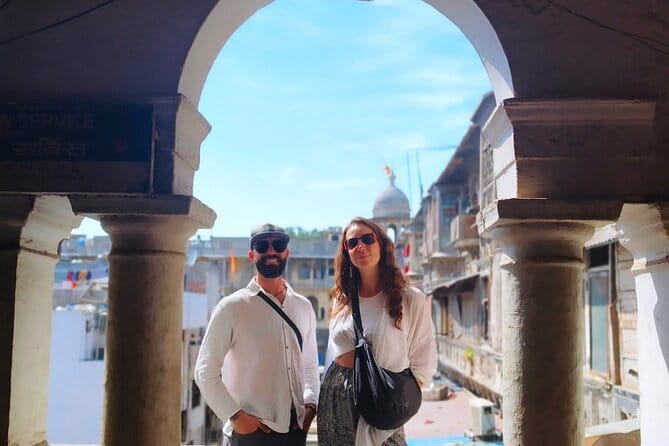
Old Delhi can hit you like a sensory drumline: tight lanes, loud bargaining, cooking smells, religious buildings, and wholesale trading blocks all packed into a small area. On your own, you can still have a great time—but you’ll often miss the why behind what you’re seeing.
This walk is built for that “get it fast” moment. You move through iconic lanes like Chandni Chowk, then pivot into the spice economy at Khari Baoli. The best part is that the guide ties the places together, so your day feels like a story instead of a checklist.
You can also read our reviews of more tours and experiences in New Delhi.



Starting at Sri Digambar Jain Lal Mandir near Red Fort
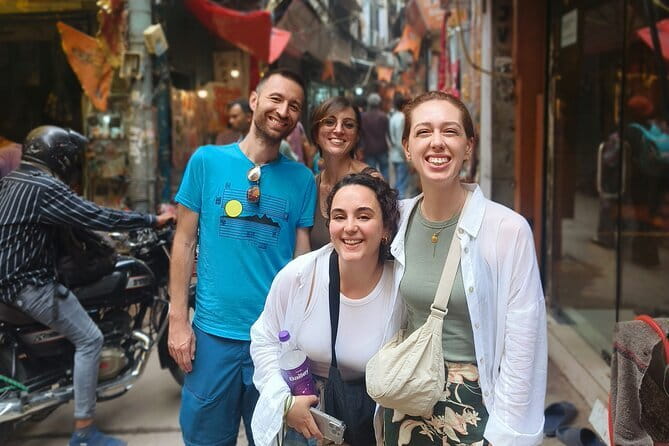
You begin at Shri Digambar Jain Atishay Kshetra Lal Mandir (opposite Red Fort on Netaji Subhash Marg, in the Chandni Chowk area). It’s your first taste of Old Delhi’s religious architecture, and it also sets the tone for how to behave in the lanes that come next.
You’ll spend about 40 minutes here, and the key detail for your comfort: admission is free. You also get a quick lesson in respect and rhythm, because the worship-site rules apply here—knees and shoulders covered, and shoes removed. The tour notes that shoes/slippers are stored safely for you, which matters when the path gets crowded.
If you’re worried about feeling “held back” by rules, don’t be. This stop is a useful warm-up: you learn how to navigate respectfully, then the market chaos makes more sense.
Chandni Chowk lanes: where the city trades, snacks, and stories
Next comes Chandni Chowk Market, with about one hour in the area. Chandni Chowk is one of Delhi’s oldest and busiest markets, and it earns that reputation: narrow lanes, endless storefronts, and plenty to look at even if you’re not shopping.
This is the part of the day that helps you calibrate. With a guide, you’re not just walking through a crowd—you’re learning how the market works: what types of goods show up near each other, and why certain streets become known for particular trades.
A practical tip: wear shoes you’re comfortable walking in for the whole afternoon. Even though the tour includes short rides later, this section is still mostly on foot through tight lanes. Plan your pace for your own comfort, not for photos.
Sis Ganj Sahib: a Sikh landmark that changes the mood

After the market energy, you step into a different tone at Gurudwara Sis Ganj Sahib. This stop is about 25 minutes, and it’s free to enter on this tour.
The guide focuses on the meaning of the gurdwara: it commemorates the martyrdom of Guru Tegh Bahadur, the ninth Sikh Guru, who was executed. That context matters because it explains why the space feels more solemn than the surrounding trading streets.
Again, the same worship etiquette applies: covered shoulders and knees, and shoes off. If you’re traveling in warm weather, the coverage rule can feel like a hassle—but think of it as part of the respect that lets you experience the place properly.
Dariba Kalan and Naughara: the quieter streets that explain Old Delhi
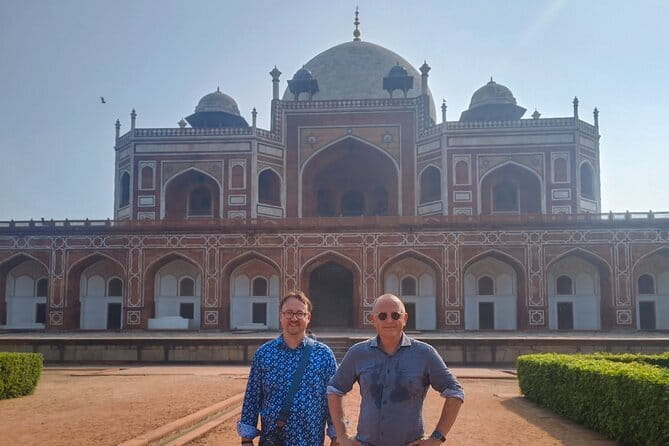
Between the big-name stops, you’ll pass through Dariba Kalan, a historic lane known for jewelry trading—especially silver and gold. This area has been a hub for that kind of metalwork for centuries, and even if you aren’t buying anything, it’s a strong snapshot of how Old Delhi specialized by street.
Then there’s a short look at Naughara (Row of Nine Houses). You’re there for around 10 minutes, and the point isn’t a long museum-style visit. It’s more like a quick historical lens: you get a sense of Mughal-era architectural remnants and how the city’s older layers still show up in everyday space.
These two stops are brief by design. They break up the day so it doesn’t become only crowds and shopping. You get variety—religious spaces, trading streets, and built heritage—without needing a separate full day.




Gali Paranthe Wali: a quick street-food hit on the way to spices

You’ll spend a short five minutes at Gali Paranthe Wali, the famous street associated with traditional parathas. Even for a brief stop, it signals something important about Old Delhi: food isn’t a side activity here. It’s part of the cultural map.
This tour already includes snacks (plus bottled water), so you’re not only relying on what you find yourself. Still, this is where your guide’s choices matter—street food in Old Delhi can be amazing, but it helps to know what’s worth your time and what fits the schedule.
If you have a sensitive stomach, tell your guide what you’re comfortable with. The tour includes snacks and treats you through the walk; you can often choose from what’s served without going off-script.
Khari Baoli spice market: wholesale power and a needed pace reset
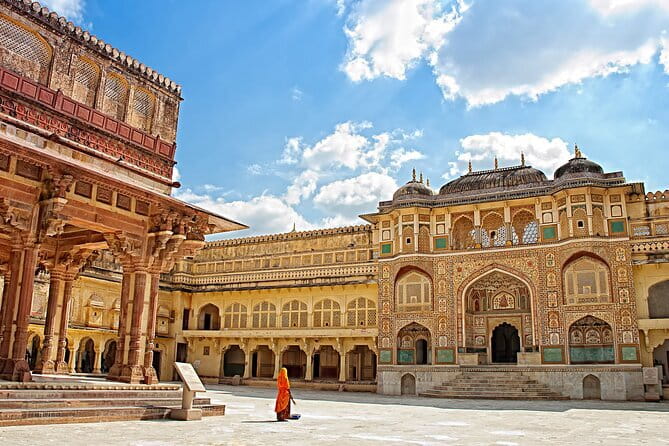
The final stretch is Khari Baoli, described as one of Asia’s largest wholesale spice markets, and a spice-trade center since the Mughal era. You’ll spend about 25 minutes here.
One big reason this part feels worth doing with a guide: spices here aren’t just a smell. They’re a working economy. You get to see the density of trade—stacks, sellers, and the sheer variety—without needing to figure everything out by trial and error.
Also, you’ll take a short cycle rickshaw / tuk tuk ride to reach the spice market area. That ride is not just cute. It’s a practical leg-saver before you tackle the densest sensory section of the day. Old Delhi can be exhausting if you stay on foot nonstop, so this small break improves the experience a lot.
Included food and drinks: how the tour handles refueling

This tour includes bottled water, snacks, and coffee and/or tea. That combination is key in this neighborhood. By the time you’re near Chandni Chowk and Khari Baoli, you’ll likely want something warm or cooling and you won’t want to hunt for it between stops.
I like that the tour builds in fuel at the right moments. You’re not stuck waiting for the next café. You’re also less likely to skip the smaller food samples that make the day special.
If you’re planning to shop later on your own, note this: the tour includes tastings and snacks, but it doesn’t include shopping. You’re here to taste and learn, not to buy everything in sight.
Price and value: why $22.53 can make sense here
At $22.53 per person for about 3 hours 30 minutes, this isn’t a “pay extra for transport” tour—it already covers several practical items:
- Free entry is listed for the key worship and market sites in the route
- Snacks, bottled water, and coffee/tea are included
- A cycle rickshaw / tuk tuk ride is included
So you’re really paying for a guided structure that lets you cover multiple cultural zones in one go—Jain, Sikh, major market lanes, plus Khari Baoli. In Old Delhi, the guide’s value is mostly about time saved and context added. Without that, you can end up walking in circles or missing the best parts that match your interests.
I also like that the reviews highlight flexibility. Guides such as Ritesh Rawat and Zohra (including a brother who’s been part of the guiding team) are described as adjusting schedules when timing or heat gets tricky. That kind of flexibility can matter more than a lower price.
Timing, weather, and what to wear so the day stays fun
The walk is set for around 3 hours 30 minutes and runs with mobile tickets. The operator also asks for good weather, so if the forecast turns ugly, you may be offered a different date or a refund.
Dress code is the big one you can prepare for in advance:
- Knees and shoulders must be covered at places of worship
- Shoes/slippers need to come off inside these sites, and they’re stored for you
For footwear, choose something easy to remove and put back on—socks you don’t mind re-wearing are also a good idea. Comfortable walking shoes matter here because even with the rickshaw break, you’ll still do plenty of lane walking.
Fitness-wise, the tour says most travelers can participate and recommends a moderate physical fitness level. If your legs are easily strained, go slow during the market sections and use the included ride as your natural reset.
Group size is kept small (the cap is listed as up to 10 travelers), and the tour is stated to have a maximum overall size as well. Small-group touring helps because the guide can keep you moving at a comfortable pace through tight lanes.
Where you meet and where you end
You start at Shri Digambar Jain Atishay Kshetra Lal Mandir near Chandni Chowk (opposite Red Fort). The tour ends at Fatehpuri Masjid on Chandni Chowk Road, and you finish at the spice market area.
That end point is practical: after you wrap up, you’re already in the Chandni Chowk / Khari Baoli zone, where you can keep going with your own plan—if you still have energy.
Should you book this Old Delhi heritage walk?
Book it if you want a first-timer-friendly way to understand Old Delhi in a half-day: temples plus markets, with food included and a spice-market finish. The value is strongest if you like your travel with structure—especially if you’d rather not guess what’s worth your attention in Chandni Chowk’s maze.
Skip it (or ask your guide a few questions first) if you dislike walking in crowds or you don’t want to deal with the worship rules like covering shoulders/knees and removing shoes. Also, if you have very limited mobility, you might want to consider a slower format, because the core experience is still a walking route.
If you do book, go in with one goal: watch how the city changes mood as you move from Jain temple to market lanes to Sikh gurdwara and then into the wholesale spice trading world. That shift is the point, and it’s exactly why this tour feels so complete for a short time in Delhi.
FAQ
How long is the Timeless Treasures walking tour?
It runs for about 3 hours 30 minutes.
Where does the tour start and end?
It starts at Shri Digambar Jain Atishay Kshetra Lal Mandir on Netaji Subhash Marg (opposite Red Fort, Chandni Chowk) and ends at Fatehpuri Masjid on Chandni Chowk Road, near the spice market area.
What’s included in the price?
The tour includes bottled water, snacks, coffee and/or tea, and a cycle rickshaw/tuk tuk ride, plus a friendly tour guide.
Is entry free for the main stops?
Admission is listed as free for the stops like Sri Digambar Jain Lal Mandir, Chandni Chowk Market, and Gurudwara Sis Ganj Sahib.
Is there any street food included?
Yes. The tour includes snacks and is described as tasting favorite street food dishes as you walk, including a stop connected with parathas.
Do I need to remove my shoes?
Yes. The tour notes that shoes and slippers need to be removed at places of worship, and they will be safely stored for you.
What should I wear for this tour?
You need knees and shoulders covered at places of worship.
What happens if the weather is bad?
The tour requires good weather. If it’s canceled due to poor weather, you’ll be offered a different date or a full refund.