REVIEW · ATHENS
Biblical Tour Letters to The Corinthians – St Paul’s Footsteps
Book on Viator →Operated by Athens Taxi Travel · Bookable on Viator
Mars Hill to Corinth in one day? Yes, and it’s surprisingly moving. This private route connects Athens to the Corinth region through the places linked to Paul’s preaching, travel, and letters—without forcing you into a one-size-fits-all bus schedule. The biggest win is that you can customize your itinerary, including skipping sights you’ve already seen and spending more time where you want it.
I also love how the day is shaped around real “how did Paul live and move?” questions: the drive-by context from your driver, the on-site stops at major ruins, and the small details that turn Bible geography into something you can picture. One possible drawback: this is an 8-hour day with several stops, so if you like super-slow museum time, you’ll want to manage expectations and tell your driver your pace early.
In This Review
- Key highlights to watch for
- St Paul’s Footsteps from Athens: What You’re Actually Signing Up For
- Price and value for a private group (up to four)
- Private transport, real pacing, and how to keep it from feeling rushed
- Mars Hill (Areopagus): the sermon site and the “Unknown God” moment
- Corinth Canal and the Diolkos: where travel got faster, and why that mattered
- Isthmia: Poseidon games, Paul the tentmaker, and a place full of competing beliefs
- Museum of Isthmia: artifacts, ports, and the Kenchreai connection
- Ancient Corinth: Bema moment, Temple of Apollo backdrop, and Paul’s working city
- Kechries (Cenchreae) and Apostolou Pavlou: ports, community, and a place for reflection
- Akrokorinthos: the fortress viewpoint that ties the city together
- Lunch time in Corinth: a break you’ll thank yourself for
- Should you book this St Paul’s Footsteps tour from Athens?
- FAQ
- What is the price for this tour?
- How long is the tour?
- Will you pick me up, and is it private?
- Is the tour offered in English?
- Are entrance fees included?
- Can I cancel for a full refund?
Key highlights to watch for
- Private, door-to-door pickup so you’re not coordinating buses and transfers all day
- Paul’s stops stitched together logically (Mars Hill → Corinth → Isthmia → ports → Corinth’s core)
- Driver-led storytelling that frames what you’re seeing as Paul-era life, not just stone monuments
- Free views at several key points (Mars Hill, Corinth Canal, Diolkos, Isthmia sites, Apollo, Kechreai, and more)
- One paid add-on you can plan for: Ancient Corinth + the Museum of Isthmia admission aren’t included (€15 per person for Ancient Corinth & the museum of Corinth)
- Optional upgrade to a licensed local guide if you want deeper commentary in select areas
St Paul’s Footsteps from Athens: What You’re Actually Signing Up For
This is a private half-day-style mindset stretched into a full day: you start in Athens, then head out to the Corinth area to see the sites tied to Paul’s presence and the early Christian world he helped shape. The tour is built around locations that connect to themes from Acts and the letters to the Corinthians—faith in public life, religion in a crowded marketplace, and the tension of proclaiming one God in a city full of idols.
The practical upside is that you’re not juggling tickets and timing on your own. The tour includes private transportation, A/C, WiFi on board, and bottled water, plus the freedom to adjust the order and emphasis as long as you stay within the time structure. And because it’s a group of up to four, you’re not stuck listening to a loud split decision from six strangers.
You can also read our reviews of more tours and experiences in Athens.
Price and value for a private group (up to four)
At $386.18 per group (up to four people), this can work out surprisingly well if you’re traveling with family or friends. The math gets better because you’re paying for the whole day of private driving, not per person like some crowded-group tours.
Here’s what that price buys you in real-world terms:
- Time efficiency: you’re using one planned route instead of piecing together separate taxis and self-guided trips.
- Less stress: door-to-door pickup means you can start the day already in “we’re doing this” mode.
- Flexibility: the tour is private, so your driver can work with your pace and priorities.
Where the value shifts: you’ll need to budget for some admissions. The tour notes that entrance fees are not included for Ancient Corinth and the Archaeological Museum of Corinth (you can buy on-site), and that’s usually the biggest extra cost. If you’re the type who hates paying add-ons, you may want to confirm those totals before you go.
Private transport, real pacing, and how to keep it from feeling rushed
This experience runs for about 8 hours, give or take, and it includes multiple stops with varied walking and viewing time. The schedule is structured, but it’s also flexible: you’ll have short windows at several locations and longer time where ruins and museums require it.
That matters because the day has two different rhythms:
1) quick “Paul was here” moments at sites you can view from key points (often free entry)
2) slower ruin/museum time where you’ll want to look around and read what’s in front of you
If you know you like to linger, say so early. One of the few downsides that can show up on any packed day trip is that your pace can be affected by the itinerary timing. With a private setup, the fix is simple: communicate what “not rushed” means for you—extra time for photos, more breaks, or longer at one major site like Ancient Corinth or Akrokorinthos.
Mars Hill (Areopagus): the sermon site and the “Unknown God” moment
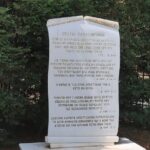
Your first stop is Areopagus Hill, also called Mars Hill, where Paul delivered one of his best-known speeches to the Athenians. Even if you’ve read the passage before, being on this hill changes the feel of it. You’re not just picturing an argument in a book—you’re standing in a place tied to the clash between Greek thought and the Christian message Paul was sharing.
This stop is also short on the clock—about 20 minutes—and admission is free. That makes it a good opener. You get the emotional and spiritual anchor of the day without burning half your morning before you head out to Corinth.
Tip for the best experience: arrive ready to listen to context. A good driver explanation here helps you connect what you see in front of you with what Paul was responding to in that intellectual world.
Corinth Canal and the Diolkos: where travel got faster, and why that mattered
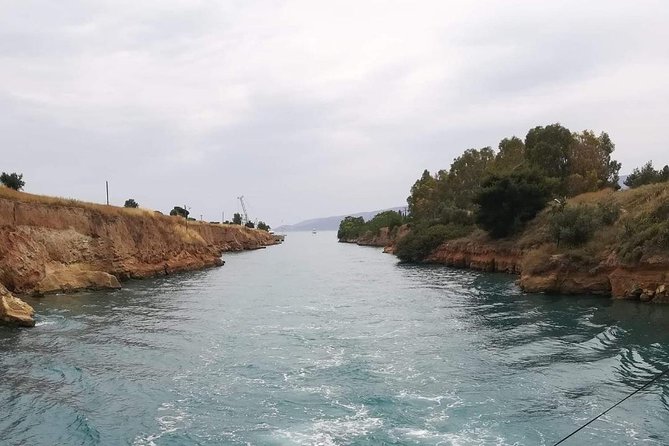
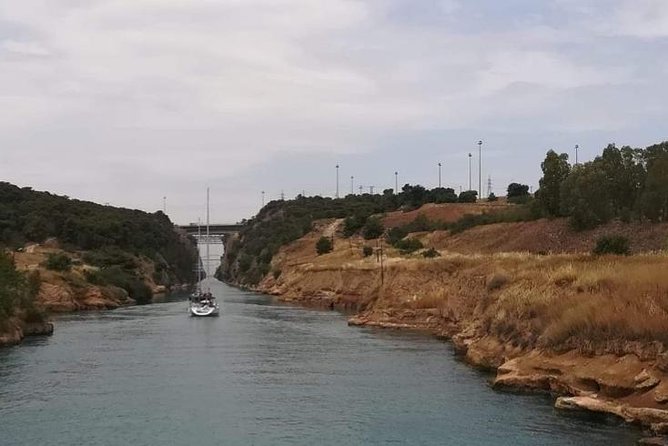
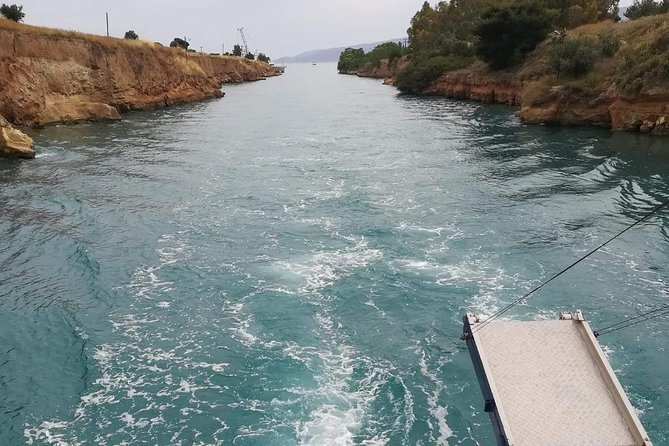
Next you’ll stop at the Corinth Canal, a 19th-century engineering marvel that links the Gulf of Corinth with the Saronic Gulf. The point isn’t just the canal itself; it’s the shortcut idea. Long before the canal existed, ships had to sail around the Peloponnese—an extra 185 nautical miles—which means Paul-era travelers and merchants were dealing with major route decisions.
The canal stop is about 30 minutes and free. It’s enough time to absorb the scale and take photos without feeling like a rushed roadside stop.
Then comes the Diolkos, an ancient track system that helped transport ships across the Isthmus of Corinth. This is one of those “how did they do that?” locations. Walking around the concept of an engineered ship pathway makes the Corinth corridor feel practical and alive—like commerce, sailors, and travelers really did flow through here.
Expect a calmer 20-minute stop. Admission is free. It’s also a great place to connect Paul’s travel routes to real geography, because the canal-and-diolkos corridor is basically the story of movement in that part of Greece.

Isthmia: Poseidon games, Paul the tentmaker, and a place full of competing beliefs
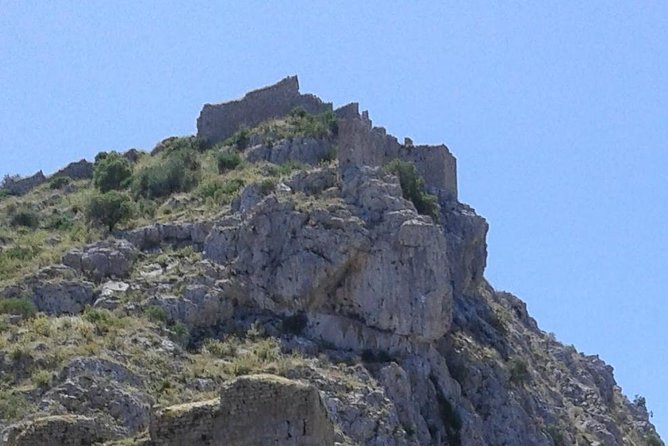
“Isthmia” is where the tour starts feeling like a living network of religion, athletics, and public life. You’ll see the ancient sanctuary area tied to Poseidon and the athletic world centered on the Isthmian Games. This was a major event in the Greek world—second only to the Olympics—and that means lots of visitors, lots of conversation, and lots of different belief systems rubbing shoulders.
There’s a stop at Isthmia itself for about 1 hour with free entry. Here, Paul’s connection is framed through the idea that he worked as a tentmaker, serving athletes and travelers. The Bible doesn’t hand you a full itinerary for every working moment, but the tour’s approach makes the plausibility feel grounded: if thousands arrived for the games, that’s where people gathered, talked, and heard new messages.
The visit continues with an archaeology-focused exploration of the Archaeological Site of Isthmia, about 40 minutes (with admission not included for this stop). You’ll see key structures like the Temple of Poseidon (rebuilt multiple times), the stadium setting for the games, and the Sanctuary of Palaimon, linked to sailors.
Two things to expect that many people love here:
- Athletic imagery as a teaching tool: Paul’s letters often use sports-and-training comparisons, and Isthmia gives you the setting.
- Contrasts in religious life: you’re looking at pagan spaces where Paul’s message would have felt both foreign and challenging.
One more Isthmia note that’s especially helpful for a Christian-history perspective: the tour points out that Isthmia also held political and military significance due to its strategic location. That helps explain why public events mattered so much—these weren’t just festivals; they were gatherings where influential people, delegates, and ideas intersected.
Museum of Isthmia: artifacts, ports, and the Kenchreai connection
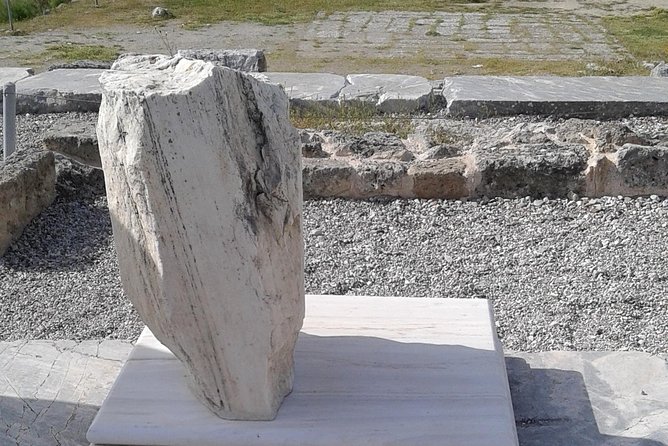
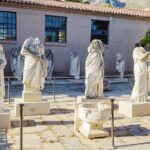
After you’ve walked the places, the Archaeological Museum of Isthmia helps anchor the day in material evidence. This stop is about 30 minutes, and admission is not included (this is one of the paid extras you’ll plan for).
What I find valuable here is the way it connects Paul to places of movement and departure. The museum includes artifacts from the sanctuary of Poseidon, and there are highlights tied to the Corinth area’s maritime links—especially the glass panels from Kenchreai, the port associated with Paul’s departure for Syria. That port detail is powerful because it turns the gospel story into something physical: routes, ships, goods, travelers, and the messy mixing of cultures at a working harbor.
If you’re the type who likes to connect faith to daily life—trade, travel, and public gathering—this museum stop gives you something to hold onto after you leave the ruins.
Ancient Corinth: Bema moment, Temple of Apollo backdrop, and Paul’s working city
Now you hit the core. Ancient Corinth (Archaia Korinthos) is one of the most important places on the itinerary because it’s tied to Paul’s stay of over 18 months, as recorded in Acts. You’ll see major reminders of how Corinth functioned as a commercial and cultural hub, which helps explain why Paul’s letters to the Corinthians feel so pointed and specific.
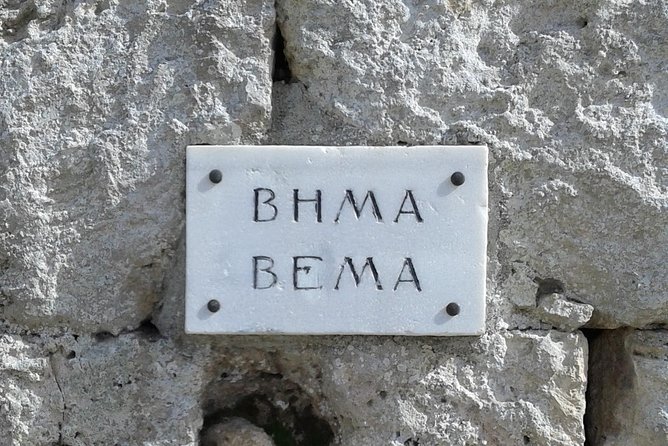
This stop is about 1 hour with admission not included (and you’ll pay on-site as noted). The star link here is the Bema, the judgment seat tied to Paul being brought before the Roman proconsul Gallio. That’s the moment where the conflict shifts: Gallio refuses to intervene in a religious dispute, and Paul can continue preaching.
If you want to understand why Paul’s mission mattered politically (even though it wasn’t political power), the Bema setting helps. It shows you the real framework: empire, law, and authority—plus a Christian message that had to survive in that world.
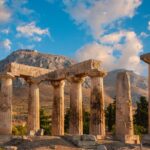
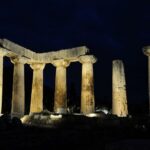
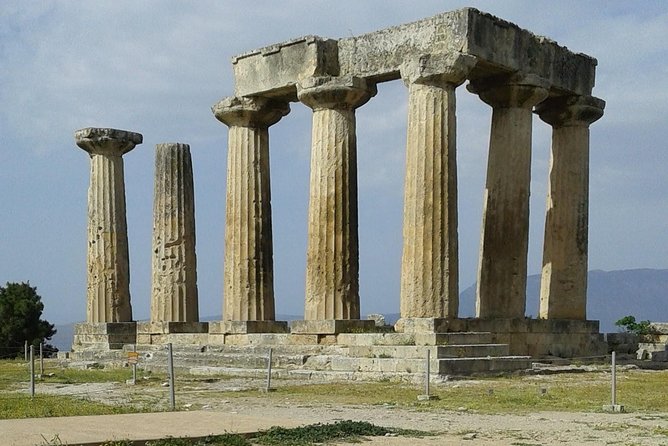
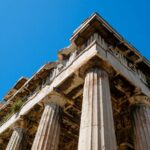
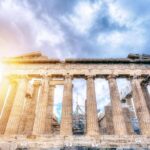
After that, you’ll also visit the Temple of Apollo, one of the city’s most visible symbols of the older belief system. Built around 560 BC with striking Doric columns, the temple helps you picture the kind of religious environment Paul spoke against when proclaiming one God and Jesus Christ. This stop is about 30 minutes and admission is free.
Kechries (Cenchreae) and Apostolou Pavlou: ports, community, and a place for reflection
Next is the coastal site of Kechries, linked to Cenchreae, the eastern port of Corinth. It’s connected to Acts 18:18 and Paul’s journey with Priscilla and Aquila, including the detail that Paul cut his hair to fulfill a vow before departing for Syria.
This stop is about 30 minutes and admission is free. It’s a quieter moment compared to the big ruin stops, and that’s exactly why it works. You get a break from heavy stone and can let the maritime setting do its job—ports feel like “where stories travel,” and Paul’s story traveled.
Then you’ll visit Apostolou Pavlou, a church honoring Paul. It’s about 20 minutes and free, and it’s a place for reflection in modern Corinth. The value here is less about ruins and more about giving your day a spiritual landing spot after you’ve spent hours in archaeological context.
Akrokorinthos: the fortress viewpoint that ties the city together
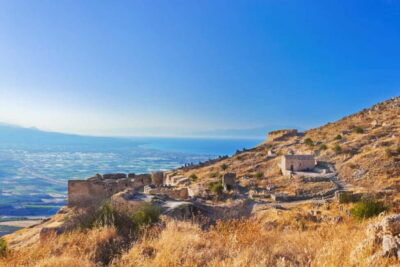
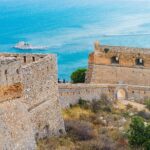
If you want the “wow, Corinth really was positioned for control” feeling, plan for Akrokorinthos, the fortress above Ancient Corinth. This stop takes about 40 minutes and admission is free.
From up here, you get panoramic views that make the earlier locations feel more connected. You can imagine how the city below functioned, how routes guided movement, and how Paul’s world would have looked from this higher vantage point—especially when you’re thinking about letters, travel, and the way public spaces tied into religious life.
Even if you don’t read every interpretive sign, the viewpoint helps your brain build a map of the day.
Lunch time in Corinth: a break you’ll thank yourself for
The itinerary includes time to enjoy lunch at a traditional seaside Greek taverna in Corinth. Lunch itself is not included, but the stop is there for a reason: after driving out of Athens and walking ruins, you need food and a reset.
My practical advice: treat lunch as part of the “pacing management” strategy. Eat earlier if you want more time for photos later, or go a bit slower if you need a breather. Either way, use it to recharge—then you’ll be more present for the last stops.
Should you book this St Paul’s Footsteps tour from Athens?
Book it if you want:
- a private day that focuses on Corinth and the Paul connections, not random sightseeing
- a route that helps you connect Bible geography to real places
- a driver-led day with the option to add a local guide upgrade if you want deeper explanations
Consider skipping (or at least adjusting your expectations) if:
- you prefer long, slow museum time and hate feeling on a schedule
- you’re trying to keep the day free of extra admissions costs, since Ancient Corinth and the museum fees aren’t included
One more decision tip: since the stops include several free sites and a couple paid ones, it’s smart to decide in advance what matters most to you—whether that’s Ancient Corinth with the Bema or the Museum of Isthmia. If you care most about one anchor stop, you can use the private setup to put your energy there.
FAQ
What is the price for this tour?
The price is $386.18 per group (up to 4 people).
How long is the tour?
The tour lasts about 8 hours.
Will you pick me up, and is it private?
Yes. This is a private tour with pickup from your place, and only your group participates.
Is the tour offered in English?
Yes, it is offered in English. A mobile ticket is also included.
Are entrance fees included?
Entrance fees are not included for Ancient Corinth and the Archaeological Museum of Corinth. You can purchase them on-site for €15.00 per person.
Can I cancel for a full refund?
Yes, you can cancel for a full refund if you cancel up to 24 hours in advance.