REVIEW · BOSTON
Boston: Underground Railroad History Tour of Beacon Hill
Book on Viator →Operated by Hub Town Tours · Bookable on Viator
Beacon Hill hides escape routes in plain sight. This 2.5-hour Underground Railroad tour links Black churches, abolitionists’ homes, and Civil War flashpoints through the Black Heritage Trail.
I love how the tour makes the story feel local, not textbook. You start in Boston Common’s shadow and end at the 54th Regiment memorial, with the same guide connecting causes, choices, and consequences. I also like the small group size (max 16), because questions actually get answered instead of being rushed.
One consideration: it’s a hilly, walking-heavy route on uneven streets. If standing for long stretches is hard for you, this probably won’t feel fun.
In This Review
- Key things to know before you go
- Beacon Hill is the Underground Railroad story in miniature
- Starting at Soldiers and Sailors Monument: the view of the “official” story
- Acorn Street and Beacon Hill’s old-world streets
- Phillips School: from whites-only schooling to early integration
- John J. Smith House: abolitionist politics, beyond the myths
- Charles Street Meeting House: one building, a public argument over integration
- 66 Phillips St: the Underground Railroad safe house connection
- Otis House and Asher Benjamin: politics and architecture as power
- African Meeting House: admission included and worth your time
- 5 Pinckney St and the Revolutionary War thread
- Ending at the Robert Gould Shaw and 54th Regiment Memorial
- Price and pace: value for your time in Boston
- Who this tour is best for (and who should skip it)
- Should you book this Beacon Hill Underground Railroad History Tour?
- FAQ
- How long is the Boston Underground Railroad History Tour of Beacon Hill?
- What is the price per person?
- Where does the tour start and end?
- How big is the group?
- Is admission included anywhere?
- What language is the tour offered in?
- What should I bring or expect for the walking portion?
Key things to know before you go

- Small groups (16 max) keep the pace human and the Q&A real
- Black Heritage Trail focus ties the Underground Railroad to everyday Beacon Hill landmarks
- African Meeting House admission included means you can go inside, not just look from the sidewalk
- 10 specific stops cover both Black communities and Boston’s elite “Brahmin” world
- 2.5 hours on foot through a steep neighborhood, so comfy shoes matter
Beacon Hill is the Underground Railroad story in miniature
This tour works because Beacon Hill doesn’t let you forget scale. The landmarks are close enough to walk between, but the impact stretches across the country. You’re not just looking at old buildings; you’re learning how real people fought slavery long before the Civil War headlines got written.
Another reason I’d recommend it: it shows how abolition in Boston wasn’t a side quest. It was tangled up with schools, meeting houses, newspapers, politics, and daily life in one compact neighborhood. That’s why the tour starts with big public symbols in Boston Common, then gradually moves into smaller streets where you can picture the risk and the courage.
And it doesn’t shy away from the messy parts. You hear about segregation, backlash, and public debates over racial integration. You also get clear markers of who did what, where, and when, so the story stays grounded.
You can also read our reviews of more tours and experiences in Boston.
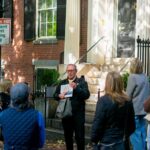


Starting at Soldiers and Sailors Monument: the view of the “official” story
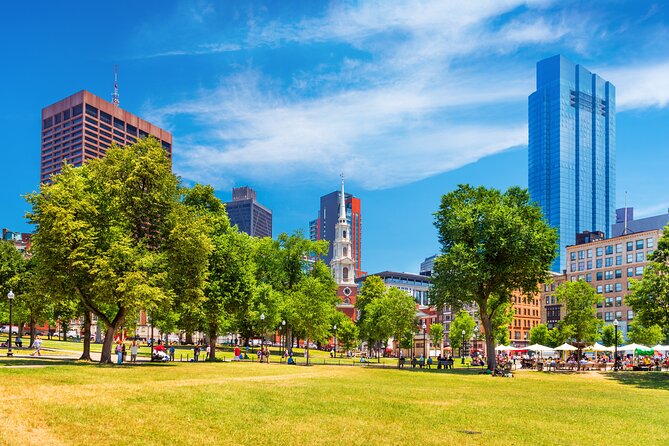
You meet at Soldiers and Sailors Monument in the middle of Boston Common, near the Boston Common Visitors Center on Tremont Street. The landmark is hard to miss: a white granite column topped by a female figure holding a flag, surrounded at the base by four bronze statues.
This start is smart. Before you walk into Beacon Hill’s more intimate spaces, you begin with a monument that represents national memory. Your guide then uses that setting to steer the conversation toward what’s often missing from the clean public version of American history: Black resistance, abolitionist strategy, and the Civil War’s roots in Northern activism.
It also gives you an easy mental warm-up. You’re orienting in the center of the city, and you can feel the “this is Boston” energy before the route turns into the quieter blocks of Beacon Hill.
Acorn Street and Beacon Hill’s old-world streets
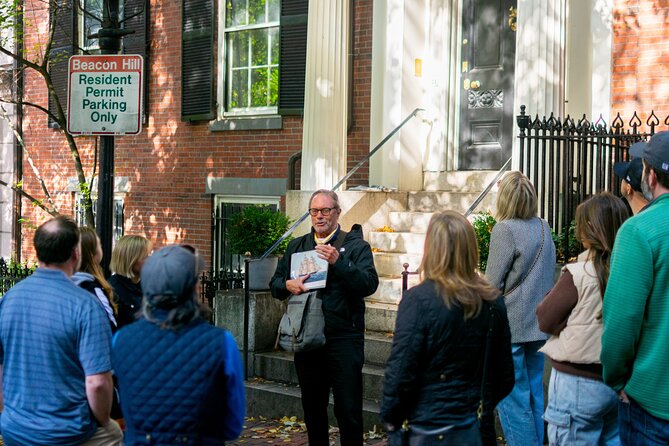
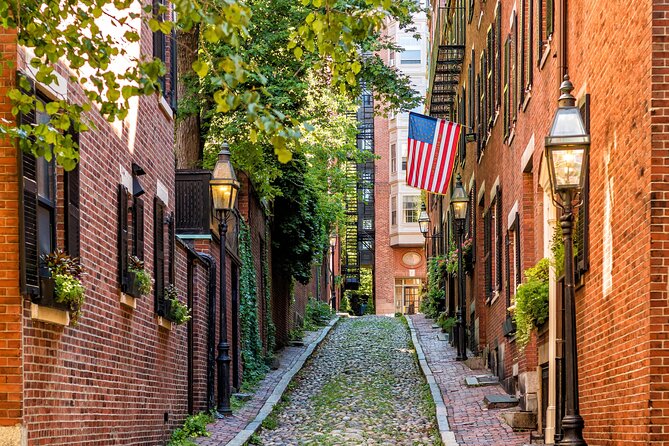
Early on, you get Beacon Hill’s famous cobblestones and tight alley feel. Acorn Street is the classic narrow, winding lane where the buildings seem to lean toward each other. On a tour like this, it’s more than a photo stop.
Your guide uses streets like these to set up contrast. Beacon Hill can look elegant and curated from the outside. But that same neighborhood held multiple communities, including enslaved people, abolitionists, and African-American residents pushing for rights in public and private spaces.
A good moment to pay attention here: how the tour links physical layout to social history. When you understand where people lived and gathered, you understand why certain actions mattered. Even without dramatized reenactments, the stories land.
Phillips School: from whites-only schooling to early integration
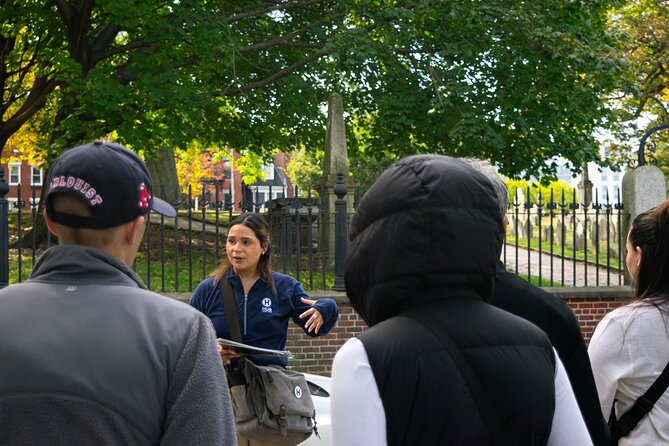
Next comes Phillips School, tied to the painful reality of segregation. The building was originally built in 1824 as a whites-only school. By 1855, Boston had integrated it among the first major steps toward schooling rights in the city.
This stop is powerful because it’s concrete. Schools are where children absorb what society will and won’t tolerate. Seeing this location after you’ve walked through the more “romantic Boston” streets helps the lesson stick: progress wasn’t abstract. It happened in specific institutions, with specific dates, and it often came after hard pressure.
You’ll also notice the tour doesn’t treat abolition like a single moment. Instead, it shows change as a long, contested process.
John J. Smith House: abolitionist politics, beyond the myths
Then you move to the John J Smith House, connected with an abolitionist, state legislator, and former barber. That mix matters. A lot of the popular storytelling about abolition focuses on famous national names, but Boston’s fight involved local organizers who worked ordinary jobs, built networks, and used political channels.
This is one of the tour’s best “why it matters” moments. When you hear about someone like John J Smith, you start seeing abolition as community leadership, not just moral speeches. People had roles. They had influence. They had ways to act.
Beacon Hill made that possible because many key figures lived close together, and debate happened in meeting houses, on the street, and through public institutions.





Charles Street Meeting House: one building, a public argument over integration
Charles Street Meeting House is a major stop for the social side of the story. The meeting house dates to 1807 and becomes the site of a contentious debate over racial integration.
This is where the tour goes beyond “safe house” history into the harder question: what did it cost to insist on equal treatment? Integration wasn’t simply welcomed. It was fought over, publicly.
Standing at a meeting house also helps you picture how ideas spread. In a city like Boston, discussions weren’t limited to salons. They happened where people gathered, argued, and decided. If you’ve ever wondered how activism worked before social media, this is one of the clearest local answers you’ll get.
66 Phillips St: the Underground Railroad safe house connection
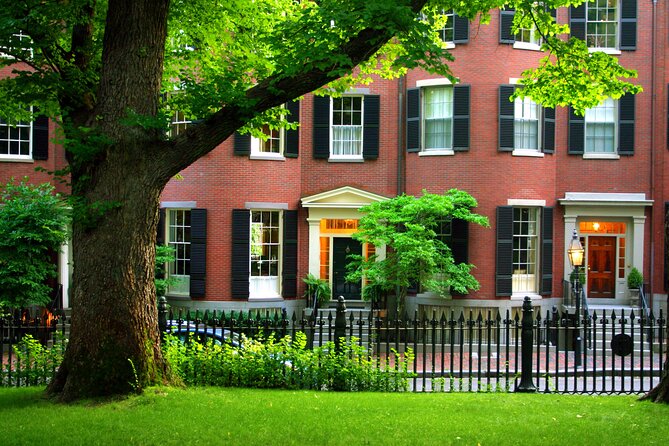
One of the most memorable stops is at 66 Phillips St, tied to an Underground Railroad safe house owned by the Haydens. The Haydens were staunch abolitionists who were formerly enslaved.
This is the moment where the tour earns its name. You’re not just hearing about abolition in theory. You’re hearing about refuge—about hiding, shelter, and the real danger of helping people escape bondage.
The tour keeps it grounded by tying the safe-house story to a broader abolition network in Beacon Hill. That matters because escape efforts didn’t happen in isolation. They relied on people who were willing to risk everything and communities that could absorb that risk.
Otis House and Asher Benjamin: politics and architecture as power
You then pass Otis House, an 1796 residence of Harrison Gray Otis, a Boston mayor. His ties to the wider revolutionary story connect Boston’s earlier era to its later battles over slavery.
Nearby, you also hear about an 1806 church designed by noted architect Asher Benjamin. Architecture can feel like “background” on a walking tour, but here it becomes a clue. Who had money, who had influence, and who shaped public space—these details help you understand how different social groups coexisted in one neighborhood while pushing against each other.
This section is subtle, but it helps you connect the dots: abolitionists weren’t the only powerful people in Beacon Hill. They were surrounded by competing priorities, and activism meant fighting inside that reality.
African Meeting House: admission included and worth your time
The tour includes time at African Meeting House, which is the cultural center of Boston’s African-American community. It’s also described as the oldest extant black church building in the United States, dating to 1806. Admission is included here, so you can go inside.
This stop tends to be a turning point. Outside, you can see buildings and imagine the past. Inside, you feel how long communities have held onto faith, leadership, and education in the same place through enormous pressure.
If you care about the human side of history—music, worship, organization, family ties—this is where your understanding stops being purely political. It becomes personal.
5 Pinckney St and the Revolutionary War thread
You also visit 5 Pinckney St, noted as the oldest extant house in Beacon Hill from 1787. This home was associated with an African-American Revolutionary War veteran.
This is a key tour move: it refuses to treat Black history as something that starts in the 1800s. The Revolutionary War thread helps you see the long record of claims to citizenship and belonging. It’s also a reminder that abolition didn’t happen in a vacuum. People had already fought for rights and recognition, then fought again when the struggle resumed after the war.
In other words, the Underground Railroad story here is part of a longer arc of resistance.
Ending at the Robert Gould Shaw and 54th Regiment Memorial
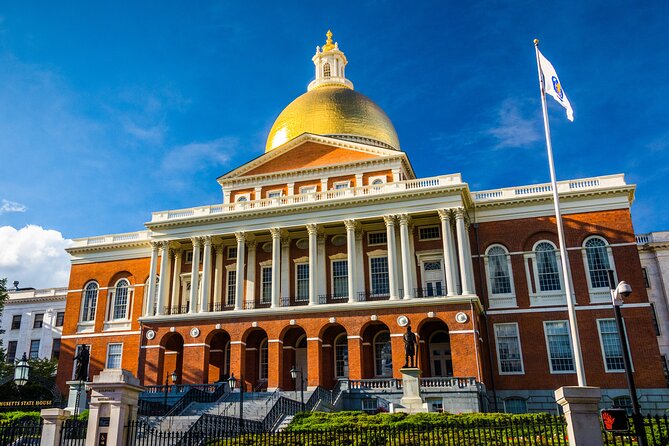
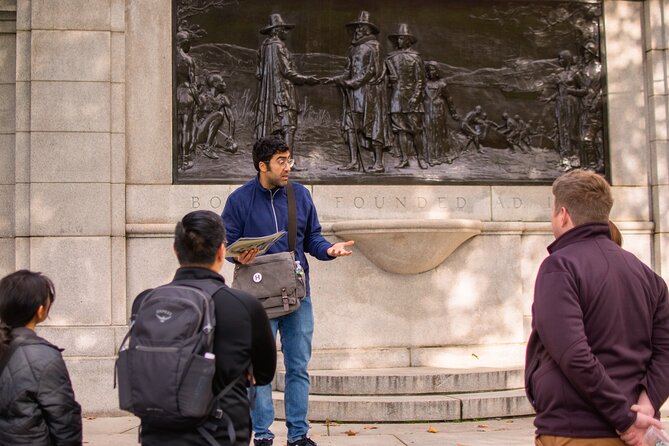
The tour concludes across from the Massachusetts State House, in front of the Robert Gould Shaw and the 54th Regiment Memorial opposite 24 Beacon Street. This final stop gives the story a strong forward push into the Civil War era.
Robert Gould Shaw’s name is often used in national conversations, but this is where the tour connects it back to Boston’s role: the abolitionist climate, the political arguments, and the courage that fed into the larger war effort.
It’s a good finish point because the memorial sits in an obvious, civic setting. You wrap up with the sense that the story doesn’t belong in the past. It belongs in how you understand the present.
Price and pace: value for your time in Boston
At $35 per person for about 2.5 hours, this tour is priced like a focused walk with real access to places you can’t easily connect yourself. Most of the stops are free to view from outside, but the African Meeting House has admission included, which helps balance the ticket cost.
The real value, though, is the guide’s role in linking places to decisions and dates. You’re not paying just for the location list. You’re paying for interpretation—how a school becomes a symbol, how a meeting house becomes a courtroom, and how a house number becomes a lifeline.
About pace: expect a moderate fitness level requirement. Beacon Hill includes hills and uneven surfaces, and there will be standing and walking between stops. Most of the route runs on foot with multiple short pauses, but it still adds up.
My practical advice is simple: wear shoes you can walk on for hours, bring water, and plan to be a little slower than you would on flat city streets.
Who this tour is best for (and who should skip it)
This is ideal if you want Boston’s Civil War-era story told through local Black activism, not just famous national events. If you like seeing how abolition showed up in schools, churches, and debates over integration, you’ll feel rewarded.
It’s also a good pick if you want a smaller-group experience. With a cap of 16 guests, you get more space for questions and less time feeling like you’re rushing from one plaque to another.
If your group struggles with hills or you have trouble standing for extended periods, this one may feel like a grind. The route is described as not recommended when standing is difficult, so it’s worth choosing another option with a flatter walk if mobility is an issue.
Should you book this Beacon Hill Underground Railroad History Tour?
Yes, if you want a high-impact, foot-powered history lesson that stays grounded in specific Black heritage landmarks. This tour does an excellent job connecting the Underground Railroad to the broader Civil War era, and it anchors the story in places like African Meeting House and 66 Phillips St.
I’d especially recommend booking if you care about how people argued for integration and how community leadership operated in daily life. It’s not only about escape routes. It’s about the long effort—public and private—that made escape possible.
FAQ
How long is the Boston Underground Railroad History Tour of Beacon Hill?
It’s about 2 hours 30 minutes.
What is the price per person?
The tour costs $35.00 per person.
Where does the tour start and end?
It starts at Soldiers and Sailors Monument on Tremont Street near Boston Common (139 Tremont Street area) and ends at the Robert Gould Shaw and the 54th Regiment Memorial across from the Massachusetts State House (26 Beacon Street area).
How big is the group?
The tour is limited to a maximum of 16 travelers.
Is admission included anywhere?
Yes. Admission is included for the African Meeting House stop. Other stops are listed with free admission.
What language is the tour offered in?
The tour is offered in English.
What should I bring or expect for the walking portion?
Expect a lot of walking on Beacon Hill, including hills and uneven surfaces. Wear comfortable shoes, and plan for standing during stops. Service animals are allowed.