REVIEW · ROME
Cleopatra & the Women of Ancient Rome Tour: Livia, Agrippina…
Book on Viator →Operated by Storytelling Rome Tours & Walks · Bookable on Viator
Rome feels different when women drive the story. In this 2.5-hour walk across Rome’s ancient core, the guide connects Cleopatra and other empresses to the exact ruins around you, using clear narration and modern comparisons. I liked how the tour reads like a sequence of connected scenes, not a dry list of dates.
I especially enjoyed the small group size (maximum 20), because it keeps the pace lively and lets you ask questions without getting lost in the crowd. You also get enough time at several stops to actually look around—Forum views included—before the next chapter starts.
One drawback to keep in mind: a few segments are brief, so if you love lingering to photograph every corner, you’ll probably want to build in extra free time before or after the tour.
In This Review
- Key highlights you’ll feel fast
- What you’re really paying for at $46.96
- Where the tour starts and how it ends (so you can plan the rest)
- Stop 1: Piazza del Campidoglio and the Forum view with Julia Domna and Vestal Virgins
- Stop 2: Arco di Giano for a Palatine Hill perspective and layered Rome
- Stop 3: Foro di Cesare and the Temple of Venus Genetrix recreations with Cleopatra
- Stop 4: Tempio di Portuno as a quick archaeological pause
- Stop 5: Teatro di Marcello, Octavia, and the Columna Bellica spear-in-blood moment
- Stop 6: Il Portico di Ottavia and Livia’s role as the tour’s final lesson
- The guide style that makes this work (and what you should expect)
- Who this tour is best for
- After the tour: what to do in the Jewish Quarter
- Should you book Cleopatra & the Women of Ancient Rome?
- FAQ
- How long is the Cleopatra & the Women of Ancient Rome tour?
- How much does it cost?
- Where does the tour start and end?
- Do you need an admission ticket for the stops?
- Is it a small group tour?
- Can I cancel for a refund?
- Should you book this women-of-Ancient-Rome walking tour?
Key highlights you’ll feel fast
- A Cleopatra-focused story told from Roman power dynamics, not just the usual clichés
- Small-group pacing (max 20) that keeps the narration snappy and interactive
- Forum-area viewpoints from Piazza del Campidoglio, plus quieter angles near Palatine Hill
- Recreations in the street, including what you’re seeing in ruined sites and the Columna Bellica moment
- A women-led timeline that expands beyond Cleopatra to figures like Vestal Virgins, Julia Domna, Agrippina, and Livia
What you’re really paying for at $46.96
At $46.96 per person for about 2 hours 30 minutes, this tour isn’t about museum entry fees. Most stops are admission ticket free, so your money mostly goes toward interpretation: a guide who can turn broken stone into stories you can follow.
That matters, because Rome’s Forum-and-empire area can feel like a blur if you’re wandering on your own. Here, you get a guided line through the chaos. The guide ties women’s lives to political decisions, public rituals, family alliances, and propaganda-style moments—then points you to the exact spot where each story plays out.
And the value gets better because the group is capped at 20. In practice, that usually means you spend less time waiting and more time hearing what you came for.
You can also read our reviews of more tours and experiences in Rome.

Where the tour starts and how it ends (so you can plan the rest)
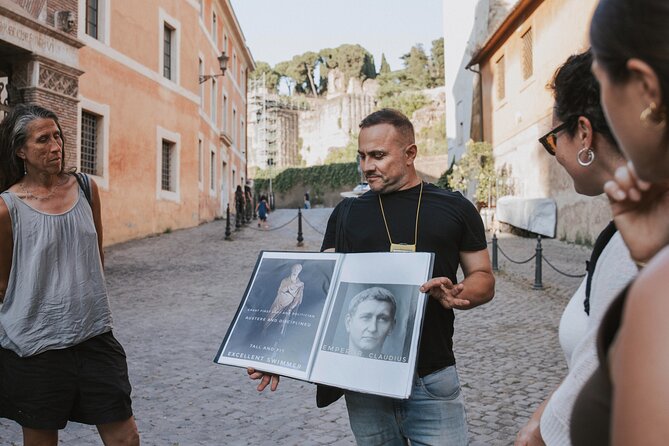
You meet at Via dei Fori Imperiali, 1, 00186 Roma RM and finish at the Portico of Octavia, Via del Portico d’Ottavia 29, 00186 Roma RM. The tour ends in the Jewish Quarter, which is a smart place to continue your evening with restaurants and wine bars.
A practical bonus: there’s a big taxi stand only about a 2-minute walk from the finish area. So if you want a relaxed dinner without battling public transport connections, you can do that.
Also, it’s a mobile ticket experience, which is one less thing to manage while you’re juggling sunscreen, water, and all the cobblestones Rome loves.
Stop 1: Piazza del Campidoglio and the Forum view with Julia Domna and Vestal Virgins
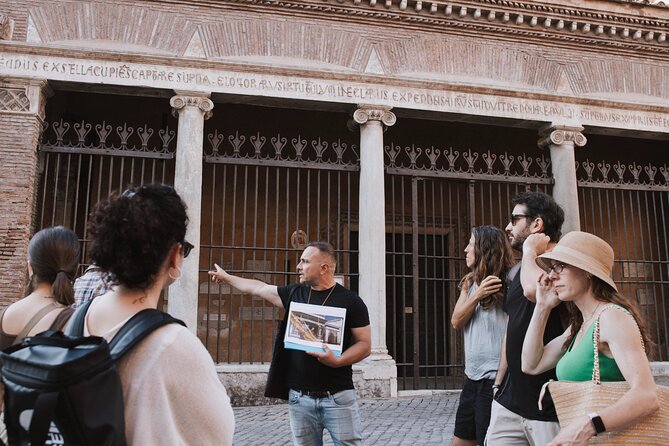
You start at Piazza del Campidoglio, one of those Roman viewpoints that makes everything snap into place. From here, you look down over the Roman Forum, and the guide uses that visibility to set the stage—then explains how women weren’t just background characters in the empire.
This stop is where you hear about Empress Julia Domna and the Vestal Virgins. The Vestals aren’t just an interesting footnote here. The tour’s framing includes their role around Rome’s sacred flame, and it’s delivered with enough drama and clarity that you can feel why this group held real weight.
What I like about starting here:
- It gives you context immediately, before the route gets more specific.
- The view helps you understand how power was displayed in public spaces.
What to watch for:
- Take a few seconds at the viewpoint before you listen too hard. Let your eyes map what you’re hearing.
Stop 2: Arco di Giano for a Palatine Hill perspective and layered Rome
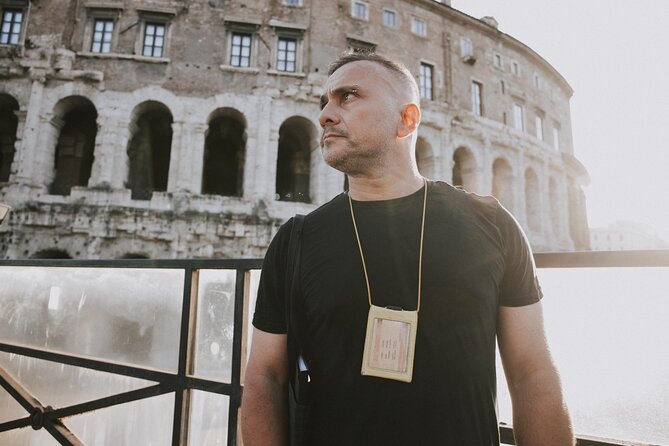
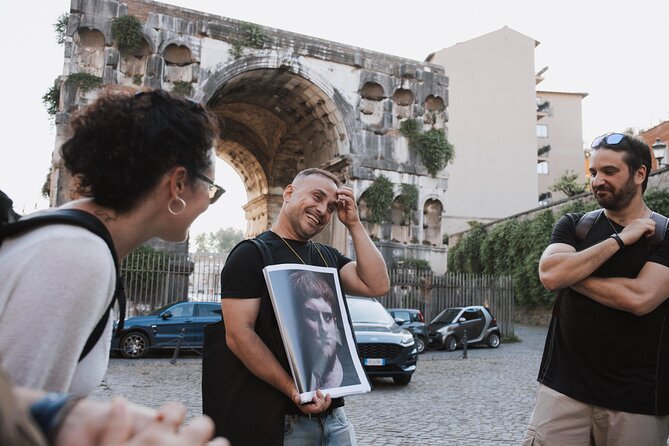
Next comes Arco di Giano, a square-and-angles kind of stop rather than a single-famous monument. This is where the tour earns points for showing you Rome from a less obvious angle.
From here, you get a unique perspective of Palatine Hill, and the guide builds a timeline around what you can see nearby. You’ll also hear about a cluster of eras sitting side by side:
- the Arco degli Argentari (3rd century AD)
- the Temple of Hercules (2nd century BC)
- San Giorgio al Velabro (13th century)
This stop works well because Rome’s ruins can look like random leftovers if you don’t learn how to read them. Here, you’re trained to see the city as a stack of different moments—ancient, later ancient, and medieval—overlapping in one viewpoint.
If you’re the type who likes photos, this is one to slow down for. The “angle” is the attraction, not just the subject.
Stop 3: Foro di Cesare and the Temple of Venus Genetrix recreations with Cleopatra
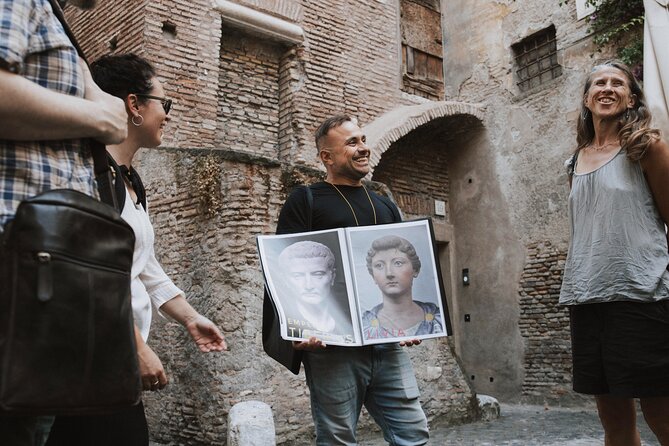
Now you’re in the heart of the story: the Foro di Cesare area. The guide focuses on the Temple of Venus Genetrix, a temple commissioned by Julius Caesar, and shows visible ruins alongside recreations of what it once looked like.
Then the tour pivots into Cleopatra.
What makes this section especially memorable is how the guide treats Cleopatra as a political actor. Instead of leaning on femme fatale stereotypes, the narration includes her rise to power, her use of Roman political support, and even her influence on fashion in Rome—all while keeping the details grounded in the place you’re standing.
In other words, you’re not just learning who Cleopatra was. You’re learning how power and image worked together in Rome.
A practical note:
- This is a great time to pay attention to the recreations. If you tune out for 30 seconds, you might miss the link between the ruins and the story the guide is building.



Stop 4: Tempio di Portuno as a quick archaeological pause
At Tempio di Portuno, the tour gives you a short stop—listed as about 10 minutes. It’s essentially a moment to reset and look at the archaeological surroundings as more than set dressing.
This segment is valuable because it breaks the momentum. After Cleopatra-and-political-staging energy, you get a brief chance to take in the remains and let the earlier story land.
Because it’s short, don’t treat this like a free extra break to wander. Use it to look closely while the guide is still talking, then move on with the narrative.
Stop 5: Teatro di Marcello, Octavia, and the Columna Bellica spear-in-blood moment
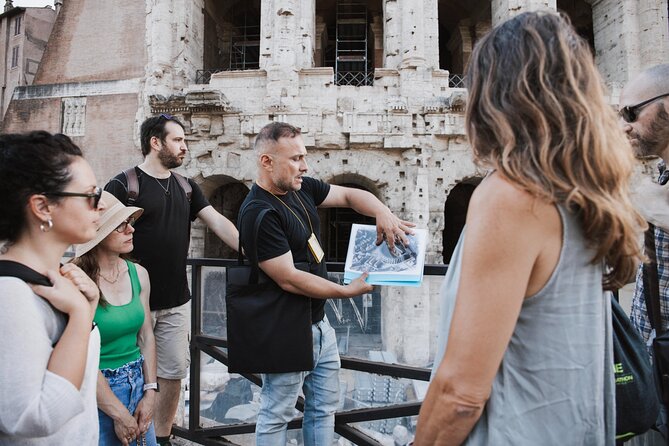
Then you hit Teatro di Marcello, a major storytelling pivot. Here the tour connects a family story to imperial conflict.
You’ll hear about his mother, Octavia, who was married off to Marc Antony, and the emotional consequence of that marriage becomes part of how Rome’s political world functions.
The other big centerpiece at this stop is the Columna Bellica recreation. The guide walks you through the symbolism of the column and the dramatic moment when Emperor Augustus threw a spear dipped in blood against it to signal that Rome was going to war against Cleopatra.
That’s the kind of scene that history tours often skip, because it’s dramatic and you’d rather keep things clean. Here, it’s used to explain how the empire communicated war, legitimacy, and obedience in a way ordinary people could understand.
If you like your history with cause-and-effect, this stop delivers.
Stop 6: Il Portico di Ottavia and Livia’s role as the tour’s final lesson
The tour concludes at Il Portico di Ottavia, where Empress Livia takes the final spotlight. Livia is presented as the wife of Emperor Augustus, and as a figure known as the first First Lady in Western history.
The tour’s structure builds toward this ending: you’ve seen women connected to ritual power (Vestal Virgins), imperial presence (Julia Domna), dynastic politics (Octavia), and Cleopatra’s strategic rise. Livia lands as the last piece in a bigger pattern: women shaping Rome from the center of authority, not only from the margins.
It’s a strong close because it shifts from dramatic events to long influence—how image, household power, and official standing can matter for generations.
The guide style that makes this work (and what you should expect)
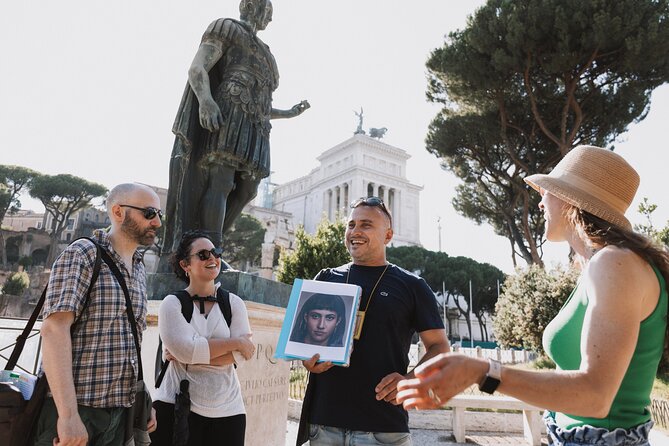
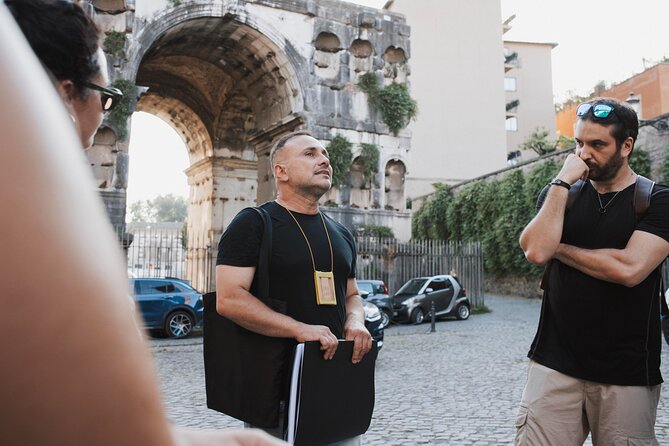
This experience is one of those tours where storytelling is the product, not an added bonus. In the comments, Massimo comes up repeatedly for linking scenes so it feels like a story unfolding, with enough humor and personality to keep attention from drifting.
The pacing also gets praised as well-controlled. Stops don’t drag. They’re timed so you can look, listen, and move without feeling exhausted—though you are still walking an ancient city, so comfy shoes are non-negotiable.
One more nice detail: there’s mention of a bathroom/beverage break, plus the possibility of adding a break for a glass of wine if you want it. That’s not the kind of thing you get on every history tour, and it can make a big difference if you’re touring during warmer parts of the day.
Who this tour is best for
I think this tour is a great fit if you:
- want a different angle on Rome, with women at the center of the story
- like tours where the guide explains the psychology and politics, not just names and dates
- enjoy small-group experiences and don’t want to feel like you’re being herded
- want the Forum area without the usual crowds and museum bottlenecks
It also seems like it works for families in at least some cases. One parent described how the guide kept a 5-year-old engaged for over two hours, which says a lot about the narration style.
If you’re the type who only enjoys deep archaeology reading time, you might find some stops feel short. This is a story-driven route, not a slow archaeological seminar.
After the tour: what to do in the Jewish Quarter
Finishing at the Portico of Octavia puts you in a food-friendly zone. You can keep the evening simple: grab dinner nearby, then wander at a slower pace.
If you’re deciding whether to end the night in that area or head back toward your hotel, this layout is convenient. You’ve got restaurants and wine bars close to the finish, and a taxi stand nearby if you want to avoid another complicated transit plan.
Should you book Cleopatra & the Women of Ancient Rome?
Book it if you want Rome explained through women’s power and political survival, with a guide who treats the city like a stage and the ruins like clues. The small group size, the smart Forum-area viewpoints, and the guided recreations (Temple of Venus Genetrix, Columna Bellica) make it feel worth it even if you’ve visited Rome before.
Skip it only if you strongly prefer long, silent time in ruins or indoor museum-style pacing. This is built for narrative flow, and some stops are brief by design.
FAQ
How long is the Cleopatra & the Women of Ancient Rome tour?
It lasts about 2 hours 30 minutes.
How much does it cost?
The price is $46.96 per person.
Where does the tour start and end?
It starts at Via dei Fori Imperiali, 1, 00186 Roma RM and ends at the Portico of Octavia, Via del Portico d’Ottavia 29, 00186 Roma RM.
Do you need an admission ticket for the stops?
The stops listed are marked as admission ticket free.
Is it a small group tour?
Yes. The maximum group size is 20 travelers.
Can I cancel for a refund?
Yes. Free cancellation is available up to 24 hours in advance for a full refund.
Should you book this women-of-Ancient-Rome walking tour?
If you’re curious about Cleopatra but also want the larger picture of how women shaped power in ancient Rome, I’d book it. The price is reasonable for a guided, story-led 2.5-hour walk, and the small-group setup makes it easier to stay connected to what the guide is pointing out.