REVIEW · ROME
Colosseum and Palatine Hill: Unveil Rome’s Ancient Spectacles
Book on Viator →Operated by ROMA IN TOURS · Bookable on Viator
Rome’s ancient power is still here.
This Colosseum and Roman Forum tour is interesting because it pairs big-ticket ruins with the stories that explain why Rome mattered in the first place. I like how the Colosseum portion is built around the amphitheater’s original Flavian story, not just photos, and I also like the stop on Palatine Hill, which connects the founding myth to where emperors lived. The main drawback to plan around: it is a shared group experience (up to 24), so you may feel a bit herded when crowds are heavy.
You’ll move through three classic sites in about two hours, with admission tickets handled for you and a guide telling the through-line from marketplace square to imperial spectacle. Expect timed entry, a set meeting point at Via di S. Giovanni in Laterano, and a guide-led pace that’s ideal if you have limited time. Just keep your day flexible, because if your selected slot isn’t available, you can be moved to another time on the same day.
In This Review
- Key things I’d focus on before you go
- How the Colosseum and Forum Loop Works in Two Hours
- Entering the Colosseum: Vespasian, Titus, and What You’re Really Seeing
- Roman Forum on the Via Sacra: Marketplace to Power Center
- Palatine Hill: Romulus and Remus, Plus Emperor Residences
- Tickets, Timing, and the Group Reality (Mobile Entry Included)
- The best part of the guide experience (and what you should expect)
- Value for Money: Is $162.19 a good deal?
- Who should book this tour, and who might prefer another plan
- Getting more out of your 2 hours (simple, practical moves)
- Should you book this Colosseum and Palatine Hill tour?
- FAQ
- How long is the Colosseum, Roman Forum, and Palatine Hill tour?
- Where does the tour start and end?
- Is this tour private?
- What language is the tour offered in?
- What tickets are included?
- Do I need a passport or ID to enter?
- What happens if my chosen time isn’t available?
- Is there a mobile ticket?
- Is food included?
- What is the cancellation window for a full refund?
Key things I’d focus on before you go
- Reserved Colosseum entry and booking help so you’re not wasting time hunting tickets.
- Via Sacra storytelling that links triumph parades and emperors to the street you’ll walk.
- Palatine Hill context so you understand why this hill sits at the heart of Rome’s myths and residences.
- 3-stop route in ~2 hours which works well for first-time visitors.
- Shared group reality (up to 24) where questions can be harder during busy moments.
How the Colosseum and Forum Loop Works in Two Hours
This is a tight, structured Rome day: Colosseum first, then the Roman Forum, and finish on Palatine Hill. The total time is about two hours, with roughly 40 minutes at each stop, so the tour is designed for momentum instead of wandering.
You start at Via di S. Giovanni in Laterano, 14 (00184 Roma), and the tour ends back there. It’s near public transportation, which matters in Rome where timing and walking distances can make or break your plan.
Also, this is not a private tour. Your group can be made up of 1 to 24 people, and that affects the experience more than you might expect: more people means tighter movement, fewer chances to ask follow-up questions, and sometimes more noise in the key viewpoints.
You can also read our reviews of more tours and experiences in Rome.
Entering the Colosseum: Vespasian, Titus, and What You’re Really Seeing
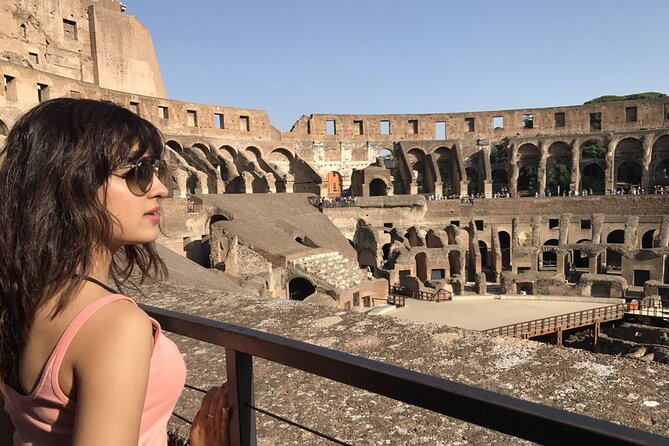
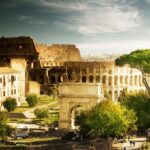
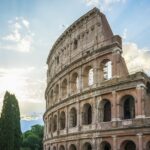
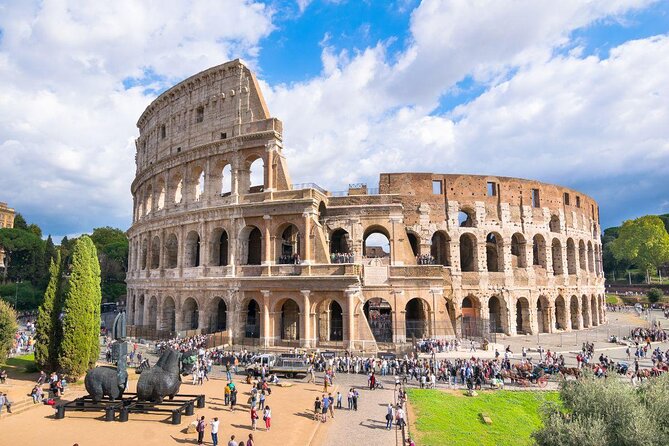
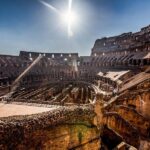
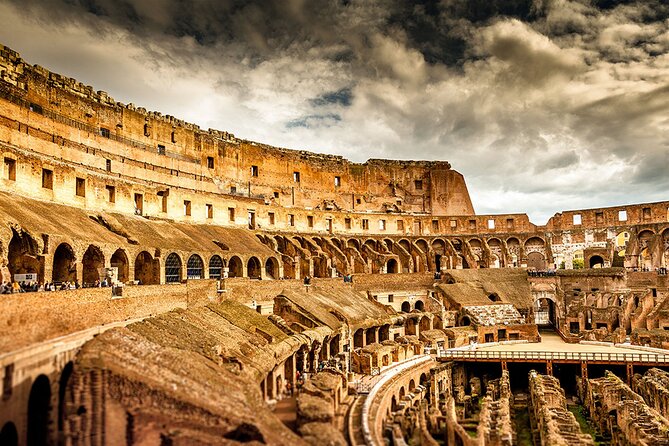
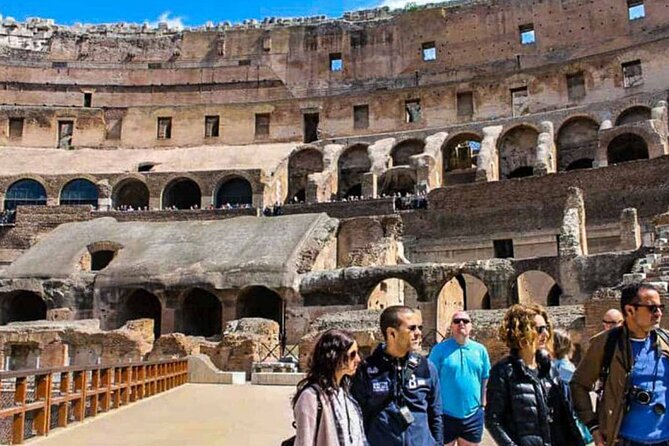
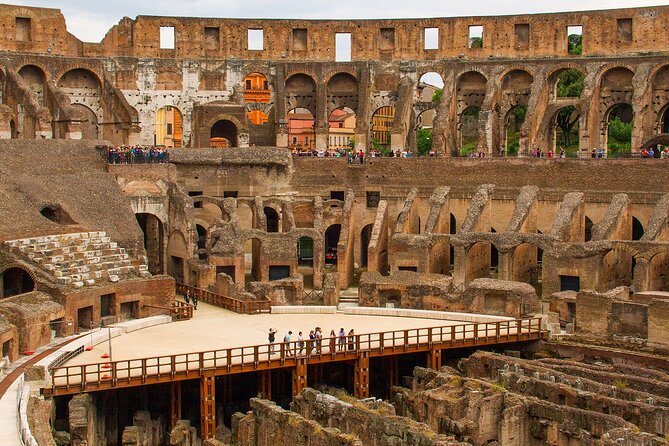
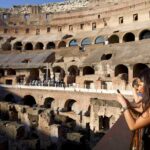
The Colosseum is the headline for a reason. It was originally called the Flavian Amphitheater (in Latin, Amphitheatrum Flavium), and it’s the largest Roman amphitheater in the world, with a spectator capacity often estimated between 50,000 and 87,000.
The story the tour focuses on is the Flavian timeline. Construction began under Vespasian in 70 AD and was completed by Titus, who inaugurated it on April 21, 80 AD. Later changes happened under Domitian in 90 AD, so you’re not just looking at an old ruin—you’re looking at a building that evolved through reigns.
Here’s what to watch for as you’re there: even in its damaged state, the structure reads like engineering. It’s meant for crowd movement, layered viewing, and spectacle. A guided explanation helps you “read” the building instead of treating it like a giant background set.
A practical bonus: the tour includes Colosseum entry and a reservation fee, so you’re not starting from scratch when lines and ticket checks are intense. That’s one of the biggest reasons timed tours can feel worth the money in Rome.
Roman Forum on the Via Sacra: Marketplace to Power Center
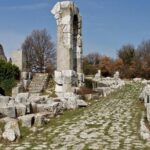
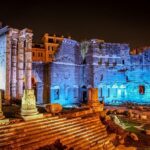
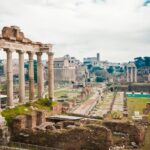
After the amphitheater, the tour shifts from entertainment to politics and religion—right where the Romans lived their public lives. The Roman Forum (Foro Romano in Italian) is a rectangular forum surrounded by ruins of major government buildings at the center of the city.
This space started as a marketplace, and people called it the Forum Magnum, or simply the Forum. Standing in the middle of the ruins, it’s easy to assume everything is just “ancient stone,” but the guide’s job is to turn it into a place with roles, routines, and big decisions.
One of the most valuable parts is the walk along the Via Sacra, the main street of Ancient Rome. This is where emperors and generals paraded after victories—think Augustus and Hadrian—so you’re walking a route tied to public triumph, not just a scenic stroll.
The tour also includes access inside key areas and monuments, including the old Senate, dwellings of the Vestal Virgins, the Temples of Vesta, Septimius Severus, and the Triumphal Arches of Titus. The tour description frames these as bewildering but true, and that’s exactly what you want in a Roman Forum visit: clear, believable connections between what you see and what people used these spaces for.
One consideration: the Forum can be crowded and spread out, so your 40 minutes can feel fast. Go with the mindset that the tour is selecting the best “readable highlights,” not covering every single ruin in the area.
Palatine Hill: Romulus and Remus, Plus Emperor Residences
Many tours treat Palatine Hill like a quick stop. This one doesn’t have to, because Palatine Hill is where myth and elite power overlap.
Palatine Hill towers over the Roman Forum and the Circus Maximus, and it’s famous for imperial residences. Even from a distance, you can see remnants of palaces that were once home to emperors. The hill also includes sites tied to temples, so it’s not only about living there—it’s about how sacred and political life intertwined.
Most importantly, Palatine Hill connects to Rome’s origin story. The tour points you to the myth of Romulus and Remus, helping you understand why this hill became a symbol of the city’s beginnings. Without that thread, Palatine Hill can feel like “more ruins on a hill.” With it, you get a map for your imagination.
In terms of value, this stop is a smart way to make Rome feel like one place, not three disconnected tickets. You go from spectacle (Colosseum) to civic ritual (Forum) to the origin story and elite living (Palatine Hill).
Tickets, Timing, and the Group Reality (Mobile Entry Included)
What you get included is a big part of the decision. Your tour price covers a certified guide, plus entrance tickets for Palatine Hill and the Roman Forum. It also covers Colosseum admission valued at €18 per person and the Colosseum reservation fee valued at €2 per person.
You’ll receive a mobile ticket, and an online consultant sends boarding information ahead of time. There’s also online support at the time of boarding, which matters when you’re trying to meet the group in a city where the details can be fiddly.
One rule you must take seriously: each traveler must present a valid passport or identification document that matches the name used at booking to enter the Colosseum and Roman Forum. Don’t assume they’ll be flexible if you’ve got a different spelling or a different document than expected.
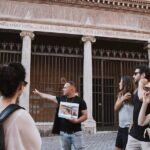
Also, plan for group behavior. With up to 24 people, it can get loud, and it can limit questions. If your style is very interactive—asking lots of follow-ups mid-walk—go in expecting that you may need to wait for brief pauses, or ask the guide after you’ve heard the main explanation.
Finally, timing changes can happen. If your chosen time isn’t available, you may be transferred to another time on the same day, and those changes can be outside the tour operator’s control. For last-minute bookings, if there are not enough seats, you may be placed on the day following the reserved date. My advice: don’t stack two tours back-to-back with tight timing.
The best part of the guide experience (and what you should expect)
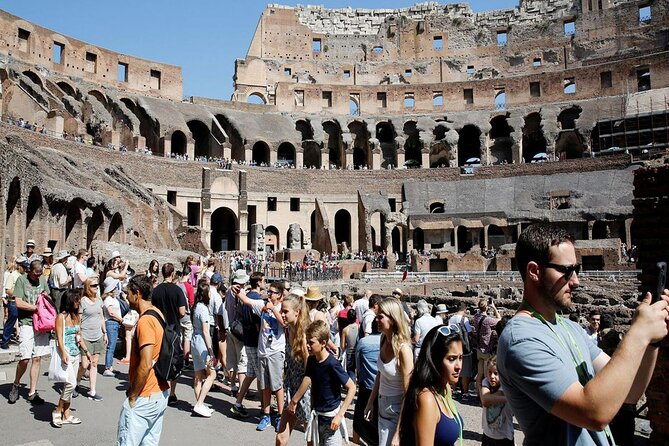
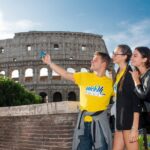
A good guide can make the Colosseum and Forum feel like a living timeline instead of a pile of stone. The positive feedback I’ve seen here is that some guides bring the stories clearly and in strong English, and the tour vibe can feel friendly rather than rushed.
One specific name mentioned is Francesca. The comments about her highlight excellent English and a pleasant, upbeat approach that makes the experience easier to follow. That kind of guide presence matters because these sites are huge and concept-heavy. If you get a guide who explains how Roman life worked, your time flies by in the best way.
On the other hand, not every group setting feels the same. If you end up in a larger group, you might struggle to ask questions, and you could feel the pace is less conversational. If you’re sensitive to crowd energy, you’ll probably enjoy this most at a time slot that’s less peak-demand.
Value for Money: Is $162.19 a good deal?
$162.19 per person is not cheap, especially if you compare it to buying individual tickets. Here’s how to judge the value in a realistic way.
First, you’re paying for more than entry. You’re paying for a guide to connect the dots between the Colosseum, the Roman Forum, and Palatine Hill in about two hours. You’re also paying for the reservation setup baked into the ticket costs (including the reservation fee on the Colosseum).
Second, in Rome, time has a cost. The Colosseum and Forum can involve queues and timed checks. A guided, reservation-based entry can save you stress even if you’re not saving minutes on paper.
Where the price might feel harder to swallow is if you’re mainly a self-wanderer. If you already know what you want to see and you prefer long independent pacing, you could spend less by booking tickets yourself and using a guide only where you want deeper explanation. But if you want structure, storytelling, and a clear route, this price starts to make more sense.
Who should book this tour, and who might prefer another plan
This fits best if you’re doing Rome for the first time and want the big ancient hits in one smooth loop. It’s also a solid match if you don’t want to spend your limited planning time figuring out how to enter three separate sites across scattered ruins.
You’ll likely enjoy it if you:
- Want a guided explanation during your limited visit time
- Like seeing famous monuments with context, not just photos
- Prefer a short, planned route over a long, self-guided day
It might not be ideal if you:
- Need a quieter, low-crowd experience (the group can be up to 24)
- Want lots of time to linger and ask many questions
- Have a schedule that cannot absorb a time change on the same day
If you qualify for a youth rate (students and children), you’ll need an ID with photo and proof of age.
Getting more out of your 2 hours (simple, practical moves)
If I were planning your day, I’d do three things to protect your experience.
Wear shoes you can stand in for a while, and bring a light layer if weather shifts. The route is outdoors and you’re moving between sites quickly, so comfort helps you stay focused on the stories instead of your feet.
Second, bring your identification document that matches the booking name. This is the kind of small detail that can cause a big delay at ticket checks, and it’s avoidable.
Third, come prepared to listen. These sites are dense with meaning—Vespasian and Titus in the Colosseum, the Via Sacra and major monuments in the Forum, and the Romulus and Remus context on Palatine Hill. If you try to “read everything” yourself at the same time you’re moving as a group, you’ll miss what the guide is doing for you.
Should you book this Colosseum and Palatine Hill tour?
Book it if you want a guided, timed route that hits the Colosseum, the Roman Forum, and Palatine Hill without you having to piece together the plan. The best-case scenario is exactly what the tour is built for: clear explanations, reserved entry comfort, and a story that connects Rome’s spectacle, civic life, and founding myth.
Skip or look for another format if you strongly prefer private, low-crowd guiding, or if your itinerary is too tight to tolerate a possible same-day schedule shift. Since it’s a shared group tour, you’ll want to set expectations early.
If you do book, do it smart: confirm your document details match, save the boarding info, and don’t pack another tour right after this one.
FAQ
How long is the Colosseum, Roman Forum, and Palatine Hill tour?
It’s approximately 2 hours total, with about 40 minutes at the Colosseum, Roman Forum, and Palatine Hill.
Where does the tour start and end?
The meeting point is Via di S. Giovanni in Laterano, 14, 00184 Roma RM, Italy, and the tour ends back at the meeting point.
Is this tour private?
No. It’s a shared tour with a group size of 1 to 24 people.
What language is the tour offered in?
The tour is offered in English.
What tickets are included?
Palatine Hill entrance, Roman Forum entrance, and Colosseum entry are included, along with a Colosseum reservation fee.
Do I need a passport or ID to enter?
Yes. Each traveler must present a valid passport or identification document that matches the name provided at booking.
What happens if my chosen time isn’t available?
If the chosen time slot isn’t available, you may be transferred to another time on the same day.
Is there a mobile ticket?
Yes. The tour includes a mobile ticket.
Is food included?
No. Food and drink are not included.
What is the cancellation window for a full refund?
You can cancel up to 3 days in advance of the experience for a full refund.