REVIEW · ATHENS
Corinth Canal, Ancient Corinth, Nafplio and Epidaurus Private Tour from Athens
Book on Viator →Operated by LS Tours · Bookable on Viator
Corinth on a private schedule is a rare mix: big ruins, huge views, and real Peloponnese towns in one long day. This tour strings together Corinth Canal, Ancient Corinth, and Epidaurus, with time built in so you’re not stuck sprinting from stop to stop. Two things I like a lot are the door-to-door pickup and the relaxed pace your driver can keep (including time for Nafplio), plus the air-conditioned ride with onboard WiFi. The main drawback to plan for is simply the length and heat: you’ll do some walking and climbing, especially around Acrocorinth and Palamidi.
You also get a practical “in-the-car to the site” education style. Your driver is fluent in English and can answer questions, but this isn’t a scenario where you’ll have a licensed guide inside every archaeological entrance. If you want someone inside museums with a formal credential, you may prefer a tour that includes a certified archaeologist guide.
In This Review
- Key highlights worth your time
- Corinth Canal, Ancient Corinth, and Epidaurus in one day
- Door-to-door pickup from Athens (and Piraeus)
- Corinth Canal: fast, scenic, and built for dramatic angles
- Ancient Corinth: where the Roman Odeon and Saint Paul connect
- Acrocorinth: the acropolis rock and the view payoff
- Archaeological Museum of Corinth: artifacts that make the ruins make sense
- Palamidi Castle and Nafplio: the view-and-lunch reset
- Sanctuary of Asklepios: medicine’s big turning point
- Epidaurus Theatre: the world-famous stage
- Epidaurus Archaeological Museum: reconstructions and columns
- Price and logistics: what you’re paying for (and what you still pay for)
- Who this private tour fits best
- Should you book this Corinth–Epidaurus private day?
- FAQ
- Is this tour private?
- What’s included in the tour price?
- What admission fees should I expect to pay?
- Will I have a licensed tour guide at the sites?
- Where does pickup happen?
- What if weather is bad?
Key highlights worth your time
- Corinth Canal viewpoints in a short, focused stop with big-isthmus views and dramatic limestone walls.
- Ancient Corinth plus Acrocorinth: temple ruins and the Acropolis rock above the city, both with free time to look around.
- Venetian-built Palamidi Castle on a 216-metre hill, for the payoff views over Nafplio.
- Asklepios and Epidaurus: the history of medicine meets one of Greece’s most famous theaters.
- Air-conditioned private transport with WiFi so you can actually recharge between stops.
Corinth Canal, Ancient Corinth, and Epidaurus in one day
This isn’t just a sightseeing loop. It’s a day that moves across a whole stretch of the Peloponnese—ancient city-state ground, a monumental engineering landmark, and then the healing-and-theater world of Epidaurus. If you’re short on time in Greece but want variety that still feels connected, this itinerary hits that sweet spot.
You start with a drive out of Athens, which matters because it sets you up for calmer site time instead of arriving late and stressed. Then the day builds toward the places that most people come to the Peloponnese for: Ancient Corinth, Acrocorinth, and Epidaurus.
And yes, you’ll pack a lot in. But because it’s private transportation, you’re not dealing with the squeeze of a big coach schedule.
You can also read our reviews of more tours and experiences in Athens.


Door-to-door pickup from Athens (and Piraeus)
The pickup part is one of the easiest wins. Your driver comes to your hotel lobby, meets you at your Airbnb entrance, or meets you at the Piraeus arriving area holding a sign with your name. That reduces the usual first-day hassle of figuring out meeting points while jet-lagged.
In the car, you’ll have bottled water, an air-conditioned vehicle, and WiFi onboard. That’s not just comfort—it’s practical for a long day, especially in warm weather when you’ll be outside.
A small consideration: because this is private, you’re tied to that exact schedule. If you’re the type who likes to linger endlessly over coffee in Athens, you’ll want to be ready to go when pickup happens.
Corinth Canal: fast, scenic, and built for dramatic angles
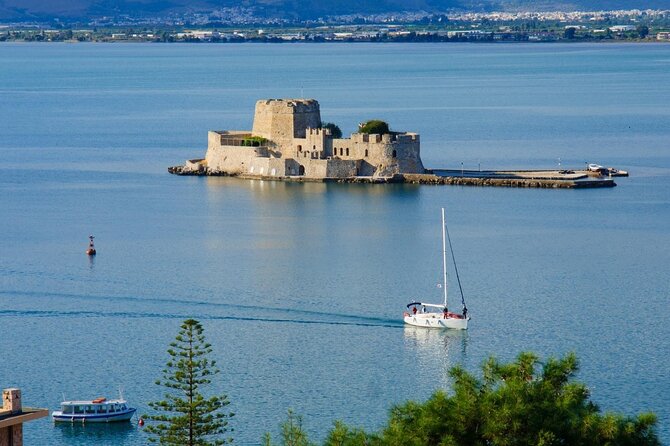
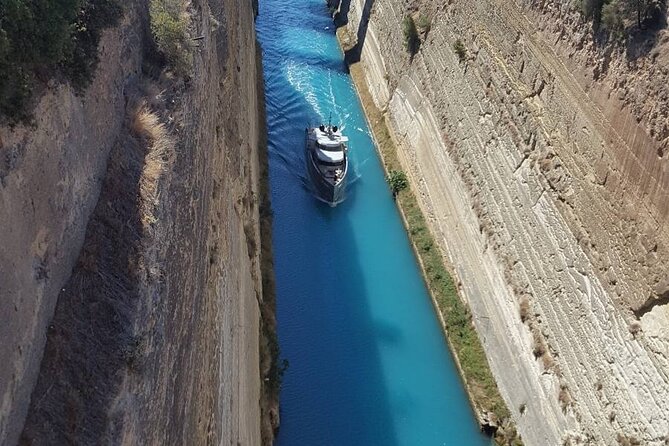
Your first real stop is the Corinth Canal area. The canal dates to 1893, and the point here is the visual scale: you look down toward the isthmus and take in the steep limestone walls. Even with a shorter time window, the setting does a good job of giving you context for why the canal became such a big deal.
Fifteen minutes isn’t about museum-style learning. It’s about getting your bearings fast and snapping photos from viewpoints that show the geography clearly.
If you’re the type who loves water-level engineering, you might wish you had extra time for a canal cruise. This specific tour keeps things short and then moves you on to the archaeological heavy hitters.
Ancient Corinth: where the Roman Odeon and Saint Paul connect
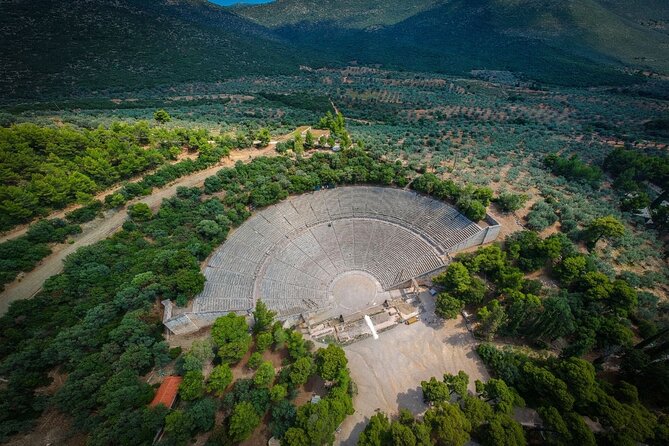
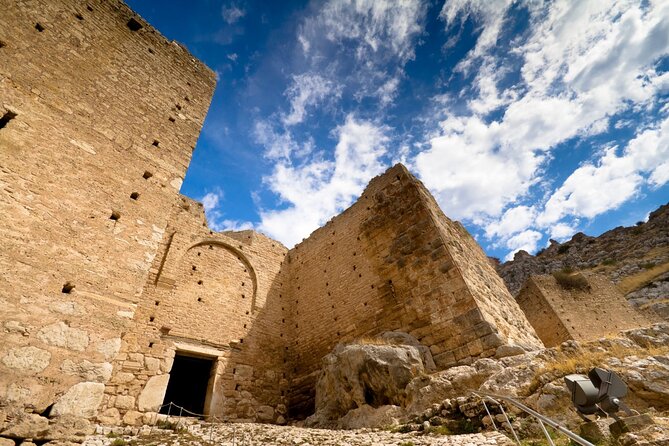
At Ancient Corinth, you’re stepping into the remains of one of Greece’s best-known city-states—an area set on the Isthmus, with mountains around it. You’ll typically see highlights tied to different eras, including the Temple of Apollo, the Bema of Saint Paul, and the Roman Odeon.
Forty-five minutes is enough to do two things well:
1) get a clear overview of the site layout, and
2) spend time where your interests land (religious history, Roman architecture, or just the sheer feel of walking through an ancient urban grid).
The site ticket isn’t included, so plan for the entry fee. Also, because you only have one mid-morning block here, don’t let yourself get stuck reading everything at a frantic pace. Pick a few structures, look at how they relate, then move on.
Acrocorinth: the acropolis rock and the view payoff
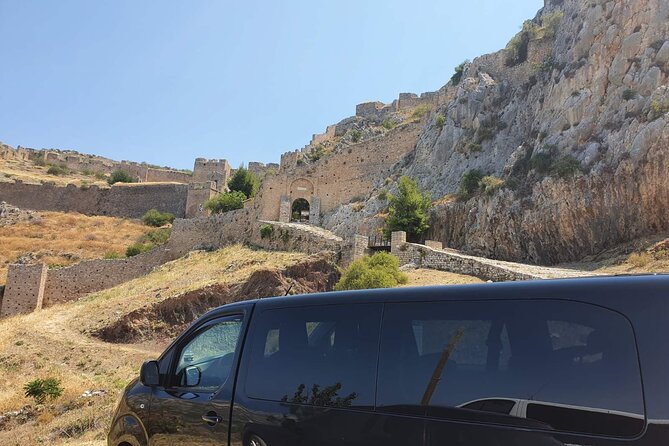
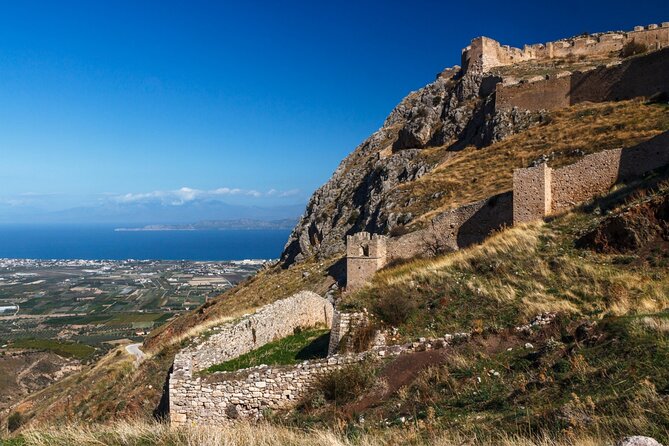
Next comes Acrocorinth, the acropolis of ancient Corinth—a monolithic rock overlooking the ancient city. This is the kind of place that rewards you for walking a bit: once you get up toward the viewpoints, you’ll understand the geography of Corinth much better than you can from a flat map.
You also get 45 minutes with free entry, so you can take it at your own speed. If your legs are in good shape, use this time to go slow and look around rather than rushing through for photos.
The main drawback is physical effort. Some visitors describe the climb as difficult, especially in hot weather. If your travel style is “comfortable walks only,” be ready to adjust. Ask your driver during the day if you should shorten the climb or pace it differently.





Archaeological Museum of Corinth: artifacts that make the ruins make sense
The Archaeological Museum of Corinth gives you the chance to connect objects to the ground you walked. You’ll spend about an hour here, and the museum focuses on collections from the local site and nearby smaller sites in the region.
This is where you’ll start seeing what people actually left behind—rather than only imagining how the monuments looked when they were whole. It’s a smart break from outdoors, especially if the sun is strong and you need shade.
Museum time can be a make-or-break factor on a long day. One hour is reasonable here: enough to feel you went, but not so much that you lose momentum for the afternoon sites.
Palamidi Castle and Nafplio: the view-and-lunch reset
After the museum, you head to Palamidi Castle in Nafplio. The fortress sits on top of a 216-metre hill, and it was built by the Venetians during their second occupation (1686–1715). Even if you don’t become an instant Venetian history expert, the site explains the strategic thinking of controlling the city from above.
Your time on Palamidi is about thirty minutes, and it’s mostly about the climb and the views over Nafplio. If you like panoramic lookouts, this is a top moment of the day.
Then you drop into Nafplio for free time—around ninety minutes to stroll and shop, plus time for lunch. This is a great place to eat without rushing. Nafplio gives you that classic southern Greece town feeling: narrow lanes, casual pace, and souvenir browsing that doesn’t feel like a trap.
Practical tip: bring water or make sure you top up after your castle climb. You’ll thank yourself later at the museum or theater stops.
Sanctuary of Asklepios: medicine’s big turning point
The Sanctuary of Asklepios is a short stop, about fifteen minutes. But it’s historically significant in a very specific way: this is connected to the story of medicine and the shift from belief in divine healing to more science-based thinking.
If you’ve ever wondered how ancient Greeks thought about health, this is a useful one-stop answer. Don’t expect a long guided tour here. Instead, think of it as a quick pause that changes how you interpret what comes next at Epidaurus.
Short stops are easy to skip. In this case, I’d still treat it as a highlight. It adds meaning, not just another ruin.
Epidaurus Theatre: the world-famous stage
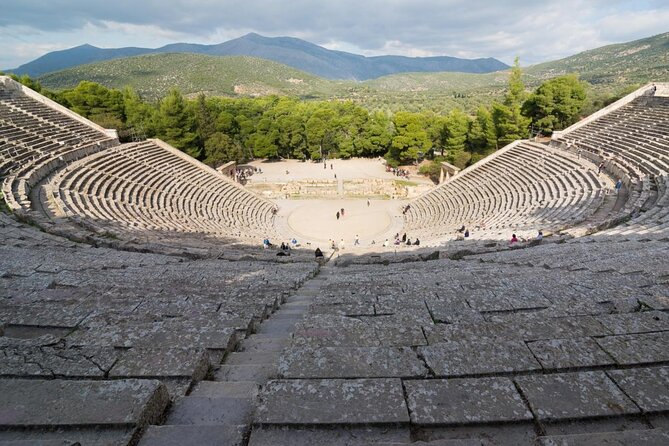
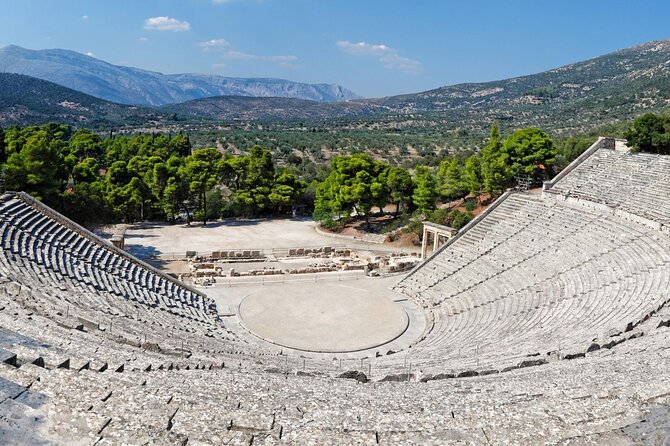
Then comes the Ancient Theatre of Epidaurus—one of the most popular archaeological sites in Greece and a UNESCO World Heritage listing. Your time here is about fifteen minutes, which again means: don’t try to do everything. Sit, look, and take in the scale.
The theater is famous for how it functions as a performance space. Even if you’re not a theater nerd, the way the seating and setting work together makes the site memorable fast.
This stop also tends to be a strong emotional payoff. Many people describe it as a high point of the entire day, and it’s easy to see why.
Epidaurus Archaeological Museum: reconstructions and columns
The Epidaurus museum stop is shorter, roughly thirty minutes, but it offers something a lot of ruin-only tours miss. The museum is noted for reconstructions of temples and columns, helping you picture what you’re looking at when you’re standing outside.
If you’re the kind of traveler who likes to understand context, this is a smart follow-up to the theater. It helps connect the site to larger structures rather than leaving you with only impressions.
Then you head back to Athens. You’re looking at about two hours of driving to finish your day.
Price and logistics: what you’re paying for (and what you still pay for)
At about $228.27 per person, you’re buying privacy plus comfort plus a planned route through a heavy list of major stops. You’re also getting a driver who provides English commentary and can answer questions during the day, even if they don’t enter the sites with you.
That driver-and-vehicle model is the heart of the value. You’re not paying for a licensed guide at every entrance, and that’s why the entry tickets matter.
Admissions are not included, and the provided fees you should budget for include:
- Ancient Corinth Archaeological Site/Museum: €20 per person
- Palamidi Castle: €20 per person
- Epidaurus Archaeological Museum/Theatre/Asklepios: €20 per person
You’ll also have additional site entry for other stops where admission is listed as not included, such as the Archaeological Museum of Corinth.
So the real total depends on how those additional tickets price out. But you can safely plan that the day has a solid base ticket cost on top of the tour price.
One more logistics point: your driver is not an official tour guide. They can explain and guide your understanding, but they won’t accompany you inside each archaeological site. If you want someone holding your hand through museum galleries, think about adding that elsewhere in your trip.
Who this private tour fits best
This tour is a great fit if you want a lot of classics without the stress of coordinating transport yourself. It’s especially good for:
- couples and small groups who want a relaxed, flexible pace
- first-timers who want Ancient Corinth plus Epidaurus in one day
- people who value onboard comfort for a long driving day
It may be less ideal if you have very limited mobility or hate climbing. Acrocorinth and Palamidi both involve effort, and some visitors specifically noted heat and difficult walking.
Should you book this Corinth–Epidaurus private day?
I’d book it if your priority is a smooth, private route that covers the big names: Corinth Canal views, Ancient Corinth, Acrocorinth, Nafplio, and Epidaurus. The standout value is that you get private air-conditioned transport with onboard WiFi and a driver who keeps the day moving without the rigid coach feeling.
I’d think twice if you want a licensed guide inside every site or if you know you’re sensitive to long, hot days with climbs. In that case, you might prefer a version that includes a certified guide through entrances, or you might plan a shorter itinerary.
FAQ
Is this tour private?
Yes. It’s a private tour/activity, and only your group participates.
What’s included in the tour price?
The price includes pickup, private transportation in an air-conditioned vehicle, WiFi on board, and bottled water. The tour is offered in English.
What admission fees should I expect to pay?
Admission fees are not included. The provided entry prices include €20 per person for Ancient Corinth Archaeological Site/Museum, €20 per person for Palamidi Castle, and €20 per person for the Epidaurus Archaeological Museum/Theatre/Asklepios. Other stops list admission as not included as well.
Will I have a licensed tour guide at the sites?
No. A licensed tour guide is not included. Your driver is not an official tour guide, but they are knowledgeable and can provide explanations in fluent English and answer questions about the places you visit.
Where does pickup happen?
Pickup is offered from your hotel lobby, from your Airbnb apartment entrance, or from the Piraeus port arriving area with a sign showing your name.
What if weather is bad?
This experience requires good weather. If it’s canceled due to poor weather, you’ll be offered a different date or a full refund.