REVIEW · BERLIN
Private Berlin WWII and Cold War History Tour with Local Expert Guide
Book on Viator →Operated by Friendly Local Guides · Bookable on Viator
Berlin has two timelines, side by side. This private walk links WWII ruins to Cold War borders in a way that feels human, not textbook. I love the flexibility a private guide brings (with standouts like Eleni and Dimitri), and I also love the simple rhythm of a currywurst break that keeps the story moving.
I’ll say one practical caution up front: it’s a long walking day (about 4 hours on paper, sometimes more in real life), and the subject matter turns very heavy fast. If it’s freezing, wear warm layers and expect a slower pace when you stop to take in memorials.
The good news is that the route mixes the big-name hits with a few quieter corners of Berlin, including the Palace of Tears and the UNESCO setting of Museum Island. You’ll get photo-ready views, emotional stops, and clear context for what you’re seeing from both eras.
In This Review
- What You’ll Remember Most
- Entering Berlin’s Two Eras: WWII to the Cold War
- Meeting on Oranienburger Strasse and Getting Your Bearings
- Jewish Berlin and the Divided City: New Synagogue and Centrum Judaicum
- The Palace of Tears: Cold War Design and Real Escape Pressure
- WWII Power and the Berlin Under Nazi Rule: Hitler’s Bunker
- Holocaust Memorial: Walking Through Memory, Not Spectacle
- Reichstag and Brandenburg Gate: Icons with a Lot of Edges
- Museum Island and Bebelplatz: When Berlin Shows Its Cultural Side
- Currywurst Breaks That Don’t Feel Random
- Checkpoint Charlie: The Cold War in One Crossing
- Mitte’s Quiet Corners: Missing House and Heckmann Höfe
- How Much Time It Really Takes (And Why Pace Matters)
- Value for the Price: What $129 Buys You
- A Note on Service Reliability
- Who Should Book This Tour
- Should You Book This Berlin WWII and Cold War History Tour?
- FAQ
- How long is the private Berlin WWII and Cold War History Tour?
- Where do we meet and where does the tour end?
- Is this tour private or shared with other groups?
- What language is the tour offered in?
- What’s included in the price?
- Are there any admissions or tickets included?
- Can the itinerary be customized?
- Is the tour mostly walking, and what fitness level do I need?
- Is free cancellation available?
What You’ll Remember Most
- A private guide who adjusts the pace so you’re not stuck dragging behind a big group
- Currywurst built into the route, not treated as an afterthought
- Palace of Tears and escape stories that make the Berlin Wall era click
- Checkpoint Charlie and the Holocaust Memorial, framed with care and context
- Museum Island and Gendarmenmarkt area architecture for a strong change of mood
- Mitte off-the-beaten touches like the Missing House and Heckmann Höfe
Entering Berlin’s Two Eras: WWII to the Cold War
Berlin can feel like a puzzle that never fully fits together—until someone puts the border line and the bunker story into one walk. This tour moves from WWII-era power and destruction into the Cold War’s divided-city reality, using landmarks you can actually see and stand in front of.
What I like most is the way your guide turns each stop into a “why this place matters” moment. You’re not just looking at stone and signage; you’re learning how Berliners lived with shifting control, propaganda, and fear.
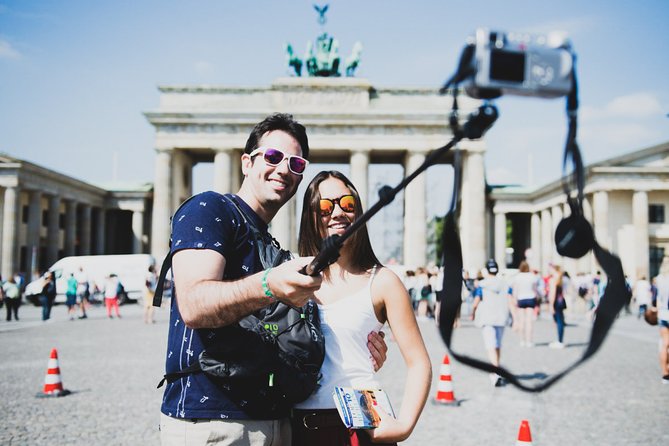
And yes, you’ll still get the famous sights—Brandenburg Gate, the Holocaust Memorial, Checkpoint Charlie—but the tour keeps returning to the human impact underneath the icons.
You can also read our reviews of more tours and experiences in Berlin.


Meeting on Oranienburger Strasse and Getting Your Bearings

You meet at Oranienburger Str. 28-30 in West Berlin. It’s a smart starting point because it’s central, it’s easy to reach by public transit, and it’s close enough to key areas that you can actually spend time walking the story instead of commuting between disconnected sites.
Because it’s private, you’ll set your tempo. Many guides in this program are praised for pacing—taking breaks, using shortcuts, and slowing down when people need it. One review even called out how a guide modified the route for someone in the group who couldn’t walk as well.
A small but important note: this is a walking tour. You should have moderate physical fitness, and you’ll want to dress for weather. In winter especially, the route can feel longer than expected if you also stop for photos.
Jewish Berlin and the Divided City: New Synagogue and Centrum Judaicum
The first real “context anchor” is the area around the Stiftung Neue Synagoge Berlin (Centrum Judaicum) and the nearby New Synagogue you pass on Oranienburger Strasse. Even if your focus is WWII and the Cold War, these stops matter because Berlin’s story isn’t only political. It also includes community life, memory, and rebuilding.
At Centrum Judaicum, the idea is about connection—linking past and future. For me, that’s a useful counterweight. You’ll be heading into darker ground later, and these moments remind you that Berlin wasn’t only a place of occupation and borders; it was also a place people tried to keep alive.
You’ll also get photo time where it makes sense. The New Synagogue’s striking Moorish architecture is one of those details that photographs well, even if you only get a quick glance before moving on.
The Palace of Tears: Cold War Design and Real Escape Pressure
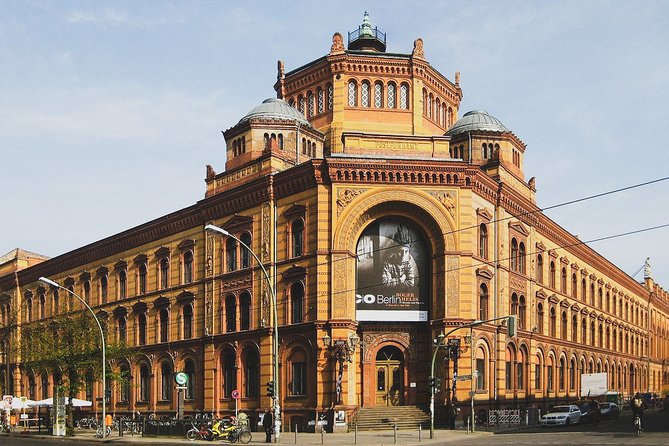
The Palace of Tears is one of the most memorable stops on the plan, and it’s not just because it sounds dramatic. It’s because it’s a preserved slice of a 1960s border world, complete with interior design details that help you imagine daily life in that era.
When you walk into the Palace of Tears, you step into a time capsule feel: the floor tiles, the wall clock, and the building’s interior “modern” aesthetic all do the job of making the Cold War tangible. This is where the tour’s divided-city story starts to feel less abstract.
Your guide uses the exhibition to explain the harrowing pressure of escape attempts—how residents tried to move from Russian-occupied East Berlin to Allied-occupied West Berlin. It’s heavy, but the focus is clear, and the stop helps you understand why Berlin’s border crossings were so charged.
WWII Power and the Berlin Under Nazi Rule: Hitler’s Bunker
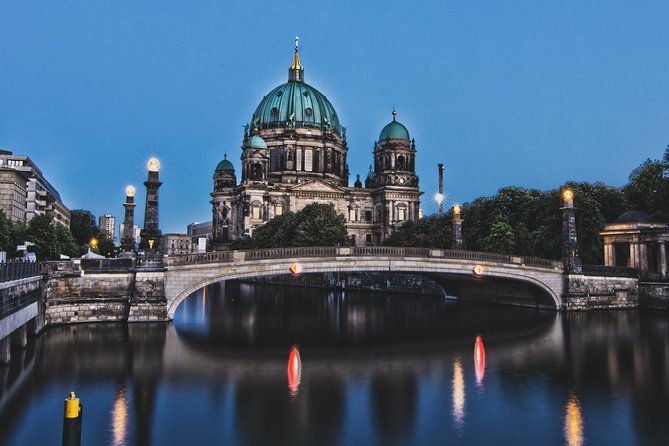
From Cold War flight stories, the route shifts back into WWII through sites connected to Hitler’s rise and the final days of the Nazi regime. The plan includes a visit to Hitler’s bunker, often called the Führerbunker.
This stop isn’t about spectacle. It’s about scale and collapse—how a regime built on control ended in ruin, and how that end shaped Berlin’s physical and emotional landscape.
If you prefer history that explains cause-and-effect, this is a good moment. Your guide can connect what you’ve just learned about propaganda and control to what comes next: how Berlin transformed after defeat, and how that transformation set the stage for the Wall era.



Holocaust Memorial: Walking Through Memory, Not Spectacle
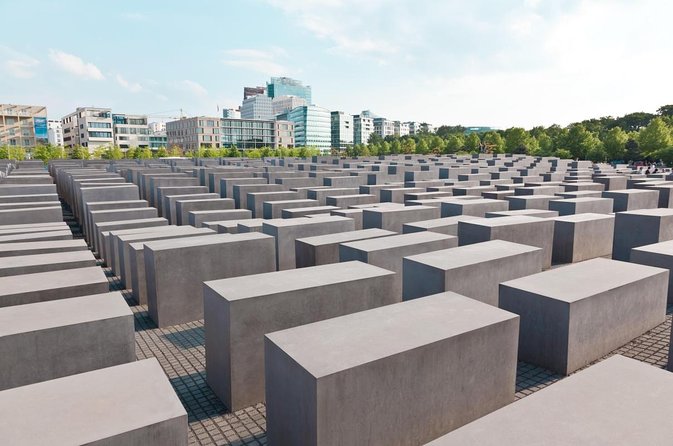
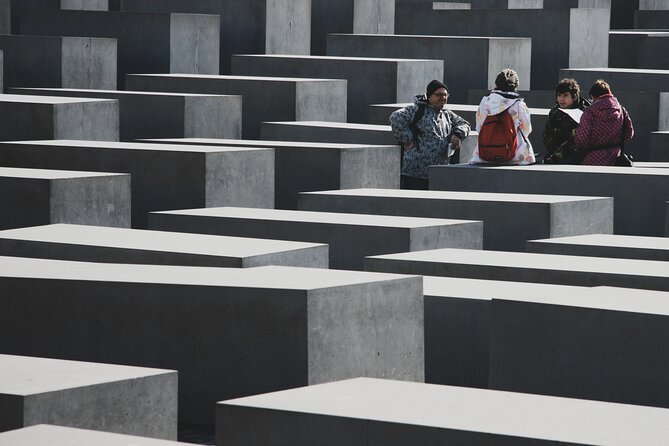
Next comes the Holocaust Memorial (Memorial to the Murdered Jews of Europe). It’s hard to describe without sounding like a cliché, but the experience matters because it’s meant to feel unsettling and sobering.
The plan has you wander the memorial area rather than just pass it. This matters. A quick stop turns it into a photo stop. A slower walk turns it into a remembrance space that hits differently.
Your guide’s job here is important: they help you understand what you’re seeing and why it’s designed the way it is. That context can be the difference between viewing it as an attraction versus absorbing it as warning and remembrance.
Reichstag and Brandenburg Gate: Icons with a Lot of Edges
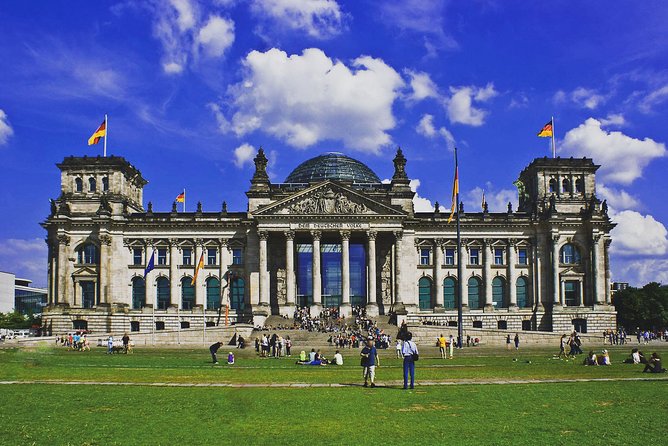
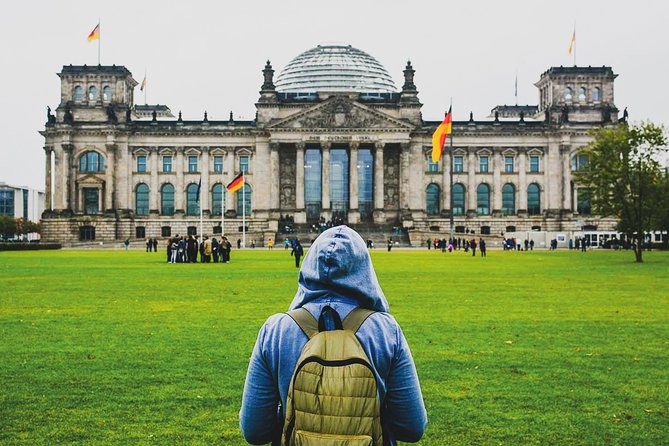
Then the tour brings you back into the big “Berlin postcard” category with major architecture and vantage points. The Reichstag Building is part of the route, as is Brandenburg Gate.
These are both classic stops, but your guide’s interpretation is what makes them useful for a first-time Berlin visit. With WWII and Cold War themes running through the whole walk, Brandenburg Gate stops being just a monument and becomes a symbol that keeps changing meaning depending on who holds power.
If you’re the kind of traveler who likes to understand what a city is telling you through its skyline, this section is a win. You’ll get photo time and the feeling that the modern city sits directly on top of its past.
Museum Island and Bebelplatz: When Berlin Shows Its Cultural Side
Right after more intense sites, the tour pivots toward Museum Island and Bebelplatz. Museum Island is UNESCO-listed and functions like a museum ensemble in its own right.
You’ll also learn about the Nazi-led book burnings tied to the area, which again connects culture and control. This is one of the tour’s best reminders: propaganda isn’t only political speeches. It’s what a regime decides to erase.
Bebelplatz also helps set that tone. It’s a handsome public square, and the history underneath it adds weight without turning the stop into a lecture. It’s a good contrast after memorial spaces.
If you enjoy architecture, this segment gives you a visual break while still staying on-theme.
Currywurst Breaks That Don’t Feel Random
One of the smartest choices in this tour is the inclusion of currywurst—twice in the route plan. Currywurst is one of Berlin’s most iconic street foods, and it works as a pacing tool.
You get a stop early enough that you’re not walking on empty energy, and later again near Wilhelmstrasse for a snack-and-rest rhythm. It’s included in the price, so you avoid the mental tax of deciding food plans mid-walk.
And in the reviews, this kind of practical pacing comes up often: rest stops, nearby cafés and drinks, and guides who know the best flow through the area. If you’re trying to see a lot without exhausting yourself, these snack moments help.
Checkpoint Charlie: The Cold War in One Crossing
Checkpoint Charlie is one of the most recognizable border crossing points from the Cold War, and the tour includes it for good reason: it’s emotional and instantly understandable.
But the real value comes from how it’s framed. With the Palace of Tears and escape story behind you, Checkpoint Charlie becomes more than a photo backdrop. It turns into a symbol of fear, surveillance, and the danger of trying to move between systems.
Your guide helps you interpret the site and connect it back to the divided-city reality you’ve been learning all day. Expect a moment that feels less like sightseeing and more like history with a pulse.
Mitte’s Quiet Corners: Missing House and Heckmann Höfe
Not every stop on the tour is on the standard first-timer checklist, and that’s a big part of why I think this works as an introduction to Berlin.
In Mitte, your guide points out little-known attractions such as the Missing House on Große Hamburger Strasse and the picturesque Heckmann Höfe. These places don’t carry the same “headline” status as the Holocaust Memorial or Brandenburg Gate, but they add something crucial: the sense that Berlin keeps rewriting itself.
The Missing House is especially thought-provoking because it turns absence into a visible reminder. That theme carries nicely across the whole walk, where destruction and division are both present.
And since the tour is private, you can spend a little longer at spots that grab you while moving past corners that don’t.
How Much Time It Really Takes (And Why Pace Matters)
The tour is listed at about 4 hours, private, and walking-based. In real life, the time you spend at each site and the number of photo stops can stretch it. One review noted a longer duration around 5.5 hours.
This isn’t a dealbreaker, but it does change how you should plan your day. I’d treat it as a half-day that may turn into a long half-day, especially in colder months or if your guide stops frequently for breaks and questions.
The best guides in this program are praised for exactly this: they manage pace, they use shortcuts, and they answer lots of questions without turning it into a chaotic sprint.
Value for the Price: What $129 Buys You
At $129 per person for a private 4-hour walk, the value is in the combination, not any single landmark.
You get:
- A private local guide focused on WWII and the Cold War
- A walking route that hits major sites like Checkpoint Charlie, Brandenburg Gate, and Museum Island
- Currywurst included, which cuts down on extra spend
- Built-in time for photos and off-the-beaten stops in Mitte
- Expert advice on what to do after the tour, which matters on day one
If you tried to DIY this route, you’d spend time figuring out where to go, how to connect the WWII and Cold War threads, and where the emotional sites fit into a coherent story. Paying for the guide is paying for that structure.
The one caution on value: if you already know Berlin’s major sites well, you may feel you’re paying mainly for narration and pacing. If this is your first time in Berlin, it’s much easier to feel the payoff.
A Note on Service Reliability
One review in the set described a guide not showing up at the meeting point and causing a missed day. The provider responded publicly that they issued a full refund and that the guide involved was no longer working with them.
This is rare, but it’s still worth reading as a shopper: if anything feels off, contact the provider promptly and don’t just wait endlessly at the meeting point. Most experiences are praised as smooth, but you deserve the basics of reliability.
Who Should Book This Tour
This private WWII and Cold War walk is ideal if:
- You want a first-time Berlin orientation that actually ties events together
- You like walking between sites and hearing what each place means
- You care about both WWII and the Wall era, not just one chapter
- You appreciate a guide who can handle questions and adjust pace
It’s also a good fit if you want built-in food (currywurst) and advice for what comes next after you’ve seen the headline places.
You might skip it if:
- You hate walking or you need long stretches of seating
- You’re looking for a light, casual sightseeing day. This route moves into very serious subject matter.
Should You Book This Berlin WWII and Cold War History Tour?
I’d book it if you want a guided, coherent Berlin story in one walking day. The mix of big icons and more personal, emotionally charged stops like the Palace of Tears and the Holocaust Memorial makes it more than a checklist.
Also, the private format is where this tour shines. Reviews highlight guides such as Dimitri and Eleni for pacing, tailoring, and clear explanations. If you’re the type who asks questions while you walk, you’ll likely feel well taken care of.
Just go in prepared for walking and for heavy moments. Wear warm clothes, bring good walking shoes, and give yourself permission to slow down at the memorial spaces.
If that sounds like your kind of day, this is a strong value way to understand Berlin’s past without feeling lost in it.
FAQ
How long is the private Berlin WWII and Cold War History Tour?
It runs about 4 hours.
Where do we meet and where does the tour end?
You meet on Oranienburger Str. 28-30, 10117 Berlin, Germany. The tour ends back at the meeting point.
Is this tour private or shared with other groups?
This is a private tour, so only your group participates.
What language is the tour offered in?
The tour is offered in English.
What’s included in the price?
Included are all fees and taxes, a private local expert guide and private walking tour, currywurst, and the option for a customizable itinerary. You’ll also get expert advice on where to go and what to do after the tour.
Are there any admissions or tickets included?
The plan lists admission tickets as free for the stops included in the route.
Can the itinerary be customized?
Yes, the itinerary can be customized to fit your interests and preferences.
Is the tour mostly walking, and what fitness level do I need?
It is a walking tour and you should have a moderate physical fitness level.
Is free cancellation available?
Yes, you can cancel up to 24 hours in advance for a full refund.