REVIEW · ATHENS
From Athens: Ancient Sparta and Mystras Private Day Trip
Book on GetYourGuide →Operated by Olive Sea_Travel · Bookable on GetYourGuide
Ancient Sparta hits different with Mystras beside it. This private day trip pairs Mystras’ Byzantine “ghost city” feel with a quick, dramatic stop at the Corinth Canal, so you’re not just touring ruins—you’re watching two eras overlap in one long, scenic day. The coast drive sets the tone too, with seaside villages and a look toward Salamis Island before the big history lands.
I especially like how the route keeps you moving between viewpoints and details. You get short, meaningful photo and walking windows, plus enough time at Mystras to actually follow the climb up to the citadel and the descent back toward the palaces and churches. And if you end up with an English-speaking host like Giannis, Panos, or Manos, the ride is often where the story glue holds everything together.
One consideration: much of the time at the sites is self-guided. Your driver is not licensed to walk into the sites and explain inside, and at least one departure has had the olive oil museum stop affected by closing hours, so it’s smart to be flexible about that final museum timing.
In This Review
- Key things to know before you go
- Athens to Laconia in one long, air-conditioned sweep
- Corinth Canal: a fast stop with big engineering drama
- Mystras: the Byzantine ghost city where daily life survived
- Climbing and pacing matters: Mystras Castle vs. the upper citadel
- Sparta: Leonidas, the ancient citadel, and the Spartathlon ending point
- Museums and the olive oil detour you should plan for
- What the $566 per person really buys you (and what you’ll still pay)
- How to make the day feel worth it: small choices that change everything
- Should you book this Athens-to-Sparta and Mystras day trip?
- FAQ
- Is this a private day trip?
- What’s included in the price?
- Do I need to pay entrance fees?
- Is there a licensed guide on site?
- How long is the tour?
- Are tickets handled ahead of time?
Key things to know before you go
- Mystras is bigger (and more layered) than it sounds, with medieval churches plus everyday house-and-palace remains in the same walled area.
- Corinth Canal is more than a photo stop: the pedestrian bridge gives you a real sense of scale and separation between regions.
- Stroll the “citadel to palaces” path at Mystras to connect towers, courtyards, and church spaces in the right order.
- Sparta is best if you arrive with a mindset for minimal ruins and use the orientation points you’ll see along the way.
- The olive and Greek olive oil museum is guided, but your day can still feel tight if it closes early.
- Private van comfort plus self-guided freedom is the core style here: you get control without the full guided tour cost.
Athens to Laconia in one long, air-conditioned sweep
This is the kind of day trip where the drive matters as much as the stops. You leave Athens in an air-conditioned van with hotel pickup and drop-off handled, and you’ll have bottled water for the ride. It’s a private group, so you’re not stuck matching your pace to strangers.
The route begins along the coast through Greek seaside villages, which is an underrated warm-up. You also pass by the area connected to Salamis Island, known for the naval battle between Athenians and Persians. It helps you shift mental gears from Athens’ spotlight to the wider stage of Greek history.
You’ll want to treat the day like a hike with seat breaks, not a museum crawl. Even though the itinerary is structured, you’re doing real walking at Mystras, and the timing between sites is tight enough that you should keep an eye on your shoes, water, and energy level.
You can also read our reviews of more tours and experiences in Athens.

Corinth Canal: a fast stop with big engineering drama
The Corinth Canal stop is brief, but it lands with visual impact. You’ll have about 15 minutes for photos and scenic views, including the pedestrian bridge where you can walk out and look down into the cut. The canal has been operating since 1892, and it divides the Peloponnese from the rest of Greece while linking the Saronic Gulf to the Corinthian Sea.
If you like big infrastructure moments, this is one of Greece’s clearest “how did they do that?” experiences. It’s also a useful mental anchor: after the coast drive and historical battles, the canal’s “separating line” makes the next stops feel more sharply defined.
Two small practical tips make this stop better. First, bring your phone battery saver on your day out—this is a photo-heavy stretch. Second, wear shoes with grip; you’ll be standing and moving around the bridge area more than you’d expect for a short stop.
Mystras: the Byzantine ghost city where daily life survived
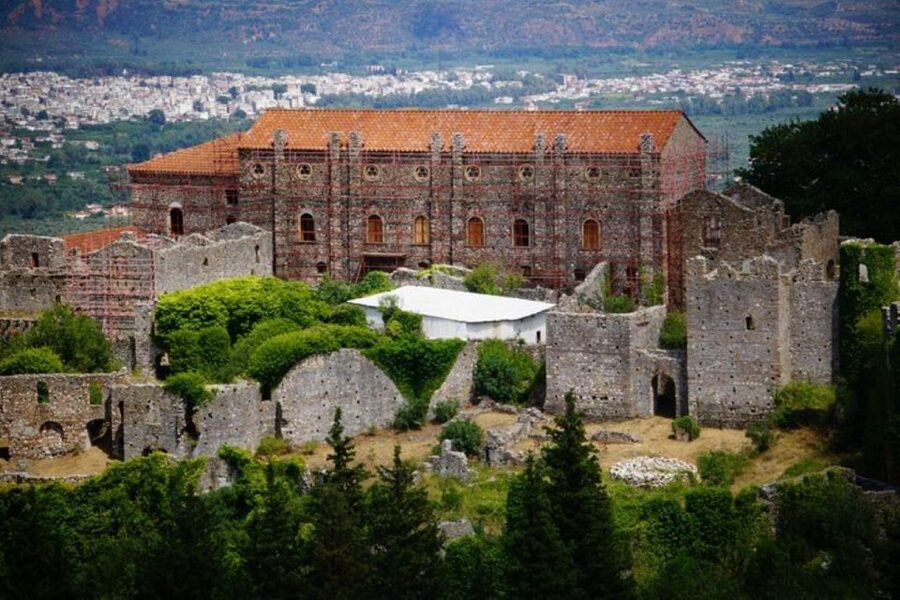
Mystras is the star of the day, and the “ghost city” nickname makes sense once you’re there. The site was fortified on a citadel and preserves medieval churches alongside ordinary houses, mansions, and palaces from the Byzantine Empire, with Frankish elements mixed in. In other words, it’s not just castles and temples—it’s a whole lived-in world frozen in time.
You’ll have a self-guided visit time at Mystras, plus extra time for the Mystras Castle area. The typical way to get your bearings is to start by moving upward toward the citadel for the big views, then walk downhill to meet the palaces and royal courtyards. That top-to-bottom flow helps you understand the site’s layout instead of treating it like random ruins.
A big plus for Mystras is that it still functions as a religious landscape. Even with the “ghost” vibe, many monasteries remain active, and monks may show you around their small society. That adds a living, human tempo to what could otherwise feel like an all-stone history lesson.
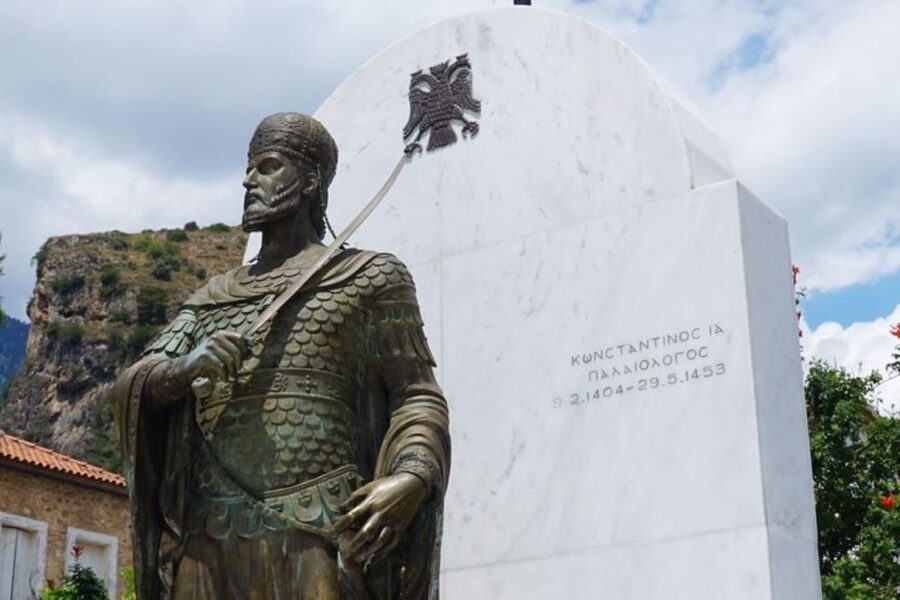
One of the most memorable moments you’ll likely look for is the chapel of St. Demetrios. On its floor, a plaque survives showing a two-headed eagle—Byzantium’s symbol. The story connected to that plaque is that Konstantine Palaiologos kneeled there before being crowned the last Byzantine emperor.
Because Mystras includes both steep walking and uneven stone paths, plan this part like an active visit. You don’t need to be an athlete, but you do want decent shoes, a hat, and patience for stairs and slopes. If you’re the type who enjoys reading small details on-site, you’ll probably lose track of time—in the best way.
Climbing and pacing matters: Mystras Castle vs. the upper citadel
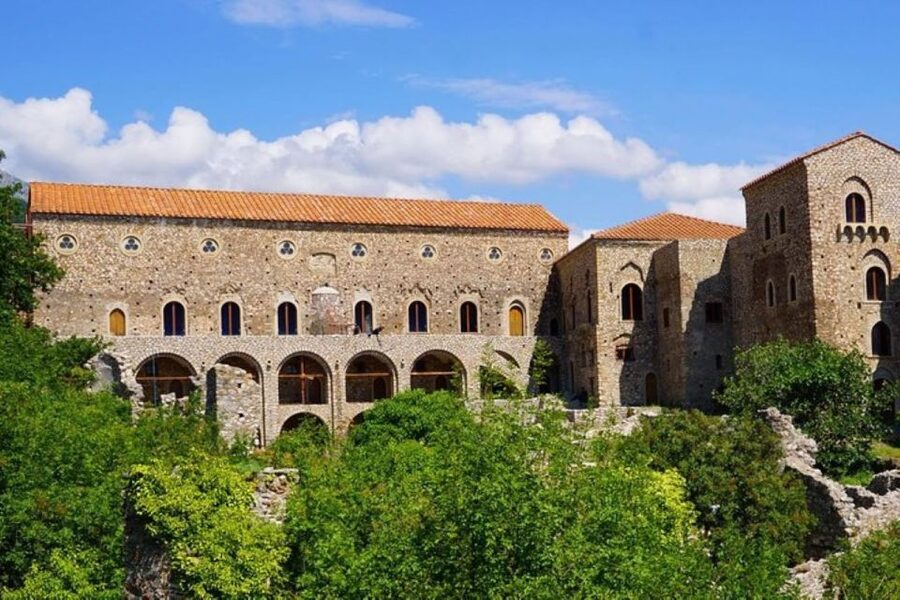
Mystras has enough physical variety that how you pace it changes what you get out of it. The upper areas give you scale and views, which help everything below make sense. The lower areas connect courtyards and palace spaces, which makes the Byzantine-French mix feel more real.
You’ll be doing this self-guided, so I suggest you set a simple goal. Pick one “through-line,” like church life, or fortifications, or the feel of courtly spaces. When you’re scanning the complex, that one goal keeps your brain from flipping between too many fragments.
Also, don’t underestimate how long you can spend just looking. The views from the citadel area aren’t just pretty; they help you understand why the fortress position mattered. That’s when the ruins start to feel less like leftovers and more like a system.
Sparta: Leonidas, the ancient citadel, and the Spartathlon ending point
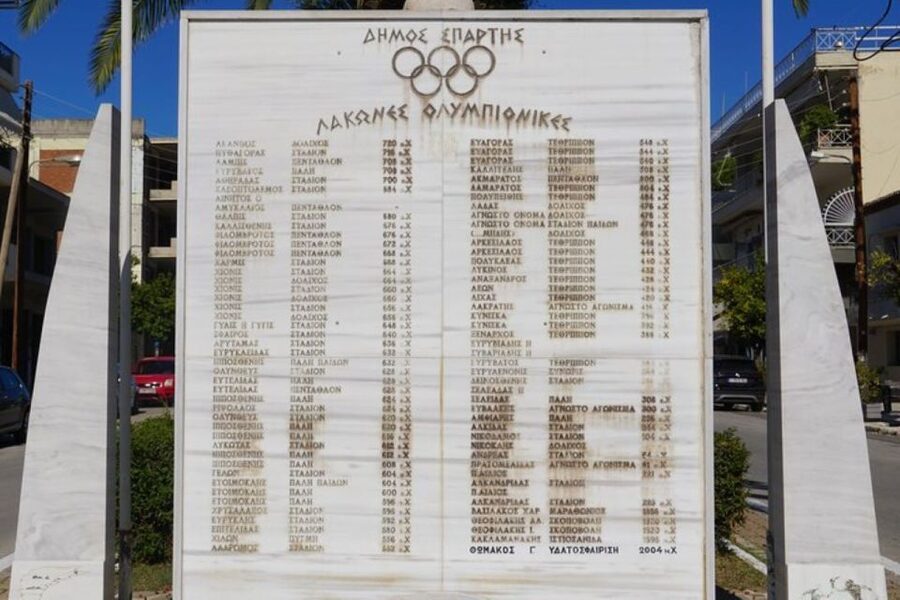
Sparta is a different kind of experience than Mystras. The “eternal rival” angle with Athens is part of the story, and the city’s reputation as a military society is central to how you read the ruins. You’ll also connect Sparta to major figures from Greek legend and history, including Leonidas.
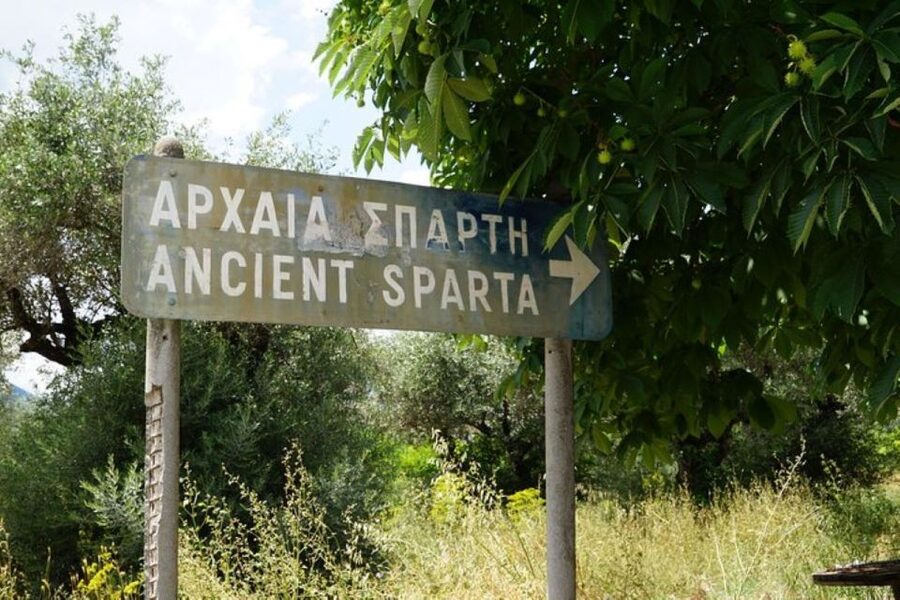
Your Sparta time focuses on key orientation points. You’ll visit the ancient citadel of Sparta where you can see the theater area gradually coming into view as you move through the site. That gradual reveal can help you feel the terrain rather than just stand and look.
Next comes the Leonidas Monument area for a quick stop, followed by time near the stadium. There’s a statue of King Leonidas that marks the ending point of the Spartathlon race, the long-distance Athens-to-Sparta route measured at 245.3 km. It’s a great example of how ancient spaces keep getting used, even when the original city is gone.
Here’s the balanced takeaway: Sparta’s remains can feel more minimal than what many people expect from a full-day ancient stop. Since much of the explaining is self-guided (your driver can’t provide site-by-site licensed commentary), you’ll get more value if you come with curiosity and a willingness to read what’s there.
If you’re a serious history nerd who wants the why behind every stone, consider adding a licensed guide. If you just want to walk the key spots and connect them to the larger Greek story, this portion can still be satisfying and not too demanding—just different.



Museums and the olive oil detour you should plan for
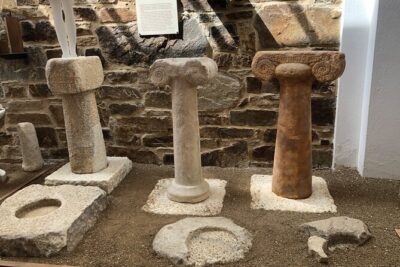
The tour includes a chance to visit the archaeological museum of Sparta. Museum time can be a great equalizer when the outdoors feels fragmentary, because it helps you connect artifacts to the architecture you saw earlier.
Then there’s the Museum of Olive and Greek Olive Oil, guided for about 30 minutes. Even if you’re not a food-history person, this is a useful way to leave with a sense of how everyday production fits into the broader Greek identity.
One caution based on real-world experience: the olive oil museum stop has had timing issues for at least one departure, with the museum reported closed as early as 3 pm. That doesn’t mean it will happen to you, but it does mean you should treat that final stop as schedule-sensitive. If it matters to you, I’d double-check the posted opening hours for the day you go, and be ready for the day to prioritize what’s available.
If the museum does run as expected, you’ll likely appreciate the guided format more than you’d think. A guided 30-minute block can turn a quick stop into a clear story, especially when your day is already packed with Mystras and Sparta walking.
What the $566 per person really buys you (and what you’ll still pay)
This private day trip is priced at $566 per person, and the value depends on what you want from the experience. What you’re paying for is the long-distance convenience from Athens, private van transport, pickup and drop-off, bottled water, and a driver who handles timing and coordination. You also skip the ticket line, which is one of those small upgrades that actually saves stress.
What isn’t included is important. Entrance fees are listed at €34 per person, and food and drinks are not included. There’s also the option for a licensed guide for €380 if you want someone who can go inside the sites with you and explain as you go.
So here’s my practical math in human terms. If you’re comfortable doing self-guided exploration at Mystras and Sparta, and you want a private driver without paying for a full licensed guide all day, the price can feel fair. If you want deep storytelling in every stop and you’re hoping for robust interpretive help inside each site, you’ll want to plan for the additional licensed-guide cost.
How to make the day feel worth it: small choices that change everything
You’ll enjoy this tour most if you come prepared to walk, not just look. Mystras is the biggest physical task, with uphill climbs and downhill wandering between areas. Sparta is more about orientation and short stops, but those pauses still add up over a long day.
Bring a simple kit. Comfortable walking shoes are non-negotiable, and I’d also carry water beyond what’s provided if you run hot easily. A hat helps too, especially if the day is bright.
Next, manage expectations about guidance. Since the driver is not licensed to accompany you into sites, you should plan to use signage and your own questions as you walk. If you want richer explanations, ask your driver what to focus on before you step into each major site area.
Finally, plan your energy around the order. Mystras comes first, and it’s the heavy-hitter. Treat the Sparta portion as a satisfying follow-up, not something you need to “complete” like a mandatory checklist.
Should you book this Athens-to-Sparta and Mystras day trip?
I’d book it if you want one day that connects ancient Greece and Byzantine Greece in a way that feels physical—uphill, downhill, fortress views, courtyards, and open-air ruin spaces. Mystras alone can justify the drive, and the Corinth Canal stop gives you a clean, dramatic palate cleanser between eras.
I’d think twice if you need a fully narrated, inside-every-site kind of tour. Because the driver can’t provide licensed site commentary, you’re relying on self-guided time, museum help, and whatever your host explains during transitions. If that structure sounds frustrating, add the option for a licensed guide and make the day more interpretive.
If you like history that you can walk through, and you don’t mind a schedule that’s tight but not rushed, this is a strong private day trip from Athens.
FAQ
Is this a private day trip?
Yes. It’s a private group experience with hotel pickup and drop-off and private transportation.
What’s included in the price?
The trip includes hotel pickup and drop-off, private tour arrangement, driver, transportation, and bottled water. Entrance fees, food, and drinks are not included.
Do I need to pay entrance fees?
Yes. Entrance fees are listed at €34 per person and are not included in the base price.
Is there a licensed guide on site?
Your driver is not licensed to accompany you into any site along the tour. A licensed guide can be requested for €380.
How long is the tour?
The duration is 1 day.
Are tickets handled ahead of time?
Yes. You skip the ticket line.