REVIEW · ATHENS
From Piraeus Port: Parthenon and Acropolis Museum Historical Tour
Book on Viator →Operated by Keytours - Greece · Bookable on Viator
Two ancient sites, one efficient port day. This guided Athens experience strings together the Acropolis and the Acropolis Museum with audio commentary, a small group pace, and skip-the-line help that saves your time. I like how the stops are arranged so you see the big icons first, then get the context that makes the stonework start to make sense.
The itinerary has one catch: the start can feel a bit logistically chaotic for cruise passengers. You might be shuttled and spend some time waiting before you’re moving, and some areas involve uneven, sometimes slippery steps with restoration happening on-site—so plan for that extra friction on a tight port schedule.
In This Review
- Key Points You’ll Care About
- From Piraeus Harbour to the Hilltop: What This Day Feels Like
- Theatre of Dionysus to the Odeon of Herodes Atticus
- Parthenon Viewing: How to Make the 30 Minutes Count
- Erechtheion and Caryatids: My Favorite Stop on the Hill
- A Break on the Acropolis: Views, Photos, and Reset Time
- Dionysiou Areopagitou: A Scenic Walk Back Toward the City
- Acropolis Museum Tour: Why the 1.5 Hours Changes Everything
- Price and Value: Is $127.03 a Smart Deal?
- Tips for Getting the Most From Your Day
- Should You Book This Piraeus Port Day?
- FAQ
- What time does the tour start from Piraeus Harbour?
- How long is the tour?
- Is this tour offered in English, and how many people are in the group?
- Does the tour include entrance tickets for the Acropolis and Acropolis Museum?
- Is the walking suitable for everyone?
- Can I cancel for a full refund?
Key Points You’ll Care About
- Skip-the-line access for Acropolis and Acropolis Museum helps protect your time in Athens
- Small group size (max 22) keeps the pace manageable and questions doable
- Audio devices for clear commentary mean you don’t miss the story while looking up
- A themed walk from the Theatre of Dionysus to the Odeon ties the day to performance and myth
- Museum guidance right after the sites helps you connect what you saw to what you’re looking at
From Piraeus Harbour to the Hilltop: What This Day Feels Like
This is a classic cruise-friendly route: you start at Piraeus Harbour at 9:00am, you get picked up from the cruise terminal, and you’re back after about 5 hours 30 minutes. The tour uses an air-conditioned vehicle, which is a big deal in Athens heat—especially when you’re hopping between sites and getting back out into the street.
Your driver is supposed to meet and greet you in the cruise ship terminal holding a sign that says KEYTOURS. That matters because finding the group at a port can be half the battle. Once you’re on the ground, the day becomes very “Athens”: lots of stairs, stone surfaces, and views that keep pulling your attention upward.
Two practical things to keep in mind. First, this day is efficient, not slow. Second, there’s restoration activity on and around the Acropolis that can affect sightlines and walking surfaces. I think that makes this tour even more useful: a guide can help you see what you came for even when scaffolding and temporary barriers show up.
You can also read our reviews of more tours and experiences in Athens.

Theatre of Dionysus to the Odeon of Herodes Atticus

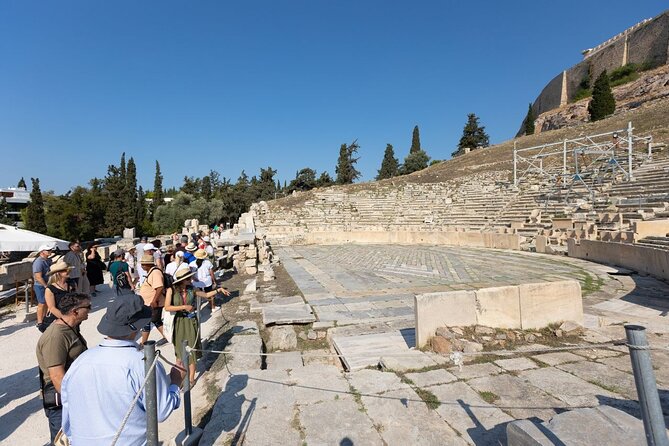
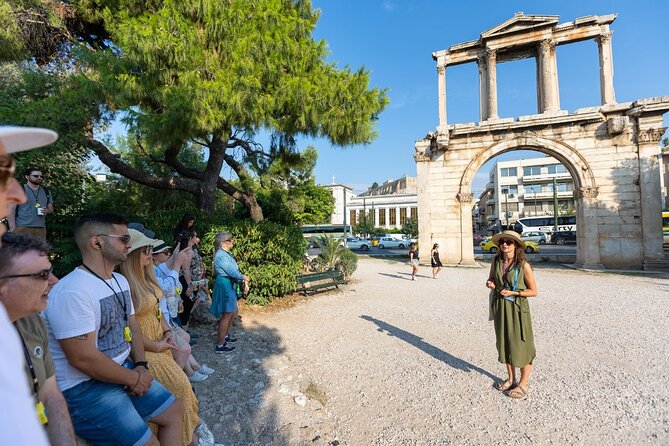
Your first historical stop sets a strong theme: how Athens used drama and public performance to shape civic life. You start with a walk to the Theatre of Dionysus, described as the birthplace of ancient drama. Even if you’re not a theatre-history buff, this stop is the right opener because it frames the Acropolis not just as a collection of temples, but as a place tied to public culture.
Then you reach the Odeon of Herodes Atticus, a Roman-era amphitheater that’s still used for performances today. That “still used” detail is important. It’s one thing to look at ancient seating rows. It’s another to realize that the acoustics and the setting were good enough to keep performing long after the original era passed.
Time-wise, this stop is about 50 minutes, including guide narration and getting oriented. If you’re the type who likes to understand the “why” before you take photos, this first segment is a good match. If you’re mostly photo-focused, you’ll still get plenty of angles—but you might feel the guide keeps moving at a steady pace.
Parthenon Viewing: How to Make the 30 Minutes Count
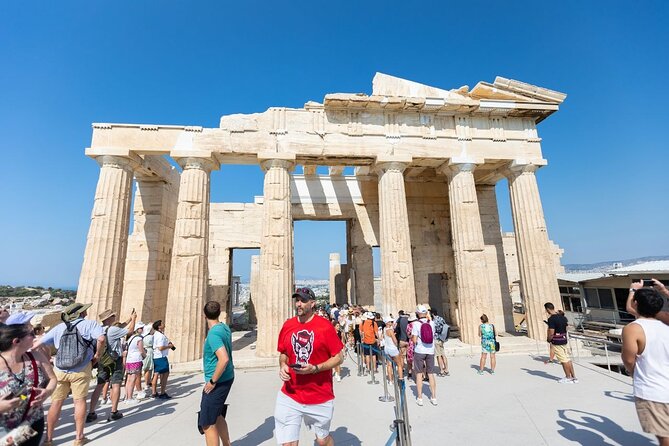
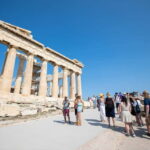
Then comes the big one: the Parthenon. You’ll stand before the monument that Athens uses to introduce itself to the world. Your guide explains its history, its architectural brilliance, and its role as a symbol tied to ancient Greek civilization and democracy. That might sound like a lecture, but what I appreciate is that the Parthenon is hard to read on your own. A guide helps you notice patterns and purpose in the details.
You only get about 30 minutes at the Parthenon, and that’s tight. The smart strategy is to divide your time into two passes: one pass to look big-picture—columns, symmetry, and the way it sits on the hill—and a second pass for details your guide points out. If you try to do everything in one go, you’ll end up with great photos but a foggy sense of why the building is so influential.
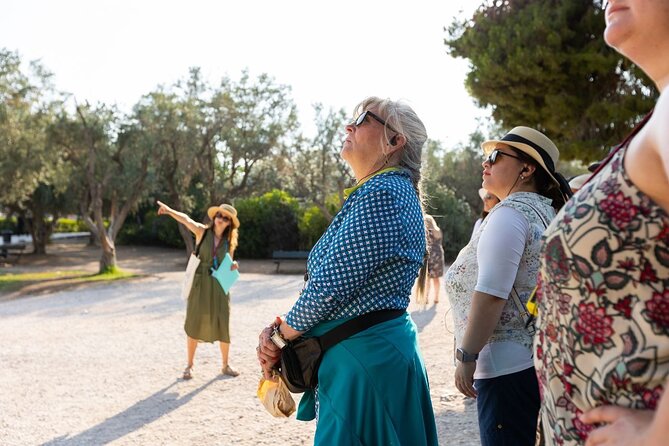
One practical note: Acropolis surfaces are uneven, and you can encounter slick steps at times. Comfortable walking shoes are a must. Also, restoration work can affect what you can see clearly, so you’ll be glad you’re not doing it alone—your guide can help you interpret what you’re looking at even when scaffolding changes the view.
Admission is included if you selected the entrance-ticket option, and the tour includes skip-the-ticket-line for both the Acropolis and the Acropolis Museum. That combination is what turns a short stop into an actually worthwhile stop. If you’re on a cruise day and you’re trying not to gamble with ticket lines, this is exactly the kind of added value you want.
Erechtheion and Caryatids: My Favorite Stop on the Hill

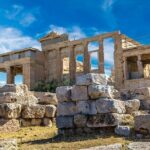
The Erechtheion is quieter and more delicate than the Parthenon, and that contrast is part of why I like it. This is where you see the Caryatid statues—the sculpted figures used as iconic supports. The guide also connects the building to myths and sacred rituals, emphasizing that the Erechtheion was built on especially important ground on the Acropolis.
Even with only about 10 minutes here, it can feel satisfying because the Caryatids are visually unforgettable. You don’t need a deep art degree to get what makes them different. But having a guide helps, because the symbolism and stories around the temple make the statues feel less like decoration and more like a ritual language in stone.
At this point in the day, the timing can be a little breathy. You may be tired from stairs. That’s normal. Still, I’d treat this stop as a “linger with purpose” moment: take in the full composition once, then focus your attention on the Caryatids long enough to let the details register.
A Break on the Acropolis: Views, Photos, and Reset Time
Next you get 30 minutes of flexible time on the Acropolis. This segment is listed as a break so you can rest, enjoy the views, or explore at your leisure. I think this is one of the most practical parts of the whole tour because it gives you control. Maybe you want more time at the Parthenon vantage point. Maybe you want a photo angle you missed earlier. Or maybe you just want to catch your breath and sit for a minute.
This is also the point where you’ll appreciate having audio devices earlier in the tour. When you return to areas you already visited, the guide’s context can make your self-guided moments feel richer—even if you’re just taking photos.
Keep expectations real: this isn’t a long lunch break. It’s a breathing window. Use it to reset your legs and get your head back into “enjoy Athens” mode before heading down.





Dionysiou Areopagitou: A Scenic Walk Back Toward the City

After the hill, you shift to the street scene with a walk along Dionysiou Areopagitou, one of Athens’ scenic pedestrian streets. It’s lined with neoclassical buildings, and you may spot street performers while you walk. You also get views back toward the Acropolis, which is a nice way to end your day’s “looking up” phase.
You’ll spend about 15 minutes on this stretch. It’s short, but it gives your body a change of pace compared with the staircase-heavy temple area. This walk also helps you transition from ancient Athens to modern Athens—without the tour feeling like a hard drop.
If you’re someone who likes getting oriented in a city, use the walk as a quick way to learn where things sit relative to each other. You can also grab a quick photo of the Acropolis from street level, where the scale can feel different than it does from directly in front of the monuments.
Acropolis Museum Tour: Why the 1.5 Hours Changes Everything
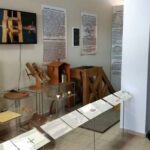
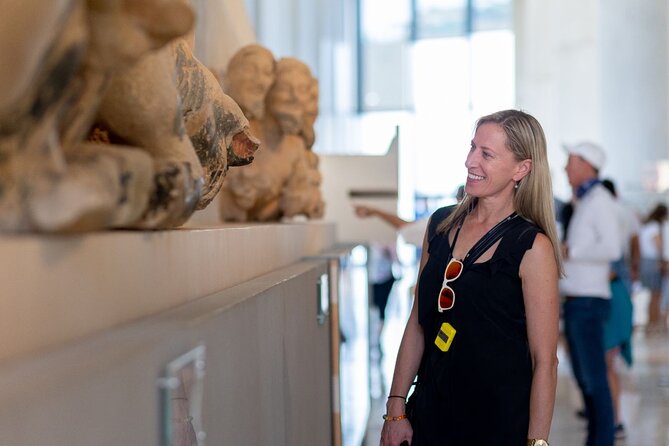
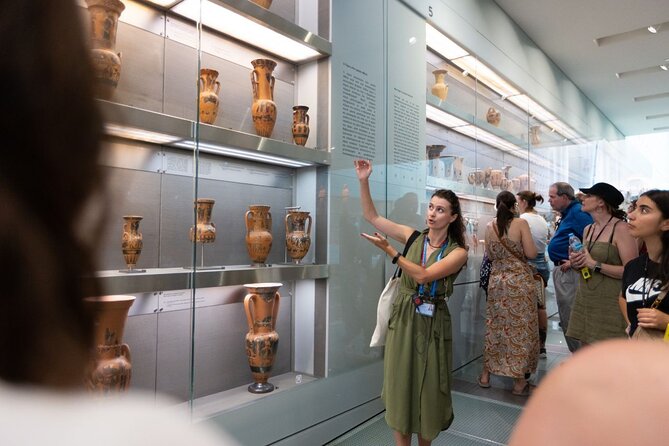
The day ends with the Acropolis Museum, and the time is 1 hour 30 minutes. This is more than a bonus stop. It’s the reason your Acropolis photos stop being just pretty pictures and start becoming a clearer story.
In the museum visit, you’ll see original sculptures and artifacts, plus reconstructions that bring ancient Athens to life—right steps away from the Acropolis site. That “right steps away” detail matters because it makes the physical connection immediate. You can think, I just saw the building outside; now I’m seeing what came from it.
A guided museum visit can be hit-or-miss if the time is too short. Here, the duration feels well chosen for a port-day. You get enough time to see highlights and hear interpretation, without getting stuck in slow-moving sections.
Also, the tour includes skip-the-ticket-line for the museum. If you’ve ever experienced how ticketing can eat up the last hour of a cruise excursion, you’ll understand why that’s part of the value.
Price and Value: Is $127.03 a Smart Deal?
At $127.03 per person, this tour isn’t the cheapest way to do Athens. But price is about what you’re buying: time, guidance, and reduced friction.
Here’s what you’re effectively paying for:
- Professional licensed guide covering multiple stops with a coherent narrative
- Audio devices so you’re not stuck craning and straining to hear
- Skip-the-ticket-line for both the Acropolis and the Acropolis Museum
- Pickup/drop-off from Piraeus, plus an air-conditioned vehicle
- A small group size (max 22), which usually means less waiting and more attention
If you’re port-bound, those logistics matter. Ticket lines and miscommunication can wreck a short day. I’d also pay attention to the detail that these tours are often booked well ahead—on average, about 54 days in advance. That’s a sign you should reserve early for your sailing date, especially if you want a specific time.
One more value angle: the museum stop is included and guided. If you skip the museum and only do the outdoor monuments, you often leave with images but not much understanding. This tour tries to fix that by pairing the hilltop experience with the artifacts that explain it.
Tips for Getting the Most From Your Day
If you decide to book, a few simple choices can make the difference between a good day and a great one.
- Wear comfortable shoes with grip. Expect uneven stone and steps.
- Bring water and something light to snack on only if allowed by your schedule and ship rules. This tour doesn’t list meals.
- Plan your photos with intention. Do the big monuments first, then use the flexible 30-minute break for your favorite angles.
- Keep your pace realistic. You’re doing several major sites in one morning/afternoon window, including a street walk.
And a gentle warning: because some parts can involve waiting at the start, don’t treat this as a “only port time matters” gamble. If your ship is strict about return timing, keep your mind calm and stay alert when boarding/shuttling is involved. That’s not about blaming anyone—it’s just how cruise days work.
Should You Book This Piraeus Port Day?
I think this tour is a solid choice if you want a structured Acropolis experience without spending half your day on lines and confusion. The combination of guided Acropolis stops, a quick themed walk, and a guided Acropolis Museum visit is a smart way to turn a short excursion into a satisfying learning-and-photo day.
I’d skip it only if your schedule is so tight that any start-up waiting would feel unbearable, or if you’re dealing with mobility issues that make stairs difficult. The tour is listed for travelers with moderate physical fitness, and there can be slippery or uneven steps, plus restoration areas.
If you want an efficient, story-based highlight circuit from Piraeus, this is one of the better ways to do it.
FAQ
What time does the tour start from Piraeus Harbour?
The meeting start time is 9:00am at Piraeus Harbour. Your driver will meet you in the cruise ship terminal holding a sign that says KEYTOURS.
How long is the tour?
The tour duration is about 5 hours 30 minutes.
Is this tour offered in English, and how many people are in the group?
The tour is offered in English, and it has a maximum group size of 22 travelers.
Does the tour include entrance tickets for the Acropolis and Acropolis Museum?
Entrance fees are included only if you selected the option that includes tickets. If you selected the option without entrance tickets, you must purchase tickets for your time slot before the activity departure time to enter with your group.
Is the walking suitable for everyone?
The tour is suggested for travelers with moderate physical fitness. You should be prepared for walking and steps around the Acropolis area.
Can I cancel for a full refund?
Yes. You can cancel up to 24 hours in advance for a full refund.