REVIEW · ROME
Full-Day Guided Historical Tour of Cascia and Assisi
Book on Viator →Operated by The Italian Dreams Travel · Bookable on Viator
Saints in two towns, with a handy guide. This full-day guided religious history route is built for small groups (max 12) and includes round-trip pickup from your Rome hotel, so you spend less time figuring things out and more time inside the places that matter. I also like that it combines Cascia and Assisi in one push, with enough time at each stop to actually absorb what you’re seeing.
The tradeoff is simple: it’s a long 12-hour day, and lunch isn’t included, so you’ll want to plan for your own food break before you go hungry mid-church tour.
If you’re up early, this is a great fit for people who want context while you walk: Saint Rita’s story in Cascia, then Assisi’s layered artwork and major basilicas (including the two-level San Francesco complex). The tour runs in English with a live escort for the day, and you’ll get a mobile ticket to keep things smooth.
In This Review
- Key things to know before you go
- Why Cascia and Assisi together makes sense from Rome
- 6:30am pickup, transit, and why this day feels long
- Monastero di Santa Rita da Cascia: the calm core of the whole trip
- Cascia highlights: basilicas, frescoes, town palazzi, and a local tasting
- Assisi’s San Francesco: two churches stacked, two eras of style
- Assisi Centro Storico: Santa Chiara, Rufino, the amphitheater, and views
- How the guide quality can make or break your day
- Price and value: is $417 worth it?
- What to pack for churches at speed
- Should you book this Cascia and Assisi guided tour?
- FAQ
- What is the duration of the Cascia and Assisi tour from Rome?
- How much does the tour cost?
- Is pickup from my Rome hotel included?
- What time does the tour start?
- How many people are in the group?
- Is the tour offered in English?
- Are lunch and admission tickets included?
Key things to know before you go
- Small-group pacing (max 12) helps you slip past the worst crowd moments.
- Hotel pickup and drop-off in Rome removes the biggest logistics headache.
- Saint Rita focus in Cascia includes the monastery where she lived for 40 years.
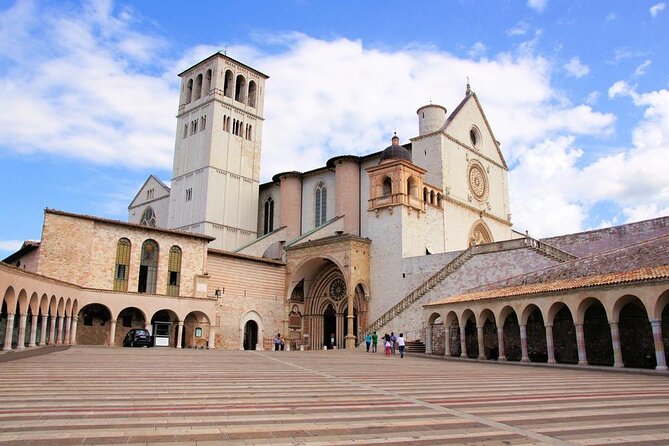
- San Francesco in Assisi is two churches in one site, linked to different architectural styles.
- Entry is free at the listed highlights, so you’re paying mostly for guiding and transit.
- Lunch is on you, so bring water and plan when you’ll eat.
Why Cascia and Assisi together makes sense from Rome
Most people visit Assisi alone, then wonder what else they could pair it with. This tour gives you a satisfying second chapter by adding Cascia—ground zero for Saint Rita’s legacy—before heading to Assisi for its major Franciscan landmarks.
What you get is not just sightseeing. You get a day with a through-line: Christian devotion expressed through place. Cascia gives you the Rita connection and the feel of pilgrimage sites. Assisi then shifts the tone to one of the most important church complexes in Italy, with famous interiors and major churches packed into the old center.
You can also read our reviews of more tours and experiences in Rome.
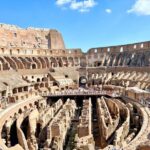
6:30am pickup, transit, and why this day feels long
Start time is 6:30am, with the minivan arriving under your hotel. They’ll call you to let you know when to come out, which matters in Rome—going to the street at the wrong time can mean delays you don’t want.
You should mentally budget for a long ride and a full schedule. This is not a quick “morning basilica, afternoon gelato” outing. It’s a guided day that moves through two towns and multiple sites, with about three hours devoted to each main phase.
A practical tip: dress for early-morning cool and indoor heat. Church visits can swing quickly between chilly stone and warm crowds, and you’ll be on your feet for hours.
Monastero di Santa Rita da Cascia: the calm core of the whole trip
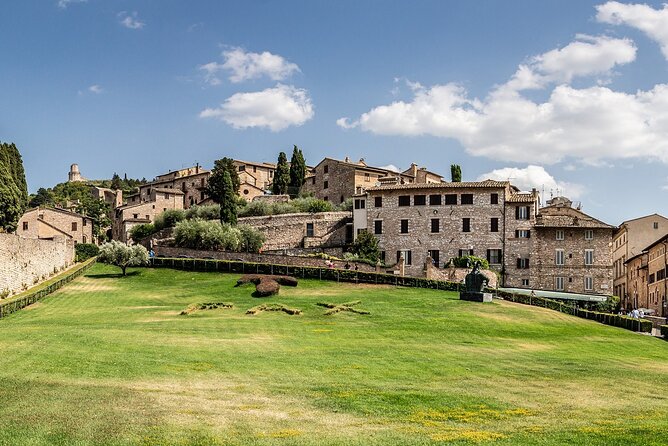
Your first big stop is the Monastero di Santa Rita da Cascia, the cloistered monastery tied to Saint Rita’s life. You’re not just looking at a building—you’re entering the historic space where she lived for 40 years as an Augustinian nun.
The best part here is the atmosphere. Cloisters and chapels change your pace. Even when you’re busy taking photos, you can feel the difference between a tourist stop and a place meant for prayer. And the tour includes time to pray near the Solemn Bank, which is the kind of detail that turns a checklist visit into something more personal.
This stop is also timed well: about 3 hours, and admission at this site is listed as free. That helps you avoid the feeling of rushing through something that deserves slower attention.
One consideration: if you’re someone who prefers a lot of quiet independence, pay attention to how your group is managed once you arrive. Cloistered spaces don’t always function like free-form walking areas, so you may have less room to wander on your own than in outdoor sightseeing spots.
Cascia highlights: basilicas, frescoes, town palazzi, and a local tasting
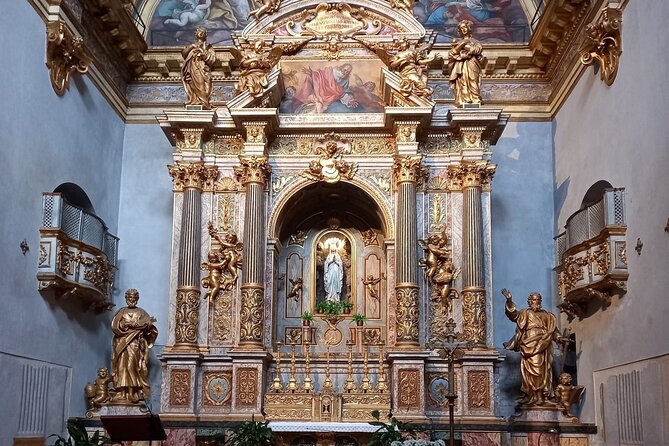
After Santa Rita’s monastery, Cascia turns into a full religious-and-historic walk through a complex of churches and civic landmarks.
You’ll spend time around the Sanctuary of Santa Rita da Cascia, including the Basilica and its lower basilica, along with spaces tied to the complex such as the monastery and penitentiary. This is where Cascia’s identity becomes very concrete: the town reads like devotion in stone.
Then the tour widens into the surrounding church fabric, including:
- The church of San Francesco
- The former Sant’Antonio Abate, originally from the fifteenth century but reworked in the Baroque period, with preserved fifteenth-century fresco cycles
- Santa Maria della Visitazione, remodeled after earthquake damage, featuring a wooden crucifix from the 1400s
- Sant’Agostino, with frescoes linked to Umbrian and Perugian schools
- Civic buildings like Palazzo Carli (municipal library), Palazzo Frenfanelli (Municipality), and Palazzo Santi (Civic Museum)
- The Roman temple of Villa San Silvestro
- The hamlet of Roccaporena, tied to Saint Rita’s birthplace
- The Chiavano plateau, which adds a sense of setting beyond the church walls
And yes, there’s also a local product tasting in Cascia. That’s not a throwaway add-on. When a tour includes tasting, it usually means you’re being nudged to experience the region as more than monuments.
This Cascia segment is also about 3 hours, and admissions are listed as free at the stops covered here. That “free entry” detail matters for value. You’re paying for guidance and transit time, not stacking extra ticket costs on top of an already packed day.
Assisi’s San Francesco: two churches stacked, two eras of style
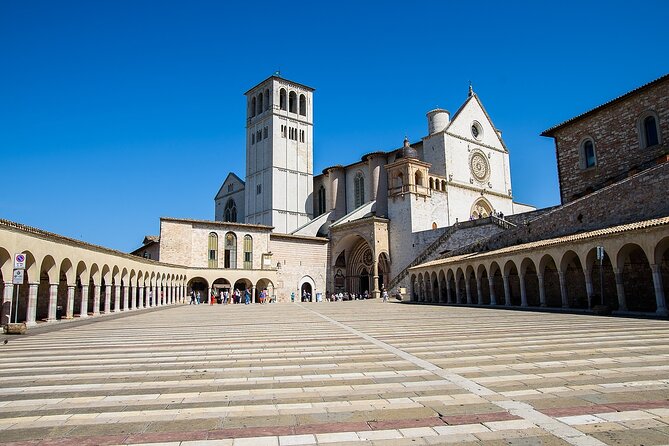
In Assisi, the anchor is Basilica Papale e Sacro Convento di San Francesco d’Assisi. This is one of those sites where structure tells a story.
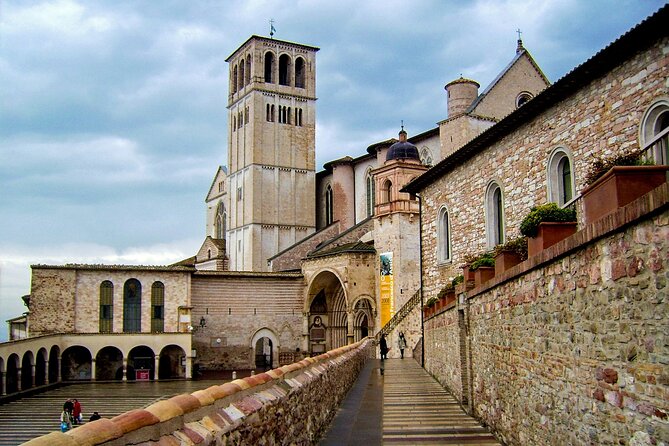
The key feature: the basilica is made up of two superimposed churches, connected to different construction phases. The lower portion is linked to an Umbrian Romanesque phase with Lombard influence. The upper portion shifts toward French Gothic style. You’re seeing how faith, politics, and art moved over time—and you’re not just hearing about it.
The tour includes about 3 hours here, and it points out that interior decoration is extraordinary in both levels. That timing is important because San Francesco is visually intense. If you try to do it alone with limited time, you miss how the space is layered and why it looks the way it does.
Practical mindset: treat this as a “slow looking” stop. If you only rush for photos, you’ll miss the emotional impact of standing inside work that took generations.
Assisi Centro Storico: Santa Chiara, Rufino, the amphitheater, and views
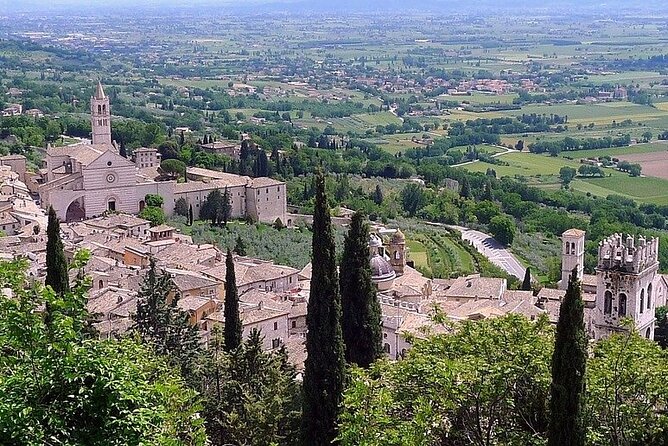
After San Francesco, you move into Assisi’s older heart—Centro Storico di Assisi—with guided time for several major sites.
On the list:
- Basilica di Santa Chiara
- Chiesa Nuova
- Cattedrale di San Rufino
- The Roman Amphitheater (Anfiteatro Romano)
- Rocca Maggiore
- Piazza del Comune
What I like about this portion is the variety. You’re not only inside churches. You get a more complete picture of what Assisi looks like as a lived-in medieval town: civic squares, big religious institutions, and Roman leftovers that remind you this isn’t a single-era story.
Rocca Maggiore is the type of stop that makes you understand why people built forts here. Even if you’re not chasing dramatic views for their own sake, you’ll see the town’s layout in a way that helps everything else click.
Also, this city-center block is about 3 hours, and admissions are listed as free for the stops in this part. That’s another value point because it keeps your ticket costs predictable.
How the guide quality can make or break your day
This tour depends on one thing: how smoothly your escort brings the sites to life while keeping you moving.
One highlight from the feedback is that Federico earned strong praise for attention and customer satisfaction. Another piece of praise points to an Assisi guide who explained details calmly and clearly, with enough pacing that people could visit churches comfortably rather than feeling herded.
Still, it’s worth saying plainly: guide dynamics can vary. In one account, a group felt the communication onboard was minimal and that timing slipped after lunch. If you’re the type who wants continuous commentary and a steady rhythm, go in with one expectation: you’ll benefit most when your guide actively engages and gives you breathing room in the churches.
My suggestion: if you care about explanations, arrive with a question or two in mind. Ask about what you’re seeing—fresco meaning, why the basilica has two levels, what makes Saint Rita’s story unique. A good guide will latch onto that and turn the day from facts into understanding.
Price and value: is $417 worth it?
At $417 per person for a 12-hour day from Rome, you’re paying for three big things:
1) Transportation (round-trip hotel pickup and drop-off),
2) an escort for the whole trip, and
3) a tight route that links Cascia + Assisi efficiently in one day.
What helps the value here: entry is listed as free at the key sites across the itinerary, and the group is kept small (max 12). You’re not buying a stack of museum tickets just to get through church interiors.
What hurts the value a bit: lunch isn’t included, so your total day cost will rise when you eat on your own. It’s not unusual, but it means you should plan for it now rather than later.
If you’re already spending time in Rome and you don’t want to deal with day-tripping logistics, this price can feel fair. If you love self-guided wandering and you’re comfortable with long-distance travel planning, you might be tempted to do it independently. But if you want the sites connected by meaning—and you value the time saved—this is the kind of itinerary that can justify the cost.
What to pack for churches at speed
You’ll be in multiple churches and historical interiors, so pack like you’re going to a worship site, not a theme park.
Bring:
- Comfortable shoes with grip. Stone floors are often slippery.
- Layers. Morning chill + warm interiors happens fast.
- Water. There’s no lunch included, and you’ll be on the go.
- A small plan for food. Even if you eat later, having a snack option helps.
Also, keep your phone battery in mind. Cascia and Assisi sites invite photos, but you don’t want your battery dying mid-visit when you’re standing in the most impressive interior.
Should you book this Cascia and Assisi guided tour?
Book it if you want a structured day that covers Cascia’s Saint Rita sites and Assisi’s major Franciscan and historic landmarks without you wrestling with transit and timing. It’s especially worth it if you like context as you walk and you appreciate small-group touring.
Skip it (or at least reconsider the timing) if you hate long days, you need frequent stops for food, or you strongly prefer independence over guidance inside churches. And if you’re sensitive to group pacing, know that church sites can require some level of management even with a good escort.
If you fall in the “I want this done right” category, this tour is a solid bet—because it connects two pilgrimage identities into one smooth, guided loop.
FAQ
What is the duration of the Cascia and Assisi tour from Rome?
The tour runs for approximately 12 hours.
How much does the tour cost?
The price is listed as $417.00 per person.
Is pickup from my Rome hotel included?
Yes. The tour includes pick-up and drop-off at your hotel, and you’ll be called to be warned when the minivan arrives.
What time does the tour start?
Pickup starts with a start time of 6:30am.
How many people are in the group?
The tour has a maximum of 12 travelers.
Is the tour offered in English?
Yes, English is offered. Other languages are listed as available for an additional 30€ per person.
Are lunch and admission tickets included?
Lunch is not included. Admission tickets are listed as free for the main sites described in the itinerary.