REVIEW · ST AUGUSTINE
Guided Historical Tour of St. Augustine Per Person
Book on Viator →Operated by Explore Tours And Pickups · Bookable on Viator
St. Augustine’s story is stacked in every block. This 1-hour guided ride takes you past the big historic anchors—from Mission Nombre de Dios to the Plaza de la Constitución—using an open-air electric vehicle that saves your legs. I like that it’s a small group (max 9), so the guide can actually help you make sense of what you’re seeing, not just rattle off dates.
Two things I really like: you get personal Q&A time as you roll between sites, and you cover a lot of ground without sprinting from one ticket line to the next. One consideration: it’s outdoors on an open vehicle, so bring layers or a rain option if the day turns cool or drizzly.
In This Review
- Key highlights you’ll feel fast
- Price and what you’re really buying in 1 hour
- Riding in an open-air electric vehicle (and why it’s a big deal)
- Meeting point basics: 1 Cordova St and the parking reality
- Mission Nombre de Dios and the Shrine of Our Lady of La Leche
- St. Augustine Cathedral Basilica: oldest parish in the U.S.
- Tolomato Cemetery: a long timeline you can feel
- St. Francis Barracks: coquina, empires, and shifting control
- Castillo de San Marcos: the oldest masonry fortification on the continent
- The Gonzalez-Alvarez House: a surviving Spanish colonial residence
- Flagler’s Memorial Presbyterian Church and the Venice-style clue
- Bridge of Lions era: 1927 design from the Florida land-boom days
- Plaza de la Constitución: the city’s historic center and a market that goes back
- Guides, pace, and small-group Q&A: the difference between facts and understanding
- Who should book this tour (and who might pass)
- Should you book? My practical take
- FAQ
- How long is the tour?
- What does the tour cost?
- How many people are in the group?
- What language is the tour offered in?
- Where does the tour start?
- Do they offer parking?
- Is this tour outdoors?
- Are service animals allowed?
- What happens if the weather is bad?
- Can I get a refund if I cancel?
Key highlights you’ll feel fast
- Small-group focus (max 9) keeps the pace friendly and questions easy to ask
- Electric open-air transport helps you see more in 1 hour than a foot tour
- Stops cover the full arc: Spanish founding, military defense, and later Florida eras
- You pass major landmarks in one loop, including Castillo de San Marcos and the Cathedral Basilica
- Guides like Karen Brady, Marc, Deanna, Jaren, and Mark are highlighted for clear, story-style explanations
- The tour helps you build context before you explore on your own afterward
Price and what you’re really buying in 1 hour
At $30.60 per person, this is priced like an efficient “orientation plus highlights” tour. The value isn’t just that you get transportation. It’s that you get a guided thread through St. Augustine’s timeline—Spanish arrival, religious roots, fortifications, and the later layers that still shape today’s downtown.
A 1-hour format also matters. St. Augustine rewards curiosity, but it can also be time-consuming if you spend it only lining up for the most famous stops. This tour is built to help you decide what to hit next once you’ve seen the main landmarks from the outside and learned what each one means.
If you’re short on time, this is a smart first move. If you’re here for a few days, it still works because it gives you names, connections, and context you’ll spot again later when you walk the streets.
You can also read our reviews of more tours and experiences in St Augustine.


Riding in an open-air electric vehicle (and why it’s a big deal)
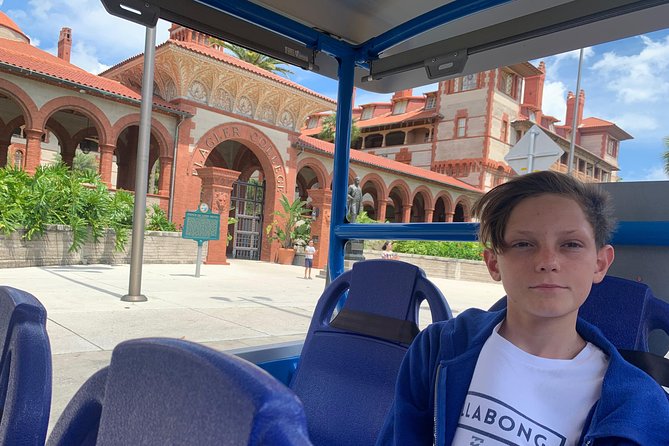
The tour runs on an open-air electric vehicle in the downtown area. That’s a practical win in St. Augustine. Historic cores are compact, but the driving/parking friction can be real. Sitting and rolling past multiple major sites means you spend less time crossing town and more time actually seeing.
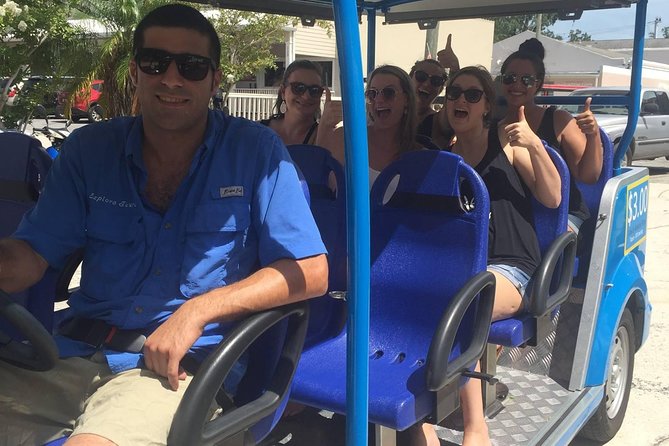
You’ll also find the pace built for listening. The guides are positioned to talk as you pass landmarks, and you have time to stop and ask questions. Several guest comments call out how the small setup made it easier to hear the guide and keep the conversation going—especially helpful when you’re trying to understand why St. Augustine looks the way it does.
One more practical note: because it’s open-air, weather can affect comfort. On cooler days, a wind chill can sneak up. You’ll want layers.
Meeting point basics: 1 Cordova St and the parking reality

The tour starts and ends at 1 Cordova St, St. Augustine, FL 32084. One key planning issue: the operator explicitly does not offer parking. So you’ll want to arrive early and work around street/garage options on your own.
If you’re using public transportation, the meeting area is described as near public transit. Either way, aim to show up a bit before the start time—downtown timing can be unpredictable, and being early keeps stress low.
Mission Nombre de Dios and the Shrine of Our Lady of La Leche
This is where St. Augustine’s origin story kicks in. You’ll learn how the site ties back to the Spanish founding in 1565. The guide points out the Shrine of Our Lady of La Leche at Mission Nombre de Dios, tracing the roots to the moment Pedro Menéndez de Avilés landed and proclaimed this location for Spain and the Church on September 8, 1565.
There’s also a human detail that helps it click: Menéndez named the site Nombre de Dios, meaning Name of God, and put Father López in charge, making him the first parish priest in St. Augustine.
Why this stop matters: you’re not just looking at a church. You’re seeing where the city’s religious and cultural gravity began. Even if you later visit museums or walk nearby streets, the guide’s explanation helps you recognize the early “why” behind St. Augustine’s layout.
Possible drawback: if you’re the type who wants lots of inside time at every stop, you’ll need to plan later visits. This tour is about viewing and context more than deep time inside buildings.
St. Augustine Cathedral Basilica: oldest parish in the U.S.
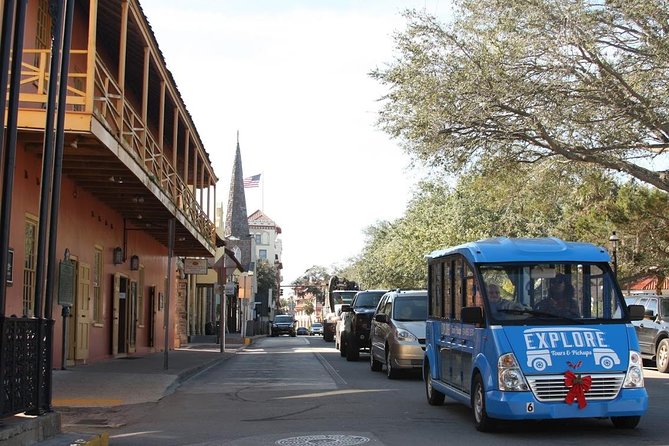
Next up is the Cathedral Basilica of St. Augustine, highlighted as the oldest Catholic Church in the city and also the oldest parish in the country.
The practical value here is perspective. When you hear a place is the oldest parish in the U.S., it changes how you read everything around it—nearby streets, nearby buildings, and the way later layers added onto the original core.
What you’ll get on this tour: an explanation that connects the cathedral to the wider founding timeline and the Catholic presence that anchored the city from the beginning. Since you’re passing in a vehicle, you get the exterior orientation and the meaning without the full gate-and-wait experience.





Tolomato Cemetery: a long timeline you can feel
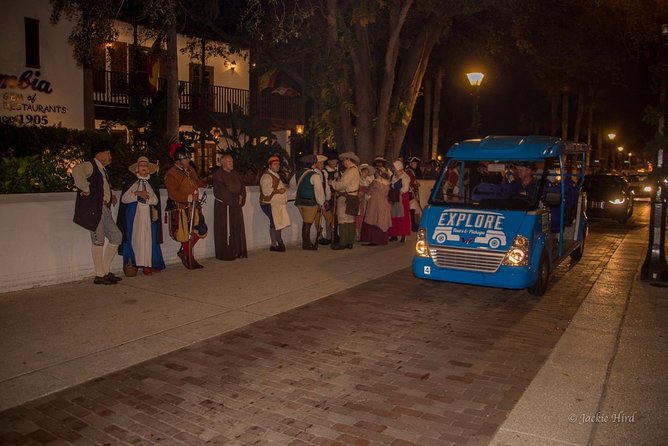
You’ll also pass Tolomato Cemetery, an important landmark because of its long use period. The cemetery was in use from the 18th century until 1884.
It sits in a city context that’s easy to lose sight of: St. Augustine is described as the oldest European-founded city in the United States, and Tolomato reflects how communities lived, changed, and remembered across centuries.
Why it’s worth including: cemeteries often get treated like side-notes, but here it’s part of the story of how a settlement matured. You’ll come away with a stronger sense that St. Augustine’s history isn’t only forts and missions—it’s also people and families across generations.
St. Francis Barracks: coquina, empires, and shifting control

The tour passes St. Francis Barracks, built of coquina between 1724 and 1755 by Franciscans. Then you’ll learn how the British took control of Florida in 1763 and the barracks were converted for military use. Later, when Florida came under U.S. claim in 1821, the U.S. Army took over until deactivation in 1900. In 1907, it was leased to Florida State Troops, a forerunner of the present-day National Guard.
This stop gives you something most “downtown highlights” tours skip: the real-world mechanics of who controlled the region and how buildings changed roles.
Practical takeaway: when you hear the material details (coquina) and the timeline of control, you can better understand why certain structures look the way they do. It’s a lot easier to appreciate architecture when you know what it was built to do.
Castillo de San Marcos: the oldest masonry fortification on the continent
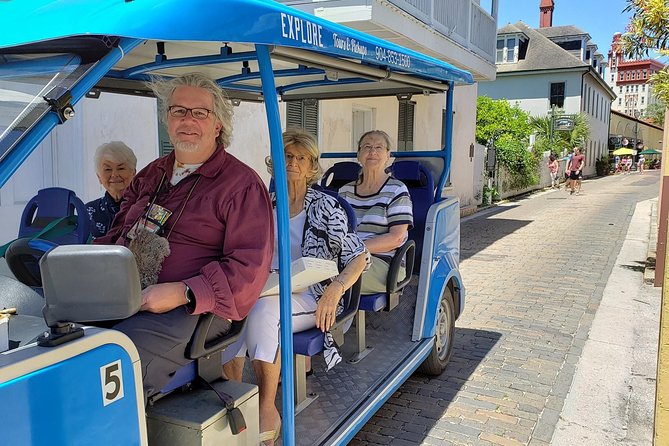
At Castillo de San Marcos National Monument, you’ll learn why this place is such a big deal. It preserves the oldest masonry fortification in the continental United States and interprets more than 450 years of cultural intersections.
This is one of the tour’s clearest “anchor points.” You’ll see the fort from the downtown corridor and get the historical framing without needing to spend your whole day there first.
Why it’s ideal on a 1-hour tour: the fort is visually obvious, but its meaning is layered. A guide helps you connect Spanish defense strategy, Atlantic trade pressures, and the long tug-of-war that shaped St. Augustine.
The Gonzalez-Alvarez House: a surviving Spanish colonial residence
Your route also includes a stop connected with the Gonzalez-Alvarez House, described as the oldest surviving Spanish colonial residence in Florida. The structure is owned and operated by the St. Augustine Historical Society.
This is a great change of pace from military stories. It shifts the focus to daily life and domestic architecture, which makes St. Augustine feel less like a theme park and more like a real place that people lived in.
Flagler’s Memorial Presbyterian Church and the Venice-style clue
Another standout along the route is Flagler’s Memorial Presbyterian Church, dedicated on March 16, 1890. The old Presbyterian Church on St. George Street was vacated when the congregation moved to the new sanctuary, designed with room for 480 worshipers.
There’s also a personal story behind the building: Flagler built it for his daughter Jennie Louise Flagler, who died in 1889. The guide explains the architecture too—Carrere & Hastings designed it, and its design is based on the Basilica of St. Mark in Venice.
Why this stop works: it gives you a later-era St. Augustine thread, showing how the city kept evolving after the original Spanish-era identity. If you’re only thinking “Spanish fort,” this is your reminder that St. Augustine also has an American-era story tied to influential locals.
Bridge of Lions era: 1927 design from the Florida land-boom days
You’ll pass the Bridge completed in 1927, built during Florida’s land boom period. It’s described as designed as a work of art as much as a transport route, connecting downtown St. Augustine with Anastasia Island.
This part of the tour helps you see how modern St. Augustine grew from the early core. The bridge isn’t just a way to get somewhere—it’s a symbol of when travel and development reshaped the city’s future.
Practical tip: even on a quick stop, you can take photos because the bridge is a natural reference point. When you later cross it yourself, you’ll know what you’re looking at.
Plaza de la Constitución: the city’s historic center and a market that goes back
Your tour ends back through the heart of downtown at the Plaza de la Constitución. The guide frames it as sitting at the center of historic St. Augustine, bordered by the Cathedral Basilica of St. Augustine, Trinity Episcopal, and the Government House.
You’ll also learn the plaza faces the Bridge of Lions and that the central pavilion hosts city events, private events, and live entertainment. The public market aspect is one of the most impressive time markers: it’s been in use since the 1500s, when fish, vegetables, and other goods were traded there.
This stop is the payoff. It pulls together the idea that St. Augustine wasn’t only a strategic outpost. It was also a working town with commerce at its center.
Guides, pace, and small-group Q&A: the difference between facts and understanding
A big reason this tour earns a near-perfect rating is the human side: guides like Karen Brady, Marc, Deanna, Jaren, and Mark are repeatedly praised for being approachable, helpful, and good at turning facts into something you can remember.
Look for these patterns if you want the best experience:
- Ask questions early. The guide is there for it, and you’ll feel the flow improve as your curiosity gets fed.
- Use the tour to map your next steps. The best guides naturally point out what makes certain stops worth extra time later.
- If the day is cool or drizzly, the guides seem prepared for it. One guest specifically noted a blanket on a cold day, and you’ll want to bring a layer just in case.
Also, the duration—about an hour—keeps things from dragging. You’ll feel like you got a clean overview with enough details to follow up on your own.
Who should book this tour (and who might pass)
This tour fits best if you:
- Want a fast, guided way to understand St. Augustine before spending hours on your own
- Prefer small groups so you can hear the guide and ask questions
- Like history stories that connect locations to big themes (religion, defense, trade, city life)
You might think twice if you:
- Want long inside visits at multiple major sites in one day
- Get frustrated by outdoor weather changes, since it’s open-air
If you’re traveling with family, friends, or even a couple, the small cart format makes it feel relaxed rather than rushed.
Should you book? My practical take
Book it if this is your first time in St. Augustine and you want to leave with names, timelines, and a simple plan for what to see next. The price is reasonable for the amount of ground covered, and the small-group setup plus Q&A makes the 1-hour format actually useful.
Skip it only if you already know exactly which sites you want to do in depth and you prefer self-guided pacing. In that case, you may get more satisfaction by picking a couple of locations and spending longer inside.
FAQ
How long is the tour?
It runs for about 1 hour.
What does the tour cost?
The price is $30.60 per person.
How many people are in the group?
The maximum group size is 9 travelers.
What language is the tour offered in?
The tour is offered in English.
Where does the tour start?
The tour starts at 1 Cordova St, St. Augustine, FL 32084.
Do they offer parking?
No. The operator does not offer parking, so you’ll need to plan accordingly and arrive early.
Is this tour outdoors?
Yes. You ride on an open-air electric vehicle in the downtown area.
Are service animals allowed?
Service animals are allowed.
What happens if the weather is bad?
The experience requires good weather. If it’s canceled due to poor weather, you’ll be offered a different date or a full refund.
Can I get a refund if I cancel?
Yes. You can cancel up to 24 hours in advance for a full refund. If you cancel less than 24 hours before the start time, the amount paid is not refunded.