REVIEW · ST AUGUSTINE
St. Augustine Walking History Tour
Book on Viator →Operated by A Ghostly Encounter · Bookable on Viator
St. Augustine history is easier when someone points. This 2-hour walking tour strings together the city’s biggest landmarks with clear stories and practical tips. You’re starting from the historic core and moving at a human pace, so the place starts to make sense fast.
I love that it packs major anchors in one run: Castillo de San Marcos and the Cathedral Basilica of St. Augustine. I also like the variety beyond the obvious—cemeteries (Huguenot and Tolomato), plus a church visit where you can see what’s inside, not just what’s on the outside.
One thing to consider: you’ll be on cobblestones, and the route is mostly walking. If your feet don’t do well on uneven pavement, plan for extra comfortable shoes.
In This Review
- Key points before you go
- How this tour gets you oriented fast in St. Augustine
- Price and what $30 really buys you
- Castillo de San Marcos: the fort that sets the tone
- Memorial Presbyterian Church: what you see inside changes the story
- Old City Gates at 2 St George St: the founding point
- Oldest Wooden School House: a small building with hurricane logic
- Cemeteries on Orange Street and Cordova Street: Huguenot and Tolomato
- Ponce de Leon Hall and the Lightner Museum: Flagler’s vision in buildings
- Governor’s House, Plaza de la Constitución, and St George Street: the civic core
- Cathedral Basilica of St. Augustine: faith and resilience in stone
- Guides make the difference: Andrew, Rob, and Pepper
- Comfort, shoes, and the small stuff that affects your day
- Should you book this St. Augustine Walking History Tour?
- FAQ
- How much does the St. Augustine Walking History Tour cost?
- How long is the tour?
- Where do I meet, and where does the tour end?
- What time does the tour start?
- Is the tour in English?
- Do I get a mobile ticket?
- Is gratuity included in the tour price?
- Are service animals allowed?
Key points before you go
- Max 12 travelers means you’re not lost in a crowd.
- Mobile ticket keeps check-in simple.
- Castillo de San Marcos adds the Spanish fort perspective early.
- Memorial Presbyterian Church offers a free, docent-led interior visit.
- Huguenot and Tolomato cemeteries add the human side of early St. Augustine.
- Cobblestones ahead: wear grippy, comfortable walking shoes.
How this tour gets you oriented fast in St. Augustine

If you only have a short window in St. Augustine, a guided route like this is a big help. Instead of bouncing randomly between “the famous spots,” you get a sequence that explains how the city grew—Spanish control, British transition, and later American influence.
The tour starts at 12 St George St at 10:00 am, and it loops back to the same meeting point when you’re done. That’s useful because you can plan a lunch or museum stop right after without needing to backtrack through town.
The pacing is also part of the value. With about 2 hours and a small group size, you’re more likely to get real answers from your guide instead of racing through stops while the guide talks over you.
You can also read our reviews of more tours and experiences in St Augustine.


Price and what $30 really buys you
At $30 per person for a roughly 2-hour guided walk, you’re paying for three things: time, organization, and interpretation. Walking history tours can sound similar on paper, but the difference is whether someone connects the dots for you.
Here, you’re not just looking at buildings. You’re stopping at places with specific roles—fortifications, worship spaces, memorial grounds, and buildings tied to later hotel and museum life. That matters because St. Augustine can feel layered and confusing if you only read plaques on your own.
One small detail that affects your cost: gratuity isn’t included. If you like a guide’s style (and this tour has consistently strong feedback), you’ll likely want to tip. It’s not a dealbreaker—just budget for it if you’re the kind of person who always tips well.
Castillo de San Marcos: the fort that sets the tone
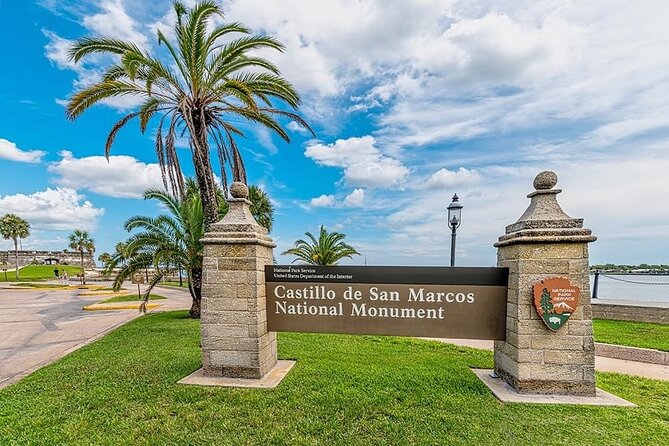
The tour begins at St. Augustine’s Castillo de San Marcos National Monument, the oldest masonry fort in the United States and the only intact 17th-century fort. That’s a mouthful, but the key takeaway is simple: you’re standing on walls that have outlasted a lot of change.
This fort started as a Spanish project in 1672 meant to protect their New World territories. Over time, control shifted—then the fort played crucial roles in later conflicts, including the Civil War and the Spanish–American War.
Why this stop works on a walking tour: it gives you a framework for everything you’ll see next. Once you understand why the Spanish built hard stone defenses here, the rest of the city’s layout and political storyline clicks into place.
Practical note: fort terrain can mean sun, shade, and uneven walking around the area. If it’s hot when you go, bring water and plan for a little time in direct light.
Memorial Presbyterian Church: what you see inside changes the story
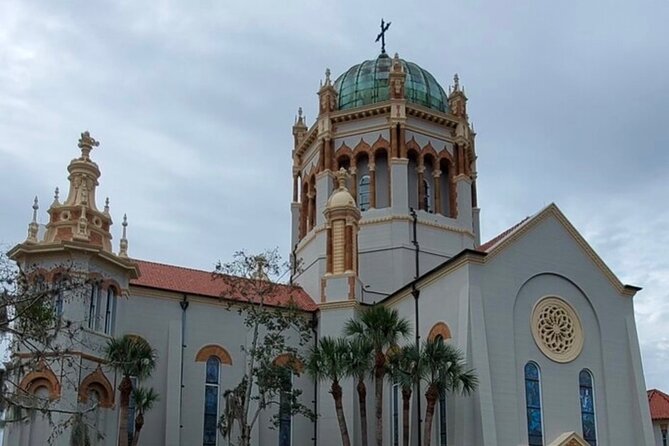
Next up is Memorial Presbyterian Church, known for towering spires and white stone on the exterior. The big win is that you can go inside, where the guide’s context helps you notice details you’d otherwise skip.
This church is part of regular worship and it also offers free, docent-led tours. In other words, you’re not just getting a quick peek; you’re stepping into a living place of history and art.
What I like about this stop for first-timers is contrast. Forts talk about protection and power. Churches talk about community, identity, and how people organized their lives around faith and art—especially across centuries of change.
If you’re sensitive to noise or crowds, check the timing of interior visits at the church when you arrive. Worship schedules can shape how long you can comfortably stay.
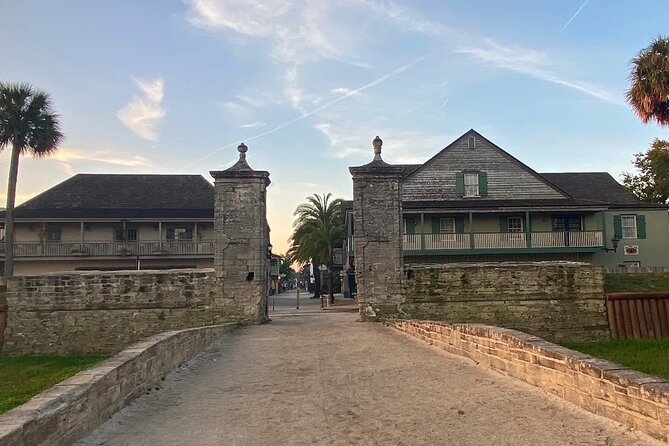
Old City Gates at 2 St George St: the founding point
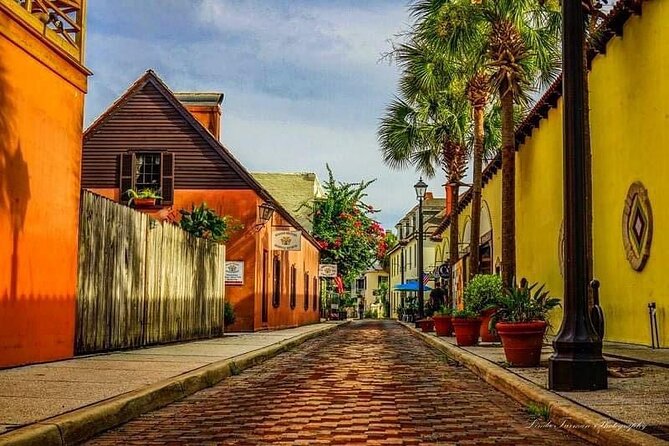
You start this section at the Old City Gates at 2 St George St, the historic entrance to St. Augustine. The guide ties the city’s beginnings to early founders, including Pedro Menéndez de Avilés.
This is one of those stops that helps you “read” the city. When you understand where people entered, you see why key streets developed when they did—and you get a clearer mental map for the walking route.
I also like that this stop pairs well with nearby wandering. After the tour, you can look at the gates area and streets around it with better context, instead of feeling like you walked through a pretty historic zone without learning why it mattered.






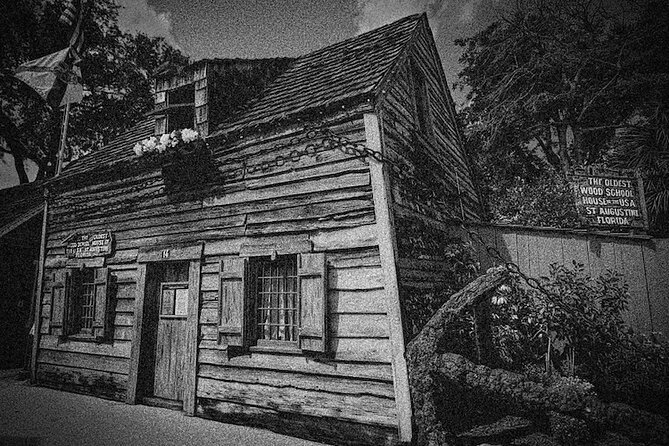
Oldest Wooden School House: a small building with hurricane logic
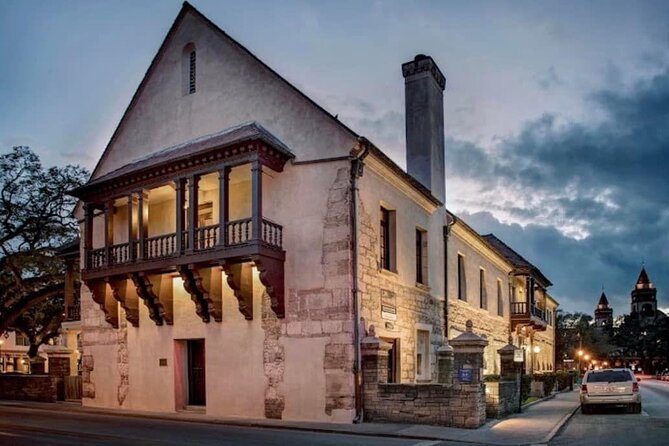
The Oldest Wooden School House in St. Augustine is easy to overlook if you only chase big-ticket landmarks. But it’s a powerful contrast to stone fortifications.
This small wooden structure dates back to the 1700s and is chained to the ground to protect it from hurricanes. That single detail tells you something important: St. Augustine history isn’t just dates and wars—it’s also survival and engineering choices made for a real climate.
During the visit, you’ll get a chance to see the schoolhouse, plus the gardens and the historic kitchen as part of what the site offers. That gives you a fuller picture of daily life, not just formal politics or military power.
If you love everyday history, this stop is a morale boost. It makes the city feel inhabited, not staged.
Cemeteries on Orange Street and Cordova Street: Huguenot and Tolomato

Then the tour shifts tone, and it’s a good one. You’ll pass Huguenot Cemetery on Orange Street, a quiet resting place connected to early settlers and the mix of cultures in St. Augustine’s beginnings.
After that, you’ll catch a glimpse of Tolomato Cemetery on Cordova Street. This cemetery dates back to the colonial era, and the guide shares stories tied to the people laid to rest there.
These stops aren’t about fear or spooky theater. They’re about perspective. Cemeteries force you to slow down and connect the city’s big events to real lives—families, communities, and people whose names stayed behind after centuries.
Practical tip: cemeteries can be cooler shaded spots, but they still require steady footing on walkways. If you’re traveling with knee trouble, take your time and don’t rush between areas.
Ponce de Leon Hall and the Lightner Museum: Flagler’s vision in buildings
Next, you’ll see Ponce De Leon Hall on King Street, a historic building that once housed the Ponce de Leon Hotel. The connection to Henry Flagler’s vision for St. Augustine is the point here: later investment and tourism changed how the city was branded and built.
From there, you’ll head to the Lightner Museum, located in the former Alcazar Hotel. This museum is described as eclectic, covering fine and decorative art, natural history and geological specimens, Victorian collectibles, and Americana. There’s also a schedule of special events and educational programs.
Why this works in the context of a history walk: it ties the city’s earlier colonial and military storyline to its later era of growth and visitor culture. You get the arc, not just the snapshots.
If you’re museum-minded, consider saving extra time after the tour for the Lightner. Even if you don’t do every gallery, you’ll likely know what to look for once your guide gives you the connecting storyline.
Governor’s House, Plaza de la Constitución, and St George Street: the civic core
As you move through downtown, you’ll pass the Governor’s House Cultural Center and Museum. The focus is political and social history—how people ruled, governed, and organized public life in different eras.
Then comes Plaza de la Constitución, which is essentially the city’s historic heart. This is a great moment to catch your breath and soak in the layout: you’ll see why plazas matter in older cities. They’re where decisions, daily life, and foot traffic naturally gather.
From there, the walk reaches St. George Street, a pedestrian thoroughfare packed with shops, galleries, and attractions. Even if you don’t plan to shop, the street gives you a sense of how the historic core functions today.
This section is where you’ll appreciate having the tour’s context. Without it, St. George Street can look like “shops in an old town.” With it, you see how the old civic structure became a modern strolling route.
Cathedral Basilica of St. Augustine: faith and resilience in stone
The tour ends with the Cathedral Basilica of St. Augustine, described as a symbol of faith and resilience in the face of adversity. This is the big spiritual marker in the city center, and the guide’s comments help you connect it to the broader story you’ve been building all morning.
If you’re the type who likes to read buildings like documents, this stop is rewarding. A cathedral’s materials, design choices, and repairs over time all point to how communities respond to hardship.
Even if you only take a quick look, stopping here after fort walls and cemeteries creates a full-circle feeling. You leave with a bigger sense of how St. Augustine held onto identity—through defense, worship, and remembrance.
Guides make the difference: Andrew, Rob, and Pepper
One of the strongest things about this tour is the guide lineup quality. Andrew, nicknamed the Chief, was praised for being patient, personable, and easy to understand. Rob was highlighted for practical pacing and for bringing history to life with lots of facts and tips for enjoying St. Augustine after the tour. Pepper was also noted for being informative in a way that helped people plan their time better.
That kind of guide energy matters more than people think. You can read plaques on your own, but a good guide helps you decide what’s worth your attention next—especially when you only have a day or two.
If you like asking questions, the small group size (maximum of 12) makes it easier to get answers without feeling rushed.
Comfort, shoes, and the small stuff that affects your day
This is a casual tour, but it does require practical prep. The route includes cobblestone streets, so shoes with grip are a smart move. Bring water, and give yourself a minute at each stop before you start snapping photos.
The experience allows service animals, and it’s near public transportation, which helps if you’re mixing this tour with other activities in town. If you’re going with friends, this size is also a nice sweet spot: not too small to feel awkward, not too large to feel chaotic.
Should you book this St. Augustine Walking History Tour?
Book it if you want a fast, organized 2-hour orientation through St. Augustine’s main layers—Spanish fort power, church art and worship, cemetery stories, and later civic and museum-era stops. The $30 price makes sense when you consider you’re paying for guided interpretation of multiple landmarks, not just a walk.
I’d skip or adjust your plans if you know cobblestones and uneven pavement are rough on you. You can still enjoy St. Augustine, but you’ll probably want a route with fewer long stretches of uneven walking.
If you’re here for the first time, or you’re trying to plan the rest of your day, this tour is a strong starting move. It gives you the right questions to ask and the right places to return to when you want a closer look.
FAQ
How much does the St. Augustine Walking History Tour cost?
The price is $30.00 per person.
How long is the tour?
The tour duration is approximately 2 hours.
Where do I meet, and where does the tour end?
You meet at 12 St George St, St. Augustine, FL 32084, USA, and the tour ends back at the same meeting point.
What time does the tour start?
The listed start time is 10:00 am.
Is the tour in English?
Yes, the tour is offered in English.
Do I get a mobile ticket?
Yes. The tour includes a mobile ticket.
Is gratuity included in the tour price?
No. Gratuity for your guide is not included, and you can tip if you want.
Are service animals allowed?
Yes, service animals are allowed.