REVIEW · MARRAKECH
Half Day Marrakech History Tour including entrances
Book on Viator →Operated by Holiday Services · Bookable on Viator
Four hours in Marrakech beats a long, aimless wander. This half-day history route links Koutoubia Mosque and Bahia Palace with guided context, hotel pickup, and entrance tickets on the main interior stops. It’s a smart way to get your bearings fast, without spending your whole day stuck in queues and heat.
I also like the way the tour mixes big-name sites with calmer corners, including a walk through the Ben Youssef Medersa area and the older parts around the medina. One thing to consider: pace and extras can depend on the day and the guide, and a few departures have had weather problems or extra shop stops at the end.
In This Review
- Key highlights to look for
- A half-day route that gets you inside Marrakech’s big stories
- Hotel pickup and the morning advantage
- Koutoubia Mosque exterior stop: quick, iconic, and worth it
- Bahia Palace and the Mellah-area context: mosaics, gardens, and power
- Ben Youssef Medersa: the tiled school you can still feel
- Saadian Tombs: cedar-domed chambers and a 1917 twist
- Tiskiwin Museum: caravan routes between Marrakech and Timbuktu
- Time and weather: how to protect your half-day
- Price and value: what $41.88 is really buying
- Who should book this tour (and who might prefer something else)
- Should you book the Half Day Marrakech History Tour?
- FAQ
- What time does the tour start?
- How long is the Half Day Marrakech History Tour?
- What’s included in the price?
- Are food and drinks included?
- Do I get a mobile ticket?
- Is admission included for Koutoubia Mosque?
- What is the cancellation policy?
- Can the itinerary or monuments change?
Key highlights to look for
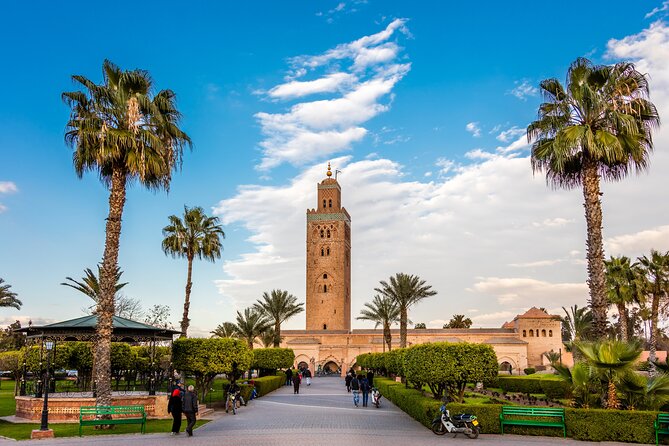
- Koutoubia Mosque exterior with the 70-meter minaret in a quick, photo-friendly stop
- Bahia Palace interiors and gardens with guided stories about the sultans
- Ben Youssef Medersa ticket included for one of Morocco’s best-known Islamic schools
- Saadian Tombs stop for cedar-domed chambers and a 1917 rediscovery story
- Tiskiwin Museum (double riad setting) focused on caravan trade between Marrakech and Timbuktu
- Hotel pickup and drop-off that saves you the first-morning navigation stress
A half-day route that gets you inside Marrakech’s big stories
Marrakech can feel like sensory overload on day one. This tour helps by giving you a timed path through the city’s most important architectural landmarks, with a local guide to translate what you’re seeing. You’re not just looking at buildings; you’re learning why they were built and how people used them.
The biggest win is focus. In about four hours, you hit the visual powerhouses: the mosque silhouette that dominates the skyline, a palace complex made to impress, and heritage sites that explain how power, learning, and trade shaped the city. It also ends where it starts, so you don’t lose your afternoon to logistics.
You can also read our reviews of more tours and experiences in Marrakech.


Hotel pickup and the morning advantage
The tour starts at 8:30 am, and that timing matters. Marrakech mornings are usually your friend for walking and exploring before the day gets hot and sticky.
You’ll get hotel pickup and drop-off plus an air-conditioned vehicle, which is especially useful for covering the distance between the medina edges and the monuments without tiring out right away. The tour also uses a mobile ticket, so you’re not juggling printed papers in a crowded area.
One practical note: this is a walking tour. Even when the vehicle is doing its share, you’ll want comfortable shoes with grip. The best part of the route is moving at human speed through historic streets and entrances.
Koutoubia Mosque exterior stop: quick, iconic, and worth it
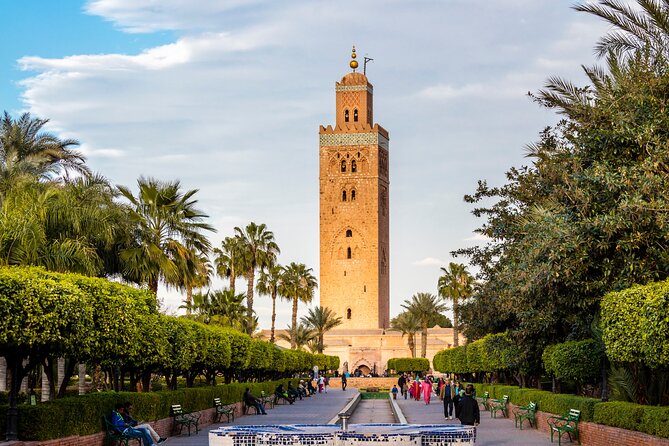
You’ll first reach the Koutoubia Mosque area for an exterior visit. It’s a short stop—about 15 minutes—and the admission ticket isn’t included because you’re mainly viewing the Hispano-Moorish exterior and especially the famous minaret.
Here’s what makes this stop feel meaningful instead of rushed: the guide’s explanation. The 70-meter minaret topped with a spire and orbs is the sort of thing you’ll recognize in photos, but the context helps you notice the details you’d otherwise miss—shape, style, and how the building fits into Marrakech’s wider visual language.
If you like photos, this is your moment. Plan for a couple of minutes to step back and frame the tower cleanly before moving on.
Bahia Palace and the Mellah-area context: mosaics, gardens, and power
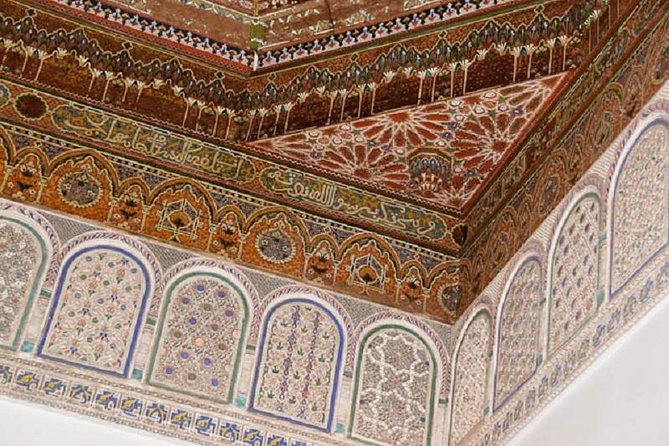
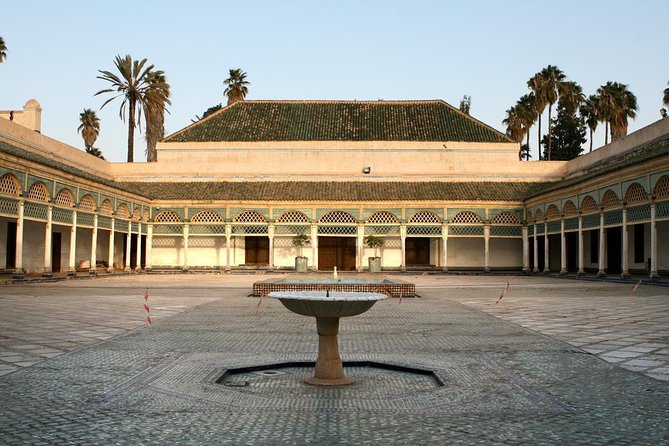
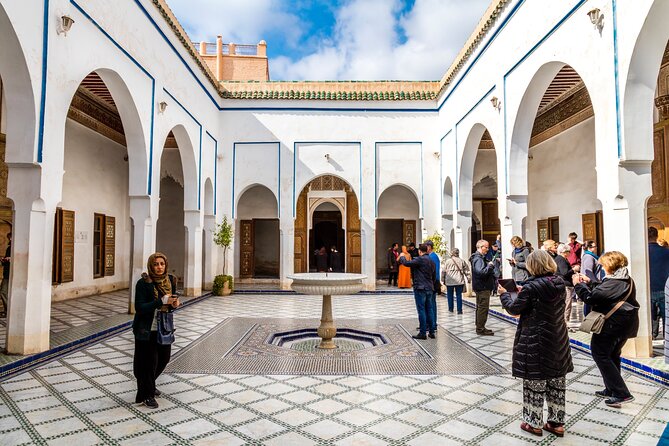
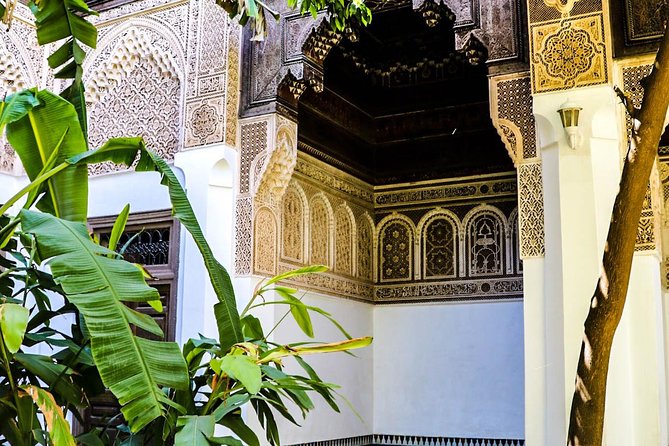
Next comes Bahia Palace, with entrance included and about one hour on site. This is the stop that many people consider the tour’s centerpiece, because it combines craftsmanship with atmosphere: ornate pavilions, mosaic-coated halls, and perfumed courtyards with gardens.
You’ll also get guide-led historical context that links Bahia Palace to earlier palace ambition in the region. The tour route references the Mellah area and the story around El Badia Palace, described as a jewel of Islamic art built toward the end of the 16th century by El Mansour Eddahbi. Then, it contrasts that with how Alaouit Sultan Moulay Ismail is said to have taken away many of the richest elements for other building projects, leaving behind a large esplanade and carved, orange-tree-lined gardens inside high walls. Even if you don’t see everything from that earlier palace today, the explanation gives the place a backstory.
What to watch for while you’re there:
- The way the complex is designed to guide movement from room to room and courtyard to courtyard
- The mix of decoration and function—this wasn’t just for show, it was built to run palace life
- The garden feel, where the layout makes you slow down
Is there a drawback? Bahia Palace can feel crowded during peak visiting windows, and one reviewer complained about a stop near the end that felt like a sales opportunity. So if you want pure monument time, keep your eyes open for any extra add-on and decide calmly whether you want to browse.
Ben Youssef Medersa: the tiled school you can still feel
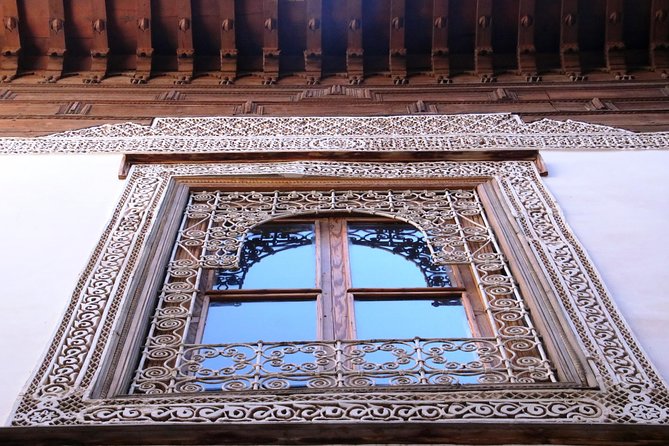
After Bahia Palace, you visit Medersa Ben Youssef (also often written as Ben Youssef Medrassa). This stop runs about one hour and the entrance is included.
When this medersa was active, it was described as one of the largest and most important Islamic schools in Morocco. Today, you’re still walking through a place shaped for study—courtyards, learning spaces, and architectural detail that turns “education” into a physical experience.
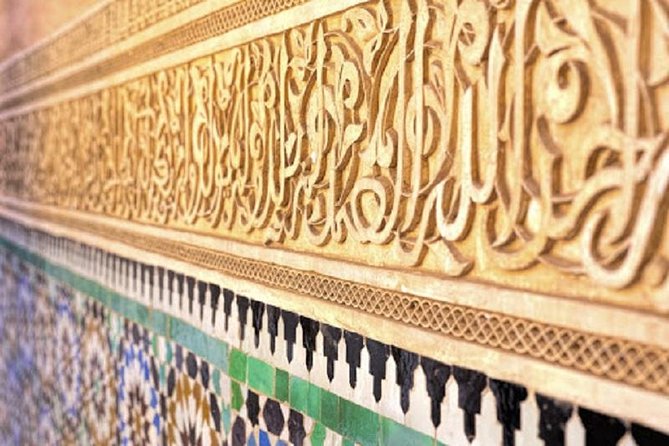
If you love design, this is where the tour pays off. The buildings here aren’t just pretty; they show how Moroccan craftsmanship, geometry, and light were used to create a serious space for learning. Even if you don’t know every term the guide says, you’ll feel the order of the place.
A quick tip: pace yourself. It’s easy to rush through medersas because they look like “one big courtyard.” Slow down for the details. That’s where the guide’s explanation is easiest to translate into something you can actually see.

Saadian Tombs: cedar-domed chambers and a 1917 twist
Then the tour goes to the Saadian Tombs, described as royal burial chambers dating from the 1500s. You’ll spend time admiring the marble and cedar-domed interiors, and you’ll also get the story behind their rediscovery: the tombs were unearthed in 1917.
This stop is valuable because it adds a different kind of Marrakech depth. Bahia Palace teaches you about living spaces and political ambition. Ben Youssef teaches you about scholarship and architecture as a system. The Saadian Tombs, in contrast, turns the focus to memory—how rulers wanted to be remembered, and what happened to those spaces over time.
One practical consideration: if you’re someone who dislikes tight indoor spaces, go in knowing the tombs are not a wide-open outdoor walk. The reward is the atmosphere—quiet, detailed, and very “you’re inside the past” compared with the medina streets.
Tiskiwin Museum: caravan routes between Marrakech and Timbuktu
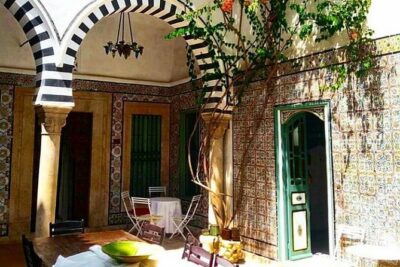
The tour finishes with a visit to the Tiskiwin Museum, set in a double riad (a traditional courtyard-house layout). Here the focus shifts from palaces and burial chambers to trade and culture.
You’ll see an exhibition centered on the ancient Saharan caravan routes between Marrakech and Timbuktu. That theme matters because it explains Marrakech as more than a decorative end point. It becomes a crossroads where goods, people, and ideas moved across long distances.
This stop also brings arts and crafts into the mix, including items such as Berber clothing, jewelry, and carpets. It’s a good counterbalance if you’ve spent the morning staring at architecture. Think of it as your “what people made and carried” chapter to go with the “who lived and ruled” chapters you saw earlier.
Time and weather: how to protect your half-day
A half-day tour is only useful if it actually feels like four hours. The overall duration here is about 4 hours, but experiences can vary depending on the guide, the route on the day, and even the weather.
One important pattern I’d plan around: if the sky turns into a downpour, Marrakech can get slick fast, and being stuck inside vehicles can feel like lost time. I’d pack for that possibility even if the morning looks calm—light rain layer, quick-dry shoes, and a small umbrella if you tolerate carrying one.
Also, be aware that some days may include brief shopping stops. In positive moments, some people liked the chance to buy natural products like hair and skin items. In negative moments, others felt certain stops weren’t needed. You don’t have to buy anything. But if you know shopping trips can ruin your day, set your expectations before you go.
Finally, there’s the guide factor. A few people praised English clarity and lively explanations from guides such as Abdul (attentive, described as speaking multiple foreign languages) and Micky (funny and strong on facts). Others had the opposite experience—hard-to-follow English, skipped attractions, or a guide who spent too much energy on unrelated topics. You can’t control who you get, but you can control how you handle the tour: ask questions early, and don’t let one awkward moment steer how you see the sites.
Price and value: what $41.88 is really buying
At $41.88 per person, this isn’t the cheapest way to see monuments. It also isn’t overpriced once you factor in the pieces you’d otherwise pay for yourself.
Here’s what the tour includes based on the information you have:
- Hotel pickup and drop-off
- Air-conditioned vehicle
- Entrance fees for Bahia Palace and Medersa Ben Youssef
- A guided route with a timed schedule (about 4 hours)
The tour overview also clearly includes the Saadian Tombs and the Tiskiwin Museum, and some accounts indicate entrance into those stops was part of the value. Still, to protect yourself, check your ticket or voucher wording on which entrances are covered.
Value logic that works in real life:
- If you’re new to Marrakech and don’t want to negotiate medina navigation, pickup plus vehicle time is often worth it.
- If you’d likely visit multiple interior sites, entrance coverage helps.
- If you’re pairing this with self-guided exploring later, this tour can act like your “map with stories,” saving time when you’re out walking on your own.
If you’re the kind of traveler who wants maximum time in fewer places, this tour might feel tight. If you want a smart first-morning hit list with history explained, it can be great value.
Who should book this tour (and who might prefer something else)
This one makes sense if you:
- Want a guided introduction to Marrakech’s key monuments in a single morning
- Like architecture, design, and palace layouts with real explanations
- Prefer not to figure out logistics inside the medina on your first day
You might skip it if you:
- Hate added shopping stops or unpredictable changes
- Need very consistent, perfectly clear English narration (guide quality seems to vary)
- Want a slower, deeper museum day—this is built to move
If you’re traveling with friends and you all want the same starting point, the group size can help. The tour has a maximum of 50 travelers, but some departures run small groups (one example mentioned a group of six). Either way, the guide matters most.
Should you book the Half Day Marrakech History Tour?
I’d book it if you want a strong first pass at Marrakech—mosque exterior, palace interiors, a medersa visit, plus the Saadian Tombs and a museum tied to trade routes. The structure is practical, and the included entrances for Bahia Palace and Ben Youssef Medersa reduce guesswork.
I wouldn’t book it blindly if you’re highly sensitive to time slipping, weather disruptions, or shopping add-ons. Your best move is to go in with a flexible mindset: bring rain gear, comfortable shoes, and a clear plan for how you’ll handle any extra shop stop. If you do that, the monuments and explanations can make this half-day feel like a real head start for the rest of your Marrakech days.
FAQ
What time does the tour start?
It starts at 8:30 am.
How long is the Half Day Marrakech History Tour?
The duration is about 4 hours.
What’s included in the price?
The price includes hotel pickup and drop-off, entrance fees for El Bahia Palace and Medrassa Ben Youssef, and an air-conditioned vehicle.
Are food and drinks included?
No. Food and drinks are not included.
Do I get a mobile ticket?
Yes. The tour includes a mobile ticket.
Is admission included for Koutoubia Mosque?
You’ll have an exterior visit of Koutoubia Mosque, and the information provided lists that the admission ticket isn’t included.
What is the cancellation policy?
You can cancel for a full refund up to 24 hours in advance of the experience start time.
Can the itinerary or monuments change?
Yes. One or more monuments could be substituted according to availability or any occurred event.