REVIEW · NARA
Discover Ancient Nara: Private Car Tour from Kyoto or Osaka
Book on Viator →Operated by GoAmigo! · Bookable on Viator
A Nara day trip without the hassle. A private car with an in-person English guide turns a long journey into a relaxed day, from hotel pickup to Great Buddha photos. You’ll spend real time with the deer in Nara Park and slow down for Naramachi’s traditional streets and tea-shop time. One consideration: temple entry fees (like Todai-ji) aren’t included, and the price is per group (up to 2).
What makes this one feel different is the people factor. Guides you might meet on these tours include Ami, Sho, and Towa, and they often steer the schedule around what your group cares about, whether that’s more shrine time, more photo stops, or kid-friendly pacing. There’s also been at least one heads-up in the field about car comfort, so if you’re sensitive to ride quality, it’s worth asking before you book.
In This Review
- Key Things I’d Bookmark Before Booking
- A Private Car Day Trip to Nara From Kyoto or Osaka: Is It Worth It?
- Hotel Pickup and the Nara Game Plan: How the Day Feels
- Nara Park Deer Time: Feeding, Bowing, and Photo Strategy
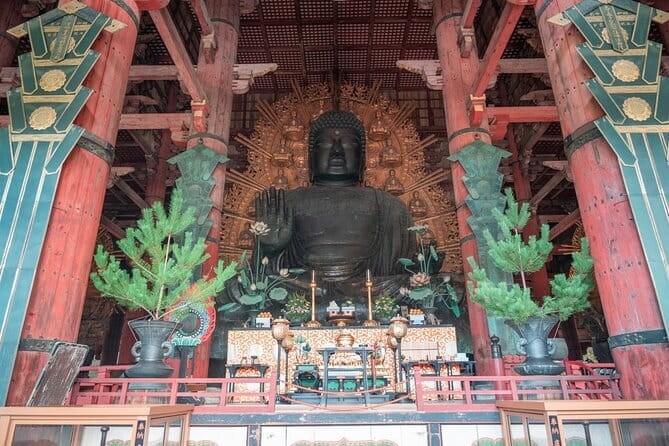
- Todai-ji Temple and the Great Buddha: What to Look For
- Naramachi Nigiwai-no-le: Traditional Streets, Townhouse Interiors, and Lunch
- Kasuga Taisha Shrine in the Sacred Forest: The Meaning Behind the Walk
- Mt. Wakakusa Summit: Panoramic Views With Deer on the Same Stage
- Optional Add-Ons If Time Allows: Tea, Matcha, Sake, and Seasonal Fun
- Two People Make the Difference: Driver and Guide Roles
- What You Should Plan For: Walking, Heat, and Deer Etiquette
- Price and Logistics: How to Think Like a Smart Shopper
- Should You Book This Nara Private Car Tour?
- FAQ
- What sites are included in the Nara tour?
- How long is the tour from Kyoto or Osaka?
- Is pickup and drop-off included?
- Is lunch included?
- Are temple admission fees included?
- What’s included in the price besides the guide?
- Is this a private tour?
Key Things I’d Bookmark Before Booking
- Hotel pickup and drop-off from Kyoto or Osaka to make Nara feel like a true day trip
- Todai-ji plus Nara Park deer time in a tight, efficient route with a guide’s context
- Naramachi strolling with traditional townhouse views and local shopping stops
- Kasuga Taisha in the sacred forest with an accompanying guide for meaning, not just looking
- Mt. Wakakusa summit views for panoramic photos and deer moments near the top
A Private Car Day Trip to Nara From Kyoto or Osaka: Is It Worth It?
This is the kind of Nara day trip that works best when you want ease more than transit math. You’re paying for a driver, an English guide, and a full day of someone else handling timing, routes, and the “where do we go next” stress. If you’re coming from Kyoto or Osaka, that convenience is the real product.
The route itself is compact but meaningful. You’re hitting Nara Park, Todai-ji (home of the Great Buddha), Naramachi, Kasuga Taisha, and Mount Wakakusa, then heading back to your hotel. In an ordinary self-guided day, you’d spend a bunch of time figuring out train transfers, local buses, and walking between far-flung stops. Here, the car is doing the heavy lifting.
Price is set at $573.33 per group (up to 2) for about 8 to 9 hours. That can sound steep if you compare it to a train ticket. But compare it to the cost of a private taxi plus a guide. Also, temple fees are not included, so plan for small add-ons like Todai-ji’s fee (¥800).
This setup is ideal for couples, small families, and anyone who wants to see Nara’s highlights without turning the day into a logistics project.
You can also read our reviews of more tours and experiences in Nara.
Hotel Pickup and the Nara Game Plan: How the Day Feels
The tour runs as a true private experience. Your party stays together the whole time, and you’re traveling in an air-conditioned vehicle. You also get bottled water, which matters in Japan’s summer heat.
What I like about this format is the pacing. Instead of sprinting from one “must-see” to the next, the guide can adjust the day based on your interests. In the field, guides have been flexible about what to emphasize, and they’ve helped families keep a comfortable rhythm without constantly forcing long lectures.
You’ll also get reminders and clear direction around the day itself. For first-timers in Japan, that reduces stress fast. For people traveling with kids, it can be the difference between enjoying Nara and just surviving it.
Nara Park Deer Time: Feeding, Bowing, and Photo Strategy
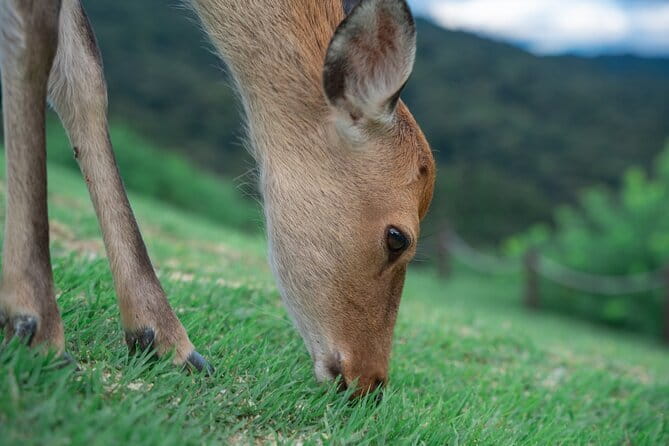
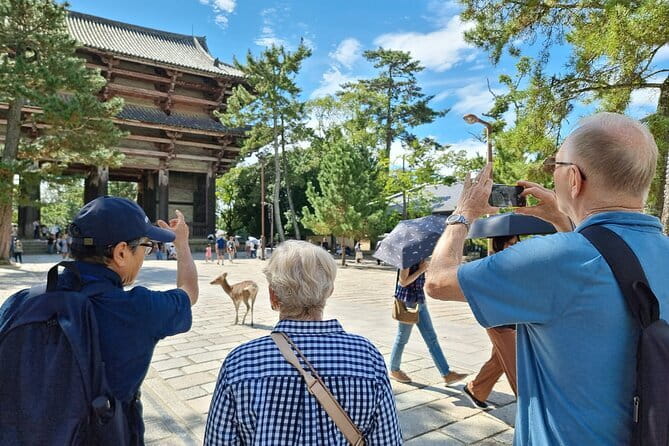
Nara Park is the part of the day most people picture first, and it’s also where your guide earns their keep. You’ll start with about an hour at Nara Park, with time to feed the deer and take commemorative photos.
This is not just “watch deer from a distance.” You’re actively interacting. The classic deer moment is feeding them carefully while you laugh, pose, and try not to get your snacks stolen by a deer with better manners than some tourists.
A few practical ideas:
- Keep your camera ready, but don’t hold it so tight you forget to enjoy the moment.
- Let the guide handle any etiquette tips, especially if you’re traveling with kids.
- Wear shoes you’re comfortable walking in. Even short park strolls add up in a day.
If you want deer photos that look natural (not frantic), having an English guide to help you time shots and move between viewpoints makes a real difference.
Todai-ji Temple and the Great Buddha: What to Look For
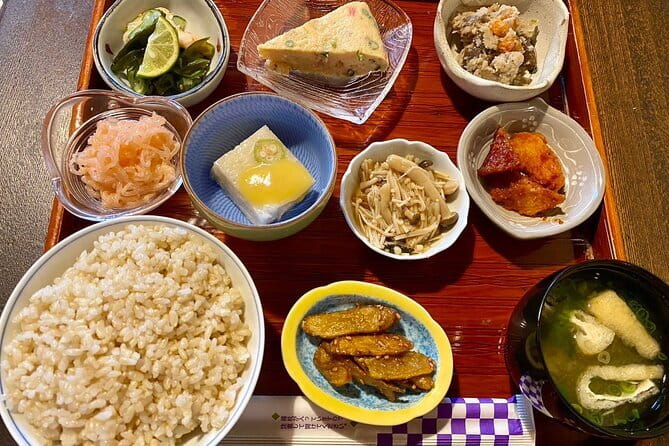
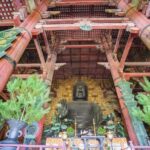
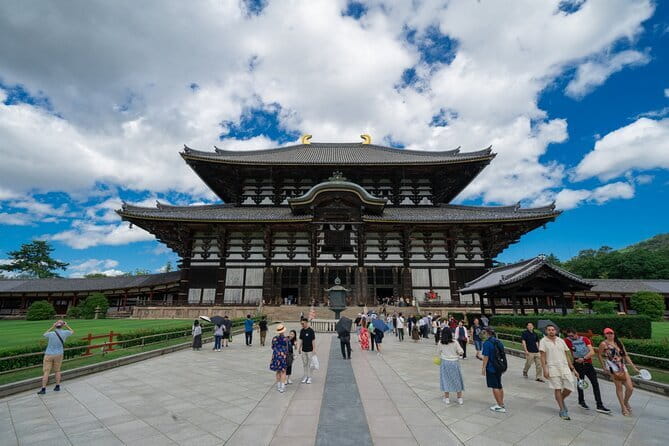
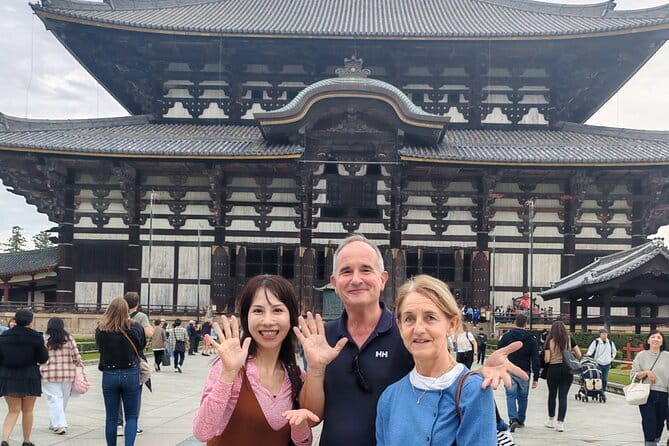
Todai-ji is the big-ticket temple stop, and it’s easy to see why it’s on every Nara route. Here, you get about one hour at the site, and your guide explains the history and meaning of the temple rather than just listing facts.
The Great Buddha is the obvious headline. But what makes Todai-ji more rewarding with a guide is how the place fits into Nara’s older story—why this temple mattered to people in the past and why it still feels important today.
Important cost note: Todai-ji admission is not included. You should expect ¥800 as listed. Budget that into your day so you’re not surprised at the gate.
If you’re the kind of visitor who likes to understand what you’re seeing (not just check boxes), this is the stop that delivers.
Naramachi Nigiwai-no-le: Traditional Streets, Townhouse Interiors, and Lunch
After the deer and Todai-ji, the day shifts into a more human, slower Nara. You’ll head toward Naramachi, a historic district known for old-style townhouses, shopfronts, and the kind of wandering that’s fun even when you’re not hunting for souvenirs.
This part includes about 1 hour 30 minutes and covers:
- Stroll time through Naramachi’s traditional lanes
- Shopping and a chance to browse local stores
- A mochi-pounding watch at Nakatanidou (when available)
- A visit to Nigiwa-i-no-ie, where you can explore the interior of a traditional townhouse
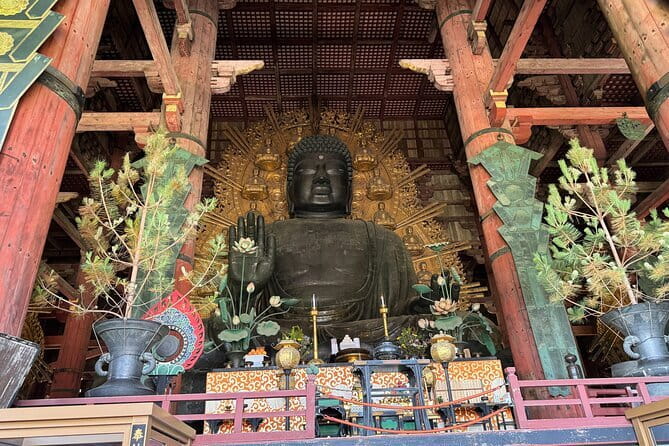
Lunch happens around this area. The tour includes lunch at a local Japanese restaurant. If you have dietary needs, this is where you should speak up. In practice, guides on these tours have been able to handle requests like gluten-free lunch, so it’s worth mentioning your needs clearly rather than hoping.
A good strategy in Naramachi is simple: don’t over-plan purchases. Go for what looks handmade, what you can realistically carry home, and what feels tied to Nara rather than generic “Japan kitsch.” Then you’ll enjoy the browsing instead of turning it into a rushed chore.
Kasuga Taisha Shrine in the Sacred Forest: The Meaning Behind the Walk
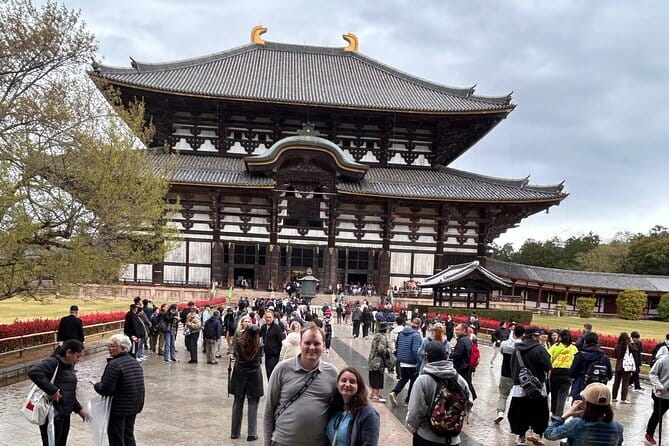
Kasuga Taisha is a standout because it isn’t just a building. You walk in a space that feels protected and ancient, set in a sacred forest preserved for over 1,000 years.
You’ll spend about one hour here, with your guide accompanying the visit. With a guide, it’s easier to notice the details that make the shrine special, and to understand why people come back again and again.
This stop also makes a nice contrast to Nara Park. If Nara Park feels playful and loud (deer choreography plus photo ops), Kasuga Taisha feels quieter and more grounded. It’s the kind of place where you naturally slow down, look around, and notice how the environment shapes the experience.
Mt. Wakakusa Summit: Panoramic Views With Deer on the Same Stage
Mount Wakakusa is the “wow, we made it to the view” portion of the day. You get around 40 minutes at the summit area for photos and panoramic views.
The big payoff is the combination:
- Wide perspective over Nara and Osaka
- A photo setting that often includes deer nearby
- The chance to catch the softer light that makes outdoor photos look better than midday snapshots
This is also where you can feel the day’s pacing. You’re not spending hours hiking. It’s short enough to stay comfortable, but long enough to get the kind of summit photos you’ll actually want to keep.
If you’re visiting during a hot day, plan to take water breaks. Your guide can help you decide when to move and when to pause for photos.
Optional Add-Ons If Time Allows: Tea, Matcha, Sake, and Seasonal Fun
Not every day needs extra stops, but it helps to know what’s possible. If time allows, the tour lists optional experiences such as:
- Afternoon tea at the historic Nara Hotel
- A casual matcha experience
- Local sake tasting
- Seasonal activities like strawberry picking
These are best treated as add-ons, not guarantees. Your guide’s job is to keep the main route smooth. If you want one of these, tell your guide early so there’s room to fit it in without turning the day into a sprint.
Even if you skip the optional parts, Nara already gives you plenty to see: deer, major temple architecture, old town streets, a shrine forest, and summit views.
Two People Make the Difference: Driver and Guide Roles
This tour runs with two staff members: a dedicated driver and an in-person English guide. That division matters.
The driver handles the vehicle, traffic, and smooth timing between stops. The guide handles the experience—what to notice, what each place means, how to keep your group comfortable, and how to adapt if your interests shift mid-day.
From the field, guides like Ami, Sho, and Towa are the kind of people who don’t just talk. They also help you with practical things like pacing for families, photo angles and moments, and even logistics like where to eat and how to order lunch from menus that can be confusing.
If you’re a visitor who likes photos, you’ll likely appreciate the attention to capturing the day in a way that feels natural, not staged.
What You Should Plan For: Walking, Heat, and Deer Etiquette
Nara Park plus temple areas plus town streets means you should be ready to walk. The tour is designed so “most travelers can participate,” but you’ll still want comfortable shoes. If you’re older or traveling with kids, ask your guide what the walking looks like for your ability level.
Heat can also be a factor. In Japan, summer afternoons can feel brutal, and a private car tour is one of the easiest ways to keep from frying. Still, build in shade breaks and water stops when you feel yourself slowing down.
Then there’s the deer interaction. If you haven’t met deer up close in Japan, they’re bold. The key is staying calm, being careful, and following your guide’s instructions so everyone stays safe and the deer don’t become the boss of the day.
Price and Logistics: How to Think Like a Smart Shopper
Let’s talk value in plain terms.
You’re paying for:
- Private transport in an air-conditioned vehicle
- An in-person English guide
- Bottled water
- Hotel pickup and drop-off (from Kyoto or Osaka)
- A full route including major Nara sights plus Naramachi strolling
- Lunch at a local Japanese restaurant
You’re not paying for:
- Temple admission fees (example: Todai-ji ¥800)
So the question isn’t just “is it expensive.” The question is “what’s your time worth, and how much do you want to manage on your own?” If you like planning and navigating, public transit can be cheaper. But if you want the day to feel smooth, this private format buys you comfort and confidence.
For groups of two, it can be especially good value because you’re not sharing a guide with strangers. That lets the day bend toward what you want: more deer time, more shrine time, or more time to wander Naramachi at your own speed.
Should You Book This Nara Private Car Tour?
Book it if:
- You want a relaxed Nara day without transit transfers and long waits
- You care about understanding the places, not just seeing them
- You’re traveling with kids or anyone who benefits from a slower, flexible pace
- You want photo-friendly stops that still feel organized
Skip it or consider a different option if:
- You’re on a tight budget and don’t mind public transportation
- You have high sensitivity to vehicle comfort and prefer to pre-screen transport details
- You only want one or two sites and would rather build a shorter, cheaper outing
If you want an efficient, comfortable day that hits the main Nara highlights and still gives you time to enjoy yourself, this is a strong choice.
FAQ
What sites are included in the Nara tour?
You’ll visit Nara Park for deer feeding and photos, Todai-ji Temple to see the Great Buddha, Naramachi for traditional townhouse and local shopping time, Kasuga Taisha Shrine, and Mount Wakakusa for panoramic views.
How long is the tour from Kyoto or Osaka?
It runs about 8 to 9 hours.
Is pickup and drop-off included?
Yes. Pickup is offered, and the tour includes returning you to your hotel in Kyoto or Osaka.
Is lunch included?
Yes. The tour includes lunch at a local Japanese restaurant, with other dining options available on request.
Are temple admission fees included?
No. Todai-ji admission is not included, and the tour lists a fee of ¥800 for Todai-ji.
What’s included in the price besides the guide?
You get an air-conditioned vehicle, bottled water, and an in-person English guide. You also receive a mobile ticket.
Is this a private tour?
Yes. It’s private, and only your group participates (up to 2 people per group as listed).