REVIEW · NARA
Nara: Bike Tour in Ancient Capital UNESCO World Heritage
Book on GetYourGuide →Operated by Heijo-Kyo Bike Tour · Bookable on GetYourGuide
Two hours, one ancient capital, no traffic stress. This small-group bike tour glides through the UNESCO Heijō-kyō palace area with timed photo stops and story-rich explanations from your guide, often Kay. You’ll hit big gates, a Japanese garden, tomb-era sites, and excavation remains—then finish with a photo-ready costume moment.
I love that the route is built for momentum: you move between the major palace points without turning it into an all-day slog. I also like how you get context that actually matches what you see, from the palace layout to how Nara-period power showed up in architecture and artifacts.
One possible drawback: some structures you’ll see are reconstructions, alongside preserved excavation spots. If you’re not into ancient sites and archaeology, the time can feel a bit long for what looks, at first glance, like empty ground.
In This Review
- Fast Takeaways Before You Pedal
- Why a Heijō-kyō Bike Tour Beats Walking in Nara
- Getting to Miharashi-kan in Suzaku-mon Square (And Not Being Late)
- Suzaku-mon Gate: The Photo Stop That Sets the Scene
- Tōin Garden (East Palace Garden): Bridges, Rocks, and State-Guest Vibes
- Nara Palace Site Museum + Excavation Site Exhibition Hall: Where the Ground Tells Stories
- Hishiage Ancient Tomb: The Tomb-Horizon Beyond the Palace
- Daiichiji Daigokuden and the Nammon South Gate: Ceremonial Scale, Up Close
- Heijō Palace Site Museum + Tenpyo Costume Photos
- Minakami Pond: The Calm Stretch That Makes the Whole Tour Feel Balanced
- Price and Value: Why $22 for 2 Hours Can Make Sense
- Pace, Group Size, and Your Comfort Level on a Bike
- Should You Book This Nara Heijō-kyō Bike Tour?
- FAQ
- How long is the Nara bike tour?
- How much does it cost?
- Where do we meet for the tour?
- What time should I arrive before the start?
- What languages is the live guide available in?
- What’s included in the price?
- What is not included?
- How big is the group?
- Is it suitable for wheelchair users or people who can’t ride a bike?
- What happens if it’s canceled due to bad weather?
Fast Takeaways Before You Pedal
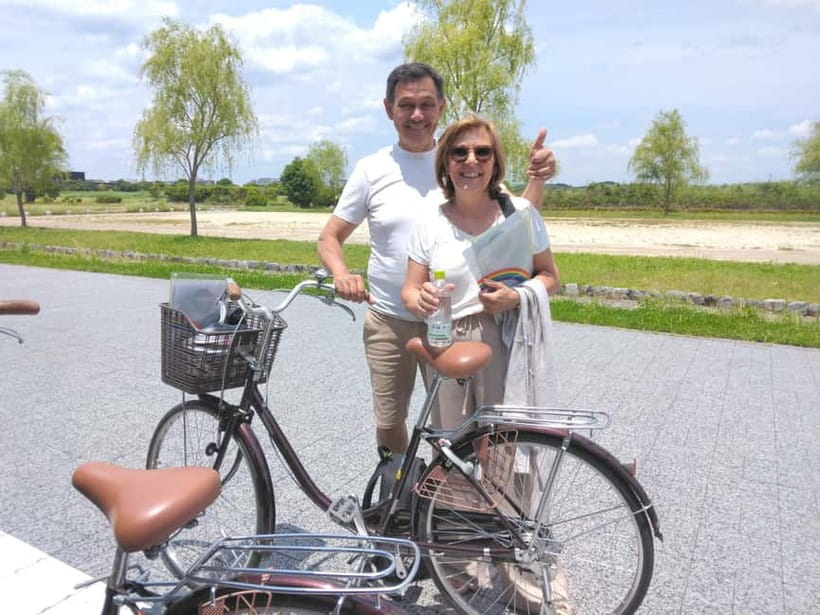
- Licensed guide with English (and Japanese) keeps the palace story clear and paced.
- UNESCO Heijō Palace grounds by bicycle covers gates, gardens, museum halls, and tomb sites.
- Excavation Site Exhibition Hall shows remains preserved and displayed as found.
- Minakami Pond ride adds a quiet, nature break with birds and wildlife sightings.
- Tenpyo (Nara-period) costume experience gives you standout photos without planning extra stops.
- Small group size (up to 8) helps you move calmly through a huge complex.
Why a Heijō-kyō Bike Tour Beats Walking in Nara
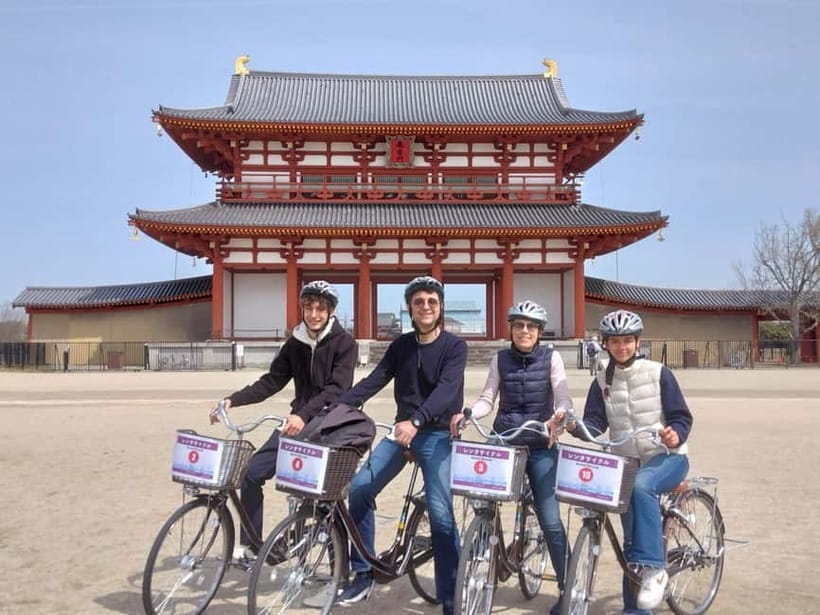
Nara’s famous for deer and temples. But the part you’re riding through here—Heijō-kyō, the Nara-period capital—has a different vibe. It’s sprawling, spaced out, and easy to misunderstand if you only rely on signs.
A bike makes the whole UNESCO site easier to read. You’re not just looking at one building; you’re tracing how the palace area was organized: entrances, garden zones, ceremonial halls, and even the tomb landscape beyond the palace core. And because the tour lasts 2 hours, you’re not stuck committing to a full half-day just to cover a lot of ground.
Also, a good guide turns empty-looking spaces into a map of what used to be there. When Kay guides, the pace is relaxed, and you get frequent photo stops so you can actually capture the big gates and museum exteriors without feeling rushed.
You can also read our reviews of more tours and experiences in Nara.
Getting to Miharashi-kan in Suzaku-mon Square (And Not Being Late)
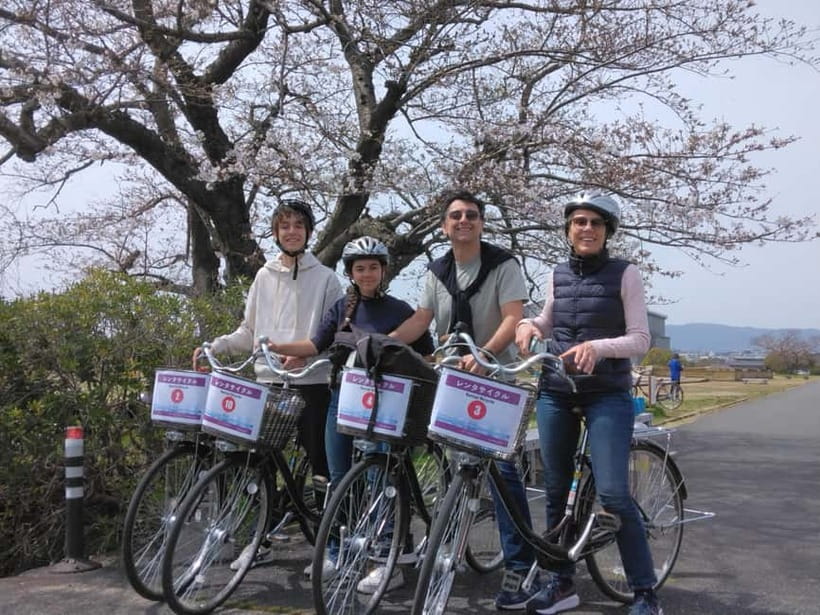
Your meeting point is the rental bike reception counter at Miharashi-kan in Suzaku-mon Square (coordinates: 34.68628944048124, 135.7926401146025). Plan to arrive 10 minutes before your start time. This matters because the group size is limited (up to 8), and bikes and helmets need to be sorted before you roll.
Here are your practical options to reach Suzaku-mon Hiroba Mae:
- From Kintetsu Nara Station: 16 minutes by Nara Kotsu bus to Suzaku-mon-hiroba-mae, then about 5 minutes’ walk north.
- From Kintetsu Yamato-Saidaiji Station (South Exit): bus to Suzaku-mon-hiroba-mae, then about 5 minutes’ walk.
- From JR Nara Station (West Exit): about 10 minutes to Suzaku-mon-hiroba-mae, then about 5 minutes’ walk.
- Or if you’re feeling steady: roughly 20 minutes’ walk from the South Exit of Kintetsu Yamato-Saidaiji Station or from Shin-Omiya Station.
If heavy rain or storms hit, the operator may cancel. In that case, you get a 100% refund.
Suzaku-mon Gate: The Photo Stop That Sets the Scene
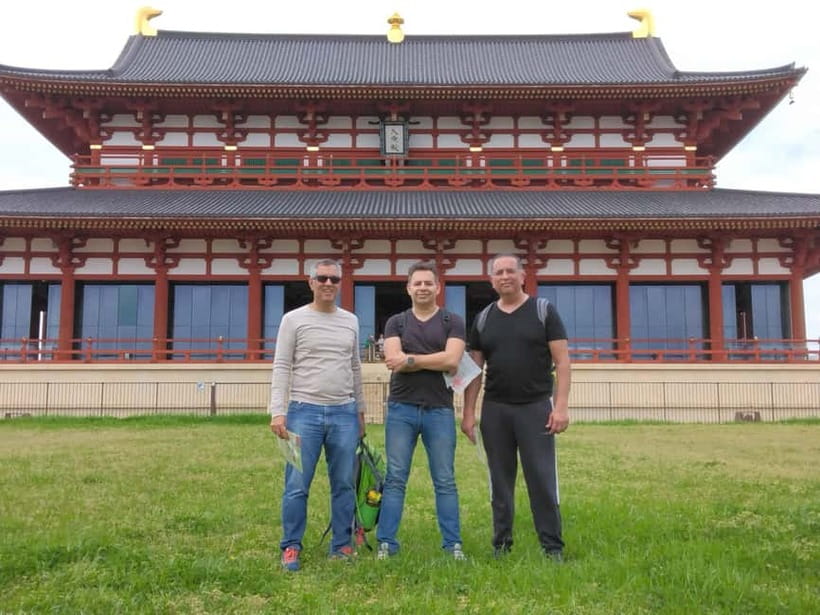
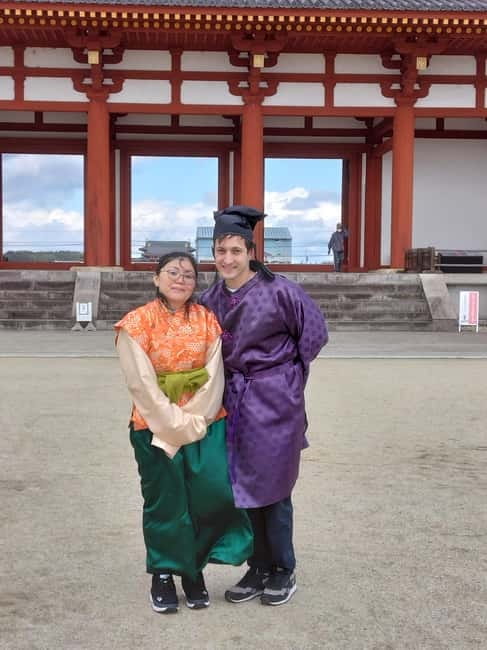
Suzakumon Gate is the main entrance gate of Heijō Palace. It’s the perfect first stop because it gives you your mental anchor: this wasn’t a small shrine area—it was the entry face of a planned capital.
During your visit, you’ll do more than take a picture. You get a guided tour and a short history explanation tied to what a gate like this meant in the Nara capital. The scenery matters too. You’ll be outdoors early, with space to orient yourself, and the whole place starts to feel less like random ruins and more like a functioning site.
What to watch for: use this stop to notice lines and symmetry. Later, when you’re seeing palace gardens, ceremonial halls, and museum layouts, those visual cues help you connect the dots.
Tōin Garden (East Palace Garden): Bridges, Rocks, and State-Guest Vibes
Next comes Tōin Garden, the east palace garden where Japanese garden design took root. This is one of those places where a quick stop can still feel like a real reset because the pace slows and the scenery gets softer.
You’ll have a photo stop and then a guided visit. The key idea isn’t just “pretty garden.” You’ll learn how the garden connected to state functions—how it fit the palace world, including its role as a guest-oriented environment.
Why this stop is worth it: it’s one of the few moments where you can see how aesthetics served power. And because it’s a garden, you don’t need to squint for meaning. The composition is right in front of you: bridges, buildings, and rock arrangements designed to be looked at, not just passed through.
Nara Palace Site Museum + Excavation Site Exhibition Hall: Where the Ground Tells Stories
Then you hit two museum stops back-to-back: Nara Place Site Museum and the Excavation Site Exhibition Hall.
The Excavation Site Exhibition Hall is especially special because the remains are preserved and displayed in the same state as they were discovered. Translation: you’re not just looking at models or tidy reconstructions. You’re viewing excavation remains tied to the reality of how the site was uncovered.
This pair of museums also helps you adjust expectations. In many historic places, “ruins” means you wander around broken stones. Here, the museum framing helps you understand why certain areas look the way they do—and what those preserved remnants represent.
Quick reality check: if you’re the kind of person who loves architecture, artifacts, and how archaeologists interpret fragments, you’ll get a lot out of these halls. If museums aren’t usually your thing, it still works because the bike route keeps you moving between indoor stops and outdoor anchor points.
Hishiage Ancient Tomb: The Tomb-Horizon Beyond the Palace
After the museums, you’ll visit Hishiage Ancient Tomb. This is where the tour widens beyond palace architecture and into the burial landscape of the period.
You’ll have guided time to admire the ancient tomb and the grave goods. It’s a different angle on what Nara-period life valued—ritual, authority, and material culture expressed through burial practice.
How to make this stop click: look at the tomb as part of the capital’s wider geography. A palace complex wasn’t an isolated bubble; it sat within a larger system of status, ceremonies, and commemorations.
Daiichiji Daigokuden and the Nammon South Gate: Ceremonial Scale, Up Close
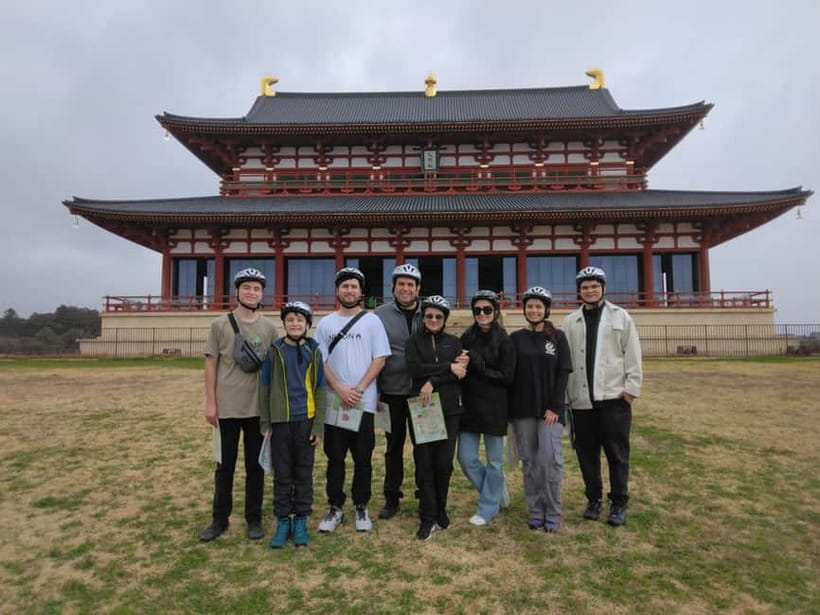
Next are the palace’s ceremonial structures: Daiichiji Daigokuden and the Daigokumon (Nammon, South Gate).
Daiichiji Daigokuden is the audience hall portion used for special ceremonies, and you’ll be able to admire its paintings and exhibitions of ornaments and pictures. Even though some elements are reconstructed, the main value here is understanding what the building was meant to do: host authority in a controlled setting.
Then you’ll go to the South Gate (Nammon) area for a shorter stop and photos. A 5-minute photo pause can sound brief, but gates work like magnets. Even if you’ve only seen one gate so far, you’ll start to notice how “entry” and “ceremony” shape the whole layout.
Practical tip: treat these two stops like a visual set. Gate first, ceremonial hall second. It helps your brain build a storyline, not just a list of locations.
Heijō Palace Site Museum + Tenpyo Costume Photos
The tour includes a visit to the Heijō Palace Site Museum. This museum focus keeps the story organized around the palace area itself. You’ll also be looking at items like ancient tiles and wooden tablets, plus models that help you understand the scale of buildings that no longer stand in full.
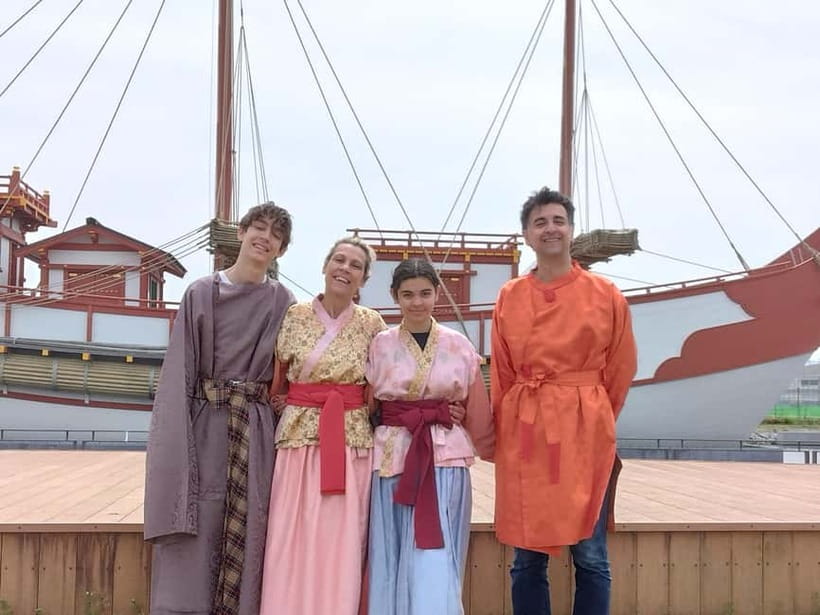
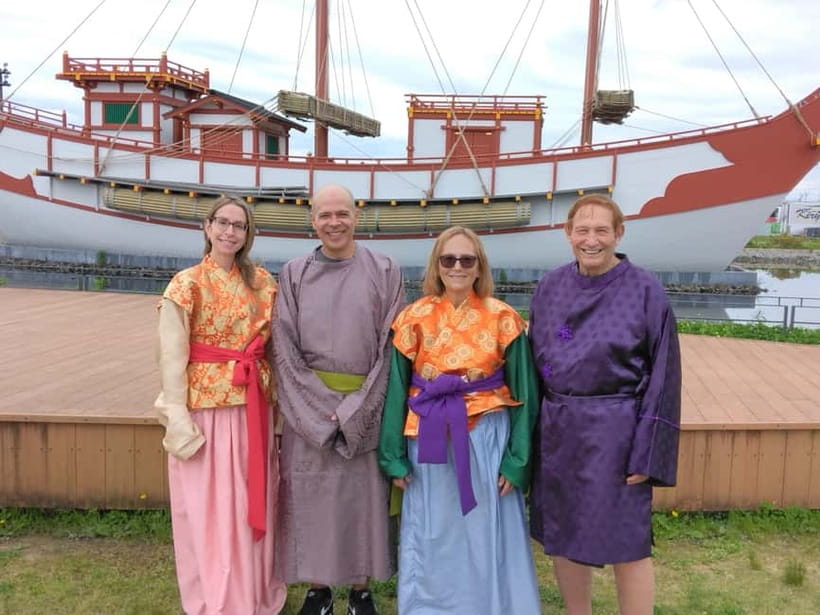
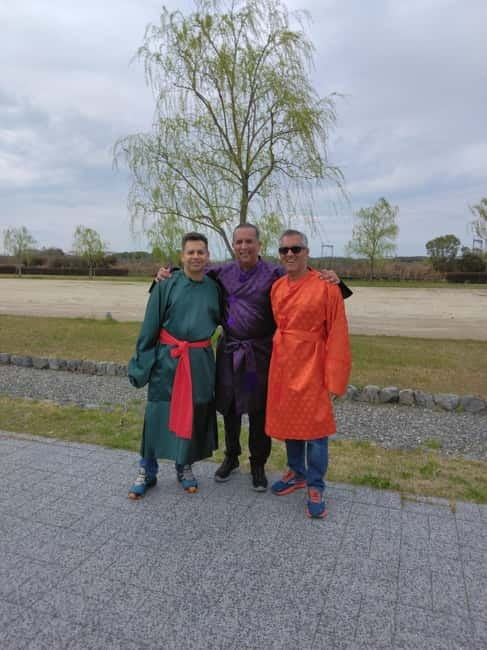
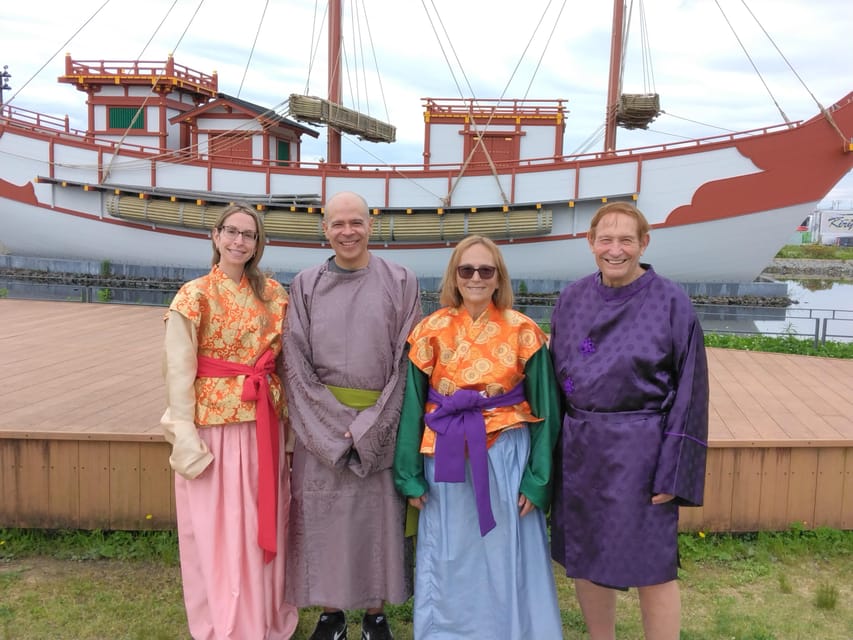
And then comes a fun, very practical add-on: Tenpyo (Nara-period) costume experience. If you want photos that don’t look like generic souvenir shots, this is the moment. You get to wear traditional clothing and create a memorable visual connection to the era you just learned about.
Who this suits best: anyone who enjoys dressing up for culture, and families who want one “big moment” during a short tour. It also helps kids and first-time Nara visitors remember the trip beyond the bike ride.
Minakami Pond: The Calm Stretch That Makes the Whole Tour Feel Balanced
One of the tour highlights is biking around Minakami Pond. This is your nature break inside the palace grounds, where you can slow down, feel the breeze, and listen for birds.
You may even spot ducks and turtles. That small bit of wildlife matters more than you’d think: it gives the UNESCO site breathing room, so you don’t end the tour feeling like you only stared at architecture.
If it’s hot: this is the section where the breeze can feel like a reset. Keep water handy even though food and drinks aren’t included.
Price and Value: Why $22 for 2 Hours Can Make Sense
At $22 per person for a 2-hour tour, the value comes from the package deal. You’re getting:
- bike rental and helmets
- a national government licensed guide
- admission to the included sites
- the Tenpyo costume experience
- a small-group setup (limited to 8)
That’s not just sightseeing. It’s guided access to multiple museum-and-site points inside a major UNESCO area—plus the bike itself, which is doing real work for you by covering distance.
What’s not included is also important: food and drinks and bike insurance. So I’d plan to eat either before or after your tour, and assume you’re responsible for any insurance coverage details not listed.
Pace, Group Size, and Your Comfort Level on a Bike
The tour is short enough to feel manageable, but it still requires real bike comfort. It’s not suitable for:
- pregnant women
- people who can’t ride a bike
- wheelchair users
- visually impaired people
Since the group max is 8, you’re usually not stuck behind a big crowd. That’s a major quality-of-life factor at a place as wide as the palace site.
Also, Kay’s guiding style comes through in the way the tour is structured: stops are frequent, photo times are built in, and the guide answers questions without making it feel like you’re interrupting. Families often like the format because it’s not a long museum slog; it alternates between bike movement and short, meaningful stops.
Should You Book This Nara Heijō-kyō Bike Tour?
Yes, if you want a fast, guided introduction to Nara’s ancient capital without turning your day into a marathon. This is the right kind of tour for you if you’re drawn to UNESCO sites, architecture, archaeology, and how a planned capital worked in everyday terms—palace gates, ceremonial halls, gardens, and tomb-era context.
Skip it (or choose something else) if you mainly want the most famous deer-and-temple sightseeing. Also consider your interest level in excavations and reconstructions. The ground you see matters, but if you’re expecting everything to look like a fully standing palace, you may find parts are more “learn what you’re looking at” than “wow, intact buildings.”
FAQ
How long is the Nara bike tour?
The tour lasts 2 hours.
How much does it cost?
The price is $22 per person.
Where do we meet for the tour?
Meet at the rental bike reception counter at Miharashi-kan in Suzakumon Square.
What time should I arrive before the start?
Please arrive at the rental bike reception at Miharashi-kan about 10 minutes before the tour starts.
What languages is the live guide available in?
The live tour guide is available in English and Japanese.
What’s included in the price?
Included are the biking tour, the guide, rental bike, helmets, all admission, and the traditional costume experience.
What is not included?
Food and drinks are not included, and bike insurance is not included.
How big is the group?
The tour is a small group limited to 8 participants.
Is it suitable for wheelchair users or people who can’t ride a bike?
No. It is not suitable for wheelchair users, and it’s not suitable for people who can’t ride a bike.
What happens if it’s canceled due to bad weather?
The supplier may cancel due to heavy rain, storms, or inclement weather, and those cancellations are refunded 100%.