REVIEW · VARANASI
The Heritage City Tour in Varanasi
Book on Viator →Operated by The Heritage city walk by Amit (アミットツアー) · Bookable on Viator
Varanasi hits you fast—then this tour gives it shape. This private heritage walk with Amit strings together the Ganges ghats, a calm tea stop, Banaras highlights, and the evening Ganga Aarti in one efficient 4.5-hour loop. I like the focused walking pace that still leaves room for side lanes, and I like that Amit is locally rooted and can guide in Japanese. One thing to factor in: the boat ride is 60 minutes, but boat admission is not included, so plan for that extra cost.
You’ll move through places that feel both famous and deeply practical to local life—ritual steps, cremation ghats, temple viewpoints, and the river ceremonies people come to understand. It’s also the kind of route where timing matters, so show up a bit early and stay flexible with crowds.
In This Review
- Key highlights you’ll feel right away
- A smart loop for seeing Varanasi’s real spine in 4.5 hours
- Dasaswamedh Ghat: the main stage of the Ganges
- Harishchandra Ghat: understanding cremation ghats respectfully
- Assi Ghat: Durga’s story and a gentler start to the later rhythm
- Ganges boat ride: the only way to get a vertical view
- Banaras Hindu University and the Kashi Vishvanath Temple area
- Ganga Aarti: what you’re seeing, and why it matters
- Price and value: what $88 really buys you
- Pace, pickup, and how to avoid day-of chaos
- Who should book this Heritage City Walk with Amit?
- Should you book this tour?
- FAQ
- How long is the Heritage City Tour in Varanasi?
- How much does the tour cost?
- Is pickup offered on this tour?
- Do I need a printed ticket?
- Does the tour include admission tickets?
- Is lunch or dinner included?
- Is there a boat ride on the Ganges?
- How long is the Ganga Aarti portion?
- Is this tour private?
- Are service animals allowed?
- Can I cancel for a full refund?
Key highlights you’ll feel right away

- Amit the guide: born and raised in Varanasi, with Japanese support
- Private group: only your group joins, not a shared shuffle
- Ghat-to-temple flow: Dasaswamedh Ghat, Harishchandra Ghat, Assi Ghat, then Kashi Vishvanath Temple area
- One river perspective: a ~60-minute Ganges boat ride (boat admission not included)
- Evening ritual payoff: Ganga Aarti is included for about 1 hour
- Good value basics: tea or coffee included, with most admission tickets covered
A smart loop for seeing Varanasi’s real spine in 4.5 hours
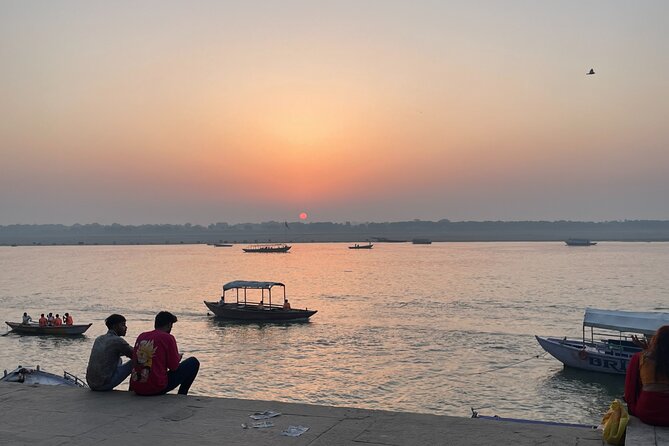
The best part of this tour format is how it strings together the places that explain Varanasi. You’re not just collecting landmarks. You’re getting a “why this matters” route: the ghats on the Ganges first, then the temple world, then the river ceremony that brings it all together.
The timing is also realistic. At roughly 4 hours 30 minutes, you can cover multiple stops without turning the day into a marathon. The pace tends to be active—you’ll be walking—so you’ll want decent shoes and a light plan for hydration.
Another practical win: you get pickup offered, plus a mobile ticket. That reduces friction in a city where meeting points can be easy to miss if you arrive at the last second. For anyone who wants a guided path through a place that can feel overwhelming on your own, this setup is a strong fit.
You can also read our reviews of more tours and experiences in Varanasi.


Dasaswamedh Ghat: the main stage of the Ganges
You start at Dasaswamedh Ghat, one of Varanasi’s major ghats right on the Ganges, and close to Vishwanath Temple. This matters because it puts you near the action zones where the river life and the temple life overlap.
There are also Hindu legends connected to Dasaswamedh Ghat, including a story where Brahma is said to have created the place to welcome a deity. Even if you don’t go heavy on mythology, these legends give you a lens: this isn’t just a riverside walkway. It’s treated like a living, story-filled threshold between everyday life and the sacred.
What to expect on the ground:
- you’ll be close to activity tied to the temple-culture rhythm
- you’ll likely see how locals use the river steps for ritual and daily routines
A small consideration: since it’s a main ghat, it can be busy. If you’re sensitive to crowds or prefer quiet viewpoints, you’ll need patience and good timing.
Harishchandra Ghat: understanding cremation ghats respectfully
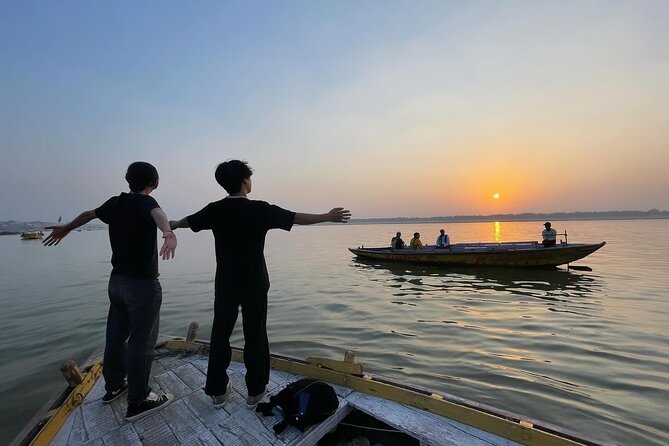
Next is Harishchandra Ghat, one of Varanasi’s two cremation ghats (the other is Manikarnika Ghat). If Dasaswamedh helps you see the spectacle side of Varanasi, Harishchandra shows you the solemn, unavoidable part.
Here’s the core fact: Hindus from different places bring the dead bodies of their relatives to Harishchandra Ghat for cremation. In the local belief system, cremation at the ghat has spiritual meaning—people view it as part of the journey after death.
This stop can be emotionally intense. You don’t need to “like” it. You do need to handle it with respect, quiet attention, and a willingness to see beyond tourism.
Practical tips for this kind of stop (without turning it into a lecture):
- dress with modesty and keep your behavior low-key
- watch where you step—ghat surfaces can be uneven
- keep your camera use thoughtful; don’t block people doing their work
Assi Ghat: Durga’s story and a gentler start to the later rhythm
Assi Ghat is a great middle stop because it brings mythology back into view, while also shifting the mood. The naming story is tied to Goddess Durga: after defeating the demons Shumbha-Nishumbha, she threw her sword into a river called Assi—so the ghat takes its name from that.
Even if you don’t track the full legend, this is how Varanasi works. Stories aren’t separate from geography. They’re built into the riverfront.
Assi Ghat is also known for evening arti, and it’s especially crowded during peak ritual times. That’s not a problem if you expect it—but it helps to plan your expectations. If you’re arriving for calmer walking and photos, earlier timing is usually easier than peak minutes.
Why I like putting Assi here in the route: it feels like a bridge between the more intense cremation-focus of Harishchandra and the ceremonial focus that comes later.
Ganges boat ride: the only way to get a vertical view
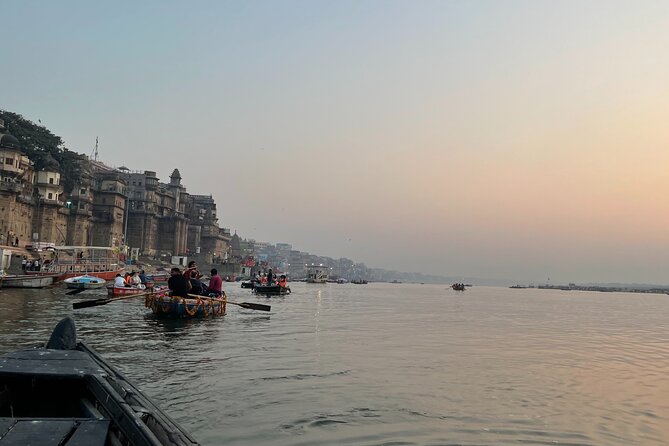
Then you get a boat ride on the Ganges for about 60 minutes. This is one of those travel moves that feels almost too simple, then becomes a highlight because it changes your relationship to the city. From the water, the ghats look less like random steps and more like a continuous riverfront civilization.
You’ll also get a sense of scale—temples, walls, steps, and crowd flow all line up along the river edge. That perspective is hard to replicate from the street.
One key consideration: boat admission is not included. Your tour includes the ride time, but not every payment tied to boat entry. When comparing total cost, factor this in so there are no surprises on the day.
Also, plan for river conditions. Even if the day is calm, boat time means you’ll want to keep water and wind in mind—bring what you’d normally bring for a short outing on open water.




Banaras Hindu University and the Kashi Vishvanath Temple area
Stop five is Banaras Hindu University, and the temple focus centers on Kashi Vishvanath Temple. Kashi Vishvanath is dedicated to Lord Shiva and is located on the western bank of the Ganga. It’s also one of the twelve Jyotirlingas, which is why it draws pilgrims from across the region.
This part of the tour is valuable because it connects the river to the religion people organize around the river. The ghats are where rituals and life events happen; the temple is where devotion gathers in a more structured, iconic form.
What you should know going in:
- expect a sacred-site environment with strong visitor/pilgrim flow
- allow time for navigating entry patterns and temple surroundings
- keep your expectations realistic: you’re going to feel the religious energy, not just see a building
Even if temples aren’t your main interest, this is a stop that helps you understand why Varanasi is so tightly tied to Shiva worship and the Ganges in daily imagination.
Ganga Aarti: what you’re seeing, and why it matters
The tour finishes with Ganga Aarti. This is a ceremonial expression of reverence to the sacred river Ganges, believed to cleanse sins and support spiritual purification. In plain terms, it’s where the whole city’s river devotion becomes visible—people treat the ceremony as a meaningful act, not just an event.
You’ll spend about 1 hour here. That timing is helpful because it gives you enough space to settle, watch how the ritual unfolds, and actually connect what you saw earlier at the ghats with what’s happening now.
What to do as a viewer:
- arrive with calm energy; don’t treat it like a quick photo stop
- stand where you can see, without leaning into other people’s space
- watch for the rhythm and attention—this is the heart of the tour
A quick reality check: Aarti views can be crowded. Bring patience and accept that you might not have a perfect angle every minute.
Price and value: what $88 really buys you
At $88 for about 4 hours 30 minutes, this tour is priced for a guided, private experience in a city where good guidance can save time and stress. What makes the value feel real is that tea or coffee is included, and multiple admission tickets are included as part of the route.
From the itinerary details:
- Admission tickets are included at Dasaswamedh Ghat, Harishchandra Ghat, Assi Ghat, Kashi Vishvanath Temple (via the Banaras Hindu University stop), and Ganga Aarti
- The Ganges boat ride is included for time, but boat admission is not included
So the value isn’t just “pay for a walk.” It’s closer to paying for a guided route where most entrances you’d normally pay for are already handled. The one clear add-on to budget for is the boat admission.
If you’re deciding between a guide and trying to DIY it, ask yourself this: do you want someone to connect the dots between mythology, river life, and what you’re actually seeing at each step? If yes, the price starts to look like a good deal.
Pace, pickup, and how to avoid day-of chaos
This experience is private, meaning only your group participates. That tends to reduce the usual “tour herd” problem and makes it easier to ask questions, especially if you’re unsure about what you’re seeing at cremation ghats or temples.
Pickup is offered, and confirmation happens at booking. The mobile ticket is useful too, because you can keep everything on your phone.
Because it’s a walking-and-ceremony day, your best move is to plan for comfort rather than perfection:
- wear shoes you can walk in for a while
- carry water and something light for energy
- keep your phone charged for maps, messages, and the mobile ticket
- expect crowds at major ritual points
A small but important point: this tour is described as having a guide who can speak Japanese, which is a big help if your comfort language is Japanese rather than English. You’ll likely feel less lost and more able to ask simple questions on the spot.
Who should book this Heritage City Walk with Amit?
This is a strong choice if you want:
- a guided route through the major river ghats plus key temple ground
- an efficient day plan that doesn’t turn into a long transit marathon
- Japanese support while still staying focused on authentic on-the-ground sights
- a guide who can explain what you’re seeing in a way that makes the city click
It may be less ideal if you:
- hate walking or prefer a slow, sit-everywhere style
- want only light sightseeing and no cremation-ghar context
- strongly prefer places without crowd flow, since some stops are naturally busy at ritual times
Should you book this tour?
If you want to understand Varanasi in a few hours—river, ritual, temple, and the Ganga Aarti all in one plan—this tour is worth serious consideration. Amit’s local roots, the private-group format, and the way the route moves from ghats to temple to ceremony make it practical, not just scenic.
My recommendation: book it if you’re comfortable with the emotional seriousness of cremation ghats and you’re ready for a lively walking day. If that sounds like too much, consider a shorter, less intense route. But for the right traveler, this is a smart way to get your bearings fast and leave with a clearer sense of what Varanasi is really about.
FAQ
How long is the Heritage City Tour in Varanasi?
It lasts about 4 hours 30 minutes.
How much does the tour cost?
The price is $88.
Is pickup offered on this tour?
Yes, pickup is offered.
Do I need a printed ticket?
No. A mobile ticket is provided.
Does the tour include admission tickets?
Admission tickets are included for the listed stops such as Dasaswamedh Ghat, Harishchandra Ghat, Assi Ghat, and the Kashi Vishvanath Temple-related visit, plus Ganga Aarti. The boat ride has admission not included.
Is lunch or dinner included?
No. Lunch and dinner are not included.
Is there a boat ride on the Ganges?
Yes. There is a boat ride of about 60 minutes, and the boat admission is not included.
How long is the Ganga Aarti portion?
Ganga Aarti is about 1 hour on the itinerary.
Is this tour private?
Yes. It’s private, so only your group participates.
Are service animals allowed?
Yes, service animals are allowed.
Can I cancel for a full refund?
You can cancel up to 24 hours in advance for a full refund.