REVIEW · VARANASI
Varanasi Half day south and north Heritage walking tour
Book on Viator →Operated by Pintu · Bookable on Viator
Varanasi makes sense when you walk it. This half-day heritage walk is guided by local Varanasi insider Pintu, with families rooted in the city for generations, so you hear the why behind ghats and temples as you go. I like that the stops aren’t just postcards—you also get a window into funeral ritual life at Harishchandra Ghat and quieter religious lanes that show how Varanasi works day to day. One consideration: it’s a focused 3-hour morning walk, and there’s no breakfast or lunch beyond the included coffee/tea.
Second, I love how Pintu connects religion, history, and everyday habits in clear, practical explanations. With English and Spanish help in person and a small group size (up to 20 people), you can ask questions while you’re looking at the real places, not just hearing theories.
In This Review
- Key highlights to look for
- How a north-and-south walk gives you the real Varanasi feel
- 9:00 am meeting at Hotel Ganges Grand: what to bring
- Dashashwamedh and Kedar Ghat: the Ganges in full view
- Harishchandra Ghat and Hanuman Ghat: ritual life and training spaces
- Kashi Kaamkoteeshwar Mandir and the Shiva Temple Lane stops
- Madanpura saree weaving craft and Chousatti Devi’s ghat-temple
- Lahiri Mahasaya Samadhi: a different spiritual thread
- Coffee/tea and street stops: how this tour handles food and shopping
- Price and value at $30 for admissions included
- Who this walking tour suits best (and who might skip)
- Should you book Pintu’s Heritage Walk?
- FAQ
- How long is the Varanasi half-day south and north heritage walking tour?
- What time does the tour start, and where is the meeting point?
- Are the guides available in languages other than English?
- What’s included in the price?
- Do I need to buy admission tickets for the stops?
- How many people are in the group?
- Is breakfast or lunch included?
- What’s the cancellation policy for a full refund?
Key highlights to look for
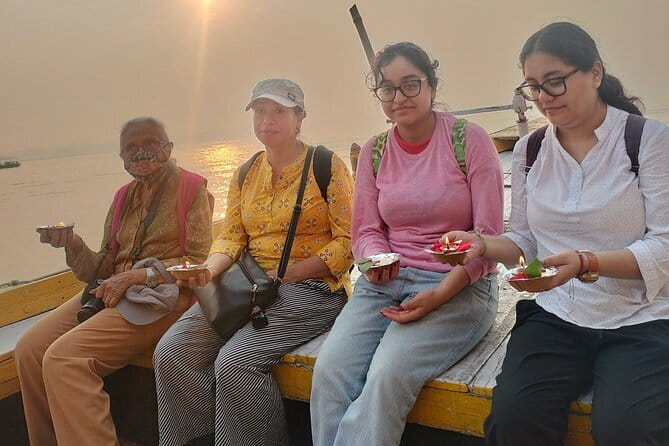
- Local, long-time Varanasi guide (Pintu) who knows corners and explains what you’re seeing
- A north-and-south heritage route with classic Ganges ghats plus less-visited stops
- Funeral ritual context at Harishchandra Ghat explained in a respectful, grounded way
- A mix of faiths and practices: Shiva temples, a Kali/Shiva lane, and a yoga lineage stop
- A stop for Varanasi saree weaving art in Madanpura (the traditional waving craft)
- Coffee/tea included so you’re not walking on empty
How a north-and-south walk gives you the real Varanasi feel
Varanasi can feel like sensory overload if you arrive and try to figure it out alone. What makes this tour work is that it’s built as a walking loop between major riverside points and nearby sacred streets. You don’t just “see” places—you learn how the city’s spiritual life connects to daily routines.
I also appreciate that the route is designed to show both famous ghats and quieter areas. The famous ones are still the anchor. But the real payoff is when you turn into narrower lanes and smaller religious stops where you can sense what people actually do, not just what shows up on a poster.
This is the kind of tour where your guide’s role matters a lot. Pintu is a local guide, and the goal is to translate the city’s symbols into something you can understand as you walk.
You can also read our reviews of more tours and experiences in Varanasi.

9:00 am meeting at Hotel Ganges Grand: what to bring
The walk starts at 9:00 am at the front of Hotel Ganges Grand (in front of the Marwari Hospital Building), D-37/47, Dashashwamedh Ghat Rd, Crossing, Godowlia, Varanasi, Uttar Pradesh 221001, India. It ends back at the meeting point, so you can plan the rest of your day without guessing transit.
This is a 3-hour experience, and you’ll be on foot through temple streets and ghat areas. Because breakfast and lunch aren’t included, I’d treat the coffee/tea as a bonus, not a meal. Bring water, and consider a light snack before you go if you tend to get hungry early.
Good to know: the tour uses a mobile ticket, and the group is kept to a maximum of 20 people. It also runs with English and Spanish guides, so you’re not stuck with vague or filtered explanations.
Dashashwamedh and Kedar Ghat: the Ganges in full view
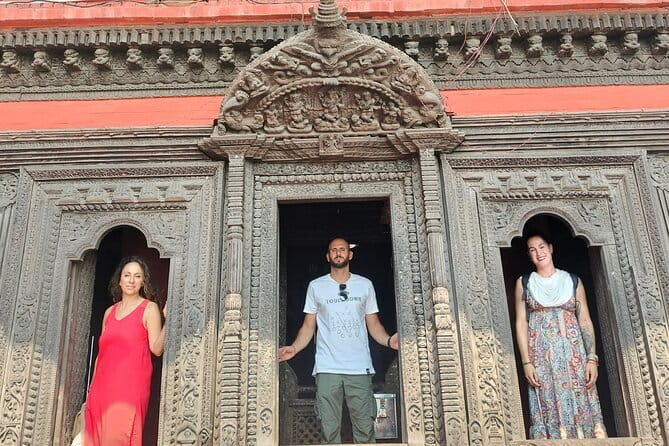
The tour begins at Dashashwamedh Ghat, one of Varanasi’s most famous ghats along the Ganges. You’ll spend about 10 minutes here, and the point isn’t to linger—it’s to orient you. From the start, you get the river connection that powers so much of Varanasi’s spiritual rhythm.
Next is Kedar Ghat (also about 10 minutes). This stop is described as a significant site with a strong spiritual atmosphere. In practical terms, this means you’ll be paying attention to the same river setting through a different spiritual lens, rather than treating each ghat as just another photo angle.
At both places, what you’ll get most from a guided walk is context: what people do there, why it matters, and how the nearby sacred life fits into the broader city pattern.
Harishchandra Ghat and Hanuman Ghat: ritual life and training spaces
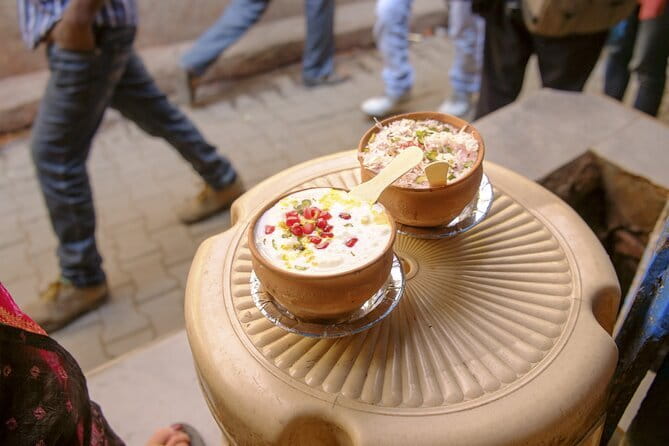
At Harishchandra Ghat you’ll have about 30 minutes, and this is one of the most meaningful stops on the route. It’s specifically tied to Hindu funeral rituals, including the association with Raja Harishchandra Ghat. If you’ve never seen funeral-related ritual spaces explained before, this is where a guide really changes your experience.
Rather than treating it like a shock encounter, Pintu’s approach (based on what he’s known for) is to explain the expectations foreigners often have and how to look at the activity with respect. You’ll likely come away understanding that these places aren’t only for ceremony—they’re part of how faith shapes everyday views of life and death.
Then you move on to Hanuman Ghat (about 15 minutes). Here, the focus shifts from funeral ritual to the world of akhàra training—traditional training centers for wrestlers linked with Indian wrestling styles like kushti. Akhadas are both physical training spaces and spiritual places, which makes this stop a great reminder that religion in Varanasi isn’t only about temples. It’s also about discipline, practice, and the way people prepare their bodies and minds.
Kashi Kaamkoteeshwar Mandir and the Shiva Temple Lane stops
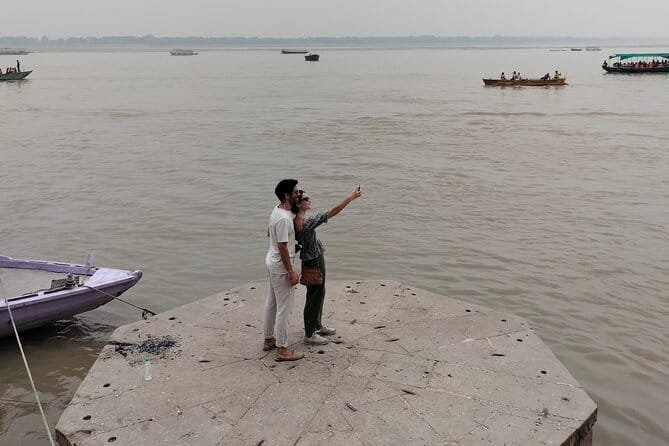
After the ghats, the route turns toward temples and sacred street lanes.
First up is Shri Kashi Kaamkoteeshwar Mandir, also described as the Kashi Kamkoteshwar Mahadev Temple, a revered shrine dedicated to Lord Shiva (about 10 minutes). This stop matters because it balances the river-focused points with a strong temple anchor. Even if you’re not a specialist in Hindu worship, you’ll understand why Shiva temples are central to this city’s religious identity.
Then you continue to Shav Shiva Temple Lane (about 10 minutes). This is tied to the Shav Shiva Kali Temple, and the key idea here is its unique deities and spiritual teachings within the sacred landscape of Varanasi. Practically, this means you’ll notice how the spiritual focus shifts even when the overall area feels “the same.” Different shrines, different emphases, different local meanings.
If you’re visiting for the first time, these temple stops help you connect the dots: how a city famous for ghats also becomes a map of devotion on foot.



Madanpura saree weaving craft and Chousatti Devi’s ghat-temple
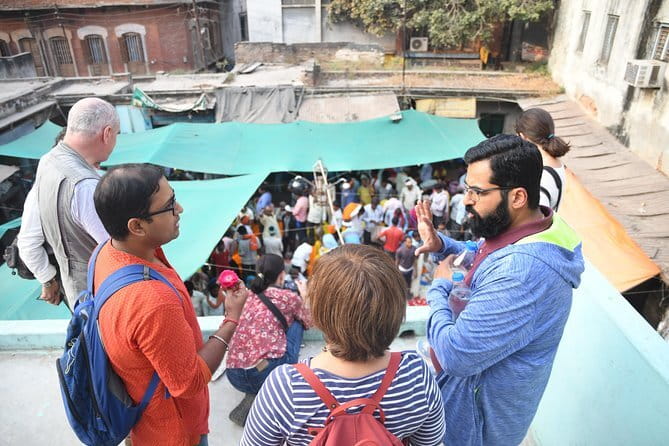
One of my favorite kinds of travel moments is when a walking tour stops turning into a museum and starts showing craft and daily work. Here, Madanpura fills that role.
You’ll spend about 30 minutes at Madanpura, described as a waving center where you can explore the traditional waving art of Varanasi saree (with the craft referenced in the listing). This is a concrete, hands-on way to understand Varanasi beyond rituals. The story becomes material: fabric, pattern, technique, and the local economy wrapped into an everyday product.
Then the tour reaches Chousatti Ghat (about 15 minutes), with a focus on Chausatti Devi Temple. The description highlights the connection to the divine feminine energy. Again, the practical value is in seeing that Varanasi’s sacred geography includes many forms of devotion, not just the most famous names.
This is also a good time to notice how guides like Pintu keep the walk moving while still making each stop meaningful. You’re not stuck waiting in one place for too long, and you still get enough time to ask what you’re seeing and why it matters.
Lahiri Mahasaya Samadhi: a different spiritual thread
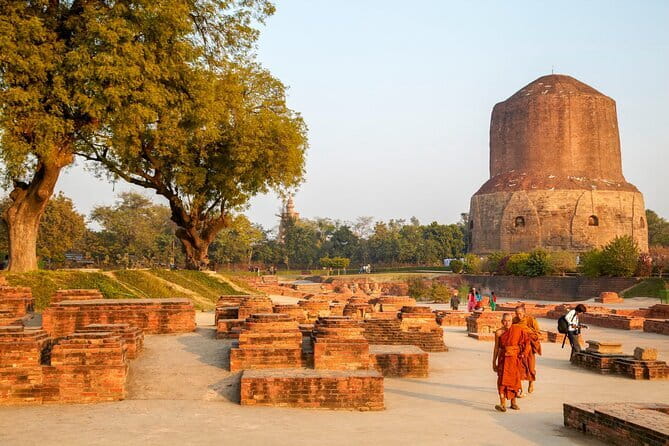
The final major sacred stop is Lahiri Mahasaya Samadhi (about 10 minutes). This site is associated with Lahiri Mahasaya, also known as Mahavatar Babaji, a prominent figure in the lineage of Kriya Yoga and a disciple of Babaji as described.
What I like about including this kind of stop near temples and ghats is that it adds another spiritual storyline. You’re not only learning about mainstream worship spaces. You’re also encountering the idea that Varanasi is a hub for multiple lines of spiritual practice, including yoga traditions and their lineages.
Even for visitors who don’t know the terms, a guided stop like this helps you leave with a clearer sense of the city’s depth—and the way different spiritual communities have shaped its identity.
Coffee/tea and street stops: how this tour handles food and shopping
The tour includes coffee and/or tea, which sounds simple, but it helps you last the pace. You’ll also pass through areas connected with daily life—markets and popular food stalls are mentioned as part of the experience, along with narrow streets and temples.
One practical note: parts of this area are also shop-heavy. In real life, it’s common for guides to show visitors where locals shop and where they can learn about teas, clothing, and textiles. That can be useful if you want context. It can also come with sales energy—so keep your money and attention in your own hands.
If you’re the type who hates being pressured, set a personal rule before you start: you can stop, you can ask questions, and you can walk away. A guide’s job should be helping you understand the culture, not pushing purchases.
Price and value at $30 for admissions included
At $30 per person for about 3 hours, this tour is priced in a way that makes sense if you value interpretation. You’re paying for a local guide who knows the city in detail, can explain what you’re seeing, and can keep you moving logically across multiple sacred zones.
Another value point: the listed stops have admission tickets marked free for the sites on the itinerary. So you’re not paying extra entrance fees stop by stop. The tour also includes coffee/tea, which is a small cost offset and helps you stay comfortable.
What you don’t get (and should plan for) is food beyond the coffee/tea. Breakfast and lunch aren’t included, so you’ll want to eat before or after your walk.
For first-time visitors, this is a very practical use of a morning. You get context early, and then you can explore the rest of Varanasi with a better sense of what each place represents.
Who this walking tour suits best (and who might skip)
This walk is ideal if you:
- want a structured route through major ghats and sacred streets
- prefer a guide to translate the spiritual meaning as you go
- like mixing well-known places with quieter corners
- want English or Spanish explanations in person
It may be less ideal if you:
- don’t like walking much (it’s built around a 3-hour foot route)
- expect meals to be included (they aren’t)
- hate shop pressure and sales stops (there can be shopping energy in areas you pass through)
Because it’s limited to up to 20 people, it’s not a huge crowd experience. But it still moves through active sacred areas, so bring patience and flexibility.
Should you book Pintu’s Heritage Walk?
I think this is a smart booking when you want Varanasi to make sense fast. The best reason to book is the combination of local guidance, a route that includes both famous ghats and less-visited spiritual stops, and explanations that connect religion to everyday life.
If you’re going for your first taste of Varanasi, this tour gives you a base map. Then you can decide what you want to revisit longer—whether that’s temples, river viewpoints, or craft-focused stops like the saree weaving art in Madanpura.
If your priority is only sightseeing photos and you don’t want to talk at all, you might feel like it’s more “learning” than “tourist viewing.” But if you enjoy understanding what you’re seeing, you’ll likely come away with a far more coherent picture of the city.
FAQ
How long is the Varanasi half-day south and north heritage walking tour?
It’s about 3 hours.
What time does the tour start, and where is the meeting point?
It starts at 9:00 am. The meeting point is in front of Hotel Ganges Grand, in front of the Marwari Hospital Building, D-37/47, Dashashwamedh Ghat Rd, Crossing, Godowlia, Varanasi, Uttar Pradesh 221001, India.
Are the guides available in languages other than English?
Yes. The tour offers in-person guidance in English and Spanish.
What’s included in the price?
Coffee and/or tea are included.
Do I need to buy admission tickets for the stops?
The stops listed show admission as free, so you shouldn’t need paid entry tickets for these particular sites.
How many people are in the group?
The tour has a maximum of 20 travelers.
Is breakfast or lunch included?
No. Breakfast, lunch, and dinner are not included.
What’s the cancellation policy for a full refund?
You can cancel for a full refund if you cancel up to 24 hours in advance of the experience’s start time.