REVIEW · NEW DELHI
20-Day Cultural Heritage Tour of Rajasthan from New Delhi
Book on Viator →Operated by Abyss Tours · Bookable on Viator
Delhi to the Ganges, with minimal planning. This private 20-day Rajasthan heritage tour links major sights into one smooth loop starting in New Delhi, so you spend less time figuring out logistics and more time seeing the places. I like that it’s private car with a driver and local English-speaking guides, which makes the itinerary feel focused instead of rushed.
What I also like is the mix of marquee monuments and cultural moments: the camel ride plus overnight desert tent stay in the Thar, and the evening aarti on the Ganges in Varanasi. One consideration: key experiences depend on timing and add-on costs, since entrance tickets and some activities (like the Varanasi boat ride) aren’t included, and the Taj Mahal closes on Fridays.
In This Review
- Key highlights at a glance
- The big idea: a private Rajasthan loop that actually stays organized
- Getting moving: pickup, private vehicle, and how the day-to-day works
- Delhi in two days: Old Delhi icons plus Qutb and Humayun’s Tomb
- Flying to Udaipur: Jagdish Temple and the relaxed pace after arrival
- Jodhpur’s fort day: Mehrangarh and the viewpoints you’ll remember
- Jaisalmer: Fort, markets, and a camel ride that leads to real night-sky silence
- Bikaner and Jaipur: Jain temple quiet, then Amber Fort drama
- Agra and Fatehpur Sikri: sunrise Taj Mahal plus Mughal-scale storytelling
- Orchha and Khajuraho: temples with more art than you expect
- Varanasi by evening aarti and a morning on the Ganges
- Price and value: what $1,500 buys you, and what to budget for
- Small details that can change your experience
- Who this tour suits best (and who should consider alternatives)
- Should you book this 20-day Rajasthan heritage tour?
- FAQ
- Is this a private tour or a shared group?
- Does the tour include airport pickup and drop-off?
- Are entrance tickets included for monuments?
- What flights are included in the tour price?
- Are hotels included, and what level are they?
- What about meals during the trip?
- Is there a camel ride and desert night?
- Is the Varanasi boat ride included?
- Do I need to pay for rickshaws in Varanasi?
- A final quick check before you book
Key highlights at a glance
- Private, air-conditioned transport with an on-the-ground English-speaking guide
- UNESCO World Heritage anchors across Delhi, Agra, and Khajuraho
- Jaisalmer desert night with a tent accommodation plus dinner and evening snacks
- Real cultural evenings like the Ganges aarti in Varanasi
- Hotel comfort built in (3-star, twin share) plus airport pickup and drop-off
- Smart route planning that uses flights to save long overland travel days
The big idea: a private Rajasthan loop that actually stays organized
Rajasthan can be a planner’s sport. This tour helps you skip the messy parts by handling the core route, transfers, and guided touring in each destination. You’re not bouncing between offices or trying to decode bus schedules while jet-lagged; the rhythm is: arrive, meet the guide, move to the next city, sightsee with context.
Because it’s private, you keep control over the pace—within reason. If your group wants extra time at one monument (or to step away from crowds), you can usually do it without the pressure of fitting into a larger group schedule.
Value-wise, you’re paying for the combination of private transport + local guides + most lodging. The $1,500-per-person price makes more sense when you realize what’s included: air-conditioned car and driver costs, hotel beds with breakfast, and the guide support at each stop.
You can also read our reviews of more tours and experiences in New Delhi.



Getting moving: pickup, private vehicle, and how the day-to-day works
The tour starts with airport meeting at Indira Gandhi International Airport in New Delhi, with a start time of 9:00 am. From there, you’re taken to your hotel for an overnight stay, then the tour runs from city to city with hotel pickup and drop-off.
Transport is air-conditioned and private, sized to your group. For 1–3 adults you get a smaller A/C car; for 3–5 you use a Toyota Innova; larger groups move up to bigger A/C vehicles. That matters because Rajasthan roads and long drives get tiring—having your own vehicle is a big part of why this tour feels manageable.
You’ll also notice how the tour builds in guide help for logistics like tickets. If entrance fees aren’t included for a sight, your guide can help you buy them—so you’re not standing around trying to figure out what’s required and where to go.
Delhi in two days: Old Delhi icons plus Qutb and Humayun’s Tomb
Delhi Day 2 is built for contrast: you’ll cover Old Delhi and New Delhi in the same day, with a mix of grand architecture and iconic landmarks.
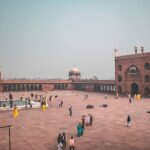
On the Old Delhi side, you’ll see Jama Masjid Mosque, one of the best-known expressions of Mughal-era power in the city. It’s a site where the atmosphere matters as much as the buildings, because the surrounding area is still part of everyday Delhi life. You’ll also get Red Fort in the mix. Just note that Red Fort and Lotus Temple are closed on Mondays; if your timing hits that day, you may be able to pass by for photography rather than enter.
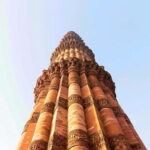
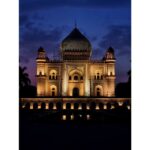
For New Delhi and the heritage highlights, you’ll visit Qutab Minar and Humayun’s Tomb—both major stops for anyone who wants more than just the modern skyline. If you like history that you can see in stone and scale, this is where the day feels especially rewarding: the architecture is impressive, and the sites are straightforward to explore with a guide pointing out details that most people miss when they rush.
Flying to Udaipur: Jagdish Temple and the relaxed pace after arrival
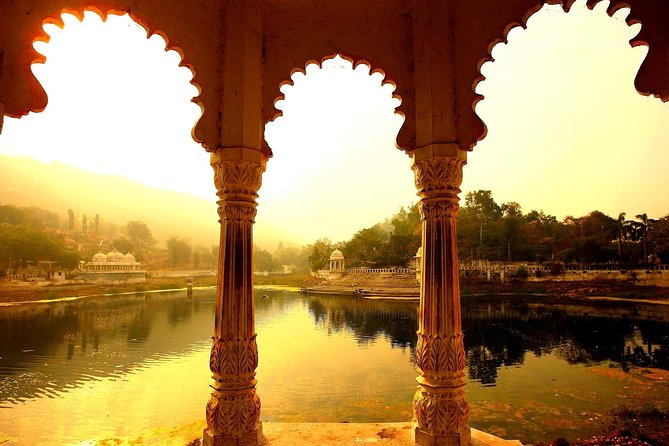
Day 3 shifts you from the bustle of Delhi to Udaipur by flight. That’s a smart choice. Instead of losing a full day to long overland travel, you gain daylight for an afternoon visit.
Jagdish Temple is on the list, and it’s a good arrival stop because it’s close to the feeling of Udaipur—devotional life, architecture, and the sense that this town is built around tradition.
Then Day 4 slows down a notch. You’ll see the City Palace and Museum and the Folk Art Museum. This is a good pairing: palace spaces show royal design, while the folk art collection gives you a deeper sense of regional culture beyond the big monuments.
Jodhpur’s fort day: Mehrangarh and the viewpoints you’ll remember
Jodhpur comes next with an overland drive on Day 5, plus an evening at leisure. On Day 6, the star is Mehrangarh Fort. If you care about scale and setting, this is one of those fort visits where the views are part of the story—your vantage point helps you understand why this fortress dominated the landscape.
You’ll also visit several fort-linked spaces and monuments listed on the route, including Jaswant Thada and the Umaid gardens, with stops for Moti Mahal and Phool Mahal as well. These add variety: not every stop is about walking the biggest wall, some are about carved details, memorial architecture, and garden design that feels cooler than open fort ramps.



Jaisalmer: Fort, markets, and a camel ride that leads to real night-sky silence
Day 7 is a drive to Jaisalmer with leisure time later. Then Day 8 is where the tour becomes uniquely “Rajasthan,” not just “Rajasthan on a checklist.”
You’ll tour Jaisalmer Fort and then explore street markets. That matters because Jaisalmer is a working town, not a theme park. The streets give you texture—tiny shops, local rhythm, and architecture that changes how the fort feels.
The camel ride to the sand dunes is next, followed by an overnight stay in the Thar desert in tent accommodation, with evening snacks and dinner. This is the most distinctive part of the whole loop. If you like experiences where the comfort is real but the setting is wild, this night is worth paying attention to while you’re packing.
A practical note: tent stays often mean less “hotel-style” comfort than you might expect. The tour includes dinner and snacks, but it’s still a desert night, so pack for cooler temperatures after sunset.
Bikaner and Jaipur: Jain temple quiet, then Amber Fort drama
Day 9 takes you from Jaisalmer to Bikaner. The route includes Bhanda Sagar Jain and the Deshnoke Rat Temple. Those stops are a shift from the desert and fort energy—more about devotional spaces and the feel of a living temple complex.
Then Day 10 brings Jaipur. You’ll have an evening at leisure, which is a smart buffer day. Cities like Jaipur can be intense when you hit them back-to-back; a lighter evening helps you recover so you can enjoy the main sights next.
Day 11 is a big Jaipur day with Amber Fort, the City Palace, Jantar Mantar (the observatory), and Hawa Mahal. Amber Fort is the headline for many people. Jantar Mantar adds a different kind of fascination: it’s science made visible in stone, and it’s far more interesting with a guide who can explain what you’re looking at.
Agra and Fatehpur Sikri: sunrise Taj Mahal plus Mughal-scale storytelling
Day 12 travels from Jaipur toward Agra, with a stop at Fatehpur Sikri en route. That’s a valuable addition because it breaks the drive and gives you another major Mughal site before you hit the crowds and energy of Agra.
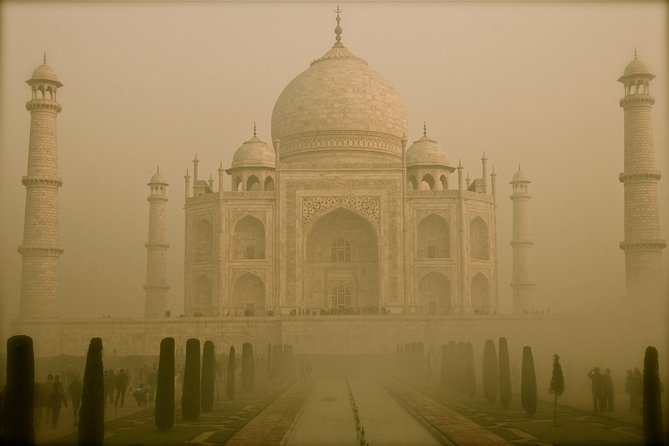
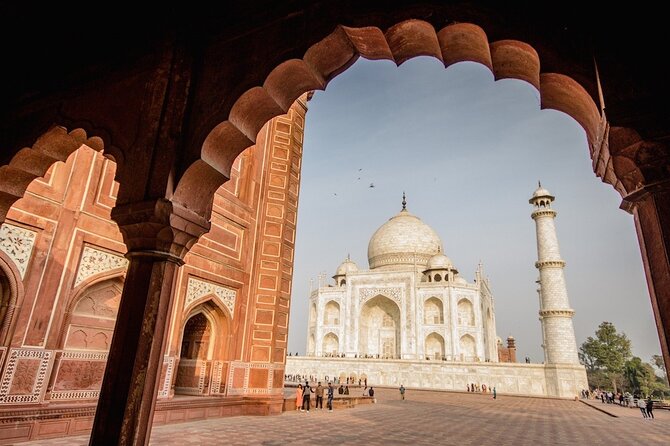
Day 13 is the classic move: a sunrise visit to the Taj Mahal, built by Mughal Emperor Shahjehan in 1630 for his queen. The Taj Mahal is on many bucket lists, but sunrise changes the experience. The light tends to be softer, the air usually feels calmer, and the building’s symmetry reads even better.
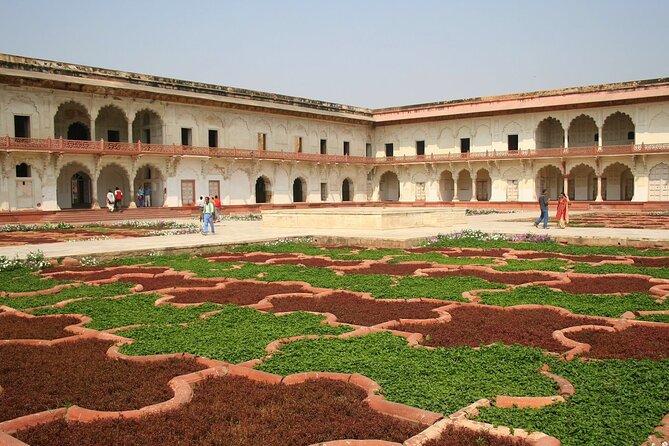
After that, you’ll see Agra Fort. It gives the Taj story another angle, showing how the Mughal presence wasn’t only about romance and marble—it was also about power, defense, and control.
Also keep timing in mind: Taj Mahal is closed on Fridays. If your dates land on Friday, the tour notes that you can see it prior or next day based on how the plan adjusts.
Orchha and Khajuraho: temples with more art than you expect
Day 14 moves you to Orchha. It’s a less-famous stop than the Taj and Forts, which is often a good thing. You’ll tour Orchha’s magnificent temples and monuments, including painted murals linked to the Bundela school of painting.
Day 15 includes that Orchha temple time, then driving onward to Khajuraho.
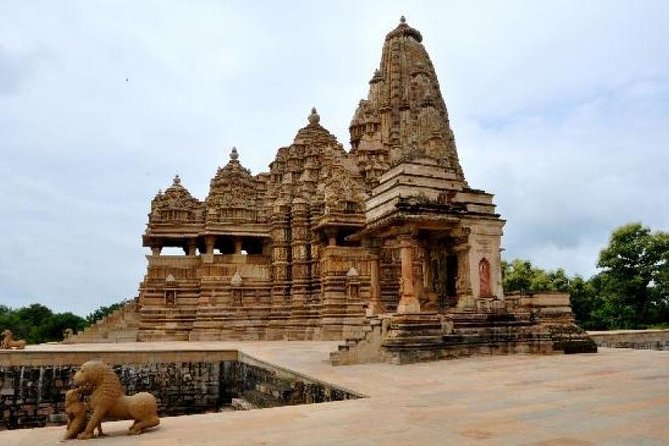
Day 16 is Khajuraho: southern, western, and eastern temples. Khajuraho is one of those places where you come for the famous carvings, but you stay for the overall design—temple layout, details, and the sheer amount of work in the stonework.
This part of the tour is a strong choice if you like art and symbolism. If you mostly want skyline views and modern cafés, Khajuraho can feel slower. But if you’re into craftsmanship, it’s a highlight.
Varanasi by evening aarti and a morning on the Ganges
Day 17 flies you to Varanasi, and that evening includes the aarti ceremony on the Ghats. This is one of the best cultural experiences in India to see in person, because it’s religious practice you watch in real time with people who treat it as part of daily life.
Day 18 starts with a morning boat cruise on the Ganges, then you’ll head to Sarnath, the deer park, and the museum. The boat cruise is listed as not included, so plan for that cost separately if you want the full morning experience. It’s also listed that rickshaw rides in Varanasi are required due to very busy lanes to reach the ghat, and your guide will arrange it, with nominal charges paid directly.
Day 19 is another Varanasi day focused on temples and Aurangazeb’s Mosque, plus a return toward Delhi later in the journey timeline.
Varanasi is emotional and intense. If you’re sensitive to crowds, smells, or constant movement, it can help to treat your schedule as flexible. Build in small pauses between major stops so the day doesn’t feel like sensory overload.
Price and value: what $1,500 buys you, and what to budget for
At $1,500 per person for about 20 days, this isn’t a budget backpacker route. You’re paying for comfort and organization: 3-star hotels on twin share, breakfast included, private air-conditioned car transport with driver, local English-speaking guides, and the desert tent night with dinner and evening snacks.
The big exclusions are also clear: entrance tickets and camera fees at sights are not included. Flights for the legs like Delhi to Udaipur, Khajuraho to Varanasi, and Varanasi to Delhi aren’t included either, though they can be booked at an additional cost. On top of that, lunch isn’t included, and the boat ride in Varanasi is specifically not included.
So here’s the realistic budgeting equation: your tour price covers the backbone of the trip, and you’ll add money for tickets, flights, and a few optional or specified extras. If you like predictable costs and minimal hassle, this structure still works well because your guide will help you buy tickets where needed.
Small details that can change your experience
A few practical notes can make your trip smoother.
First, closures matter. Taj Mahal is closed on Fridays. Red Fort and Lotus Temple are closed every Monday. The tour indicates you may do a drive-pass for photography when closures happen, so don’t count on entrance-only access for those days.
Second, meals need confirmation. Breakfast is listed as included (19 breakfasts). Dinner is listed as included in the package, but the exclusions also mention dinner and lunch as can be organized on request. Before you go, I’d confirm exactly which dinners are included versus paid on your behalf, especially since hotel dining rules can differ by city.
Third, Varanasi movement includes rickshaws to reach the Ghats areas. The tour notes the guide will arrange the rickshaw and you pay nominal charges directly.
Who this tour suits best (and who should consider alternatives)
This tour fits you if you want a guided, private Rajasthan circuit without spending your vacation managing transport. It’s also a good pick if you like culture with structure: forts, temples, palaces, UNESCO-grade monuments, and a real evening ritual on the Ganges.
It may not fit if you:
- Want to skip flights and do everything by train or bus
- Hate any add-on fees for entrances and activities
- Prefer very free time every day with zero pacing structure
Should you book this 20-day Rajasthan heritage tour?
I’d lean yes if you’re looking for a single, organized plan that hits Rajasthan’s best-known heritage sites plus the cultural heart of Varanasi, while keeping hotel comfort and private transport. The desert camel ride and night stay add a memorable Rajasthan identity that many shorter tours skip.
I’d lean no only if your dates land you right on the Friday Taj Mahal closure and you strongly need that exact timing, or if you dislike paying extra for entrance tickets, Varanasi boat time, and the flight segments. If you can handle a bit of add-on budgeting and you’ll enjoy guided sightseeing, this is a solid value way to do Rajasthan in one clean loop.
FAQ
Is this a private tour or a shared group?
It’s a private tour/activity. Only your group participates.
Does the tour include airport pickup and drop-off?
Yes. Hotel pickup and drop-off are provided as per the itinerary, and you start from Indira Gandhi International Airport in New Delhi.
Are entrance tickets included for monuments?
No. Entrance tickets and any camera fees at sights are not included in the tour price.
What flights are included in the tour price?
Flight tickets are not included. The route uses flights for Delhi to Udaipur, Khajuraho to Varanasi, and Varanasi to Delhi, and these can be booked at an additional cost.
Are hotels included, and what level are they?
Yes. The tour includes accommodations at 3-star hotels on a twin share basis.
What about meals during the trip?
Breakfast is included (19 breakfasts). Dinner is listed as included, but lunch and dinner are also noted as not included in the exclusions, so it’s important to confirm how many dinners are actually covered versus arranged on request.
Is there a camel ride and desert night?
Yes. You get a camel ride to the sand dunes and an overnight in tent accommodation in the Thar desert, with evening snacks and dinner.
Is the Varanasi boat ride included?
No. The boat ride in Varanasi is not included.
Do I need to pay for rickshaws in Varanasi?
Rickshaw rides in Varanasi are required due to busy lanes to reach the Ghats. Your guide arranges the rickshaw, and you pay nominal charges directly.
A final quick check before you book
If you want a Rajasthan trip that runs on private comfort, with guides handling the details and you just show up to see the sights, this is a strong match. Just budget for entrance tickets, the flight legs, and the Varanasi boat ride, and confirm the exact meal inclusions for dinner.