REVIEW · NEW DELHI
3-4 Hour Old Delhi Heritage Walk Tour with Tuk Tuk Ride Wherever Required
Book on Viator →Operated by TravExcel India Tours & Travel · Bookable on Viator
Old Delhi has a way of grabbing you fast. This 3–4 hour heritage walk pairs an AC car with tuk tuk and rickshaw rides where it helps, so you get the feel of the Old City without spending the whole half-day stuck in traffic. I like the small group size (capped at 15), which makes it easier to ask questions, and I also love how the route flows from major Mughal-era landmarks into the daily-market streets around Chandni Chowk. One thing to consider: Jama Masjid has an admission fee you’ll pay separately, and the walk is through tight, busy lanes.
The best part is the mix: you get a big-picture look at Delhi’s oldest Mughal-era roots at Jama Masjid, then you shift into hands-on sensory Old Delhi at the spice market and the lanes of Dariba Kalan. You’ll also get practical comfort perks like bottled water and hotel pickup. If you’re sensitive to crowds or you hate walking, plan to move at a steady pace and expect some uneven, crowded footpaths.
Guides often get praised for English and for keeping things organized in chaos, including pace and crowd navigation (names like Tariq, Adeel, and Rahis Kahn show up in past guide feedback). Just remember: this is a history-and-markets walk, so bring comfortable shoes and be ready for smells, sounds, and constant street life.
In This Review
- Key highlights you’ll feel on the ground
- Entering Old Delhi via Jama Masjid’s Mughal scale
- Chandni Chowk lanes: spices, silver, and the market rhythm
- Gali Paranthe Wali: the famous flatbread street (even if you skip tasting)
- Khari Baoli: Asia’s wholesale spice market in full swing
- Naughara: the “nine homes” idea behind a small stop
- Dariba Kalan: gold and silver lanes that feel like craft districts
- How tuk tuk rides and rickshaws keep the tour moving
- Price and value: what $24 covers for a half-day in Old Delhi
- Who this Old Delhi heritage walk suits best
- Should you book this Old Delhi heritage walk?
- FAQ
- How long is the Old Delhi heritage walk tour?
- What is the price per person?
- Is hotel pickup included?
- Is the group size small?
- What transportation is included?
- What’s included in the tour price?
- Is lunch included?
- Do I need to pay for entry at Jama Masjid?
- What should I do if the weather is poor?
- Can I cancel and get a refund?
Key highlights you’ll feel on the ground
- Small group (15 max) with private transportation so you’re not fighting for attention in a giant crowd
- AC car plus tuk tuk/rickshaw hops to cut down on wasted time between Old Delhi pockets
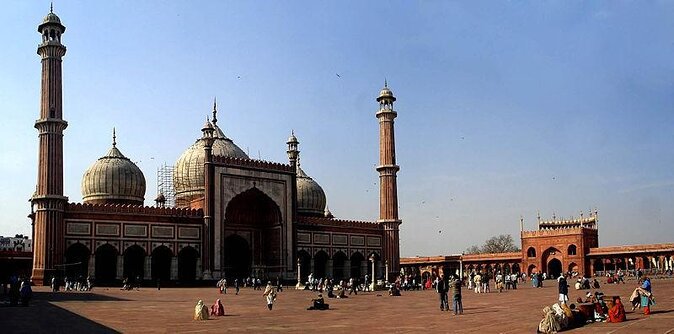
- Jama Masjid as the anchor stop to understand Mughal-era Delhi before you hit the markets
- Khari Baoli spice market for an in-your-face look at wholesale spices, nuts, herbs, and food products
- Dariba Kalan’s gold and silver stalls where craft and commerce walk side by side
- English-speaking guides like Tariq, Adeel, and Rahis Kahn who are noted for clear explanations and logistics
Entering Old Delhi via Jama Masjid’s Mughal scale
Jama Masjid is one of the biggest religious sights in India, and it makes a smart first stop. Built by Mughal Emperor Shah Jahan between 1644 and 1656, it’s the kind of place where the size alone helps you understand why this area became a center of power and faith.
Plan for about 45 minutes here, but budget extra attention time for transitions. You’ll want to dress appropriately and move slowly in the mosque areas, because lines and crowd flow can change quickly. The tour includes the guided time, but admission is not included, and camera fees at the mosque are not included either—so if you’re hoping to photograph freely, check what you’ll need before you go in.
What I like about starting here is that you get context before the markets start pulling your attention every direction. You’re not just watching street life—you’re learning how this city’s earlier Mughal-era character set the stage for the lanes that come next.
You can also read our reviews of more tours and experiences in New Delhi.



Chandni Chowk lanes: spices, silver, and the market rhythm
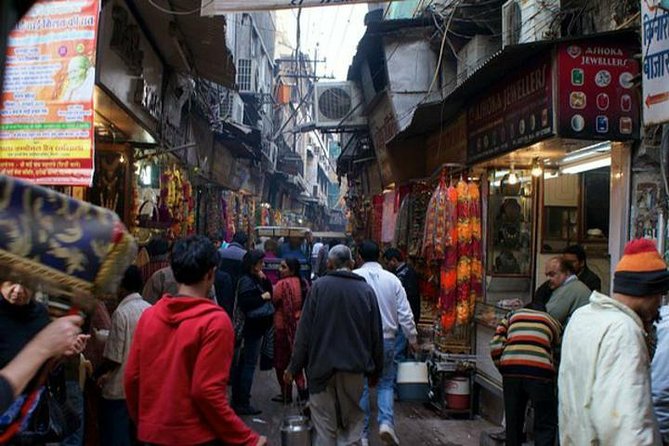
After the mosque, you head toward the Chandni Chowk market zone, where the street energy changes. It’s a dense web of small shops selling everything from spices and dried fruit to silver jewelry and colorful textiles. The side streets are narrow, so you’ll be switching between guided points of interest and your own quick scans.
This part runs around 30 minutes at Chandni Chowk itself, and then you keep moving into related lanes. The stop timing is short, which actually helps. You see the range without getting stuck in one storefront while the city keeps marching past you.
A practical note: this is where you’ll feel the “Old Delhi” part most—crowds, constant movement, and sellers calling out. If you’re someone who gets overwhelmed easily, use your guide as your pace-setter. Ask questions as you walk. When your brain is busy reading the street, it’s easier to handle the crush.
Gali Paranthe Wali: the famous flatbread street (even if you skip tasting)
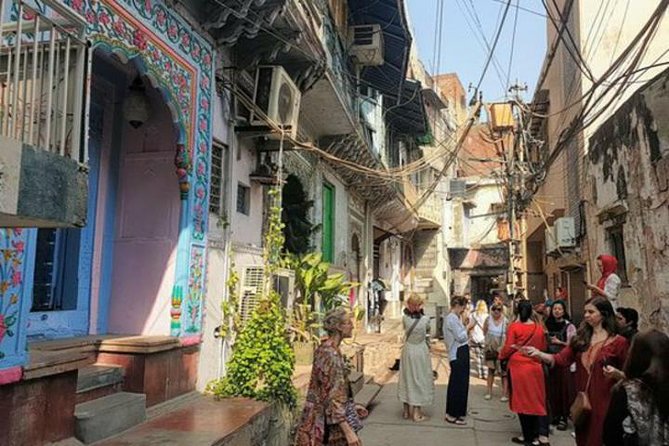
Right in the Chandni Chowk area is Gali Paranthe Wali, a narrow street known for shops devoted to paratha, the Indian flatbread. The time here is brief—about 15 minutes—so treat it like a “taste the idea” stop: you’ll get the setting and the food culture without a long sit-down.
You’ll probably notice two things quickly: first, how concentrated the food scene is, and second, how the whole lane works like a magnet for people who want something hot and specific. If you want to try paratha, you’ll likely be able to, but it’s not part of the included package. Since lunch isn’t included, you can decide on the spot whether a snack fits your budget and energy.
This stop is also good for first-timers who want a break from pure sightseeing. It’s one more way to learn the city: not just history and architecture, but what people eat when they’re rushing through daily life.
Khari Baoli: Asia’s wholesale spice market in full swing

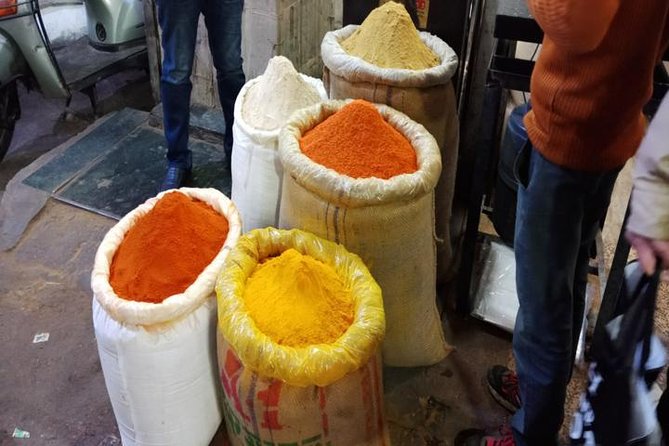
Then comes Khari Baoli, and this is where your senses take over. Khari Baoli is known for wholesale groceries, and it’s often described as Asia’s largest wholesale spice market. Think spices, nuts, herbs, plus food products like rice and tea, all packaged and sold at scale.
You get about 30 minutes here, and that’s usually enough to understand the system: how goods move, how stalls are organized, and how strong the wholesale focus is. The value here isn’t a single monument—it’s the living supply chain. You’ll watch people bargain, carry items, and move through tight aisles, and that’s the point.
If you’re sensitive to strong smells, don’t pretend otherwise. Just plan it. Keep your time efficient, bring a light scarf or tissue if you prefer it, and rely on your guide to point out what’s worth your attention versus what’s just noise.
Naughara: the “nine homes” idea behind a small stop
Next is Naughara, about 25 minutes. The name is said to translate to nine (nau) homes (ghar), though there’s also an alternate explanation tied to nine pots of water meant for travelers. Either way, the stop is short and more interpretive than shopping-heavy.
I like this kind of moment because it breaks the pattern. After big sights and market lanes, a smaller heritage stop helps you connect the city’s past practical needs—like water and wayfinding—with what you’re seeing today. If you like details about how places got their names and roles, this is the sort of stop your guide can turn into something memorable.



Dariba Kalan: gold and silver lanes that feel like craft districts
Dariba Kalan is another classic Old Delhi corridor, with a name tied to Persian influence and meanings like unparalleled pearl and the idea of “big.” You’ll spend about 30 minutes here.
What makes it worth your time is the mix of craft and commerce. This is where you see why Delhi markets weren’t only about daily groceries—they were also about precious goods and fine work. Expect a street atmosphere that’s very different from the spice area. Where Khari Baoli is earthy and wholesale-focused, Dariba Kalan feels more about display, detail, and trade.
This is also a good place to slow down and ask questions, even if you’re not shopping. Ask what types of items are popular and what buyers come looking for. You’ll learn more than you think, because your guide will connect the street names and the shops to the city’s older trading patterns.
How tuk tuk rides and rickshaws keep the tour moving
This tour uses an AC vehicle between stops, and you’ll take tuk tuk and rickshaws where required. In a place like Old Delhi, that matters more than it sounds.
Walking is part of the experience, but short rides can save your legs and keep you from losing time to the wrong street turn. The goal is not to avoid the city. The goal is to reduce the dead time so you can spend it on sights and explanations.
If you’re worried about motion or crowd crush, tell your guide what you prefer at the start. Guides on this route are often praised for crowd handling and logistics, which usually means they’re watching the flow and making judgment calls so your group stays together.
Also, because you’re bouncing between tight lanes and vehicle drop points, it’s worth keeping your essentials simple: a phone, a small amount of cash, water, and maybe a scarf or hat if the sun is strong.
Price and value: what $24 covers for a half-day in Old Delhi
At $24 per person for a 3–4 hour experience, this is priced like a serious value play compared to many “single-neighborhood” tours that don’t include car support. You get bottled water, air-conditioned vehicle, private transportation, and GST included, plus hotel pickup is offered.
That “included” list is the real story here. In Old Delhi, comfort and logistics are not extras—they protect your energy and keep your sightseeing from turning into pure endurance. The tour is also designed for a small group, which can make the guide’s explanations feel closer to a conversation than a lecture.
The main costs to watch: Jama Masjid admission isn’t included, and camera fees at the mosque aren’t included. Lunch isn’t included either. So if you’re planning a full day of food stops, you’ll need to budget for that separately. Still, even with these add-ons, the structure is set up so most of the time is guided, organized, and efficient.
If you want maximum value, show up ready to walk and shop your own pace. The tour is built for seeing a lot with a guide, not for turning into a long shopping session.
Who this Old Delhi heritage walk suits best
This tour fits you well if you want:
- A half-day Old Delhi overview with real market streets, not just a photo stop
- A small-group experience where your questions matter
- Help getting around between key areas using AC transport plus tuk tuk/rickshaw hops
- A guided introduction to Mughal-era Delhi at Jama Masjid, then market life around Chandni Chowk, Khari Baoli, and Dariba Kalan
It may be less ideal if you hate crowds, dislike walking through busy lanes, or want lots of free time to wander entirely on your own. The route is designed to move with purpose, so it’s not the “meander for hours” style.
Should you book this Old Delhi heritage walk?
I’d book it if your priority is a smart introduction to Old Delhi that blends history and daily street life in a manageable half-day. The strong win is the combination of AC car comfort, small-group pacing, and guided stops in market areas that you’d otherwise find hard to navigate.
Before you commit, check two things: that you’re comfortable with a busy, narrow-street environment, and that you’re okay paying separate costs for Jama Masjid admission (and possibly camera fees). If weather is bad, the tour can be rescheduled or refunded, since this experience requires good weather.
If you like structured sightseeing with a guide but still want the real street feel, this is a solid choice.
FAQ
How long is the Old Delhi heritage walk tour?
It runs about 3 to 4 hours.
What is the price per person?
The price is $24.00 per person.
Is hotel pickup included?
Pickup is offered, and door-to-door hotel transfers are part of the experience.
Is the group size small?
Yes. It’s a small-group experience with a cap of 15 visitors.
What transportation is included?
You’ll travel between locations by air-conditioned vehicle, with tuk tuk and rickshaw rides used wherever required.
What’s included in the tour price?
Included items are bottled water, air-conditioned vehicle, private transportation, and GST.
Is lunch included?
No, lunch is not included.
Do I need to pay for entry at Jama Masjid?
Yes. Admission ticket for Jama Masjid is not included, and camera fees are not included.
What should I do if the weather is poor?
The experience requires good weather. If it’s canceled due to poor weather, you’ll be offered a different date or a full refund.
Can I cancel and get a refund?
Yes. You can cancel up to 24 hours in advance for a full refund. If you cancel less than 24 hours before the start time, the amount you paid won’t be refunded.