REVIEW · WASHINGTON DC
African American History Tour with Museum of African American History Ticket
Book on Viator →Bookable on Viator
DC history hits hard and close. This 3.5-hour, small-group tour strings together major African American landmarks with stories that connect national politics to real lives. You’ll ride in an air-conditioned vehicle, meet at the US Navy Memorial Plaza, and end at the National Museum of African American History and Culture with same-day entry.
What I like most: the guide, Kenny, tells the story in a way that’s easy to follow and genuinely engaging, not just a list of facts. I also love that you spend time on big outdoor memorials and get a museum ticket at the end of the tour.
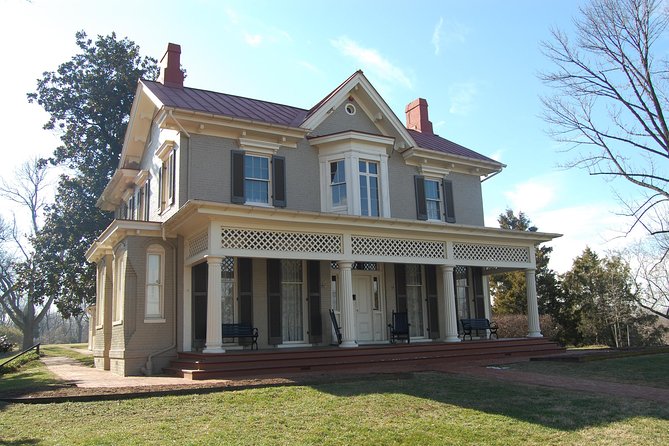
The best stops feel specific and hands-on, especially the Frederick Douglass National Historic Site and the scenes tied to Marian Anderson’s 1939 crisis. You’ll also get a focused look at the Martin Luther King Jr. Memorial’s inscription wall and symbolic elements, with the guide pointing out what to notice. For me, that mix is the win: landmarks you recognize, plus context you probably won’t get on your own.
One consideration: there’s real walking, and some days you don’t go inside the Douglass house. The tour schedule changes by day, and the Douglass House is only done as an interior walking tour Tuesday, Wednesday, and Saturday, while other days are drive-past history instead.
In This Review
- Key highlights you’ll feel on the day
- Why this 3.5-hour DC route works so well
- Starting at US Navy Memorial Plaza: get your bearings fast
- NCNW Headquarters: Mary McLeod Bethune’s legacy in a real building
- Capitol to White House: standing where major moments unfolded
- Constitution Hall and Marian Anderson: one incident that changed attention
- Lincoln Memorial: events you can picture before you even visit
- Martin Luther King Jr. Memorial: reading the inscriptions and symbols
- Frederick Douglass National Historic Site: inside access depends on the day
- LeDroit Park and Black Broadway: neighborhoods that shaped culture
- Civil War Memorial Museum: numbers, names, and the USCT story
- Dunbar High School, Howard Theatre, and Howard University: education and performance
- Carter G. Woodson and the Bethune homes: Black history as an idea built in houses
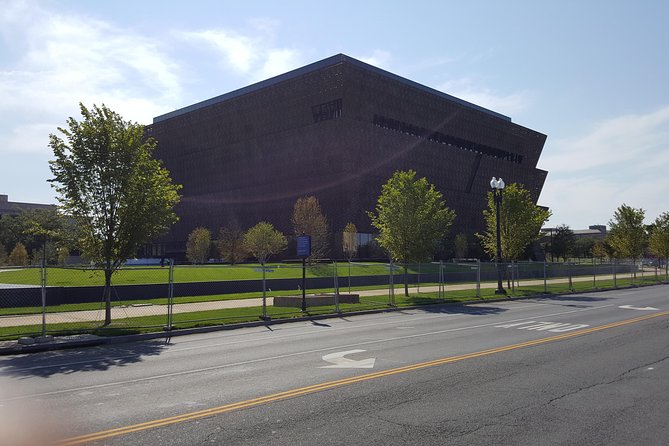
- Ending at the National Museum: your ticket day doesn’t stop at the van
- Price and value: what $90 buys you in real terms
- Who should book this tour (and who might want a different day plan)
- Should you book this African American History Tour?
- FAQ
- What is the duration of the African American History Tour?
- How much does the tour cost?
- What time does the tour start, and where does it begin?
- Where does the tour end?
- Is a museum ticket included?
- Do I get to stay in the museum after the tour finishes?
- What stops are included besides the museum?
- Is admission included for the White House and other sites?
- Is there walking involved?
- When is the Frederick Douglass house interior visit available?
- Can I cancel for a full refund?
Key highlights you’ll feel on the day
- Kenny’s storytelling at major DC landmarks that ties politics, protest, and everyday people together
- Frederick Douglass National Historic Site with inside access on select days
- Marian Anderson’s 1939 Constitution Hall clash and the Lincoln Memorial steps moment
- Martin Luther King Jr. Memorial details you’ll know how to read by the end
- African American Civil War Memorial Museum plaques and monuments with names and numbers you can actually track
- Finish at the National Museum with same-day tickets so you can keep going after the tour
Why this 3.5-hour DC route works so well
Washington DC can feel like a blur of monuments if you’re winging it. This tour is designed for half-a-day focus: you hit the big names, but you also get the human details that explain why those places matter. Instead of hopping between stops all day, you get a tight route with a guide doing the heavy lifting.
The timing also makes sense. You start in the morning and end at the National Museum of African American History and Culture, giving you time to see more than just the highlights. If you want a DC day that feels structured without feeling rushed, this is a strong fit.
You can also read our reviews of more tours and experiences in Washington DC.
Starting at US Navy Memorial Plaza: get your bearings fast
You meet at the US Navy Memorial Plaza at 701 Pennsylvania Ave NW. The location is practical because it puts you near the core of the National Mall area, so the day doesn’t start with a long scramble across town.
You’ll be in an air-conditioned vehicle, with bottled water provided. That sounds small until you’re doing DC in summer heat, when hydration and shade become part of the experience.
NCNW Headquarters: Mary McLeod Bethune’s legacy in a real building
Your tour kicks off with the Headquarters of the National Council of Negro Women (NCNW). It’s more than a photo stop. You learn that the organization was founded in 1935 by Mary McLeod Bethune to promote the rights and welfare of African American women and their families.
You also get building details that help the story stick. The headquarters has been in the same building since 1953, and it’s designated as a National Historic Landmark. The building’s history starts as a late-19th-century commercial office, then it’s purchased by NCNW in 1942 with help from a Federal Housing Administration loan.
Why this stop matters: it shows that history isn’t only about speeches and battles. It’s also about institutions built to support families, education, and community leadership.
Capitol to White House: standing where major moments unfolded
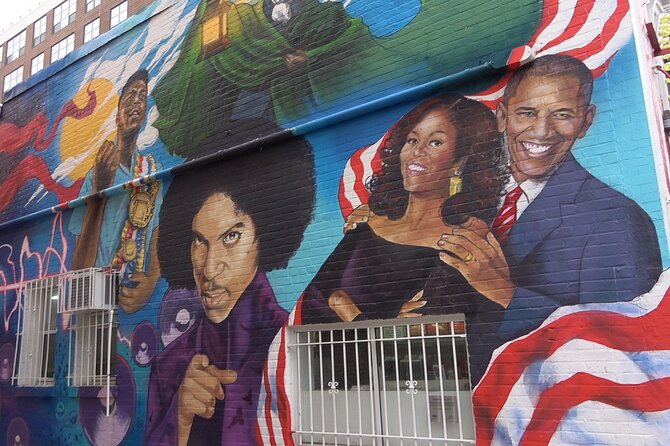
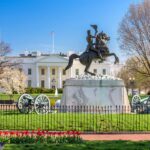
At the U.S. Capitol stop, you get to stand where the inauguration of President Obama took place. The guide also connects the Capitol and White House to the labor of enslaved people who helped build them. You’ll hear how Supreme Court decisions made in the Capitol affected people of color for decades.
Then you move to the White House for a short look. African Americans played important roles here too, from enslaved workers who built the residence to Barack Obama as the first African American President. The tour is brief at the White House (about 15 minutes), and admission isn’t included, so don’t expect an interior visit.
My take: this section works best when you treat it like a guided “why” tour, not a postcard tour. The value is in the stories tied to power and decision-making.
Constitution Hall and Marian Anderson: one incident that changed attention
One of the most compelling parts of the day is tied to Constitution Hall. You’ll hear about Marian Anderson’s April 9, 1939 concert, and how the Daughters of the American Revolution refused to allow her to perform there because of her race.
The guide explains how the incident became national controversy. Then you get the payoff: with help from First Lady Eleanor Roosevelt, Anderson performed on the steps of the Lincoln Memorial on Easter Sunday, April 9, 1939, before a crowd of 75,000.
This stop isn’t just about remembering a person. It’s about seeing how discrimination worked at specific institutions, and how public pressure forced change. If you like history that connects policy, protest, and a single turning-point moment, you’ll be locked in here.



Lincoln Memorial: events you can picture before you even visit
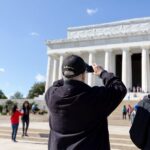
At the Lincoln Memorial stop, you’re not left guessing what happened there. Your guide gives context about African American events tied to the memorial, including the March on Washington and the Marian Anderson concert.
You’ll also hear the story of Robert Moten giving the dedication speech for the opening of the Lincoln Memorial. That detail matters because it helps explain who was part of shaping public memory, not only who got excluded from it.
Practical tip: take a moment to look at the space like a stage. The tour’s stories make the location feel like a place where history was performed, not just photographed.
Martin Luther King Jr. Memorial: reading the inscriptions and symbols
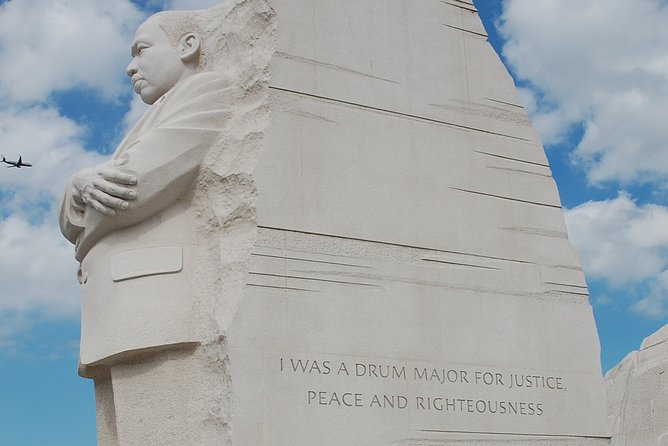
The Martin Luther King, Jr. Memorial stop focuses on how the monument communicates. You’ll learn about the inscription wall with 14 quotes and statements, plus the Mountain of Despair and the Stone of Hope.
You’ll also get facts about how the memorial was made and what the elements represent. This is one of those stops where a guide helps you notice details you might otherwise walk past, especially the way the design tells a progression from struggle toward resolve.
Frederick Douglass National Historic Site: inside access depends on the day
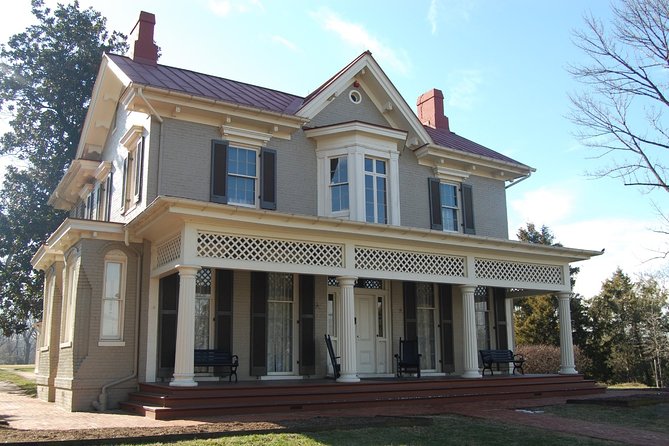
This is a highlight, and the schedule detail is important. The tour includes a walking tour of the Frederick Douglass house inside on Tuesday, Wednesday, and Saturday. Other days, you’ll drive past the Douglass home and hear the history instead.
If you can choose your travel day, this is the one factor I’d plan around. Inside access means more time with the house itself, and it tends to feel more personal because you’re physically in the space tied to Douglass’s life.
Also, note the practical side: there can be steps. If you know you’ll struggle with walking uphill or climbing, you’ll want to factor that into your expectations.
LeDroit Park and Black Broadway: neighborhoods that shaped culture
You’ll pass through and learn about LeDroit Park, a neighborhood with layers. It began as housing built for white professors of Howard University. Then homes were sold to both black and white buyers, making it one of the first integrated neighborhoods in the city.
The tour also covers cultural and intellectual life in the area. You’ll hear that prominent African American leaders lived there, including Mary Church Terrell, the first president of the National Association of Colored Women, and Duke Ellington. In the early 20th century, the neighborhood was known as Black Broadway, with nightclubs, theaters, and music venues driving entertainment and community energy.
I like this stop because it shifts the focus from famous national figures to the everyday geography of creativity and organizing.
Civil War Memorial Museum: numbers, names, and the USCT story
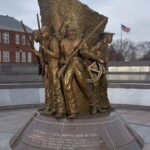
The African American Civil War Memorial Museum stop is short but specific. You learn about the 209,000 African American troops and sailors who fought during the Civil War, and you’ll hear that the memorial was dedicated in 1998.
You can read plaques listing the names of U.S. Colored Troops (USCT) in the 166 regiments. There’s also a statue called Spirit of Freedom by Ed Hamilton.
What you take away here is scale and accountability. It’s one thing to hear that African American soldiers fought. It’s another to see name lists and understand how many units were involved.
Dunbar High School, Howard Theatre, and Howard University: education and performance
The tour includes several “drive-past with story” moments that still feel meaningful.
Dunbar High School is one. You’ll hear that it was founded in 1870 as the first public high school for African Americans in the United States. You’ll also learn it has ties to figures like Mary McLeod Bethune and poet Paul Laurence Dunbar.
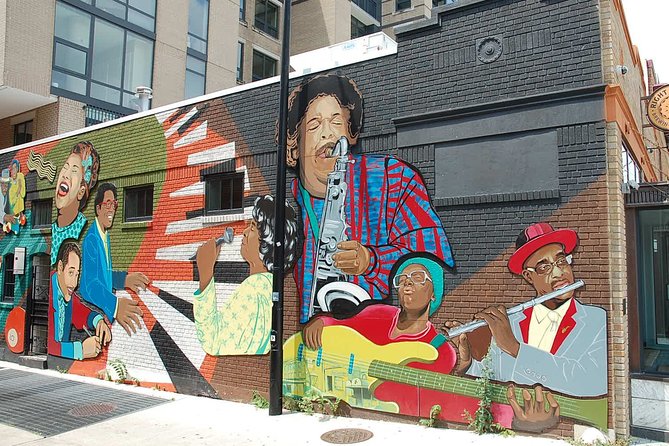
Howard Theatre is another. It opened in 1910 and was one of the first theaters in the country designed and operated by African Americans. During segregation, it became a key venue for African American performers and audiences, and played a role in the development of African American music and culture.
The guide connects Howard Theatre to major entertainers you’ll recognize, including Duke Ellington, Billie Holiday, Ella Fitzgerald, and Marvin Gaye. You’ll also hear about comedians and the Chitlin’ Circuit shows.
Then you drive past Howard University, established in 1867. You’ll get the basics (13 schools) and some famous alumni names like Thurgood Marshall, Elijah Cummings, Taraji Henson, and Toni Morrison.
If you want DC history that includes both classrooms and stages, this section delivers.
Carter G. Woodson and the Bethune homes: Black history as an idea built in houses
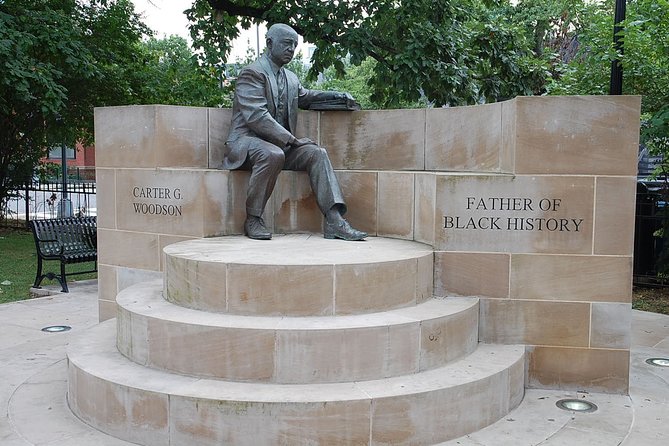
You’ll hear about Carter G. Woodson next, in the context of the Carter G. Woodson House. Woodson is credited as the Father of Black History and is credited with creating Black History Month. This is a good reminder that movements don’t only happen in public squares—sometimes they start with research, publishing, and calendar-making.
Then there’s Mary McLeod Bethune Council House. You’ll drive past the home, and you may stop to tour it Thursday through Saturday time permitting. The house design is described as second French Empire, and you’ll hear Bethune purchased it in 1943.
This portion works for me because it treats history like something living and ongoing. People built organizations, bought homes, and created systems so the next generation could learn and lead.
Ending at the National Museum: your ticket day doesn’t stop at the van
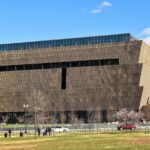
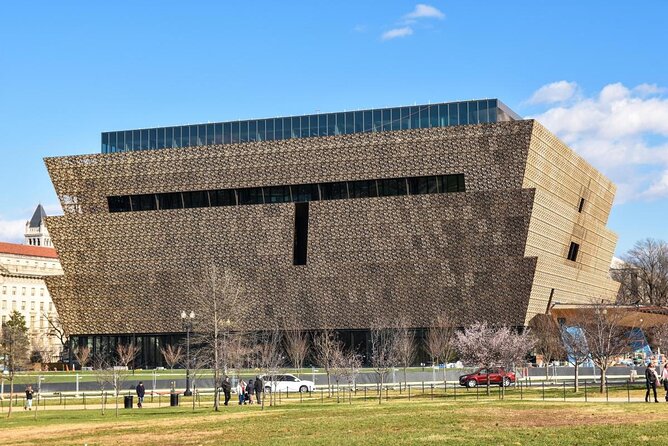
At the end of the tour—about 3 hours 30 minutes—you’re given tickets to the National Museum of African American History and Culture. The tickets are for the same day, and once you enter the museum, the tour portion is over.
Here’s what you should plan for: you can stay until 5:30 when the museum closes. So treat this as a match point. The guided half-day gives you context for what you’ll see next, then you use your museum time to go at your own pace.
You’ll already have names and stories in your head: Marian Anderson and Eleanor Roosevelt, Robert Moten, USCT units, MLK’s memorial symbolism, and the neighborhoods and institutions that shaped culture. That context is exactly what makes the museum feel less like reading labels and more like following a thread.
Price and value: what $90 buys you in real terms
The price is $90 per person for about 3 hours 30 minutes. That can sound like a lot until you look at what’s included.
You get a guided route through multiple major sites with admission tickets for the National Museum included, plus bottled water and an air-conditioned vehicle. Many of the stops themselves are listed as free admission, which means you’re paying for guidance, time planning, and interpretation—not just entry fees.
Also, the group is capped at a maximum of 21 travelers, so you’re not stuck feeling like you’re inside a crowd crush. Small-group touring usually makes questions and pacing easier, and your guide has room to keep people engaged.
Balanced note: some portions are brief drive-past moments, like Howard Theatre and Howard University. It’s still valuable, but if you’re expecting long time at every site, you may need to do a little extra self-guided walking later.
Who should book this tour (and who might want a different day plan)
This tour is a great choice if you want a guided framework for African American history in DC without spending a whole day figuring out logistics. You’ll like it if you enjoy story-based walking and photo-ready monuments paired with context.
It’s also a strong match for first-time DC trips because it touches major landmarks and keeps the museum time protected by the included ticket. And because it’s offered in English and most travelers can participate, it works for a wide range of people.
Consider a different plan if:
- You need to avoid steps and walking as much as possible.
- You’re traveling on a day when the Frederick Douglass house interior tour isn’t offered.
- You want a longer sit-down museum-focused guided experience rather than a half-day city route.
Should you book this African American History Tour?
Yes—if you want your DC day to feel purposeful. For $90, you’re buying more than transport and entry. You’re buying a guide-led story arc that moves from the Capitol and the White House to Lincoln and King, then into neighborhoods and institutions, then into the museum.
My advice: pick your travel day with the Douglass house schedule in mind, and wear shoes you can stand and walk in. If you do that, you’ll leave with a lot more than photos—you’ll leave with names, connections, and a clearer sense of how DC shaped, and was shaped by, African American history.
FAQ
What is the duration of the African American History Tour?
It runs about 3 hours 30 minutes.
How much does the tour cost?
The price is $90.00 per person.
What time does the tour start, and where does it begin?
The start time is 9:30 am, and the meeting point is US Navy Memorial Plaza, 701 Pennsylvania Ave NW, Washington, DC.
Where does the tour end?
The tour ends at the National Museum of African American History and Culture at 1400 Constitution Ave. NW.
Is a museum ticket included?
Yes. You receive same-day tickets to the National Museum of African American History and Culture at the end of the tour.
Do I get to stay in the museum after the tour finishes?
Yes. Once you arrive at the museum, you can stay until the museum closes at 5:30.
What stops are included besides the museum?
You’ll see the NCNW headquarters area and learn about major DC sites including the U.S. Capitol, the White House, the Lincoln Memorial, the Martin Luther King Jr. Memorial, and stops connected to Frederick Douglass, LeDroit Park, and more.
Is admission included for the White House and other sites?
The U.S. Capitol and Lincoln Memorial stops list free admission ticket notes. The White House admission is not included, and the tour description indicates short time there.
Is there walking involved?
Yes. There is a walking tour of the Frederick Douglass house inside on select days, and some days involve walking and steps.
When is the Frederick Douglass house interior visit available?
A walking tour inside the Frederick Douglass house is offered Tuesday, Wednesday, and Saturday. On other days you will drive past and hear the history.
Can I cancel for a full refund?
You can cancel up to 24 hours in advance for a full refund. If you cancel less than 24 hours before the start time, the amount paid is not refunded.