REVIEW · ATHENS
Ancient Agora Self-Guided Tour with 3D & Audio (No Ticket)
Book on GetYourGuide →Operated by Culture App · Bookable on GetYourGuide
You control the pace in Athens’ Agora. This self-guided smartphone tour brings offline audio and 3D reconstructions to six incredible days of walking through the ancient political, administrative, and commercial heart. It is built for you to stop, look, and listen at your own speed—no guide voice pulling you along.
I especially like the way the app mixes audio narration with text and visuals (3D models, 360° views, images, and short videos). You can also switch languages easily, including English and Greek. One thing to watch: figuring out which audio track matches each monument may feel a bit confusing in the moment, so you’ll want a charged phone and patience.
In This Review
- Key things to know before you go
- How this self-guided Agora tour really works
- What to do before you arrive (so you’re not stuck)
- Offline audio, 3D, and 360° views: how the app adds meaning
- Walking the political, administrative, and commercial Agora
- The democracy storyline: seeing the place where it began
- Socrates and the philosophers: learning without a loud group
- Temple of Hephaistos: why this stop matters
- Budget and value: the $8 tour plus entry ticket reality
- The good, the mixed, and the expectations to set
- Who this tour is best for (and who should think twice)
- Should you book the Ancient Agora self-guided tour?
- FAQ
- FAQ
- Is the Ancient Agora entrance ticket included?
- How long does the tour last after I activate it?
- Does the app work offline on site?
- What languages are available in the audio tour?
- How much storage does the app need on my phone?
- What devices does the tour support?
- Can I cancel for a full refund?
Key things to know before you go

- Offline first: download the content on Wi‑Fi ahead of time so you can use it on site without internet or roaming fees
- Smartphone-supported discovery: audio and text in multiple languages, plus 3D models, panoramas, short videos, and 360° views
- A clear Agora focus: the tour targets the political/administrative/commercial hub and the birthplace of democracy
- Philosophy and everyday Athens: you get context for philosophers like Socrates and how citizens lived day to day
- Temple of Hephaistos spotlight: it highlights the Temple of Hephaistos as one of the best-preserved sights in Greece
- GPS audio selection can need attention: the app uses location logic to select the right content, but you may still double-check where you are
How this self-guided Agora tour really works
This isn’t a bundled skip-the-line tour with a live guide. It’s a smartphone experience designed to be flexible, so your day at the Ancient Agora is shaped by what you want to linger on. You’ll use the app on your device as you walk, rather than following a fixed route with set departure times.
The big win is that you can take the Agora at a slower, more readable pace. You get a mix of audio narration plus text and visuals—so if you miss a detail while listening, you can catch it on screen right where you’re standing. That matters in archaeology sites, where wind, crowds, and distractions can make a single explanation hard to absorb.
It also helps that the tour is meant for use with an offline setup. After downloading, it keeps working on site, which means you’re not hunting for a signal or paying roaming charges just to keep your headphones going.
You can also read our reviews of more tours and experiences in Athens.



What to do before you arrive (so you’re not stuck)
Plan on doing the download part calmly at home or in your hotel on Wi‑Fi. The app requires you to download the content before your visit unless you have enough data, and it needs about 200MB of storage space. If your phone is already tight, this is the moment to clear space.
After booking, you receive an email from the provider (Culture App) with instructions to download the content. If you do not see it quickly, check your spam folder—this is the most common place those emails land when you’re traveling.
On site, your setup should be simple: charge your phone fully and bring earphones. The content is designed for you to hear narration while looking at the monuments, and having that audio ready can turn a few stops into an experience that sticks.
Finally, verify your device requirements before you rely on it: iOS 11.0+ and Android 5.1+ are required.
Offline audio, 3D, and 360° views: how the app adds meaning

The Ancient Agora is full of “you are looking at ruins, now imagine the rest.” This tour tries to solve that problem using a lot of visual reconstruction tools. You’ll see 3D models, panoramas, and short videos, plus 360° views that help you connect what you’re standing next to with the larger layout.
The practical value is that you can understand the site without needing a guide to translate every stone. If you want a quick orientation, you can use images and 360° views to build the mental map fast. If you want deeper context, the audio narration and on-screen text are there when you stop long enough to listen.
It’s also helpful that the tour doesn’t force you into one learning style. Some people want to read, some want to listen, and some want to see. Here, you get all three, tied to the location-based experience.
One note to keep your expectations grounded: the tour is self-guided and content-heavy, not endless. A few people found the information can feel a bit surface-level compared to the scale of what’s on the ground—so if you love going down research rabbit holes, you might still want a second source for the most detailed archaeology.
Walking the political, administrative, and commercial Agora
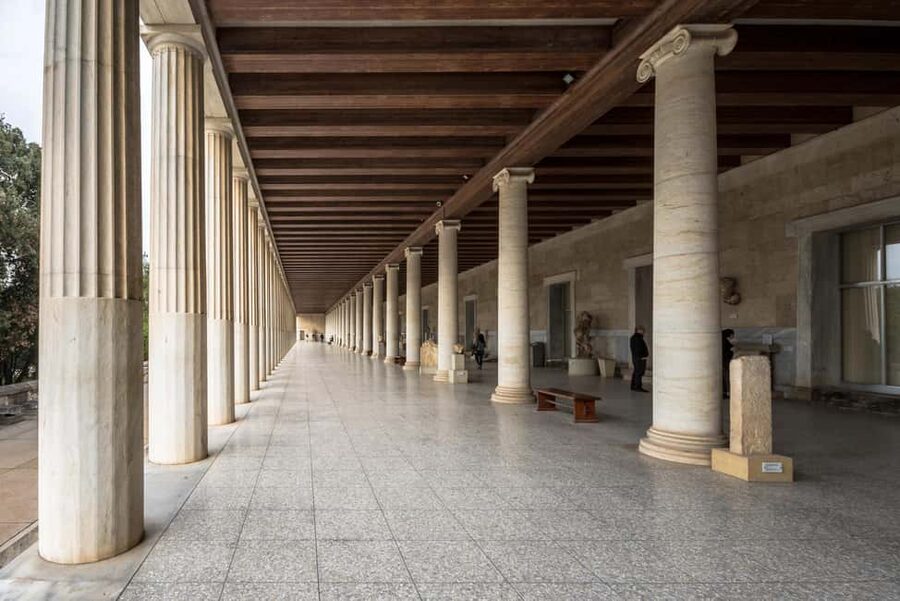
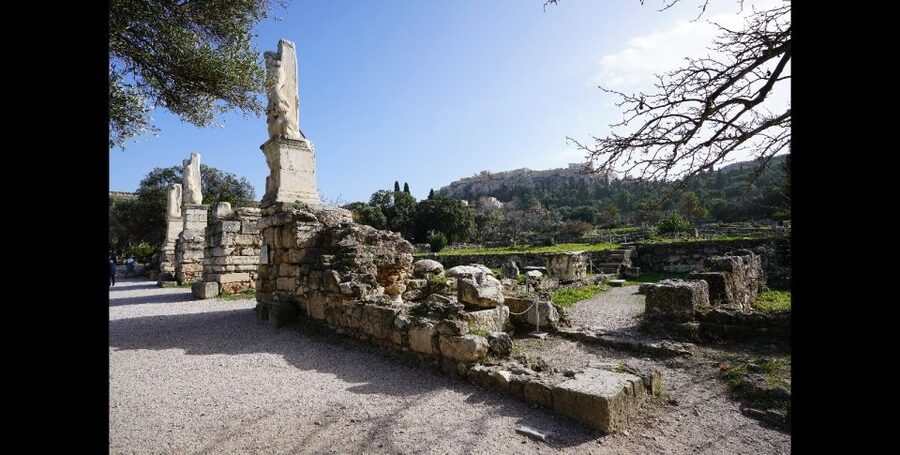
The Ancient Agora tour is built around how Athens functioned—politics, administration, commerce, and daily life. That focus is a good match for what you’ll see in this area: structures and spaces that existed for civic activity and public exchange.
As you move through the site, look for how the app frames each stop. Instead of only describing stones, the narration is meant to explain why the space mattered. That turns scattered ruins into a story about how decisions got made, how people interacted, and how the marketplace and civic life overlapped.
This is also one of the reasons self-guided works well here. If you’re not in a hurry, you can linger where the Agora’s “daily life” themes show up, rather than letting a group schedule push you forward. If you’re traveling with someone who wants photos and you want context, the audio/text mix can keep both of you engaged without constant explaining.
Drawback check: some mapping confusion can happen. If you’re standing in a spot that feels similar to the last one, double-check your position on the screen and listen for the track that matches the monument you’re looking at. GPS-driven audio selection is useful, but it’s not magic.
The democracy storyline: seeing the place where it began
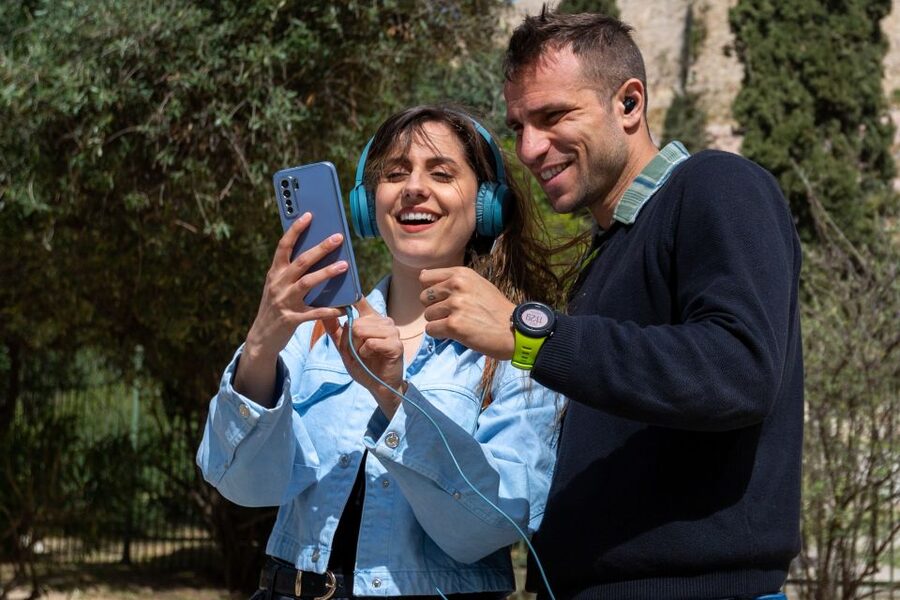
One highlight of the tour is the section tied to the birthplace of democracy—where democratic ideas were first established in ancient Athens. This is exactly the kind of topic that benefits from audio and visuals working together.
A text-only guide can tell you what democracy meant. But standing in the Agora, you need a bridge between concept and location. The app is designed to make that bridge by explaining what you’re looking at and why that place matters for political life.
For you, that means you can approach this part in a way that fits your learning style. Want a fast overview? You can use the visuals to orient yourself, then let the audio fill in meaning while you look. Want to slow down? Stay at one point long enough to read the text and replay the audio if needed.
If you’re visiting with limited time, this is one of the sections I’d prioritize early in your day. It gives you a framework—once you understand the democracy context, the rest of the Agora feels less like random ruins and more like a system.






Socrates and the philosophers: learning without a loud group
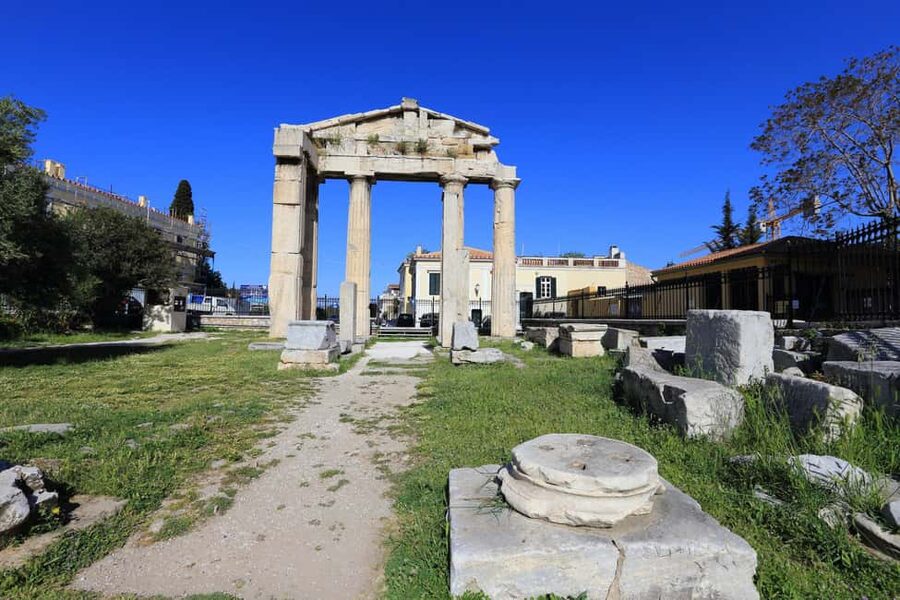
The tour also targets areas where Socrates and philosophers taught. Even if you’re not a classics scholar, this kind of content helps you see the Agora as a place where ideas moved in real public space—not just something locked inside books.
The advantage of the audio format is tone and pacing. A live guide tends to deliver the explanation once and then move on. Here, you can stop and restart as many times as you like. If you want to understand the philosophical angle before walking to the next monument, you can.
This section is also a good reminder that the Ancient Agora wasn’t only political and economic. It was social and intellectual, shaped by citizens who argued, listened, and learned. If you’re curious about how public life connected to thinking, you’ll likely find these audio tracks especially useful.
One practical tip: when you reach a monument with interpretive signage in Greek, don’t assume it will cover everything you want. The app is designed to provide its own narration, but if a spot’s visuals and audio mapping don’t feel perfectly obvious, you may need to slow down and re-check what the app thinks you’re viewing.
Temple of Hephaistos: why this stop matters
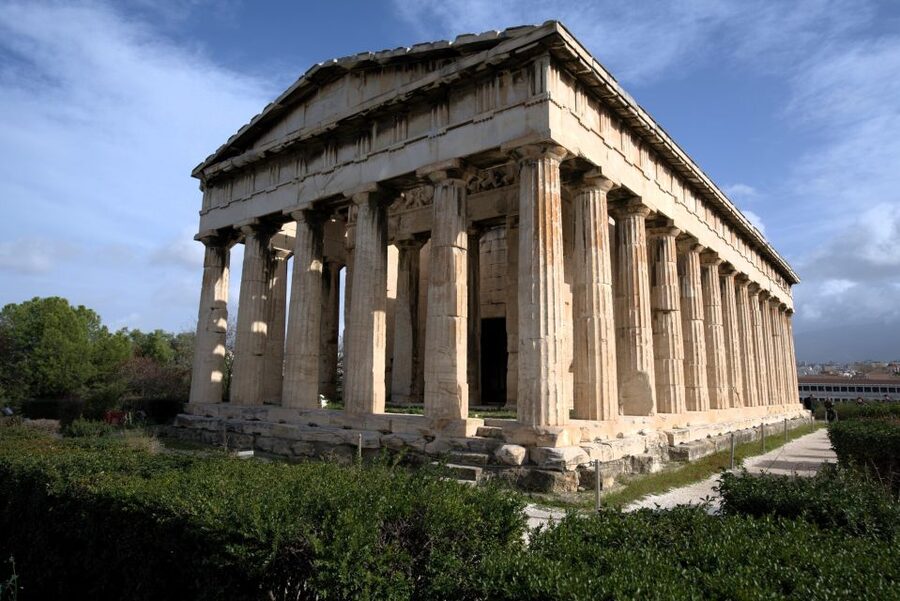
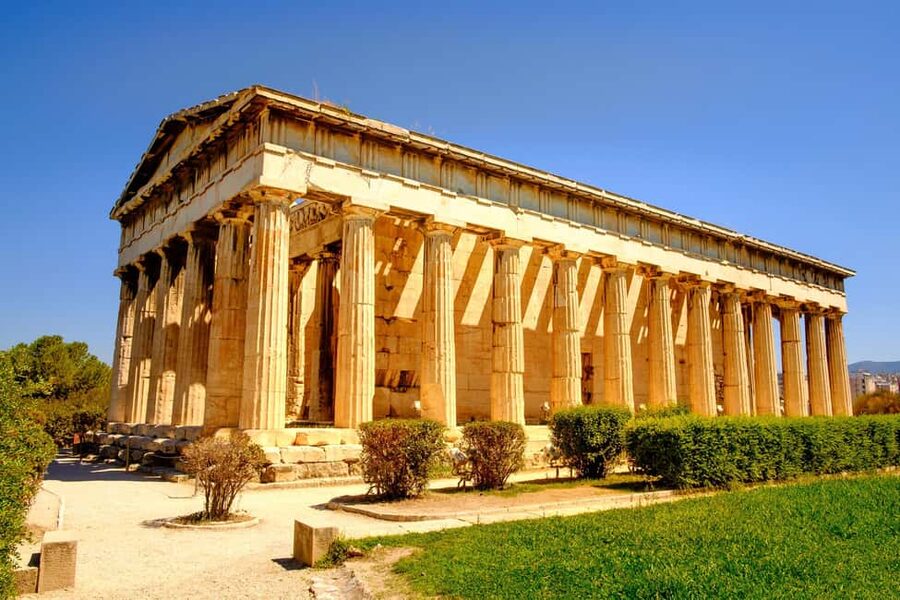
The Temple of Hephaistos is singled out as a standout feature, described as Greece’s finest preserved sight in this category. That’s a strong clue that you should treat it as your “anchor stop” during the tour.
When you arrive, use the app’s visuals to get oriented. A preserved temple gives you clearer architectural context than many fragments, so the 3D models and panoramic views can help you connect angles and structure while you’re actually looking at the building.
This is also where the tour’s multimedia approach can pay off most. If you’ve ever stood in front of an impressive ruin and thought, I get that it matters, but why exactly, this kind of audio+visual pairing usually helps. The narration and reconstruction tools are meant to turn the temple from a photo opportunity into a real understanding of place.
If you only have time for a few stops, make Hephaistos one of them. It’s the kind of location that rewards your attention, not just your camera.
Budget and value: the $8 tour plus entry ticket reality
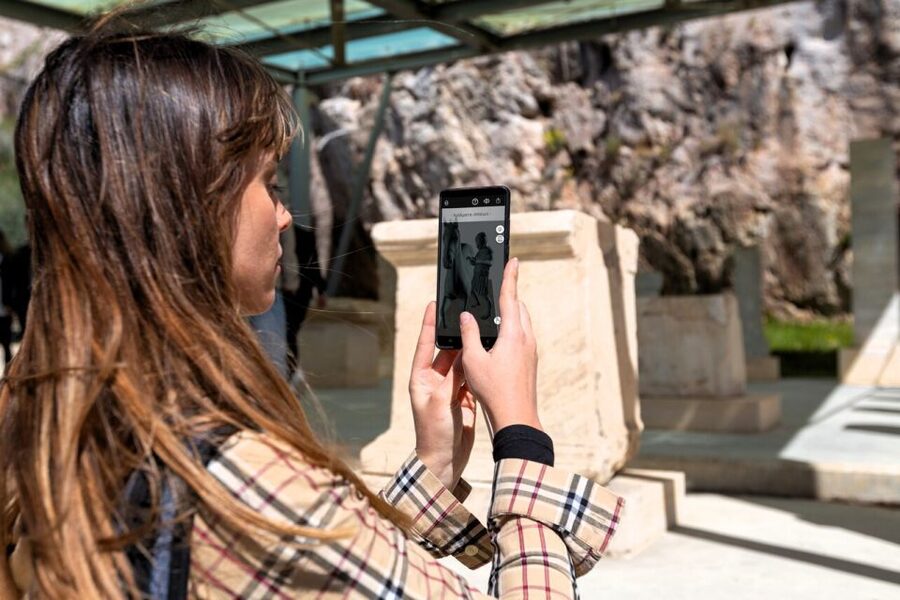
The tour price is $8 per person, and that’s the headline appeal. But the Ancient Agora entrance ticket is not included, and you’ll need to purchase it separately either at the site or online. The ticket is listed as €20 full and €10 reduced.
To judge value, think of it like this: you’re paying for the interpretation layer (audio, text, 3D/360° views), while the ticket buys access to the archaeological grounds themselves. If you plan to spend real time there, the $8 can feel like a bargain because the app keeps working offline and is valid for 5 days from first activation.
You also get multiple language options, which is helpful if you’re traveling with someone who doesn’t want to rely on your phone speakers sharing the same narration. The languages listed are English, Greek, German, Spanish, Italian, French, Dutch, and Chinese.
If you’re the type who enjoys learning on the move, this is a good match. If you prefer only a short visit and you don’t want to manage a phone setup, you might question whether the $8 is worth the hassle—especially if you’d rather spend that time exploring without headphones.
The good, the mixed, and the expectations to set
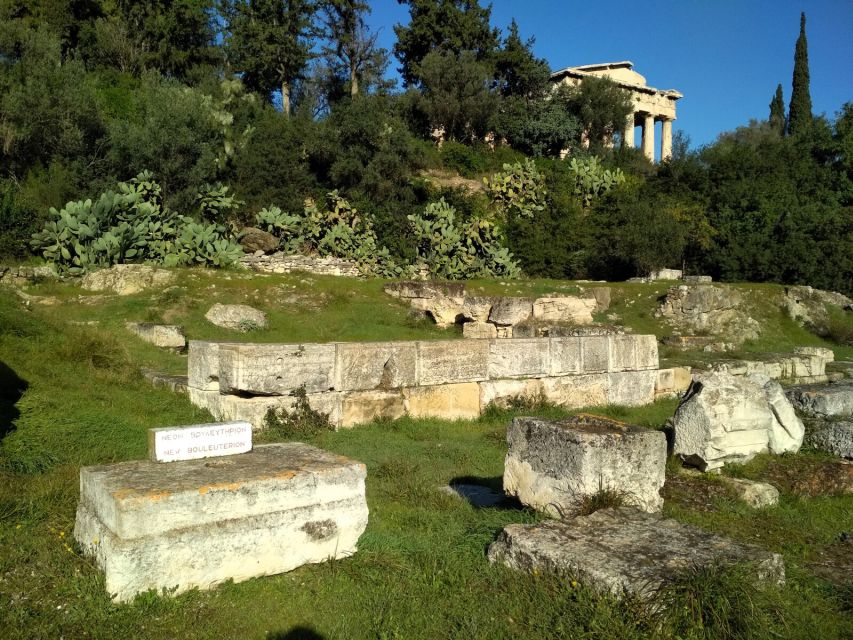
The best aspects of this experience are practical: it’s easy to access conceptually, it works offline once downloaded, and it provides visuals that help you interpret what you’re seeing. Multiple language support is a real benefit too, especially in Athens where signs might be helpful but not always complete.
The app’s style also suits people who like to learn at their own speed. You can move between political/civic themes, philosopher context, and everyday life topics without worrying about keeping up with a group.
The mixed side is about clarity and depth. Some users found it confusing to determine which audio belongs to which monument, and others felt the information could feel a bit superficial given the size of what’s on the site. One practical limitation: if you want a deeper archaeology explanation, you may still want a traditional guidebook alongside the app.
Who this tour is best for (and who should think twice)
This works best for you if you:
- want flexibility and a self-paced walk through the Agora
- like audio narration with visuals, especially 3D reconstructions and 360° views
- plan to download ahead and keep your phone ready during your visit
- travel in a group where different people might prefer different language options
You might think twice if you:
- dislike phone-based tours and don’t want to manage headphones and downloads
- need ultra-specific monument-by-monument guidance without any confusion
- expect the app to replace a more detailed guidebook or museum-style explanation
The sweet spot is travelers who want context fast, then use their own judgment on how long to linger where the story feels most relevant.
Should you book the Ancient Agora self-guided tour?
Book it if you want a low-cost, offline way to understand the Ancient Agora’s big themes: civic life, the birthplace of democracy, philosophers like Socrates, and the Temple of Hephaistos as a key landmark. The $8 price is hard to beat when you consider what you get—audio, text, 3D, 360° views—plus the fact that it runs without internet after download.
Skip it or add a backup guide if you’re the type who demands deep, crystal-clear monument identification all the time. If you’re worried about audio mapping, make sure you arrive with a fully charged phone and take a slow approach. If you do that, you’ll likely get a smooth, rewarding day with fewer headaches than you’d expect.
FAQ
FAQ
Is the Ancient Agora entrance ticket included?
No. The tour price does not include the entrance ticket. You must buy it separately (listed as €20 full or €10 reduced) either at the site or online.
How long does the tour last after I activate it?
The tour is valid for 5 days from the first activation.
Does the app work offline on site?
Yes. After you download the content, it works fully offline, with no internet needed during your visit.
What languages are available in the audio tour?
The audio and text are available in English, Greek, German, Spanish, Italian, French, Dutch, and Chinese.
How much storage does the app need on my phone?
You need approximately 200MB of storage space.
What devices does the tour support?
The app requires iOS 11.0 or later or Android 5.1 or later.
Can I cancel for a full refund?
Yes. You can cancel up to 24 hours in advance for a full refund.