REVIEW · KYOTO
Ancient Katana Training in Kyoto with Local Students
Book on Viator →Operated by Let's ask Shogo · Bookable on Viator
Katana practice in Kyoto, the real way. This 3-hour class with Shogo sensei has you joining the Kyoto Branch of Asayama Ichiden Ryū Hyōhō and training alongside local students on Iaijutsu and Kenjutsu with bokutō, not a staged performance.
I especially like that Shogo sensei teaches with clear guidance in both English and Japanese, so you can keep up without guessing. The atmosphere feels welcoming, and the class gets paced for your level instead of rushing you through big, flashy moves.
One possible drawback: this isn’t built for total beginners. The dojo generally doesn’t accept people with no prior budō experience, though you can request a consultation if you’re very eager.
In This Review
- Key things to know before you go
- Stepping into Asayama Ichiden Ryū Hyōhō in Kyoto
- What happens when class starts: Reihō etiquette and control
- Iaijutsu practice: quick-draw basics with a bokutō
- Kenjutsu practice: swordsmanship, spacing, and follow-through
- Beyond swords: the broader kobudō system behind the class
- The practical setup: timing, group size, and where to meet
- Fitness and expectations: how to know if this class fits you
- Value check: $45.61 for real instruction, not a show
- Who should book this dojo class
- Should you book Ancient Katana Training in Kyoto?
- FAQ
- How long is the ancient katana training in Kyoto?
- What time does the class start, and where is the meeting point?
- How much does it cost per person?
- Is this class beginner-friendly if I have no budō experience?
- What do I practice during the session?
- How many people are in the group?
- What if I need to cancel?
Key things to know before you go
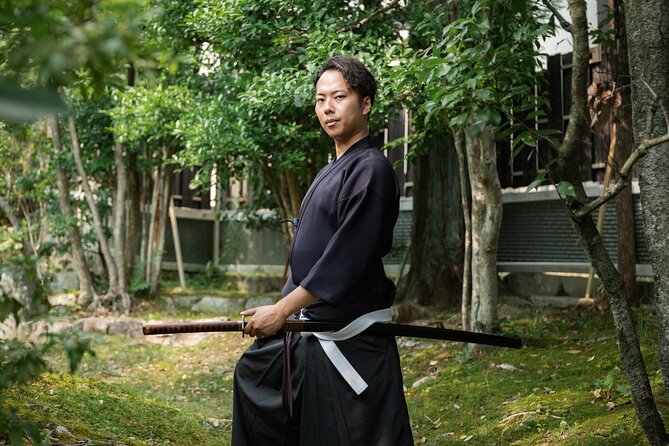
- Real dojo training with the Kyoto Branch of Asayama Ichiden Ryū Hyōhō and actual students
- Reihō etiquette first, so technique isn’t taught in a vacuum
- Iaijutsu and Kenjutsu fundamentals practiced with wooden katana (bokutō)
- Small group size with a maximum of 4 travelers for a calmer, more attentive class
- Shogo sensei instruction in English and Japanese, which matters when you’re learning formal terms
- Kobudō koryū tradition (400+ years) tied to techniques from the samurai era in armor
Stepping into Asayama Ichiden Ryū Hyōhō in Kyoto
Kyoto is full of samurai souvenirs. This is not that.
This class is a training session with the Kyoto Branch of Asayama Ichiden Ryū Hyōhō, a classical budō (koryū kobudō) tradition that has been preserved for over 400 years. The point here isn’t to watch. The point is to practice, under guidance from Shogo sensei and the regular dojo members.
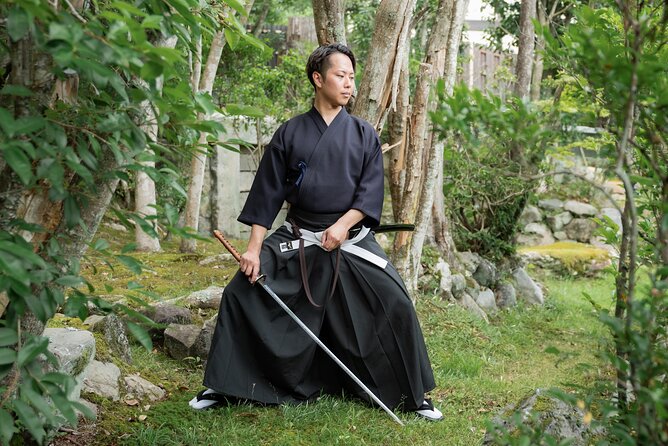
You’ll work through core sword arts like Iaijutsu (quick-draw katana technique) and Kenjutsu (Japanese swordsmanship), using bokutō (wooden katana). That one detail changes everything. A real wooden training sword makes your movements matter—distance, timing, posture—without the danger you’d face with steel.
The other big difference is that this is not marketed as a tourist activity. They run their regular training, and you join it as a trainee. That’s exciting if you want discipline. It’s also a heads-up if you’re expecting a casual introduction.
You can also read our reviews of more tours and experiences in Kyoto.

What happens when class starts: Reihō etiquette and control
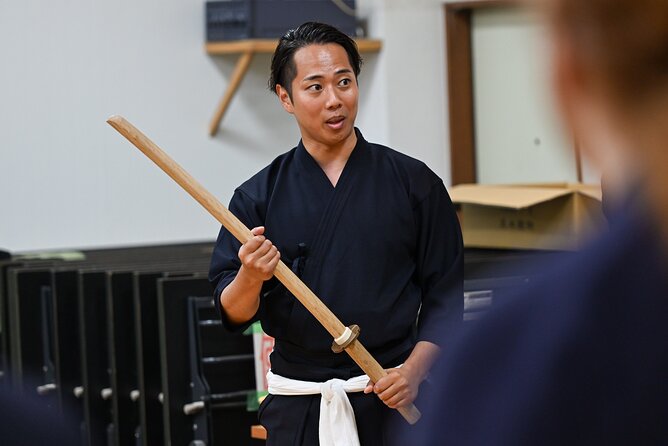
The session doesn’t begin with swinging weapons. It starts with Reihō etiquette—the bowing, formalities, and respect that shape how a dojo trains.
I like this approach because it trains your brain as much as your body. You learn that technique is only half the story. The other half is the way you move, how you wait, and how you respond to instruction. In practice, Reihō also helps beginners avoid chaos. If you’re late, too loud, or loose with attention, the class rhythm falls apart.
Because the dojo is teaching a classical ryū (school), the etiquette isn’t just theater. It’s built into the method. You’ll get cues on where your focus goes and what the class expects from you as you transition between drills.
This is also where Shogo sensei’s communication style helps. When you’re learning formal terms and dojo flow, having instruction in both English and Japanese keeps you from getting stuck at the language layer.
Iaijutsu practice: quick-draw basics with a bokutō
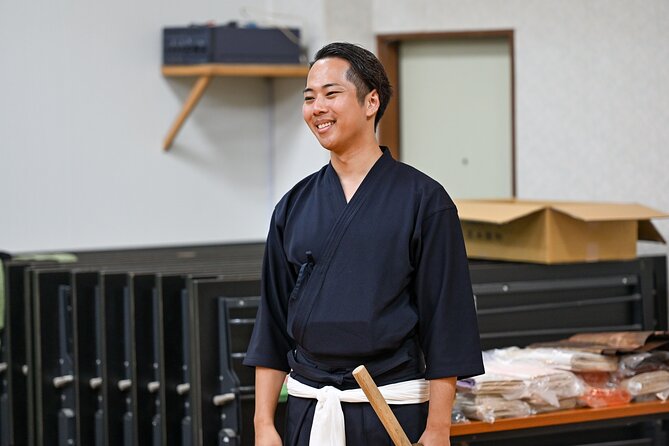
Iaijutsu sounds cool in English. In the dojo, it’s mostly about precision.
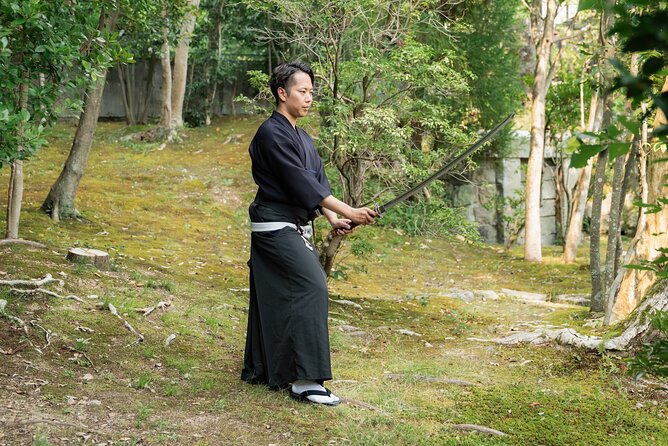
You’ll train Iaijutsu (katana drawing) with a bokutō. That means you’re practicing the sequence: readiness, movement to draw, and the controlled end position—rather than turning it into a wind-up slash. The class aims at fundamentals, not a cinematic show.
What you’ll gain here is timing. Quick-draw training forces you to think about when you act, not just how hard you move. Even if you’re new to swords, you can feel the difference between rushing and using correct body mechanics.
One practical benefit: if you’re worried you must arrive with a sword, you probably don’t need to. The training uses bokutō, and the session is set up for participants to get what they need for practice. Showing up prepared is still smart, but this class is designed so you can focus on learning instead of hunting gear in a foreign city.
Kenjutsu practice: swordsmanship, spacing, and follow-through
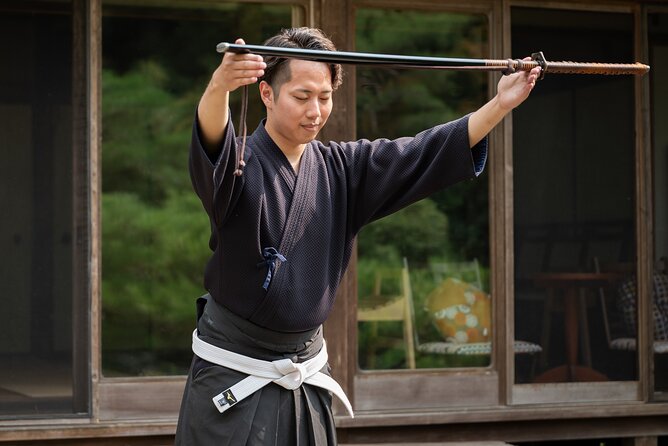
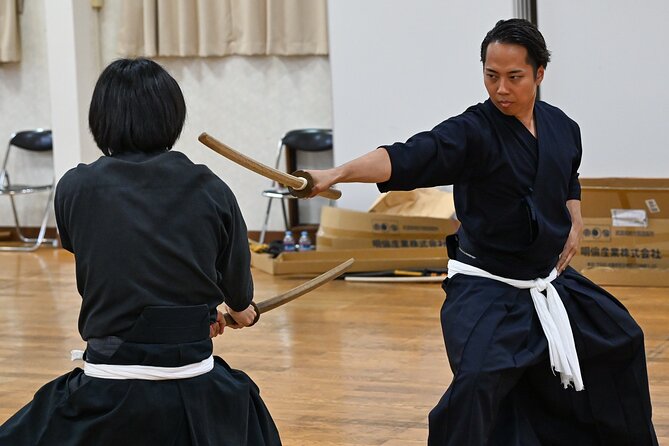
After you work on drawing fundamentals, the session shifts into Kenjutsu (katana swordsmanship). This is where footwork, distance, and control start to matter more than speed.
In sword training, the easy mistake is going too big. Beginners tend to overswing because it feels like effort equals skill. Kenjutsu drills are meant to teach the opposite: efficiency, alignment, and clean follow-through.
You’ll also notice that you’re not training in isolation. You’re in a room with other students, and the dojo expects you to match the class tempo and obey guidance quickly. That’s another reason the small group size matters. With a maximum of 4 travelers, you’re less likely to get lost in the crowd.
I like that Shogo sensei makes adjustments based on your level. That turns the class from a one-size-fits-all experience into a structured learning session. You’ll still be challenged, just not confused.
Beyond swords: the broader kobudō system behind the class
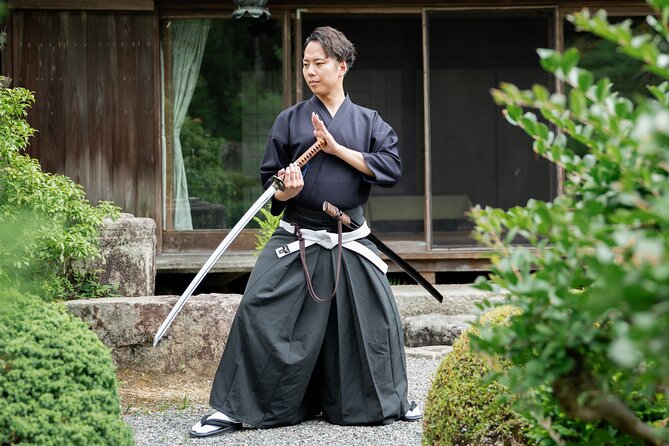
Even though this training session centers on sword arts, the tradition behind it is wider. Asayama Ichiden Ryū Hyōhō is part of kobudō that historically preserved techniques from an era when samurai fought while wearing armor.
That armor-era connection is more than trivia. It’s one reason classical schools pay attention to posture, structure, and practical movement. They’re trying to keep techniques usable in real constraints, not just perfect for modern practice.
In the broader system, the tradition also includes other weapons and methods such as kama-jutsu (sickle techniques), bōjutsu (staff), jōjutsu (short staff), tanbōjutsu (short stick), kusarifundōjutsu (chain and weight), and shurikenjutsu (throwing darts). You likely won’t cover all of that in one evening, but knowing it exists helps you understand why the dojo trains with discipline. It’s not only about “learning sword moves.” It’s about learning the school.

The practical setup: timing, group size, and where to meet
This is an evening class starting at 6:30 pm. The experience runs for about 3 hours, and it ends back at the meeting point. If you plan dinner first, don’t. Build in time for an end-of-class cooldown too.
The meeting point is at 7-chōme-27-1 Honmachi, Higashiyama Ward, Kyoto, 605-0981, Japan. It’s listed as near public transportation, which is exactly what you want in Kyoto. Getting there without a complicated route makes the whole experience feel smoother.
The group cap is 4 travelers. That’s a big deal. Smaller classes make it easier to correct posture and timing. You also get more chances to ask questions when something doesn’t make sense.
You’ll use a mobile ticket, and you’ll receive confirmation at the time of booking. That reduces friction when you’re traveling and juggling a busy itinerary.
Fitness and expectations: how to know if this class fits you
The class requests a moderate physical fitness level. That doesn’t mean you need to be an athlete. It does mean you should be comfortable with physical training for a few hours and ready to learn through repetition.
More important than fitness is mindset. This is an authentic training session. If your goal is to learn discipline and real technique, you’ll probably feel at home. If you want a casual, first-day sightseeing experience, you might find the dojo atmosphere more serious than you expect.
There’s also the experience requirement. As a general rule, they do not accept participants with no prior budō experience. If you’re determined anyway, you can contact them for consultation. I’d treat that as part of the respect. Doing the “check first” step tells the dojo you’re serious.
Value check: $45.61 for real instruction, not a show
At $45.61 per person for about 3 hours, the price can look surprisingly reasonable for what you’re getting.
You’re not paying for theater. You’re paying for real instruction time, coaching, and structured practice in a classical martial arts dojo. The small group size also supports value. You’re not one face among many; you’re a participant in a class that can actually correct details.
If you compare it to typical tourist “katana experiences,” the value improves fast. Those often give you a short demo and some basic handling. Here, you train through core elements like Reihō etiquette, Iaijutsu quick-draw fundamentals, and Kenjutsu swordsmanship drills.
One more value factor: Shogo sensei is proficient at teaching in both English and Japanese. Good language support matters when you’re learning something technical and formal. Without it, beginners lose time figuring out terms instead of learning technique.
Who should book this dojo class
You’ll get the most from this experience if you:
- Want Iaijutsu and Kenjutsu fundamentals, taught as training rather than performance
- Appreciate learning etiquette and discipline, not only weapon handling
- Prefer a small group class (max 4) with more attention
- Are comfortable asking questions and correcting mistakes during drills
You might reconsider if:
- You have no prior budō experience and don’t want to seek consultation first
- You expect a hands-off, sightseeing-style activity
- You don’t feel ready for moderate physical training
This is also a great option for people who already have some martial arts background and want to connect that knowledge to a specific Japanese tradition in Kyoto.
Should you book Ancient Katana Training in Kyoto?
If you want a real dojo session—Reihō etiquette, Iaijutsu drawing, and Kenjutsu swordsmanship with bokutō—this is the kind of class that turns Kyoto interest into actual skill building.
I’d book it if you’re ready for seriousness and you match their experience expectations, or you’re willing to ask for consultation beforehand. If you’re brand new to budō, treat the consultation step as part of the commitment. The dojo is there to train students, not to run a generic intro workshop.
If your main goal is learning discipline and technique from a guided classical tradition, this one is a strong choice.
FAQ
How long is the ancient katana training in Kyoto?
The session is about 3 hours.
What time does the class start, and where is the meeting point?
It starts at 6:30 pm. The meeting point is 7-chōme-27-1 Honmachi, Higashiyama Ward, Kyoto, 605-0981, Japan.
How much does it cost per person?
The price is $45.61 per person.
Is this class beginner-friendly if I have no budō experience?
As a general rule, the dojo does not accept participants with no prior budō experience. If you are very eager to join, you can contact them for a consultation.
What do I practice during the session?
You’ll practice Reihō etiquette, Iaijutsu (katana drawing), and Kenjutsu (katana swordsmanship) alongside the dojo’s regular members.
How many people are in the group?
The experience has a maximum of 4 travelers.
What if I need to cancel?
Cancellation is free if you cancel up to 24 hours in advance of the experience start time. If you cancel less than 24 hours before, the amount you paid is not refunded.