REVIEW · HOI AN
Authentic Vietnamese Coffee Making Experience in Hoi An
Book on Viator →Operated by Hoi An Scooter Adventures · Bookable on Viator
Coffee plus technique equals a great hour. In Hoi An, this class turns Vietnamese coffee culture into something you can actually make, not just watch—think Phin filter drip and two hands-on coffee styles of your choice. I especially like the English-speaking instruction and the fact you leave with the recipe for what you made.
The only real catch: there’s no pick-up or drop-off, so you’ll need to get to the meeting point area on your own. It’s also a short indoor-and-outdoor setup, so if the day is hot, go earlier or time it when you’re not melting.
In This Review
- Key highlights if you’re choosing a Hoi An coffee class
- Where you meet and how the 2-hour class runs
- Pick your two coffees, then learn the four (in practice)
- Vietnamese Phin filter coffee: the bold slow drip
- Egg coffee: creamy, sweet, and very teachable
- Salt coffee: the pinch that changes the whole cup
- Coconut coffee: nutty sweetness for a warmer mood
- What’s included with the $18 price (and why it feels fair)
- Who this class suits best (and who might pass)
- Practical tips for a smoother coffee session in Hoi An
- Should you book the Vietnamese coffee making experience in Hoi An?
- FAQ
- How long is the Vietnamese coffee making experience in Hoi An?
- Where is the meeting point for the class?
- Can I choose which coffees I will make?
- Is pick-up or drop-off included?
- What is included in the price?
- Is the ticket sent to you digitally?
- Do I need to provide a WhatsApp number?
- What are the cancellation rules?
Key highlights if you’re choosing a Hoi An coffee class
- Choose two coffee types to make (from egg, salt, coconut, and Phin drip)
- Learn the Phin filter method that creates Vietnam’s bold, slow-drip style
- Egg coffee is hands-on and creamy with egg yolk, condensed milk, and sugar
- Salt coffee teaches flavor balance by reducing bitterness with a pinch of salt
- Coconut and salt bring contrast—nutty sweetness and sharper brightness in the same cup
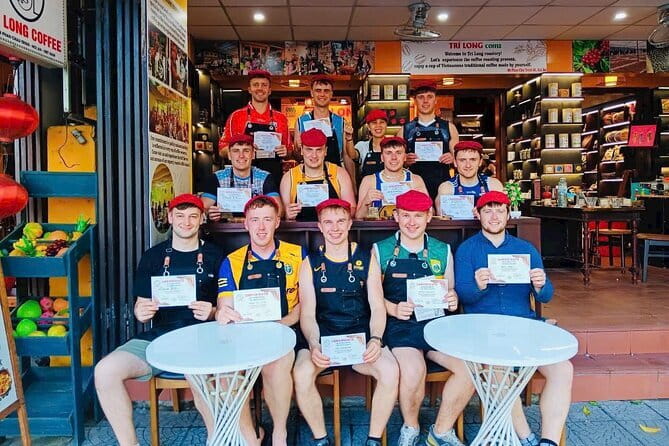
- Small-group feel for the size with a maximum of 50 people, plus friendly pacing
Where you meet and how the 2-hour class runs
The experience starts at 88 Đường Đ. Phan Chu Trinh, Phường Minh An, Hội An. It ends back at the same place, so you don’t have to worry about finding your way afterward or building a new route into your day.
Timing is listed as about 2 hours, and you’ll use a mobile ticket. When you book, you’re asked to provide your WhatsApp number, which is a practical way for the team to reach you if anything needs confirming.
There’s no pick-up or drop-off included, so I’d treat this like a sit-down activity you plan around—not a “grab me from my hotel” add-on. The good news: the meeting point is described as near public transportation, which makes it easier to fit into a normal sightseeing day.
Also, the group size is capped at 50 travelers. In real life, that tends to mean you’re not stuck in a chaotic line of people waiting to be fed coffee—there’s room for hands-on work and for questions.
You can also read our reviews of more tours and experiences in Hoi An.


Pick your two coffees, then learn the four (in practice)

One of the smartest parts of this class is that you choose two coffee types that you want to make. Your options are:
- Vietnamese Phin filter coffee
- Egg coffee
- Coconut coffee
- Salt coffee
That choice matters. If you love sweet and creamy drinks, egg coffee is usually the priority. If you like flavor with an explanation (and a little twist), salt coffee is the one you’ll remember.
Even though you make two, you’re not just limited to those two in what you learn. Multiple people mention learning about different Vietnamese coffee beans and enjoying the different styles, so you’ll likely come away understanding the whole flavor family—not only the two you handcraft.
Pacing is another plus. Reviews highlight instructors who don’t rush you and who explain what’s happening as you go. One instructor name that shows up in feedback is Van, and another is David. Either way, you’re looking for an instructor who can translate technique into something you can repeat at home.
Vietnamese Phin filter coffee: the bold slow drip
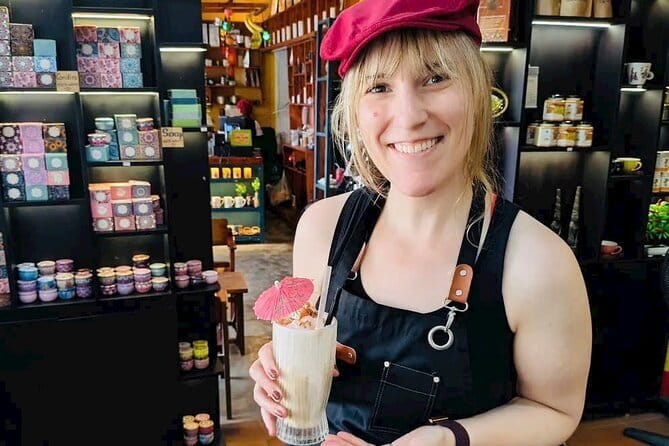
If Vietnam has a signature coffee method, it’s the Phin filter. In this class, you’ll start with a demonstration of the traditional process: slow-dripping coffee through the Phin. The result is a brew known for being bold and robust—not watery, not shy.
Why this part is valuable: most people try Vietnamese coffee in cafés where it’s already perfected for you. With the Phin method, you learn what makes it taste Vietnamese. You understand how the brewing style affects strength and intensity, and you get a practical sense of why people seek it out.
In a hands-on class, the Phin lesson is also calming. The method has a rhythm. You can watch the drip, see how the coffee develops, and learn the difference between ordering something and making it.
If you’re new to coffee, this is the section that gives you a foundation. If you’re already a coffee nerd, it’s a chance to compare your expectations against how Vietnamese brews build flavor through technique, not just roast or additives.
Egg coffee: creamy, sweet, and very teachable
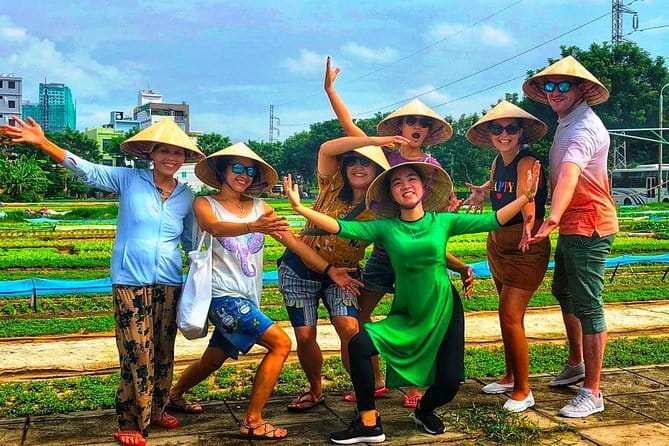
Egg coffee is one of those Vietnamese specialties that sounds unusual until you taste it. Here, you learn it properly: the coffee is combined with egg yolks, condensed milk, and sugar, whipped into a smooth, creamy texture.
The key is that it isn’t just a gimmick. When it’s made well, the result is velvety and rich without tasting like plain dessert. In the class format, you watch skilled baristas prepare it and you get to make your own chosen version.
What I like about egg coffee in a class like this: it teaches you how flavors and textures work together. You’re not only learning a drink; you’re learning a method—how the creamy component changes how the coffee tastes and feels.
Egg coffee is also a great choice if you’re traveling with someone who doesn’t want “strong coffee only.” Egg coffee tends to be approachable. It’s still coffee-forward, but it has that soft, custard-like comfort people crave after a hot day in central Vietnam.
Salt coffee: the pinch that changes the whole cup
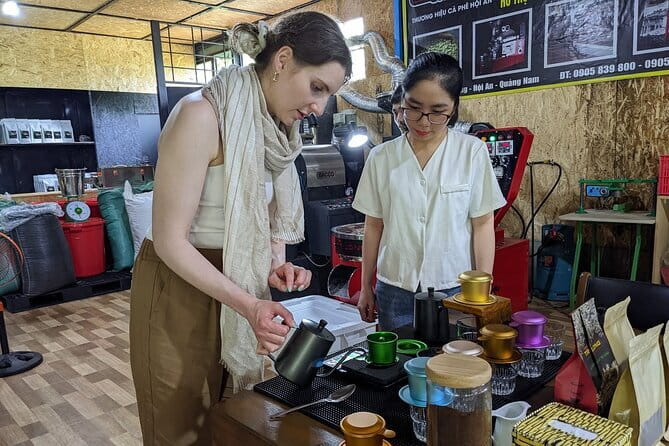
Salt coffee is the oddball on the menu—until you understand what the salt is doing. In the class, salt coffee is explained as a sensory experiment: a pinch of salt helps enhance coffee’s natural flavors and reduces bitterness.
Even if you think you don’t like bitter flavors, this matters. Bitterness can show up when coffee is over-extracted, or simply when roast and strength push past your preferred profile. Adding a tiny amount of salt can change your perception fast.
Why I’d do salt coffee here rather than only ordering it at a café: you’re learning the logic while you make it. The class notes even mention that there’s a bit of science behind the pairing. You don’t need a chemistry degree to enjoy it, but you do get a reason you can carry home.
If you like coffee that feels clean and balanced, salt coffee is often a surprise hit. And if you’re the type who enjoys trying a drink because it challenges your assumptions, this is the one to choose.





Coconut coffee: nutty sweetness for a warmer mood
Coconut coffee adds a different personality to the Vietnamese coffee lineup. The class covers it as an aromatic drink where coconut’s nutty sweetness is infused into the coffee.
Compared with egg coffee’s creamy texture, coconut coffee is more about aroma and light sweetness. It can feel refreshing, especially on days when you want something less heavy but still distinctly Vietnamese.
In practical terms, coconut coffee is a strong “pairing choice” if you want contrast: for example, egg or Phin for the coffee backbone, then coconut for brightness and fragrance. Salt coffee is also a great contrast partner if you’re building a flavor spectrum in your cup.
If you’re unsure what to pick, think like this:
- Pick Phin if you want to understand Vietnamese coffee at its root.
- Pick Egg if you want creamy and comforting.
- Pick Salt if you want balanced flavor with a twist.
- Pick Coconut if you want aromatic sweetness and something lighter.
What’s included with the $18 price (and why it feels fair)
The price is $18.00 per person, for an experience listed at about 2 hours. To judge value, I look at what you get beyond entertainment.
Here, you get:
- Coffee making tools
- An English-speaking instructor
- A Vietnamese coffee making course certificate
- The recipe of the coffee you make
- Coffee and/or tea
That combination is what makes the class worth it. Many coffee experiences are either mostly tasting or mostly watching. This one includes tools and instruction, plus you take home the recipe so you can repeat what you made.
The certificate might sound like a souvenir thing, but it can also be a confidence boost for beginners—like proof you learned something real in two hours. And the recipe is the practical win: it’s how you remember ratios and steps when you’re back in your kitchen.
Also, your group size limit at 50 suggests you won’t be jammed into an endless crowd. One review specifically praises the pacing and how nobody felt rushed, which supports the idea that you’re spending time making and learning, not just queuing.
Who this class suits best (and who might pass)
This is a great fit if you:
- Love learning how food works, not only tasting it
- Want a hands-on activity that doesn’t require extreme coffee knowledge
- Are visiting Hoi An and want a short, high-impact experience
- Prefer a class with English instruction and a friendly, fun atmosphere
It’s also very workable for couples and friends. Reviews mention people coming together, choosing different coffee styles, and both enjoying the session.
You might skip it if:
- You strongly need pick-up or drop-off convenience
- You only want to sit and taste with zero hands-on involvement
- You’re short on time and can’t make it to the meeting point on your schedule
But if you can get there, this is the kind of class that gives you something lasting: technique, flavor understanding, and the recipe.
Practical tips for a smoother coffee session in Hoi An
A couple small planning ideas can make a noticeable difference.
First: the class has a location on a main road and runs on a set time window. Reviews include advice to go when it’s not too hot, which makes sense for a city where midday sun can be intense. If you can pick the morning or early afternoon slot, you’ll probably feel better and enjoy the process more.
Second: since you’ll be making coffee styles, wear something comfortable enough to stand, stir, and watch your drink come together. You’re not in a formal workshop setting, but you are doing work.
Third: choose your two coffees based on your mood. If you want rich and classic, pair Phin with Egg. If you want a twist plus balance, go Salt and Coconut. The choice part is your chance to personalize the class.
And lastly: because you get recipes to take home, snap a photo of your notes if you’re the type who forgets details after a few days of travel. It’s not required, but it helps.
Should you book the Vietnamese coffee making experience in Hoi An?
Yes—if you want a hands-on, learn-something activity in a compact 2-hour block. For $18, you’re getting instruction in English, tools, and a takeaway recipe tied directly to the two coffees you make. That’s the kind of value that sticks after the trip.
I’d book it especially if you’re curious about Vietnamese coffee beyond the obvious. Phin filter coffee is the foundation, and egg and salt coffee are the two flavors that most people remember because they break expectations—in a good way.
Skip it only if getting to the meeting point is a dealbreaker for you, since pickup/drop-off isn’t included. If you can manage that, this is a fun, friendly class where you leave with both taste and technique.
FAQ
How long is the Vietnamese coffee making experience in Hoi An?
It lasts about 2 hours.
Where is the meeting point for the class?
The meeting point is at 88 Đường Đ. Phan Chu Trinh, Phường Minh An, Hội An, Quảng Nam, Vietnam.
Can I choose which coffees I will make?
Yes. You choose two types of coffee you want to make.
Is pick-up or drop-off included?
No, pick-up and drop-off are not included.
What is included in the price?
Included are the coffee making tools, an English-speaking instructor, a course certificate, the recipe of the coffee you make, and coffee and/or tea.
Is the ticket sent to you digitally?
Yes. You’ll use a mobile ticket.
Do I need to provide a WhatsApp number?
Yes. You’re asked to provide your WhatsApp number when booking.
What are the cancellation rules?
You can cancel for free up to 24 hours in advance for a full refund, and changes made less than 24 hours before the start time aren’t accepted.