REVIEW · HOI AN
Hoi An Ancient Town and Coffee Making Course
Book on Viator →Operated by Dragon Travel Viet · Bookable on Viator
Coffee plus history, in one smooth outing. This is a Hoi An Ancient Town walking tour paired with a hands-on Vietnamese coffee making course at Sữa Cafe, so you get a full taste of the region instead of just snapping photos. I especially like that you learn the differences behind the drinks, not only how to order them, and that you also get an easy way to cover major sights in a short time. One thing to think about: the lesson includes a 25-minute coffee powder foot detox massage, so if you dislike foot massages or strongly scented treatments, this may not be your favorite part.
The format is built for convenience: hotel pickup in the Hoi An center, a guide who keeps things moving, and a tight schedule that still leaves you time to see key town landmarks. I also like that the ancient-town portion isn’t just a list of stops—it includes a traditional art performance and time to check out the central market, where you can shop or just watch local business.
At 4 to 5 hours total, it’s the kind of experience you can fit on your first or second day in Hoi An without turning the whole day into a marathon. If you want to learn coffee styles (phin, egg, coconut, drip, and espresso) and then walk the historic lanes with context, this is a practical pick.
In This Review
- Key highlights at a glance
- A 4–5 Hour Combo: Coffee Workshop Plus UNESCO Hoi An
- Sữa Cafe Coffee Lesson: From Robusta vs Arabica to Phin and Espresso
- Egg Coffee, Coconut Coffee, and the Moment It Clicks
- Coffee Powder Foot Detox Massage: Relaxing or Just a Strange Bonus?
- Hoi An Ancient Town: Japanese Covered Bridge to Fukian Assembly Hall
- The Old Houses, the Museums, and Why This Order Works
- Central Market Time and Flexible Shopping Stops
- Price and Value: Why $39 Can Make Sense Here
- Who This Tour Fits Best (and Who Should Skip It)
- Practical Tips Before You Go
- Should You Book This Hoi An Coffee-Making Tour?
Key highlights at a glance
- Sữa Cafe coffee lesson covering roasting basics and the two main bean types (Robusta vs Arabica)
- Hands-on drink making including phin coffee, egg coffee, coconut coffee, drip coffee, and espresso
- Tasty wrap-up with coffee you make plus cake and a special pancake-style dessert
- 25-minute coffee powder foot detox massage included with the coffee lesson
- Hoi An Ancient Town highlights like the Japanese Covered Bridge and Fukian Assembly Hall
- Time for a performance and shopping with flexible stops around the central market
A 4–5 Hour Combo: Coffee Workshop Plus UNESCO Hoi An
Hoi An is a UNESCO World Heritage site (recognized in 1999), and it earns its reputation the old-fashioned way: it still feels like a living trading town, not a theme park. What I like about this tour is the pairing. You start with Vietnamese coffee, then you move straight into the town’s historic sites, so the whole day has a theme beyond sightseeing.
This experience runs about 4 to 5 hours, with the remaining time usually spent on pickup and transfer. It’s designed as a private tour, meaning it’s only your group—so you’re not stuck waiting around for strangers to ask questions or get ready.
If you’re planning a short stay, the timing is also realistic. You’ll spend about 2 hours in the coffee lesson and about 2 hours walking the Ancient Town core, with a guide who keeps the route efficient. That structure is perfect if you want to get your bearings fast and then decide later where you want to return on your own.
You can also read our reviews of more tours and experiences in Hoi An.

Sữa Cafe Coffee Lesson: From Robusta vs Arabica to Phin and Espresso
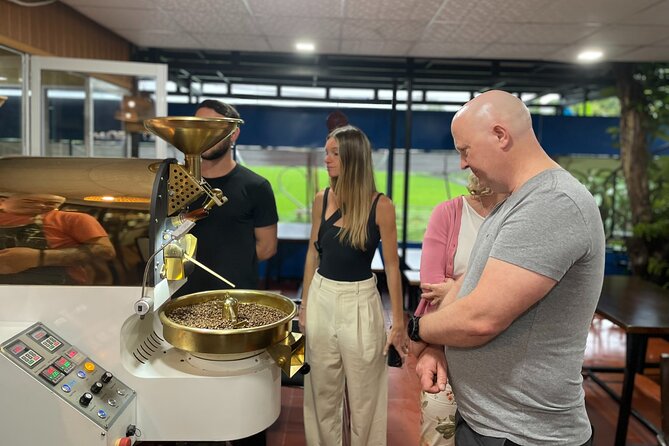
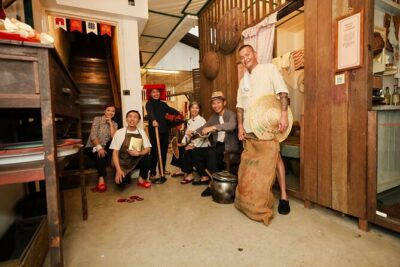
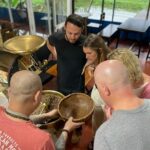
Your day starts at Sữa Cafe, where the guide takes you in for tea and a quick welcome. Then you shift into the part that makes this tour feel worth the money: the coffee is explained as a system, not just a final drink.
First, you get the history and development of the Vietnamese coffee industry. That matters because Vietnamese coffee doesn’t come from nowhere. It’s tied to how people grow, roast, and drink coffee locally, and that background helps you understand why certain styles are so common here.
Next comes a simple but useful skill: distinguishing between the two main Vietnamese coffee types—Robusta and Arabica. If you’ve only tried coffee that tastes the same in every country, this is a great reset. It helps you notice differences later when you’re ordering on your own.
Then you watch the roasting process. You’re not just staring at equipment—you’re being shown how roasting changes what ends up in your cup. After that, you move into making coffee yourself.
You’ll learn to make several styles:
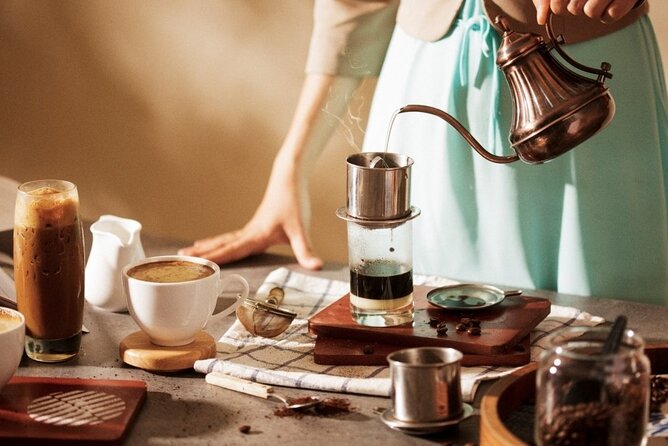
- Traditional phin coffee, the iconic Vietnamese filtered coffee
- Egg coffee, a sweet-style drink that’s become famous for a reason
- Drip coffee, a familiar method in a Vietnamese setting
- Coconut coffee, where local ingredients change the flavor profile
- Espresso coffee, for people who want something closer to what they know at home
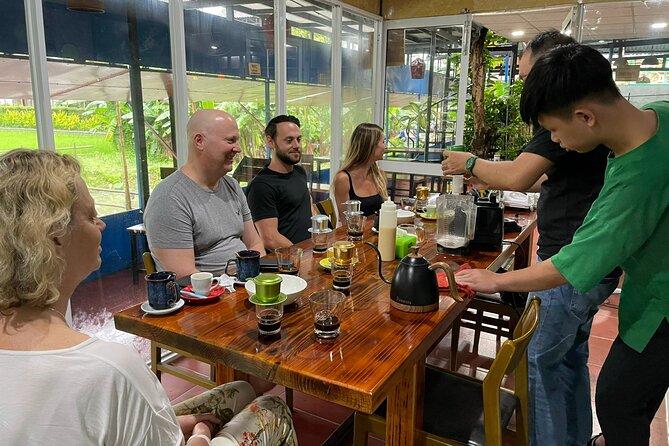
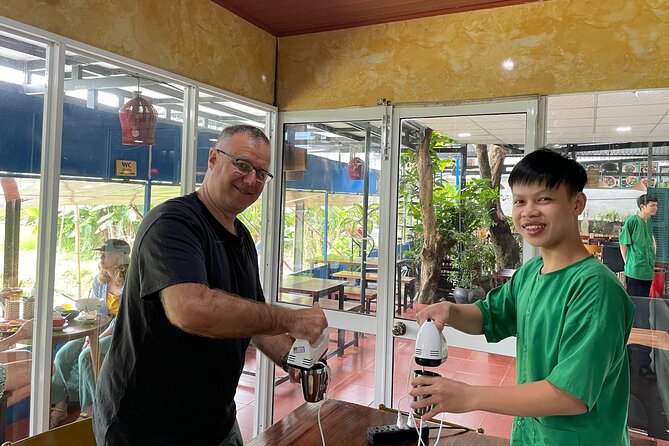
The best part is that you’re not choosing just one drink and calling it a day. You get a menu of styles so you can figure out what you actually like.
Egg Coffee, Coconut Coffee, and the Moment It Clicks
There’s a reason this course is popular: it turns coffee from a product into a craft. When you make egg coffee and coconut coffee yourself, you start paying attention to texture, sweetness, and how the base coffee behaves with toppings and mixing.
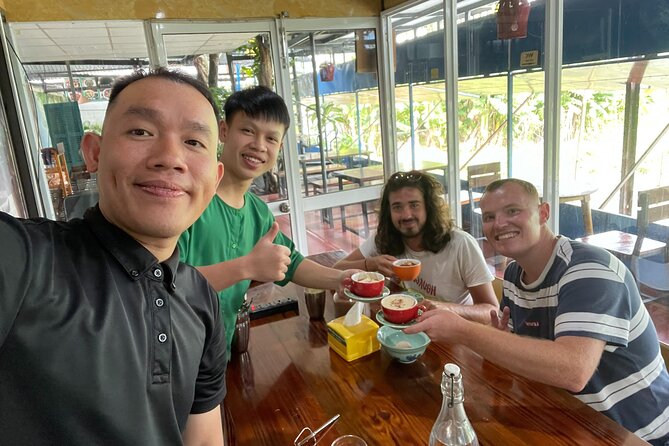
In the lesson, you also get time to enjoy what you make. After learning, you and your group enjoy the coffee along with a special pancake dessert. It’s a nice follow-through, because it’s easy to feel like a hands-on class is over once the last step is done. Here, you actually sit for a moment and taste the results as a real meal.
And yes, the drink choices are diverse enough that you can find a favorite even if you usually drink coffee for caffeine only. If you like creamy, sweet drinks, egg and coconut are obvious candidates. If you prefer something stronger or more straightforward, phin and espresso help you connect the dots.
One practical note: coffee is aromatic. Even if you stay careful, you may smell like coffee after class—think of it as a badge of accomplishment, or at least something you’ll notice when you get back to your hotel.
Coffee Powder Foot Detox Massage: Relaxing or Just a Strange Bonus?
After the coffee making portion, you get a 25-minute foot detox massage using coffee powder. This is included, so it’s not something you have to hunt down or pay extra for later.
How you feel about it will depend on your comfort with foot massages and the idea of coffee powder on your skin. The tour includes it as part of the experience, so it’s best to go in with eyes open. If foot massages are your thing, this can feel like the perfect cool-down after standing, learning, and tasting. If you’d rather not do anything with your feet, you might find this portion less fun than the coffee itself.
Either way, it’s a distinctive feature that ties the day together. The smell and texture of coffee don’t just stay in your cup—they show up in the body treatment too.
Hoi An Ancient Town: Japanese Covered Bridge to Fukian Assembly Hall
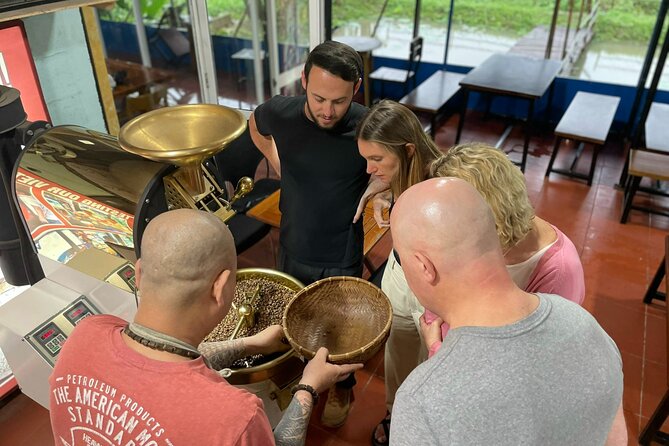
Once your coffee lesson ends, you shift into the Ancient Town portion with a walking route designed to hit the highlights without turning into a long, exhausting day.
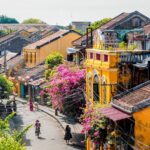
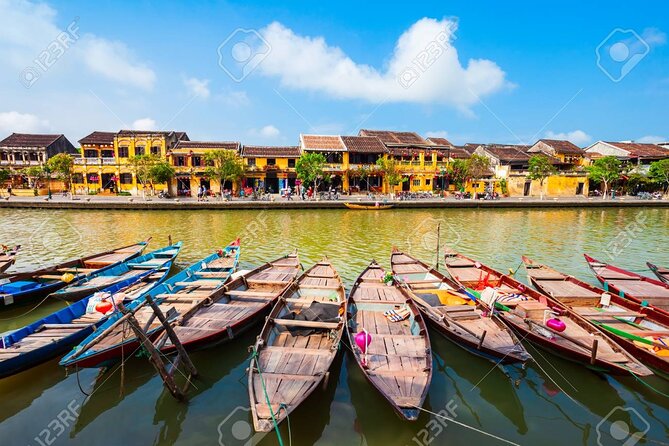
Hoi An’s historic core is famous for its mix of influences, and this itinerary reflects that. You’ll visit:
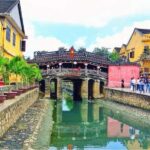
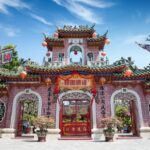
- the Japanese Covered Bridge
- the Old House of Phung Hung
- the Sa Huynh Culture Museum (or you may visit the Trading Ceramic Museum)
- Fukian Assembly Hall (Phuc Kien)
These stops are spaced in a way that lets you take photos, but they also give your guide a chance to explain what you’re looking at. The covered bridge and assembly hall are the kind of landmarks that look simple in photos, yet feel much more interesting in person once you understand what they represent.
You’ll also enjoy a traditional art performance during the town portion. For me, performances are where a historic place stops being a backdrop. It’s one of the easiest ways to feel the culture without needing to book separate tickets all day.




The Old Houses, the Museums, and Why This Order Works
This route flows in a helpful way. It starts with landmark architecture like the Japanese Covered Bridge, moves into historical buildings (like the Old House of Phung Hung), and then gives you museum time so you can ground what you’ve seen.
The choice between the Sa Huynh Culture Museum and the Trading Ceramic Museum is a small detail, but it can affect what you walk away knowing. Either way, you’re still getting a deeper look at local heritage—especially relevant in a town that grew through trade.
If your travel style is “I want to understand what I’m seeing,” this order works well. You’re not only collecting images; you’re collecting context.
Central Market Time and Flexible Shopping Stops
After the main historic sights and performance, you’ll walk toward Hoi An’s central market. This is a useful transition because it changes the vibe from monument viewing to real-day business.
You can see how people trade and run shops right now, not just how the past is preserved. If you want to buy souvenirs, snacks, or small gifts, the guide can also be flexible and pause for shopping when it’s convenient.
If you’re more into wandering than purchasing, you can treat this as your opportunity to snack and people-watch. Just keep your eyes open for prices and quality—market shopping in Hoi An can be fun, but it still pays to be a smart buyer.
Price and Value: Why $39 Can Make Sense Here
At $39 per person, this tour looks modest on paper, but the real value is in how many pieces are bundled together.
You’re paying for:
- hotel pickup in the Hoi An center
- a guide
- the coffee lesson at Sữa Cafe
- entrance fees for the town portion
- coffee and/or tea plus cake during the class
- the included coffee-tasting portion and pancake-style dessert
- a 25-minute coffee powder foot detox massage
- the Ancient Town walking experience with multiple key stops and a traditional art performance
The part that justifies the price is the coffee class. Many coffee experiences are either only a tasting or only a story session. Here you’re learning how to distinguish coffee types, you watch roasting, you make multiple styles, and you end with a guided walking tour right after. It’s that combo that makes it feel efficient rather than chopped into separate bookings.
One cost to factor in: alcohol drinks aren’t included, and if your hotel is far from the Hoi An center—or if you’re staying in Da Nang—there can be an extra pickup fee (listed as $25 return car). If you’re staying close, you’re likely to enjoy the tour without extra surprises.
Who This Tour Fits Best (and Who Should Skip It)
This tour is a strong match for:
- people who like coffee and want to learn more than just one drink
- first-timers to Hoi An who want a guided hit list of major sites
- couples or small groups who prefer a private experience rather than joining a large crowd
- travelers who enjoy a food-and-culture blend, where the day feels like more than walking
It might be less ideal if your priorities are very different. If you only want a deep, slow exploration of Ancient Town and plan to skip coffee entirely, you could spend that time more freely on your own. And again, the foot detox massage is included—so it’s not the tour to book if you strongly dislike foot massages or treatments.
Also note: the tour has a minimum age requirement for alcohol consumption (18+). That doesn’t automatically mean alcohol is served, but it does tell you the operator follows a clear policy for it.
Practical Tips Before You Go
A few small things will make your day easier.
For the coffee lesson, wear something comfortable. You’ll be standing, listening, tasting, and moving through steps to make different coffee styles. Coffee can be strong on clothing and hands, so plan for the scent to stick for a while.
Bring comfortable shoes for the walking portion. The day includes multiple stops around the Ancient Town area plus additional time near the central market. You’ll be on your feet more than you think, even though the total town time is about 2 hours.
If you care about your schedule, keep in mind the tour duration is roughly 4 to 5 hours, and some of that time is for pickup and transfer. This is a good choice when you want structure, not when you’re trying to squeeze in lots of other plans right afterward.
Should You Book This Hoi An Coffee-Making Tour?
If you want a guided day that mixes Vietnamese coffee craft with major Hoi An Ancient Town sights, this is an easy yes. The coffee lesson is the star: you learn Robusta vs Arabica, see roasting, make several popular styles, and then you taste what you made with dessert. On top of that, you get a focused walking route through landmarks like the Japanese Covered Bridge and Fukian Assembly Hall, plus a traditional art performance.
I’d book it if you’re traveling with time for one “do-it-all” outing and you’d rather learn from a guide than figure everything out solo. Just go in knowing the coffee powder foot massage is part of the package, and you’ll be much happier with the flow of the day.
If you want, I can also help you pick the best time of day to do this based on your Hoi An itinerary (first day vs later day, and what you plan to see afterward).