REVIEW · NEW DELHI
Delhi Sightseeing Tour: Top Monuments & City Highlights
Book on Viator →Operated by TravExcel India Tours & Travel · Bookable on Viator
Delhi can feel loud and chaotic at first. This tour makes it easier by laying out Old and New Delhi with a guide who can steer the day. I especially like the private-group setup (so you’re not stuck pacing with strangers) and the included street-food tastings plus bottled water to keep you going. One thing to plan for: monument entrance fees aren’t included, so your total cost can rise if you want to go inside multiple sites.
You’ll start with round-trip pickup from Gurugram, Delhi, Noida, Ghaziabad, and Faridabad, then move between big-name monuments and hands-on market stops. The format mixes an air-conditioned vehicle for travel with some walking and even a tuk-tuk ride for that very Delhi flavor. If you hate crowds or short walks, keep that in mind before choosing a “highlights” style day.
One recurring theme in the guide praise is smooth handling of traffic and crowds. Guides such as Tariq Shamim get called out for strong Delhi knowledge, good energy, and keeping the day feeling safe and organized. Another guide named Aldeen also earns high marks for in-depth explanations at temples.
In This Review
- Key things to know before you go
- The day in motion: pickup, vehicle, tuk-tuk, and pacing
- Qutub Minar and the Qutub Complex: UNESCO and the big brick tower
- India Gate: the war memorial that doubles as a city landmark
- Jama Masjid: Mughal scale, mosque etiquette, and Old Delhi energy
- Chandni Chowk and Khari Baoli: spices, shops, and street-food timing
- Red Fort stop: the Mughal residence you’ll want to pair with context
- Humayun’s Tomb: a Mughal mausoleum stop that gives you breathing room
- Lotus Temple: Bahai architecture with a calmer pace
- Guides and the real value of a private day
- Who this tour is best for (and who should skip it)
- Should you book this Delhi highlights tour?
- FAQ
- FAQ
- What monuments and areas are included in this Delhi sightseeing tour?
- How long does the tour take?
- Is hotel pickup included, and where does it start?
- Is this tour private or shared?
- Is food included?
- Are entrance fees to the monuments included?
- What transport will I use during the day?
- Can I cancel and get a refund?
Key things to know before you go
- Private group flexibility: Your guide can adjust what you prioritize, from monuments to food to shopping.
- Old Delhi food stops included: You get bottled water, snacks, and street-food tastings.
- Mixed transport for a fuller feel: Air-conditioned vehicle plus some walking, and a tuk-tuk ride.
- Major sights with simple scheduling: You hit Qutub Minar, India Gate, Jama Masjid, Chandni Chowk, Khari Baoli, Humayun’s Tomb, and Lotus Temple.
- Free stops mixed with paid entrances: India Gate, Chandni Chowk, Khari Baoli, and Lotus Temple are listed as free; some others have entrance tickets not included.
- Top guides with crowd smarts: Tariq Shamim is repeatedly praised for handling busy areas smoothly.
The day in motion: pickup, vehicle, tuk-tuk, and pacing
This isn’t a hop-on hop-off bus day. It’s a guided, private outing that starts with pickup and ends with you back at your hotel area. That matters in Delhi because routing through traffic without local help can turn a “quick stop” into a long headache.
Expect about 7 to 9 hours total. The pacing is built for seeing several anchor sites plus the market experience. That includes a bit of walking—more “move with the group” than “long hikes,” but you’ll still want comfortable shoes.
You’ll ride in an air-conditioned vehicle, then switch modes when you need to get closer to the action. The tuk-tuk ride is a fun touch because it helps you feel the city’s rhythm, especially when you’re transitioning between monument stops and Old Delhi streets. It also breaks up the day so the travel time doesn’t all blur together.
You can also read our reviews of more tours and experiences in New Delhi.



Qutub Minar and the Qutub Complex: UNESCO and the big brick tower
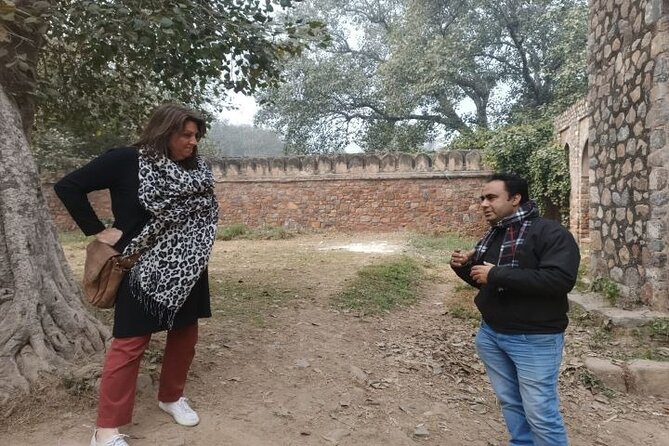
Your first real monument hit is Qutub Minar, in the Qutub Complex. This is the place for the “wow” factor: the Victory Tower is described as the highest brick tower in the world, and the whole complex is listed as a UNESCO World Heritage Site.
Practically, plan for about 1 hour here. Entrance tickets are listed as not included, so if you want to go in, you’ll pay on-site. Even if you only have time for a shorter visit inside, this stop is worth treating as the day’s formal monument start—Qutub Minar sets the tone for Mughal-era and earlier Delhi.
A good guide helps here by translating what you’re looking at into something you can grasp quickly: what’s old, what’s preserved, and why it became UNESCO material. If you care about architecture details, this is the stop where you’ll get the most payoff from asking questions.
India Gate: the war memorial that doubles as a city landmark
India Gate is the next stop, and it’s listed as free. You’ll have around 40 minutes—enough time to walk, take photos, and understand why this structure matters beyond the obvious postcard shot.
What makes it feel real is the specific memorial purpose: it honors 70,000 soldiers of the British Indian Army who died in 1914–1921 in the First World War. That historical anchor can change how you see the monument. It’s not just a big arch; it’s a site built for remembrance.
This is also a useful breathing moment in the day. It’s a contrast stop after Qutub Minar because the atmosphere shifts from a complex-within-a-site to a city monument people use in daily life and at ceremonial times. If you like your tours with a rhythm—big and quiet, then busy and social—this is one of the better transitions.
Jama Masjid: Mughal scale, mosque etiquette, and Old Delhi energy
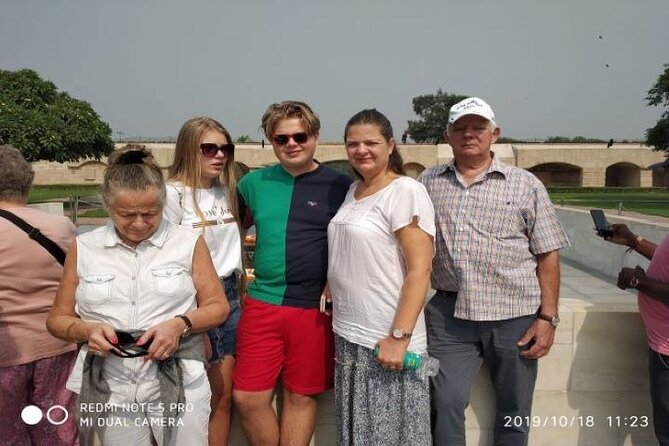
Jama Masjid (Masjid e Jahan Numa) is one of the biggest names in Delhi for a reason. Built by Mughal Emperor Shah Jahan between 1650 and 1656, it’s described as one of the largest mosques in India, and the construction is noted as costing one million rupees.
You’ll spend about 40 minutes here. Entrance tickets are listed as not included, so going inside may add cost.
The practical consideration at Jama Masjid is respect and readiness. You’ll want to dress in a way that covers appropriately and be patient with crowd flow. Your guide matters here: good guidance helps you avoid the annoying back-and-forth that happens when you’re unsure where you’re allowed to stand, walk, or photograph.
This stop pairs well with the rest of Old Delhi because it gives you a clear cultural anchor before you plunge into the market chaos.
Chandni Chowk and Khari Baoli: spices, shops, and street-food timing
This is where the day becomes tactile. After Jama Masjid, you go to Chandni Chowk for about 1 hour. It’s described as a busy shopping area with stalls for spices, dried fruit, silver jewelry, and saris, plus narrow side streets that feel like a maze of tiny shops.
Khari Baoli comes next for about 30 minutes. It’s known as a wholesale grocery area and described as Asia’s largest wholesale spice market, with spices, nuts, herbs, and food products like rice and tea.
Here’s what I like about this pairing: it makes the “Old Delhi” story concrete. You don’t just hear words like market or spice. You see wholesale-scale goods, then walk through a neighborhood street-market that feels more personal and colorful. That contrast is exactly why this kind of tour beats doing it alone without a plan.
Also, the tour includes bottled water and snacks, plus street-food tastings at Old Delhi. That’s not just a nice add-on. It reduces one of the biggest stress points of market walking: hunger plus heat plus decision fatigue. You can keep moving instead of stopping every five minutes to figure out what’s worth it.
One consideration: these markets are crowded, and the walking is close and constant. If you’re sensitive to crowds, bring a calm attitude and let your guide handle the flow.



Red Fort stop: the Mughal residence you’ll want to pair with context
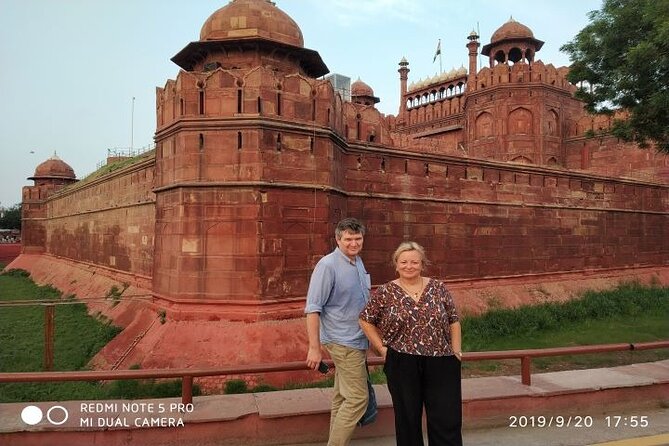
During the day, there’s a stop at the Red Fort, described as a historic fort that served as the main residence of the Mughal Emperors. The Red Fort is also tied to an annual national ritual: on Independence Day, the Prime Minister hoists the Indian tricolor there.
The key detail for your planning is this: monument entrance fees are not included, and the tour notes that you pay any monument fees you wish to enter. So you can treat Red Fort as a “see and learn” stop with photo time, or add inside access if the day’s pace still feels good.
Even if you don’t go in, Red Fort is a meaningful punctuation mark between the Old Delhi religious site and the later gardens and temples. It gives you a reminder that Delhi’s identity is layered—trade routes, empires, faith, and politics all share the same ground.
Humayun’s Tomb: a Mughal mausoleum stop that gives you breathing room
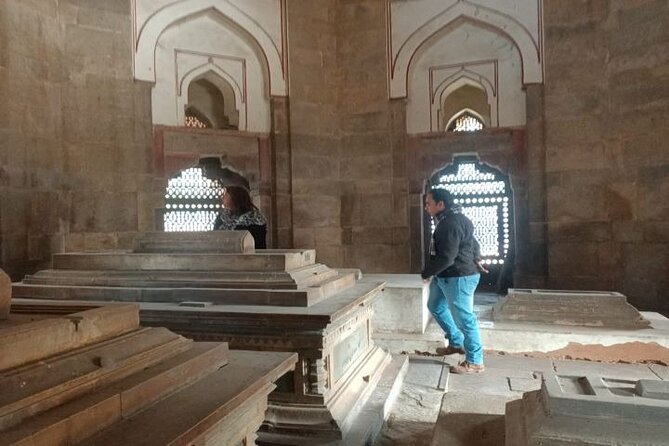
Next comes Humayun’s Tomb, which you spend about 1 hour on. It’s the tomb of Mughal Emperor Humayun, commissioned in 1569–70 by his first wife and chief consort Empress Bega Begum.
Entrance tickets are listed as not included, so again, you’ll decide whether to pay based on what you can handle time-wise. I like Humayun’s Tomb in a highlights day because it’s less about shopping intensity and more about atmosphere—space to look, read, and slow down.
A good guide makes a big difference at tombs and gardens. You want someone to translate symbolism and layout into something you can feel in a short visit, not just a quick photo and move on.
Lotus Temple: Bahai architecture with a calmer pace
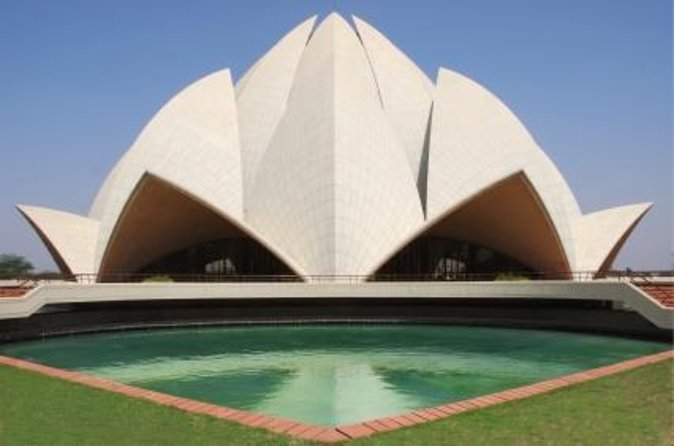
The final major landmark on the list is the Lotus Temple. It’s a Bahai faith temple built in the form of a lotus flower, and it’s described as one of the most visited monuments in Delhi.
You’ll spend about 40 minutes, and it’s listed as admission free. This stop works as a reset at the end of a long day. After crowds and monuments with entrance decisions, you get something that feels more spacious and reflective.
If you’re the type who likes variety—one day mixing Mughal sites, memorial architecture, Old Delhi markets, and a faith-based modern landmark—this is the perfect wrap-up. You finish with a contrast instead of ending the day still stuck in traffic and noise.
Guides and the real value of a private day
Where this tour really earns its strong ratings is how the day feels managed. People highlight guides such as Tariq Shamim for strong knowledge and for navigating busy places smoothly. Another guide, Aldeen, is praised for in-depth temple explanations and a car that stays in good shape.
That matters because Delhi is not a city where “just show up” always works well for first-timers. You can absolutely DIY many of these sights. But you’ll spend energy on timing, routes, and how to make the stops coherent.
With a private setup, you get practical help:
- Choosing what you care about most without cutting your day into chaos
- Handling crowd flow so you’re not guessing where to go next
- Getting quick context so you understand what you’re seeing
- Staying comfortable with water, snacks, and planned breaks between sites
Price-wise, at $50.12 per person for a full-day route, the value is mostly in the logistics you don’t want to wrestle with: pickup from multiple neighboring areas, air-conditioned transport, private guidance, and included food tastings. Your biggest cost variable is usually monument entry fees, since those are not included.
Also factor in tips. Tips aren’t listed as included, but gratuities to the guide and driver are recommended, so it’s wise to budget for that if you want to reward good service.
Who this tour is best for (and who should skip it)
This works best for you if:
- You want a first-timer-friendly Delhi sampler that hits both Old and New Delhi
- You like flexibility, so your guide can steer the balance between monuments and market time
- You want street-food tastings without having to hunt for a safe, efficient plan
- You prefer the comfort of pickup and private routing rather than public-transport juggling
You might want a different style tour if:
- You dislike crowds or are very sensitive to walking
- You want total control to the minute with zero guidance
- You’re trying to keep the day strictly low-cost, since monument entrances and possible camera/video fees can add up
Should you book this Delhi highlights tour?
If your goal is a smart, guided “best of” day that feels organized instead of stressful, I think it’s a solid booking. The included street-food tastings, bottled water, AC vehicle, and private-group setup give it good value for the time it covers. Add in the fact that guides like Tariq Shamim and Aldeen get praised for making busy areas feel manageable, and you can feel confident this isn’t just a checklist-and-drop-off kind of tour.
I’d book it if you’re okay with paying entrance fees at the paid sites and you want help choosing what to prioritize during a long day. Skip it if your style is slow travel with lots of independent wandering—this tour is structured, not aimless.
FAQ
FAQ
What monuments and areas are included in this Delhi sightseeing tour?
You’ll stop at Qutub Minar, India Gate, Jama Masjid, Chandni Chowk, Khari Baoli, Red Fort (as a stop), Humayun’s Tomb, and Lotus Temple.
How long does the tour take?
The tour runs about 7 to 9 hours.
Is hotel pickup included, and where does it start?
Yes. Round-trip pickup is offered from Gurugram, Delhi, Noida, Ghaziabad, and Faridabad.
Is this tour private or shared?
It’s a private tour/activity, so only your group participates.
Is food included?
Yes. Bottled water, snacks, and street-food tastings at Old Delhi are included.
Are entrance fees to the monuments included?
No. Entrance fees to the monuments are not included, and camera or video camera fees to the monuments are also not included.
What transport will I use during the day?
You’ll travel by air-conditioned vehicle, with some walking, plus a tuk-tuk ride for part of the experience.
Can I cancel and get a refund?
Yes, you can cancel for free up to 24 hours in advance for a full refund. If you cancel less than 24 hours before the experience starts, the amount paid is not refunded.