REVIEW · ROME
Exclusive Colosseum ARENA and Ancient Rome with Archaeologist
Book on Viator →Operated by Tours of the Vatican with Francesco & his team · Bookable on Viator
A Colosseum tour that actually feels personal. This private, archaeologist-led run through the Colosseum with the arena floor plus Palatine Hill and the Roman Forum is a fast way to see the big hits without getting lost in the weeds. I like that you skip the audioguides and follow a real specialist, and I also like that the guiding time is focused on what you’re standing in front of, not random trivia. One thing to watch: your entry depends on matching the full names you book with the ID/passport you bring, and if you arrive late you might lose your entrance.
If you’re trying to cover Rome’s ancient center in just a few hours, this format is hard to beat. You’ll have morning or afternoon options, and the pacing is built around seeing key monuments while avoiding entrance lines and feeling rushed. The guide I heard great things about, Paola, is one example of the kind of clear, professional storytelling you can expect.
In This Review
- Key Things You’ll Really Like About This Tour
- Why a 3-Hour Colosseum + Forum Combo Works in Rome
- Entering the Colosseum: Arena Floor, Seats, and Gladiator-Era Logic
- A practical note on kids
- One thing to be ready for
- Skip the Audioguides: How You Get More Out of Less Time
- Palatine Hill: Power, Palaces, and Garden-Walk Storytelling
- What you gain here
- A small timing reality
- Roman Forum: The Senate House to the Temples You Can Actually Name
- Potential drawback
- Value and Price: What You’re Paying For (and Why It Adds Up)
- Meeting Point and Timing: The Small Details That Matter at the Colosseum
- FAQ
- FAQ
- How long is the Colosseum, Palatine Hill, and Roman Forum tour?
- Is the tour offered in English?
- Is this tour private?
- What’s included for the Colosseum entry?
- Where is the meeting point?
- What do I need to bring for entry?
- Is the experience refundable if I cancel?
- Should You Book This Tour?
Key Things You’ll Really Like About This Tour
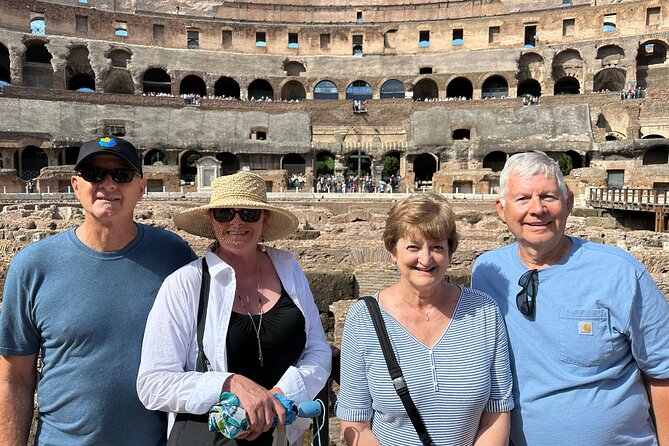
- Colosseum access that goes beyond the main floor, including the arena floor and seating levels
- A skip-the-audioguide experience, so you’re not juggling devices while trying to absorb the scale
- Palatine Hill storytelling on palaces and gardens, tied to the people and power that lived there
- Roman Forum as a walkable timeline, hitting the Senate House, Temple of Julius Caesar, and more
- Tickets and reservation fees included, plus local taxes, so you’re not piecing costs together
- English guide with a private-group setup, only your group participates
Why a 3-Hour Colosseum + Forum Combo Works in Rome
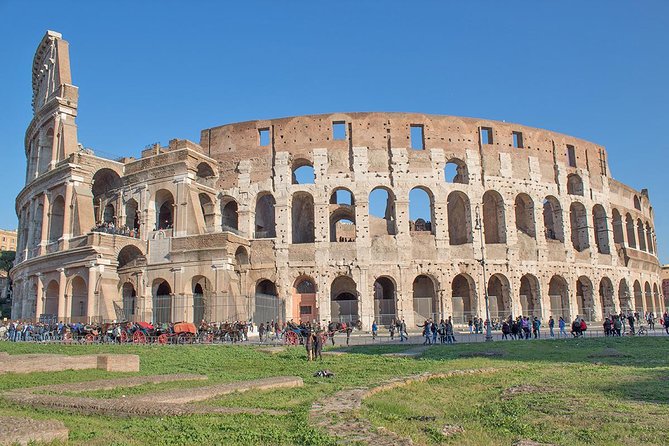
Rome can swallow whole days. That’s the good news and the bad news. The good news is the ancient core is so dense with must-sees that a short tour can still feel meaningful. The bad news is that solo sightseeing often turns into a lot of waiting and backtracking.
This experience is designed for people who want the highlights with fewer headaches. In about 3 hours, you go inside the Colosseum and then move to Palatine Hill and the Roman Forum. That sequence matters: the Colosseum is spectacle and politics in stone, Palatine Hill is power and residence, and the Roman Forum is where government, religion, and public life collided.
Also, you’re not stuck with a generic script. The tour’s built around a professional art historian guide (plus a local guide) and a tight route, which is why it can cover so much without turning into a sprint.
Who it suits best: first-timers who want the core ancient sites, couples, friends, and families who don’t want to manage maps and audio apps while standing in a confusing maze of ruins.
You can also read our reviews of more tours and experiences in Rome.
Entering the Colosseum: Arena Floor, Seats, and Gladiator-Era Logic
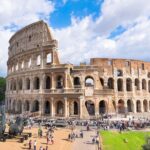
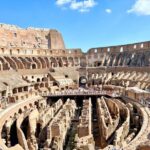
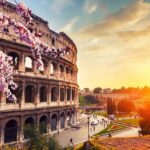
The Colosseum is easy to recognize, even from far away. It’s harder to understand why it felt so important to the Roman world until you’re inside. That’s where this tour earns its reputation.
You get a 3-hour guided Colosseum visit split across its most famous zones, including:
- the arena floor
- seating levels
- other key areas that show how the building worked as a venue for public spectacles
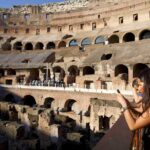
The standout is the arena floor access. Seeing ruins from the outside gives you size. Walking onto the arena floor helps you picture what spectators were watching, how people moved, and why events mattered beyond entertainment. It’s the kind of perspective shift that makes this site click.
You also get the human layer: the tour is set up to explain spectator past-times, gladiator combats, and how the spectacles were managed. That matters because the Colosseum wasn’t just a stage. It was a tool for power, identity, and social control—played out in front of crowds.
A practical note on kids
The tour information explicitly notes kids would love it. Even if you’re traveling as adults, kids usually latch onto the spectacle angle fast—gladiators, crowds, and drama.
One thing to be ready for
Even with reduced waiting, the Colosseum is a high-demand entry point. Wear comfortable shoes. Plan for a bit of standing and walking in ancient stone surroundings.
Skip the Audioguides: How You Get More Out of Less Time
Let’s be blunt. Audioguides are great when you’re relaxed and moving at your own speed. They’re less great when you’re trying to make sense of a huge site in limited time.
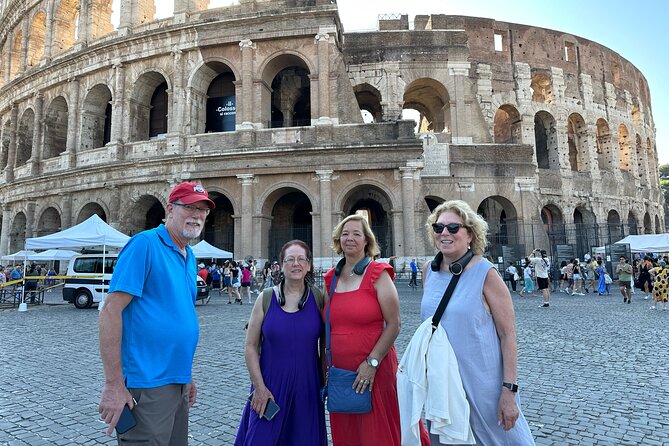
This tour is built so you don’t rely on audioguides at all. Instead, you follow a guide who can point out the details that matter and connect them to the bigger story.
That approach does two things for you:
- It reduces decision fatigue. You don’t have to choose what to listen to next.
- It helps you learn faster because explanations are anchored to what you’re seeing right then.
This is also part of why people say it feels worth the money. You’re paying for more than a pass into a landmark. You’re paying for guided time, specialized interpretation, and smooth coordination between stops.
If you like a tour that feels like you’re led by a person, not a device, you’ll probably enjoy this style.

Palatine Hill: Power, Palaces, and Garden-Walk Storytelling
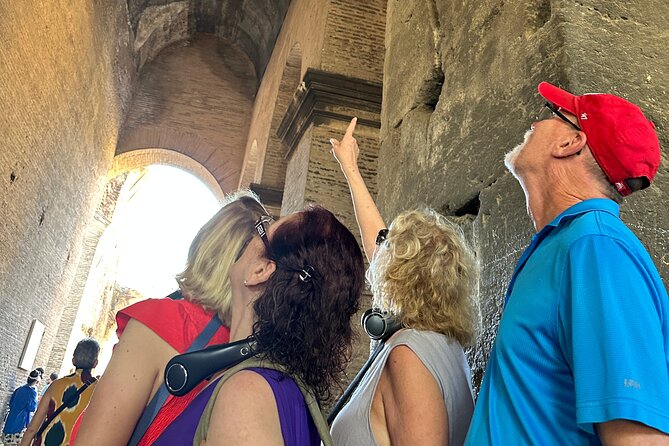
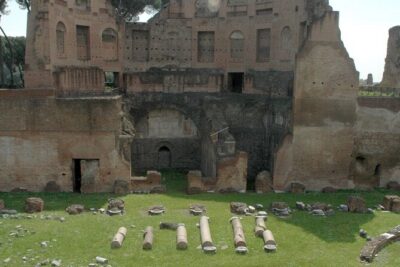
After the Colosseum, the tour moves to Palatine Hill, and this is where the vibe changes from spectacle to rule-making. Palatine Hill is strongly associated with elite residence and political meaning, and the tour leans into that by using storytelling as you walk.
You’ll listen to accounts that cover:
- fearless leaders
- epic heroines
- infamous tyrants
That might sound dramatic—and it is—but it’s also a smart way to understand why Palatine Hill mattered. This was not only where important people lived. It was where status got performed, explained, and defended.
You’ll walk through palaces and gardens, which helps you get a sense of how space shaped life. Gardens in ancient settings weren’t just pretty views. They were part of how people displayed control over nature and luxury.
What you gain here
On a self-guided day, Palatine Hill can feel like a collection of fragments. With a guide, the fragments start making sense as a lived environment—paths, rooms, and settings tied to figures and roles.
A small timing reality
This stop is about 1 hour. That’s enough time to see the main ideas and get your bearings, but it’s not enough for deep wandering. If you’re the kind of person who wants to linger for an hour in one corner, you might feel a little boxed in. The tradeoff is you get to see Roman Forum too.
Roman Forum: The Senate House to the Temples You Can Actually Name
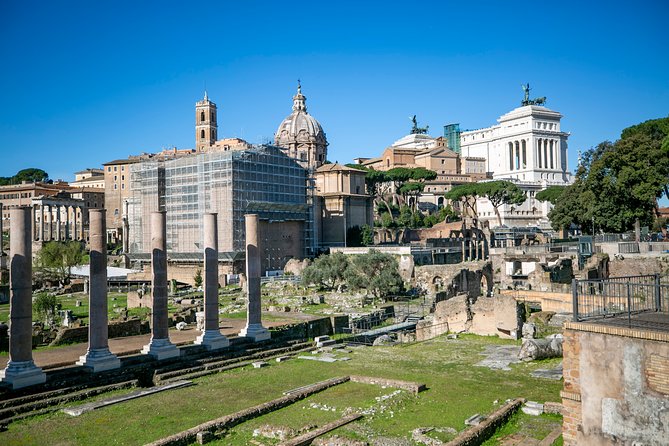
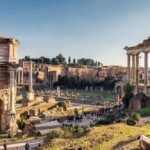
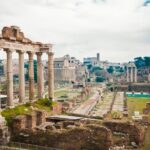
Then comes the Roman Forum, the main square and assembly location for the Roman population. This is the place where you can feel the Roman state at work—political speeches, civic decisions, and religious messaging all living side by side.
The tour’s Forum stop is also about 1 hour, and it hits major landmarks you’ll recognize:
- Senate House
- Temple of Julius Caesar
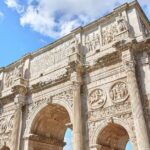
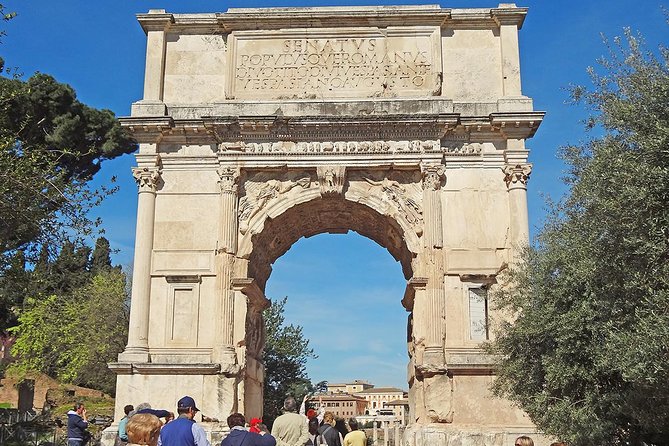
- triumphal arches
- House of the Vestal Virgins
- basilicas
- the Golden Mile
- the Temples of Saturn and Concord
- and other famous religious and political buildings
Why this matters: without a guide, it’s easy to walk through the Forum and come away thinking, I saw ruins. With a guide, you start understanding what those ruins represented—who used the space, what decisions happened here, and why religious and political power were intertwined.
Also, the Forum is a place where names and functions help your memory. This tour’s format gives you both, so you don’t leave with a vague list.
Potential drawback
Because the Forum is dense and time is limited, you won’t get a long, slow stroll through every side area. You’ll move. If you’re hoping for lots of solo wandering and photos without interruption, plan to do extra time on a separate day.
Value and Price: What You’re Paying For (and Why It Adds Up)
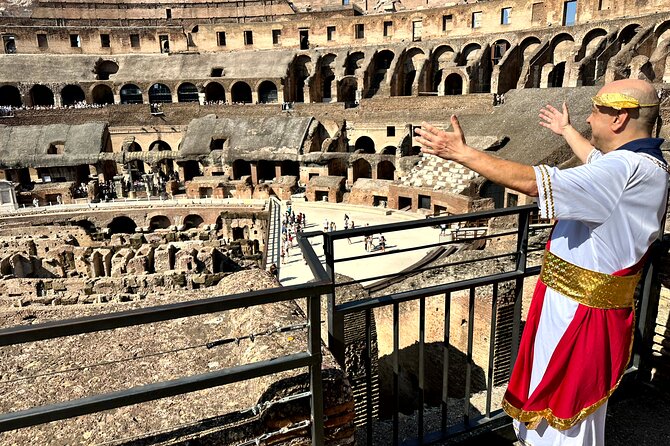
The price is $360.03 per person for roughly 3 hours. That’s not cheap, so it helps to look at what you actually receive.
Here’s what is clearly included:
- Professional art historian guide and local guide
- Local taxes
- Colosseum entrance ticket (valued at €24 per person)
- Colosseum reservation fee (valued at €2 per person)
- Colosseum Arena Floor
- Mobile ticket
The listing also notes that after those Colosseum fees, the remaining cost covers other services. In plain terms: you’re mostly paying for the guided experience and the value of reserved, timed access—plus the interpretation that ties the monuments together.
If you were to do this independently, you’d still pay for entry tickets. The big difference is you would then spend time figuring out routes, managing expectations at each checkpoint, and trying to reconstruct the story from signs and scattered context. This tour aims to remove that friction and get you to the meaningful parts of the sites faster.
I think the price makes sense if you:
- want the arena floor experience
- value a human guide who explains what you’re seeing
- prefer a structured route over hours of trial-and-error
It might feel pricey if your style is more DIY and you don’t care about a guided narrative.
Meeting Point and Timing: The Small Details That Matter at the Colosseum
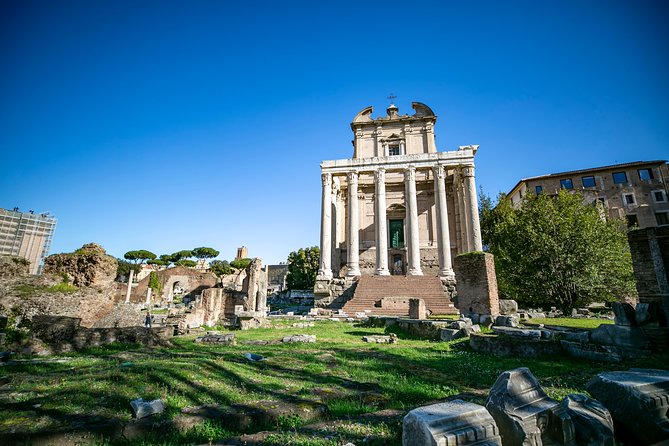
The meeting point is Piazza del Colosseo, 23, 00184 Roma RM, Italy, and the tour ends back at the meeting point.
Two timing realities to take seriously:
- This tour warns that if you arrive late you might lose the entrance.
- Your names must match entry documents, and entry can be denied if details don’t align.
If you want this to go smoothly, aim to arrive a little early, and keep your ID/passport ready. For the entry process, the tour info specifies that you must have a valid passport or ID document matching the name used at booking.
Also, note what is not included: private transportation. You’ll need to handle getting to the meeting point on your own.
FAQ
FAQ
How long is the Colosseum, Palatine Hill, and Roman Forum tour?
It lasts about 3 hours.
Is the tour offered in English?
Yes, it’s offered in English.
Is this tour private?
Yes. It’s a private tour/activity, and only your group participates.
What’s included for the Colosseum entry?
You get the Colosseum entrance ticket, the Colosseum reservation fee, and Colosseum Arena Floor access.
Where is the meeting point?
The tour starts at Piazza del Colosseo, 23, 00184 Roma RM, Italy.
What do I need to bring for entry?
You must present a valid passport or ID document that matches the full names provided at booking. If you arrive late, you might lose the entrance.
Is the experience refundable if I cancel?
No. It’s non-refundable and can’t be changed for any reason.
Should You Book This Tour?
I’d book it if you want three top ancient Roman sites handled in one efficient run, and you care about going into the Colosseum with context instead of just walking around. The combination of arena floor access, a guided narrative, and ticket/reservation inclusion is exactly what makes this feel like good value for the time you have.
Skip it if your plan is to wander slowly, you hate structured pacing, or you want to build your own story entirely from signs and independent audio.
If you’re looking for a clean, guided way to understand the Colosseum’s role, then see how power lived on Palatine Hill and operated in the Roman Forum, this is a strong choice.