REVIEW · GOA
Old Goa Heritage Walk by Make It Happen
Book on Viator →Operated by Make It Happen · Bookable on Viator
One gateway into Old Goa, one church at a time. This 2.5-hour heritage walk focuses on Portuguese-era sights and explains what life may have looked like under their rule, led by guides such as John Ferrão and Vimala Desouza. I like that entry fees come included, so you’re not doing math in your head while you’re trying to appreciate Baroque details and centuries-old stonework. I also like the practical pacing and small group vibe, capped at 20 people, which keeps the talk interactive instead of lecture-mode.
The main thing to watch is the weather and the clothing rule. You’ll need to cover knees and shoulders to enter churches, and if it’s poor weather, the walk can be moved or refunded, so plan for a flexible window.
In This Review
- Key things you’ll care about on this Old Goa walk
- Value and logistics: why this costs $12.27 and still feels fair
- Start at Viceroy’s Arch: the place to get your bearings fast
- Stop 1: Church of St. Francis of Assisi and its Baroque punch
- Stop 2: Viceroy’s Arch, the Mandovi link, and the feel of Portuguese power
- Stop 3: Our Lady of the Rosary and the World Heritage connection
- When big churches are closed: how the guide keeps the plan alive
- What makes the guides matter here: storytelling that sticks
- Comfort rules: shoes, heat, and the church dress code
- What’s included vs not included (so you can plan your day)
- Is a private tour worth it here?
- Who this Old Goa Heritage Walk is best for
- Should you book this Old Goa Heritage Walk by Make It Happen?
- FAQ
- Is the Old Goa Heritage Walk private?
- How long is the Old Goa Heritage Walk?
- How much does it cost?
- Where does the tour start and where does it end?
- Are entrance fees included?
- Is a map included?
- Do I need to bring a mobile ticket?
- What should I wear to enter the churches?
- Are snacks or an air-conditioned vehicle included?
- Is there free cancellation?
- What happens if the weather is bad?
Key things you’ll care about on this Old Goa walk

- Private guide, small group (max 20): more room to ask questions and adjust the pace.
- Entry fees included: churches you pay at usually cost you extra on other tours.
- Old Goa Heritage Map included: you’ll walk away with a way to keep exploring afterward.
- Three focused stops: St. Francis of Assisi, Viceroy’s Arch, and Our Lady of the Rosary.
- Church dress code: cover knees and shoulders to avoid getting turned away.
- Mobile ticket: you don’t need to print anything.
Value and logistics: why this costs $12.27 and still feels fair

At about $12.27 per person, this isn’t priced like a “transport + tickets + hope for the best” tour. The big reason it feels like good value is simple: the entrance fees are included, plus you get a guide, an Old Goa map, and a friendly English-speaking host.
The trade-off is also clear. There’s no air-conditioned vehicle included, and snacks aren’t part of the price. If you’re coming from far away in Goa’s heat, you’ll want to handle your own getting-there and water, then let the walk itself do the heavy lifting.
Duration is roughly 2 hours 30 minutes, which is long enough to get context and not just pose for photos, but short enough that your day doesn’t get swallowed.
You can also read our reviews of more tours and experiences in Goa.



Start at Viceroy’s Arch: the place to get your bearings fast
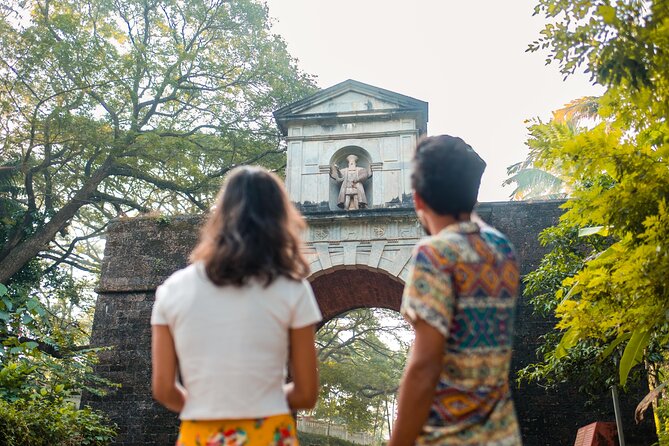
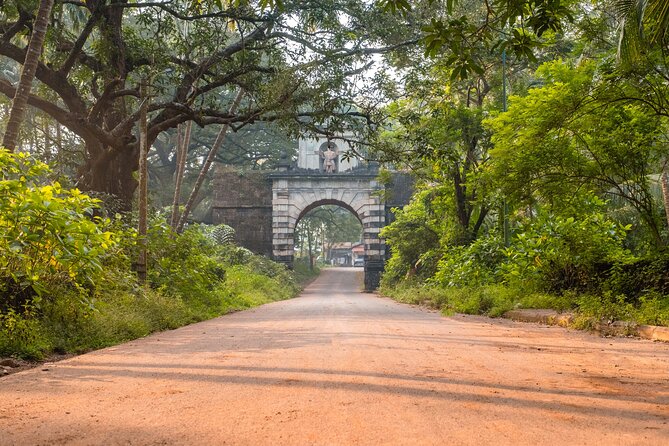
The walk begins at Viceroys Arch near the Mandovi river front area. Starting here works because it feels like a threshold. Your guide can frame Old Goa not as random monuments, but as a place with entrances, movement, and power.
From an enjoyment standpoint, this matters. If you arrive without context, Portuguese-era churches can feel like isolated buildings. Starting with a “gateway” point helps you connect later stops—why certain churches sit where they do, and why Old Goa’s layout matters.
This is also a smart move for timing. People often feel more alert earlier in the morning, and you can get your sightseeing done before the afternoon heat starts pushing you toward slow, shade-seeking autopilot.
Stop 1: Church of St. Francis of Assisi and its Baroque punch
Your first church stop is the Church of St. Francis of Assissi. This is a fine Baroque-style church, known in this walk for wall paintings and intricate woodwork.
Here’s what you should pay attention to while you’re inside:
- Look for the way the artwork fills surfaces, so the church feels like a story rather than a single altar moment.
- Notice the wood details—these are the kinds of carvings you miss if you hurry.
- Keep an eye out for what your guide points at, because the “why” behind the details is the value of doing it with a guide.
A practical note: church entry rules mean you may be thinking about fabric before you think about frescoes. Wear something that already covers knees and shoulders, so you’re not scrambling at the door.
Time-wise, this stop is brief (about 5 minutes on the walk schedule), but in a well-guided format that can still be enough to understand what you’re looking at.
Stop 2: Viceroy’s Arch, the Mandovi link, and the feel of Portuguese power

Next up is Viceroy’s Arch, described as a majestic archway and a main entrance to Old Goa from the Mandovi riverfront.
This is one of those stops that doesn’t look like much if you’re just passing through. But it’s useful because it gives you a “systems” view of the city. River-front entry points mattered for trade, movement, and authority—so an arch isn’t only architecture. It’s direction, control, and a statement.
If you like photos, this is a good place for them. If you like understanding places, it’s an even better one. The guide can help you connect the archway to the larger Portuguese influence you’ll hear about throughout the walk.
Stop time is about 10 minutes. That’s enough to take it in, ask a question, and move on without turning the walk into a long halt.
Stop 3: Our Lady of the Rosary and the World Heritage connection
The final church stop is Church of Our Lady of the Rosary, one of the most beautiful in the area, architecturally and historically significant to Old Goa.
This is also where the walk gains extra weight: this church is part of the collection tied to the World Heritage Site of churches and convents of Goa. Even if you’re not the type who reads heritage plaques, knowing the “why this place matters” context makes a difference.
What to do at this stop:
- Don’t just scan for the prettiest angles; listen for what the guide says about architecture and how the Portuguese religious footprint shaped Old Goa.
- If the guide points out historical layers, try to match them visually to what you’re seeing in front of you.
This stop runs about 10 minutes on the schedule. Again, it’s not a “stand in one room for half an hour” experience. It’s a guided route through key nodes, built for people who want the highlights with context, not an all-day museum mood.





When big churches are closed: how the guide keeps the plan alive
One of the biggest practical things you might encounter in Old Goa is closures. At least one group experienced church closures for their scheduled churches, and the guide adjusted the route to still deliver a meaningful walk, including a swap to St Augustine Tower.
So if you’re planning around a must-see list, keep expectations flexible. The benefit of having a guide is that they can reroute without the whole experience collapsing into disappointment.
What makes the guides matter here: storytelling that sticks
The best part of this walk is how the guides explain what you’re seeing in plain language. You’ll hear different guide styles, but common themes show up: history tied to buildings, and explanations that feel interactive rather than one-way.
Examples from guide names you may be assigned include:
- John Ferrão (known for lively, interactive, well-paced storytelling)
- Vimala Desouza (articulate, personable, and able to answer a lot of questions)
- Yashasvi (handled itinerary changes when a major site was closed)
- Santoshi (patient with different ages and responsive to questions)
- Pawan and Amreen (friendliness paired with lots of context)
You don’t need to be a history buff. If you’re curious, you’ll get answers. If you’re short on time, you’ll still come away with a clearer sense of Portuguese-era influence and why these churches became so central to Old Goa.
Comfort rules: shoes, heat, and the church dress code
This is where planning saves you from a stressful start.
Bring comfortable walking shoes. You’re on a heritage walk, not a sit-and-sip tour, so you’ll be on your feet. Guides also explicitly suggest comfortable shoes and appropriate attire beforehand.
Also follow the church rule: cover knees and shoulders to enter churches. That’s non-negotiable, so pick clothing that meets it even if you end up sweating. Light layers that cover arms and legs work best.
Timing can help with heat. Some groups start early (for example, an 8:30 AM start is mentioned as a way to beat the sun and crowding). If you have schedule flexibility, choosing a morning slot can make the whole day easier.
What’s included vs not included (so you can plan your day)
Included:
- Friendly English-speaking host / guide
- Old Goa Heritage Map
- Entrance fees
- Mobile ticket
Not included:
- Air-conditioned vehicle
- Snacks
That “not included” list is important for your budget thinking. If you need AC rides or planned snacks, you’ll have to arrange those separately. The upside is that your money isn’t going into extras you may not need—you’re paying for the walk, the guidance, and the church access.
Is a private tour worth it here?
With a private format and a maximum of 20 travelers, the experience tends to stay flexible. That matters because churches aren’t always cooperative: crowds happen, entrances change, and sometimes you’ll get closure situations.
A private guide also means you can ask follow-up questions without waiting your turn. If you’re traveling with kids, or if you like to stop and talk rather than speed through sights, this format fits that style better than a strict group bus tour.
Who this Old Goa Heritage Walk is best for
I’d point you to this walk if you:
- Are trying to see Portuguese-era Old Goa efficiently
- Want context while looking at churches and historic buildings
- Prefer a smaller group feel with time for questions
- Like doing a “short, strong route” instead of an all-day itinerary
It may not be ideal if you want long, slow, unstructured exploration inside each church. This walk is designed to cover key stops in one outing, so you’ll get guided highlights more than you’ll get deep standalone wandering.
Should you book this Old Goa Heritage Walk by Make It Happen?
If you want a low-cost, organized way to understand Old Goa’s Portuguese-era churches, I think you should book it—especially for the combination of included entrance fees and a real guide with storytelling. The small group size and map help you turn a two-and-a-half-hour walk into a foundation for the rest of your Old Goa day.
Book it if you can dress for churches and you can handle some walking. If your schedule is tight and you want the main sights without the planning headaches, this is a sensible choice. If your weather window is narrow, keep a flexible mindset for an alternate date.
FAQ
Is the Old Goa Heritage Walk private?
Yes. It’s described as a private guided walk, which helps with flexibility and personal attention from your guide.
How long is the Old Goa Heritage Walk?
It runs for about 2 hours 30 minutes (approx.).
How much does it cost?
The price is $12.27 per person.
Where does the tour start and where does it end?
It starts at Viceroys Arch, Goa Old Goa, Goa 403402, India, and ends back at the same meeting point.
Are entrance fees included?
Yes. Entrance fees are included, along with the guided experience.
Is a map included?
Yes. You’ll receive an Old Goa Heritage Map.
Do I need to bring a mobile ticket?
You’ll use a mobile ticket, and confirmation is received at the time of booking.
What should I wear to enter the churches?
It’s mandatory to cover knees and shoulders to enter churches.
Are snacks or an air-conditioned vehicle included?
No. Air-conditioned vehicle and snacks are not included.
Is there free cancellation?
Yes. You can cancel up to 24 hours in advance for a full refund, and cancellations due to poor weather can offer a different date or a full refund.
What happens if the weather is bad?
This experience requires good weather. If it’s canceled due to poor weather, you’ll be offered a different date or a full refund.