REVIEW · GOA
Private Portuguese Heritage Tour: Se Cathedral, Basilica of Bom Jesus and Dona Paula Beach in Goa
Book on Viator →Operated by GeTS Holidays · Bookable on Viator
Goa’s Portuguese past is right in front of you. This private half-day route ties together religion, architecture, and coastal scenery without rushing, and it’s built around real landmarks you can’t fake. I especially like that the pacing feels forgiving because you’re in a private vehicle plus short walking stretches.
Two moments really sold me: stepping inside the UNESCO Basilica of Bom Jesus and seeing the marble-inlaid floor and St. Francis Xavier’s story come to life with a guide, then ending with big sea views at Dona Paula Jetty. One consideration: the tour is labeled around 6 hours, but your actual time on the road can vary depending on traffic and how long you spend inside each church.
Key highlights to know before you go
- UNESCO Basilica of Bom Jesus with marble-inlaid floors and St. Francis Xavier’s remains
- Se Cathedral of Santa Catarina: gothic Portuguese styling and one of Goa’s biggest bells
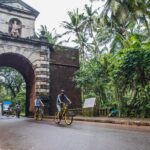
- Fontainhas (Panaji Latin Quarter): narrow lanes, old villas, and Portuguese influence you can see and taste
- St. Sebastian Chapel stop featuring statues tied to historic Catholic figures like Abade Faria
- Dona Paula Jetty for Arabian Sea and Mormugao Harbor viewpoints plus an extra pause at a small waterway market
In This Review
- Why This Portuguese Heritage Tour Works in Goa
- The Real Value: Private Pickup, English Guide, and AC Comfort
- Basilica of Bom Jesus: UNESCO Stop with Marble Details and St. Francis Xavier
- Se Cathedral of Santa Catarina: Gothic Portuguese Architecture and a Huge Bell
- Fontainhas (Panaji Latin Quarter): Street-Level Portuguese Influence
- Dona Paula Jetty: Arabian Sea Views Plus a Quiet Market Stop
- Timing, Walking, and What to Wear in Real Life
- Lunch and Meals: Budget-Friendly Options That Fit the Day
- Price and Value: Is $130 per Person Fair?
- Who Should Book This Tour (and Who Might Want Something Else)
- Should You Book This Portuguese Heritage Tour?
Why This Portuguese Heritage Tour Works in Goa
Goa can feel like two trips at once. One day you’re on beaches and backwaters; the next you’re in old churches and Portuguese-shaped streets. This tour keeps you in that second world. It’s focused on the Portuguese mark on Goa—religion, buildings, and the way communities organized their lives—then it sends you to the sea for payoff views.
The private format matters. With a hotel pickup and a dedicated guide, you’re not stuck following a megaphone schedule or asking your questions in a crowd. You also get more value from churches: the details are easier to spot when someone points them out, like the symbolism in interior art or why certain saints mattered to the Portuguese mission era.
If you’re the type who hates standing around, do note the timing can be fluid. Goa traffic is real, and church visits depend on what’s open and how long you want to linger.
The Real Value: Private Pickup, English Guide, and AC Comfort
For a heritage tour, comfort isn’t a luxury—it’s how you make the day feel good.
This one includes hotel pickup and drop-off and travel in a private, air-conditioned vehicle. That matters on a hot Goa morning. Even if you’re excited about churches, AC buys you energy for the walking parts and keeps the experience from turning into a sweaty rush.
You’ll also have a private English-speaking guide, and the guidance style can shape how satisfying the stops feel. In the feedback for this tour, multiple guides were singled out for being helpful and practical—names that came up include Mahesh with driver Dilip, Dyanadeep with driver Ramesh, Sachin with driver Santos, and Francis. That’s a good sign that the provider often assigns guides who can actually explain what you’re looking at, not just read a script.
My tip: if you have mobility limits or want extra photo time, mention it early. A private guide can adjust pacing, but you’ll get better results when you ask clearly at pickup.
You can also read our reviews of more tours and experiences in Goa.



Basilica of Bom Jesus: UNESCO Stop with Marble Details and St. Francis Xavier
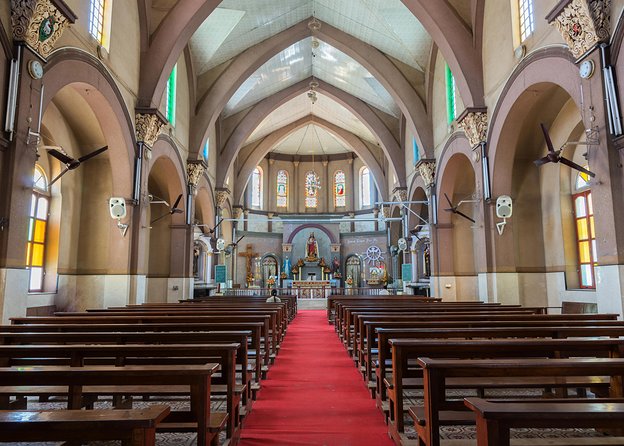
This is the anchor of the whole trip. The Basilica of Bom Jesus is a UNESCO World Heritage Site, and it’s famous for its connection to St. Francis Xavier, one of the standout Catholic missionary figures associated with Portuguese-era evangelization.
What I like in this visit is that it’s not just a quick exterior photo. You walk across a marble floor inlaid with precious stones, which is the kind of visual detail you’ll miss if you’re moving fast. Then you see the remains connected to St. Francis Xavier and hear the story tied to his life—supported by the detailed paintings that decorate the interior.
Here’s the practical angle: this kind of church is often cooler and dimmer than the street. Bring your phone flashlight if you rely on it for reading details, but keep it discreet. Also, take a minute before you rush to the main viewing area. Look for how your eyes move across the space—floor to walls to paintings—because that’s usually where the explanation from your guide will land best.
Also noted in the schedule: the admission ticket here is listed as free, which helps your budget.
Se Cathedral of Santa Catarina: Gothic Portuguese Architecture and a Huge Bell
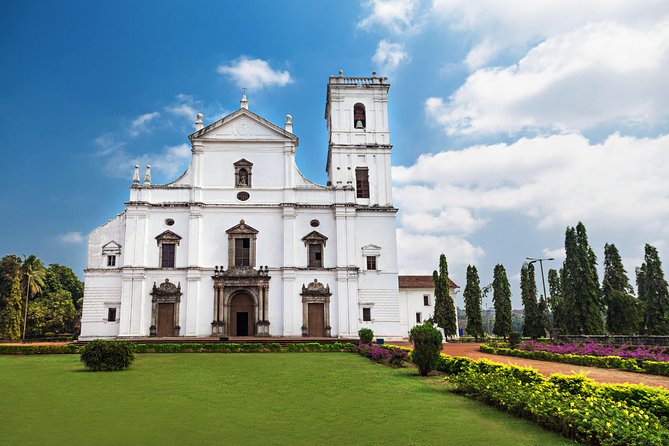
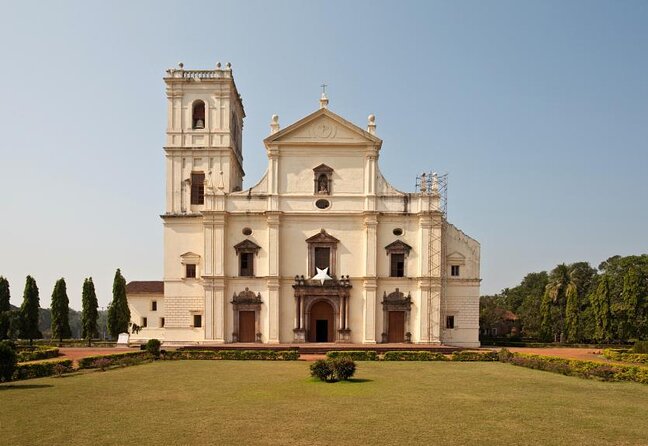
After Bom Jesus, you head toward the Se Cathedral, locally known as Se Cathedral of Santa Catarina. The big reason this stop matters is the styling. You’re looking at gothic-style Portuguese architecture—different from the bright, open feel outside. It’s the kind of change that makes you understand the Portuguese influence as more than just a few decorative touches.
Inside, the cathedral is dedicated to a saint tied to Christian martyrdom: St. Catherine of Alexandria. Your guide should connect the dedication to the visuals you’re seeing, so it doesn’t feel like a label stuck to a wall.
There’s also a standout physical feature: the cathedral houses one of the largest bells in Goa. Even if bells aren’t ringing during your visit, it’s still a focal point that makes the building feel alive and intentional.
Trade-off to consider: this stop is described as a shorter visit (around 20 minutes). If you’re the type who likes to read every side chapel and slow-walk for details, you may want your guide to prioritize the most meaningful sections rather than trying to cover everything.
Fontainhas (Panaji Latin Quarter): Street-Level Portuguese Influence
Then you step out into a different kind of history: lived-in city fabric.
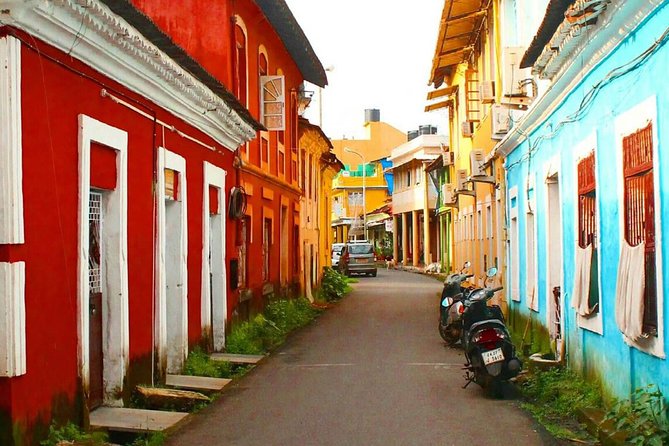
Fontainhas, the Latin Quarter of Panaji, is all narrow lanes, older villas, and visual cues of Portuguese influence. This part is less about a single monument and more about how architecture and community identity mix in everyday streets.
I like this stop because it helps you connect the dots. If Bom Jesus and Se Cathedral explain what Portuguese Catholicism looked like in grand form, Fontainhas explains how Portuguese culture changed daily life—where people built, how neighborhoods formed, and how the city still carries those patterns.
Your walk includes a pause at St. Sebastian Chapel, where statues of historic figures like Abade Faria are displayed. That’s the kind of stop that can turn into a “wait, this is why it’s here” moment. Abade Faria is a name that can feel surprising in a Goa church context, and when your guide ties him to the wider Catholic story, the chapel becomes more than a random photo spot.
Practical tip: wear comfortable shoes. The walking here is short but real, and the streets can be uneven. You’ll get more out of the experience if you don’t spend the whole time adjusting your footing.
Dona Paula Jetty: Arabian Sea Views Plus a Quiet Market Stop
The tour closes with a view that feels like a reward.
At Dona Paula Jetty, you get panoramic scenery over Mormugao Harbor and the Arabian Sea. It’s a calmer moment than the church interiors, and it’s ideal for photos because the light usually has a wider sky to work with. Even if you’re not a picture person, it’s worth stepping to a spot where your guide points out the best lines of view.
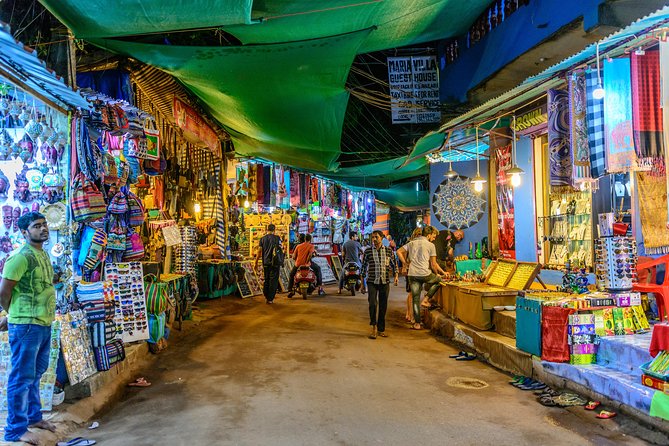
There’s also a practical extra: the schedule includes a stop at a tiny market on the waterway. This is the kind of add-on that makes the tour feel local. You’re not just sightseeing; you’re seeing how people move through the area in a small, daily way.
If you want to pace yourself, do it here. Take a slower walk, sit briefly, and let the day’s stories settle. After multiple churches, a sea view can refresh your brain.





Timing, Walking, and What to Wear in Real Life
This experience is listed at about 6 hours, starting at 10:00 am. In the real world, that means you should plan for a half-day that stays active from morning to early afternoon.
Walking is described as light to moderate: a small amount of walking is involved, and comfortable shoes are recommended. You’re on your feet in and around churches, plus the Fontainhas walk.
Dress code is flexible, but there’s a respectful baseline for places of worship. There’s no strict dress code enforced, but you should dress accordingly—short shorts and sleeveless tops aren’t recommended. If you’re packing smart, bring a light layer you can use if a church asks for more coverage.
My suggestion: bring a bottle of water. The tour doesn’t include food or drinks, and even if your guide keeps breaks reasonable, Goa heat can sneak up on you during sightseeing.
Lunch and Meals: Budget-Friendly Options That Fit the Day
Food is where you can make or break the value of a half-day tour.
The tour does not include food or drinks. Lunch is listed as optional, with typical lunch costs (including drinks) ranging from USD $2 to USD $15. That’s a wide range, which usually means you can choose casual and local, or something slightly more comfortable.
If you want the best experience without overpaying, eat like a local. Pick a spot your guide suggests from the area, then keep your order simple: one main dish, one drink, and don’t treat lunch like it needs to be an all-day event. With only so many hours, your goal is to refuel, not to turn lunch into a second tour.
Also, because you end around the jetty area, you might find that the timing naturally lines up with lunch when you’re done with photos.
Price and Value: Is $130 per Person Fair?
At $130 per person, this is not a bargain-bin option. But the price can make sense if you value three things that get expensive fast when you do them on your own: a guide, a private vehicle, and smooth routing.
Here’s what you’re paying for, based on what’s included:
- Private English-speaking guide
- Hotel pickup and drop-off
- Private air-conditioned vehicle
- Admission tickets listed as free for the major stops
The out-of-pocket part is mainly food and drinks (and any personal shopping). So your spending is predictable: you’re not paying for multiple museum tickets or transport fares on top.
When it’s best value: if you’re traveling as a pair or small group, and you want someone to explain Portuguese-era influences while you’re standing in the buildings. Churches are where a good guide turns “I saw it” into “I understood it.”
When it may feel like poor value: if your day runs short for reasons outside your control (traffic, time spent inside, or how the schedule is followed). One piece of feedback pointed out a mismatch between expected time and actual time, with the car and guide waiting. That’s the main risk to keep in mind when choosing a fixed-price half-day.
My call: if you’re flexible about timing and you care about interpretation, $130 feels more reasonable. If you want strict clockwork, consider that heritage stops can’t always be forced into a rigid schedule.
Who Should Book This Tour (and Who Might Want Something Else)
This tour is ideal if you:
- Love Portuguese heritage in Goa and want it tied to the key sites
- Prefer a private experience over group hopping
- Want both church architecture and sea views in one half-day
- Enjoy a guide who can explain what you’re seeing, not just point
You might skip or look for a different option if you:
- Have very limited mobility and want minimal walking (there is only a small amount, but it’s still on uneven areas)
- Hate uncertainty in end-time (your day can be shorter than advertised depending on the flow)
- Expect deep time inside every church without guide-managed priorities (some stops are scheduled as shorter visits)
Should You Book This Portuguese Heritage Tour?
If your Goa plan includes churches and Portuguese influence, I think this one is worth considering. You’re getting the UNESCO Basilica of Bom Jesus, a strong second church stop at Se Cathedral, a walk through Fontainhas, plus Dona Paula Jetty views that give the day a clean finish.
Book it if you want a guide-led experience with comfort built in: hotel pickup, AC transport, and a private route. Just go in with realistic expectations about timing, bring a layer for church interiors, and budget separately for lunch.
If you want to experience Portuguese Goa in a concentrated, readable way—without the stress of self-routing—this tour does that job well.