REVIEW · NEW DELHI
Old Delhi Heritage and Street Food Walk with a Local
Book on Viator →Operated by Akshay Jain · Bookable on Viator
Old Delhi can feel like sensory overload. This walk turns that noise into something meaningful, with history tied to the streets you actually walk, plus Chandni Chowk street food along the way. I love how Akshay Jain connects Mughal, Sikh, and British-era moments to everyday Delhi life, and I also like the personal, memory-flavored storytelling that makes the past easier to hold onto. One thing to consider: you’ll be walking in tight lanes for a couple of hours, so it’s not the best choice if you hate crowds or long stretches on foot.
You’ll start near Red Fort, meet your guide at a Jain temple, and work your way through iconic sites and lesser-seen corners without the usual museum-style lecture. The route is designed to show Delhi’s mix of communities in a practical, step-by-step way, and it ends at the calm grandeur of Jama Masjid. A possible drawback is that key sights like Red Fort and Jama Masjid may require extra admission on your end, so budget a little beyond the tour price.
In This Review
- Quick reasons this walk gets remembered
- Why this Old Delhi walk feels personal with Akshay Jain
- Price, time, and what you’re really buying
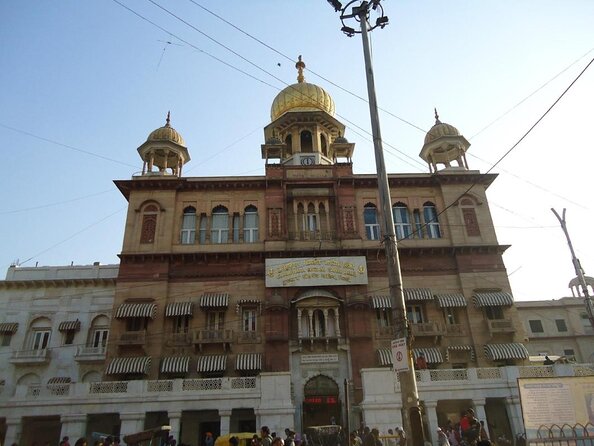
- Start at the Lal Mandir and get your bearings fast
- Red Fort ramparts and the Shah Jahan story (with timing that makes sense)
- Sri Digambar Jain Lal Mandir: faith next to Mughal power
- Begum Samru’s palace: the 18th-century ruler with a warrior past
- Gurudwara Sis Ganj Sahib: martyrdom and the changing Sikh story
- Central Baptist Church and 1857’s long shadow
- Jama Masjid finale: calm big views, plus a minaret option
- Street food stops: how to enjoy Chandni Chowk without the chaos
- What the route teaches about Delhi’s syncretic culture
- Small group size and the pacing that keeps you sane
- Practical tips so your feet and stomach both survive
- Who this walk suits best
- Should you book this Old Delhi Heritage and Street Food Walk?
- FAQ
- How long is the Old Delhi heritage and street food walk?
- What does the tour cost?
- Where do I meet the guide?
- Where does the tour end?
- Is the ticket mobile?
- How many people are in a group?
- Are admission tickets included?
- Are there any stops with free entry?
- Is street food part of the experience?
- Can I cancel and get a full refund?
Quick reasons this walk gets remembered
- Story-first route: Red Fort to Jama Masjid, with personal narration tying eras together
- Multiple faiths in one walk: Jain, Mughal, Sikh, Christian, and mosque history in close proximity
- Street food time: expect classic Chandni Chowk snacks, including memories of malai sandwiches
- Small group: max 12 people, so questions don’t get swallowed
- Optional height at the end: minaret views if you want the extra effort
Why this Old Delhi walk feels personal with Akshay Jain
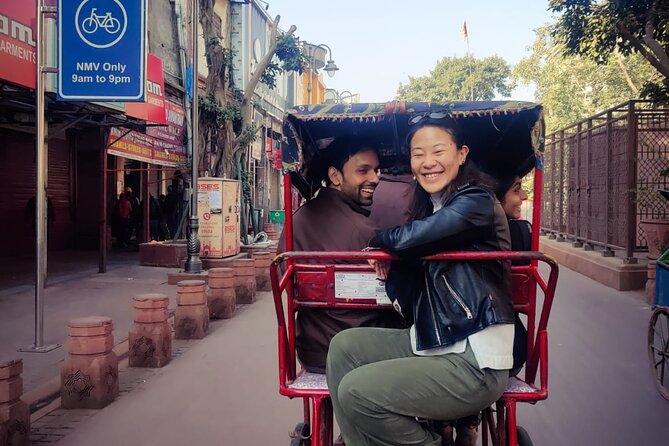
If you’ve ever wandered Chandni Chowk and felt like you were just trying to survive your own senses, this tour helps you slow down and read the city. Akshay Jain brings a local’s eye, but the best part is how he makes each stop feel connected to the next one. You’re not bouncing from landmark to landmark. You’re following a story.
I also like that the background stays grounded. The tour isn’t only about grand empires; it’s about how different communities lived side-by-side in the same geography. That syncretic feel shows up in a very practical way: you move from Mughal-era power to Jain religious life, then to Sikh martyrdom, and later to British colonial change—all within a walk that fits one afternoon.
You can also read our reviews of more tours and experiences in New Delhi.



Price, time, and what you’re really buying
At $28.80 per person for about 2 hours 30 minutes, you’re paying for guidance, context, and time in the right places. You’re not paying for transport convenience (Old Delhi is walk-and-lane territory). You are paying for someone who can explain what you’re seeing while you’re seeing it.
Two small budget notes matter:
- Admission is not included for Red Fort and for Jama Masjid (especially if you want to climb minarets).
- Several other stops in the route are free, so the tour cost generally covers the people-and-stories portion, not every ticket.
Is it “cheap”? In central Old Delhi, with a local guide and multiple major stops, it’s fairly good value. The real payoff is that you’ll understand what you’re looking at instead of just taking photos and moving on.
Start at the Lal Mandir and get your bearings fast
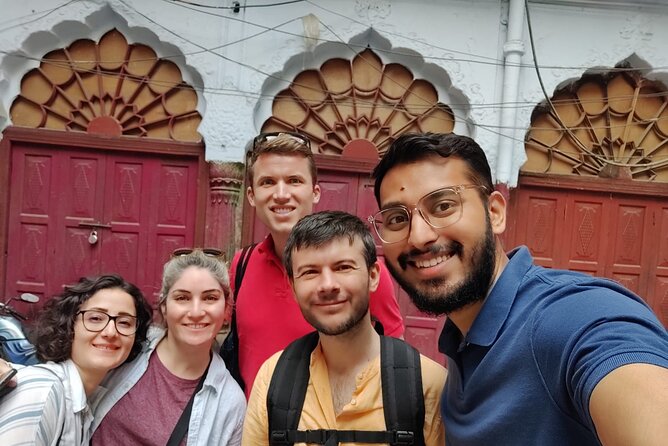
You meet at Shri Digambar Jain Atishay Kshetra Lal Mandir, on Netaji Subhash Marg, opposite Red Fort in Chandni Chowk. Even if you’ve visited Old Delhi before, starting here is a smart move. It helps you begin with perspective rather than panic.
The first thing you’ll notice is how close power and devotion sit next to each other. Standing with the Red Fort ramparts in view, you’re primed for the Mughal story that’s coming next. That positioning matters because the walk isn’t trying to be everything for everyone. It’s building a line of understanding, from Shah Jahan’s shift of power and building plans to the way later eras left their marks.
Red Fort ramparts and the Shah Jahan story (with timing that makes sense)
Stop 1 is Red Fort, with about 15 minutes there. The focus isn’t just the architecture. The focus is the big turning point: Shah Jahan, the Mughal emperor who built the Taj Mahal, and then moved the capital from Agra to Delhi to build the fort in 1648.
Fifteen minutes is enough to get oriented and catch the key story beats without spending your whole time stuck behind ticket lines. And because you’re not arriving at the fort cold, you’re primed to notice details instead of treating the fort like a photo backdrop.
Admission isn’t included here, so plan a little extra if you want inside access.
Sri Digambar Jain Lal Mandir: faith next to Mughal power
Next is Sri Digambar Jain Lal Mandir, about 10 minutes. This stop is quick, but it does important work. You hear how a Jain temple ended up located beside Mughal fortifications—even under a Muslim emperor.
This is where the walk becomes more than “Old Delhi sightseeing.” It’s about how India’s layers of belief overlap in real space, not just on posters. As a Jain, Akshay shares religion-as-way-of-life context, including interesting facts that help you read what you see rather than guess.
The temple stop is marked as free, which makes this a good chance to sit with the meaning for a moment without worrying about extra costs.




Begum Samru’s palace: the 18th-century ruler with a warrior past

Stop 3 is Begum Samru’s Palace, about 15 minutes, and this is one of those sections that turns history into a real character study. Begum Samru was a powerful woman in Northern India in the 18th century—starting as a nautch girl, later becoming a mercenary warrior, then rising to become a ruler and a diplomat in the Mughal court.
The angle that matters is how the story complicates what you might assume about “who history is about.” This mansion isn’t presented as a random pretty building. It’s presented as a clue to how power actually worked in the region when Mughal control was shifting and other strong figures rose.
Marked as free for entry here, it’s a straightforward win: you get a dramatic story without an extra ticket.
Gurudwara Sis Ganj Sahib: martyrdom and the changing Sikh story
Stop 4 is Gurudwara Sis Ganj Sahib, about 10 minutes. The questions you’ll hear are the kind that change the way you see the timeline: who succeeded Shah Jahan after the capital moved to Delhi, and why was a Sikh guru executed here along with followers?
This stop connects to the later decline of Mughal power, but it does it through a human event—martyrdom—rather than only through political dates. If you prefer history that explains causes by showing consequences, you’ll probably like this part.
It’s also marked as free, which is nice given how much emotional weight the stop carries.
Central Baptist Church and 1857’s long shadow
Stop 5 is Central Baptist Church, Chandni Chowk, about 10 minutes. Here the narrative shifts into colonial-era change. As Mughal authority wanes, the East India Company rises and captures political power. The year 1857 is framed as a shock that shook the foundations of the church and the wider region, with India’s first war of independence playing a central role.
You’ll also hear how the Company ultimately triumphs and India becomes a British colony under Queen Victoria.
Ten minutes can feel short for a subject this huge, but the tour’s strength is that it gives you the major story line while you’re still in motion around Old Delhi. If you want to understand the city’s symbols, you need this kind of quick, connected explanation.
Jama Masjid finale: calm big views, plus a minaret option
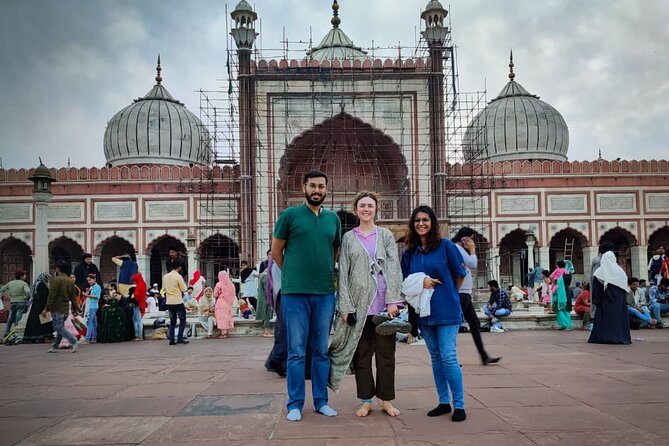
The walk ends at Jama Masjid, with about 30 minutes. This is a strong finish because you move from the tight lanes into a wider, calmer space.
Jama Masjid is presented not only as an architectural highlight, but as a moment to reflect on the decline-and-after story you heard earlier—why Mughal power shifts, and where that leaves the city.
If you’re up for it, there’s an option to climb the minarets for panoramic Old City views. That’s the kind of add-on that’s worth it if you like seeing a place from above and you have the energy. Admission is marked as not included here, so treat that as a possible extra cost.
Street food stops: how to enjoy Chandni Chowk without the chaos
This experience is a street food walk with a local, so food is part of the core plan, not a random side quest. You’ll get breaks to taste along the route, and the stories around the food matter—where it fits into the neighborhood, why certain snacks show up in this part of the city, and how daily life works in the lanes.
One specific memory that comes up is malai sandwiches—the kind of snack that helps you cool down and reset while you keep moving. The tour also uses food to connect you to local rhythm: you’ll notice how people shop, chat, and snack while history lessons play out around you.
Practical tip: in Old Delhi, hunger moves fast. Pace yourself so you don’t end up rushing food at the exact moment you’re trying to take in a story.
What the route teaches about Delhi’s syncretic culture
A big part of the value here is the “why” behind the route. Delhi doesn’t show up as one era or one religion; it shows up as layers.
You’re walking through a sequence where:
- Mughal power (Red Fort) sets the stage
- Jain life shares space beside that power (Lal Mandir)
- Later authority and ambition appear through a dramatic female ruler (Begum Samru)
- Sikh history brings the story of martyrdom into the same city map (Sis Ganj Sahib)
- British colonial change enters through 1857 and the church context (Central Baptist Church)
- The ending keeps the scale large and the mood reflective (Jama Masjid)
When those pieces fit together, Old Delhi stops being only a place to eat and start becoming a place to understand.
Small group size and the pacing that keeps you sane
With a maximum of 12 travelers, this is ideal if you want attention without a giant herd. I like small groups for two reasons: you can ask questions, and the guide can adjust the pace to what the lane conditions allow.
The route time is also realistic. You’ll spend enough time at major sites (like the Red Fort ramparts and Jama Masjid) and still have short, sharp moments at the religious landmarks that frame the story.
Practical tips so your feet and stomach both survive
Old Delhi can be rough on your ankles if you show up in the wrong shoes. Wear comfortable walking footwear with grip. Bring water if you tolerate it well; the route is active and you’ll want to stay steady.
Also, think about what “2 hours 30 minutes” means in this area. It’s not a relaxed stroll. It’s a story walk, with transitions, stairs if you choose minarets, and lots of street-level energy.
If you’re sensitive to crowds or narrow lanes, consider that this experience is built on seeing Old Delhi up close, not from a bus window.
Who this walk suits best
This is a great fit if you:
- love history but want it explained in plain, human terms
- enjoy street food and learning how neighborhoods work
- like literary or personal touches that turn facts into images
- want a manageable Old Delhi route rather than a random day of wandering
It may not be ideal if you’re looking for a slow, mostly seated experience, or if you want everything inside major monuments with no extra admission.
Should you book this Old Delhi Heritage and Street Food Walk?
I’d book it if you want Old Delhi with context. The combination of major landmarks (Red Fort and Jama Masjid) plus faith and empire “in-between” stops makes the story feel connected. Add in Akshay Jain’s personal, poetry-tinged storytelling style, and it becomes more than a checklist.
You should also check your budget for admissions at Red Fort and Jama Masjid. If that’s not a problem for you, this is a strong use of one afternoon.
If you’re debating whether to do a guided walk versus solo exploring: choose guided. Old Delhi rewards curiosity, but it also punishes confusion. This walk helps you get your bearings fast and keeps the day from turning into pure sensory overload.
FAQ
How long is the Old Delhi heritage and street food walk?
It lasts about 2 hours 30 minutes.
What does the tour cost?
The price is $28.80 per person.
Where do I meet the guide?
Meet at Shri Digambar Jain Atishay Kshetra Lal Mandir, Netaji Subhash Marg, opposite Red Fort, Chandni Chowk, Delhi 110006.
Where does the tour end?
The tour ends at Jama Masjid in Old Delhi, near Jama Masjid Metro Station.
Is the ticket mobile?
Yes, the tour uses a mobile ticket.
How many people are in a group?
The group size is capped at 12 travelers.
Are admission tickets included?
Admission tickets are not included for Red Fort and Jama Masjid.
Are there any stops with free entry?
Yes. Sri Digambar Jain Lal Mandir, Begum Samru’s Palace, Gurudwara Sis Ganj Sahib, and Central Baptist Church are listed as free.
Is street food part of the experience?
Yes. It’s described as an Old Delhi street food walk with a local guide.
Can I cancel and get a full refund?
Yes. Cancellation is free up to 24 hours in advance for a full refund. If you cancel within 24 hours, you won’t receive a refund.