REVIEW · BERLIN
Berlin: Berlin Charité Guided History Tour
Book on GetYourGuide →Operated by Secret Tours Berlin · Bookable on GetYourGuide
Berlin medicine has a way of getting personal fast. In this 2-hour guided walk, you trace 300 years of medical history through Charité’s world-renowned stories and the people who shaped them. Two things I really liked: the guide’s sharp storytelling (you can tell they know the material), and how the tour makes famous names feel connected to real human stakes like life, illness, and death. One consideration: it’s German-only, and a couple of the hospital-adjacent spaces you might expect to see are off-limits during group tours.
I also love that you hear about the big Berlin-heavy hitters—Rudolf Virchow, Emil von Behring, Robert Koch, and Ferdinand Sauerbruch—without turning it into a dry list. The tour also covers the darker chapters, including doctors’ collaboration with the Nazi regime, so the history lands as more than museum trivia. That balance is a big reason this one feels worth your time, even if you’re a Berlin regular who thinks you know the basics. The main drawback is that you do get limited physical access: the hospital grounds don’t open for group tours, and the Charité Bed House is not entered.
Finally, there’s a practical heads-up about what you’ll be allowed to do with your eyes and shoes. You’ll walk and look in places, and then you’ll enter one key teaching site, but you won’t be roaming freely like you would in a regular attraction. If you’re hoping for full hospital interior access, plan for the tour to be more “history-led viewing” than “complete building tour,” thanks to hospital protection and hygiene rules.
In This Review
- Key highlights you’ll remember
- Why Berlin Charité’s story hits differently than a typical history tour
- The big picture: from plague-era beginnings to a major university hospital
- Start at Charité Tower: your walking tour with a clear beginning
- Charité Bed House exterior: why seeing it from outside still works
- The walk along Luisenstraße and across the university campus
- Important access limits: you won’t enter the hospital grounds
- Famous Berlin doctors and scientists: the names you’ll hear and why
- The difficult chapter: doctors’ collaboration with the Nazi regime
- The medicine temple moment: Animal Anatomical Theatre (TAT)
- What you should expect overall: a guided story walk, not a full museum day
- Price and value: $28 for two hours of high-stakes medical history
- Who should book this Berlin Charité guided history tour
- Practical tips before you go
- Should you book this tour?
- FAQ
- What’s the duration of the Berlin Charité guided history tour?
- How much does the tour cost?
- Where do I meet the guide?
- Is the tour guided in English?
- Do we go inside the Charité Bed House?
- Are the Charité hospital grounds accessible during the tour?
- What is the Animal Anatomical Theatre (TAT), and can its hours change?
- Can I cancel for a refund?
- Can I reserve now and pay later?
Key highlights you’ll remember

A 300-year sweep of medical history in Berlin
Nobel Prize–level scientists and iconic doctor names like Koch, Virchow, and Behring
A candid look at the Nazi era and how medicine was used
The medicine temple visit: the Animal Anatomical Theatre (TAT)
Smart pacing across Luisenstraße and university campus viewpoints, without hospital-granted access
Why Berlin Charité’s story hits differently than a typical history tour

A guided tour about medicine can easily turn into names, dates, and impressive-sounding breakthroughs. This one keeps steering back to what medicine actually means: decisions, experiments, suffering, and the long shadow of institutions. You’re not just learning what happened—you’re learning how a city builds a medical reputation over centuries, and what that reputation costs.
I like how Berlin’s medical history is treated as part of the city’s identity, not a separate academic world. Charité isn’t some distant concept. It’s right there, shaping science and medical training in a place you’ll walk through.
You can also read our reviews of more tours and experiences in Berlin.



The big picture: from plague-era beginnings to a major university hospital

The story starts in the 18th century with a plague house—an origin that sounds grim because it was. From there, the institution develops into a major university hospital in Europe. That arc matters because it explains why Charité became more than a hospital: it became a training ground and a scientific engine.
You’ll also hear how Berlin medicine carried both genius and contradictions. The tour’s value is that it doesn’t pretend medical progress came from a clean timeline. It shows how institutions grow, how ideas spread, and how ethical failures can happen inside the same walls that produce major advances.
Start at Charité Tower: your walking tour with a clear beginning
You meet in front of the Charité Tower, at the crossroads of Schumannstraße / Charitéplatz / Charitéstraße. Tours start on time, so I’d treat it like a site appointment: get there a bit early, especially if you’re navigating public transit.
From the first stop, the tour sets expectations in a helpful way. You’ll view the Charité Bed House from the outside, which is still useful because it anchors the whole narrative. You get the sense of scale right away, and you’re not thrown into history with zero orientation.
Charité Bed House exterior: why seeing it from outside still works
You don’t enter the Charité Bed House. That might sound like a letdown at first, but it actually keeps the tour focused on storytelling and architectural context. Hospital facilities come with protection and hygiene regulations, and this tour respects that boundary.
Outside viewing is still worth it. The guide uses what you can see—location, campus context, the institution’s physical presence—to help you understand why Charité became so influential. It’s easier to remember the names of scientists when you’re also tracking how the institution fits into Berlin’s university area.
The walk along Luisenstraße and across the university campus
After the exterior start, you move along Luisenstraße and cross parts of the university campus. This is where the experience feels like a real city walk, not just a stop-and-go lecture.
The best part of this section is momentum. The guide ties the historical themes to what you’re passing, so you’re always connecting the lesson to a place. It’s also a nice break from the heavy subject matter, since you get movement and orientation while still learning.





Important access limits: you won’t enter the hospital grounds
Here’s the key practical reality. The hospital grounds (Charité Campus Mitte) are not accessible for group tours. That means you won’t wander inside multiple departments or see the hospital like a visitor would in a normal tour.
This is actually good to know upfront. It saves you from building expectations that the tour can’t fulfill. Instead, you can focus on what the tour does well: guided interpretation, meaningful exterior viewing, and one significant teaching-site interior stop.
Famous Berlin doctors and scientists: the names you’ll hear and why

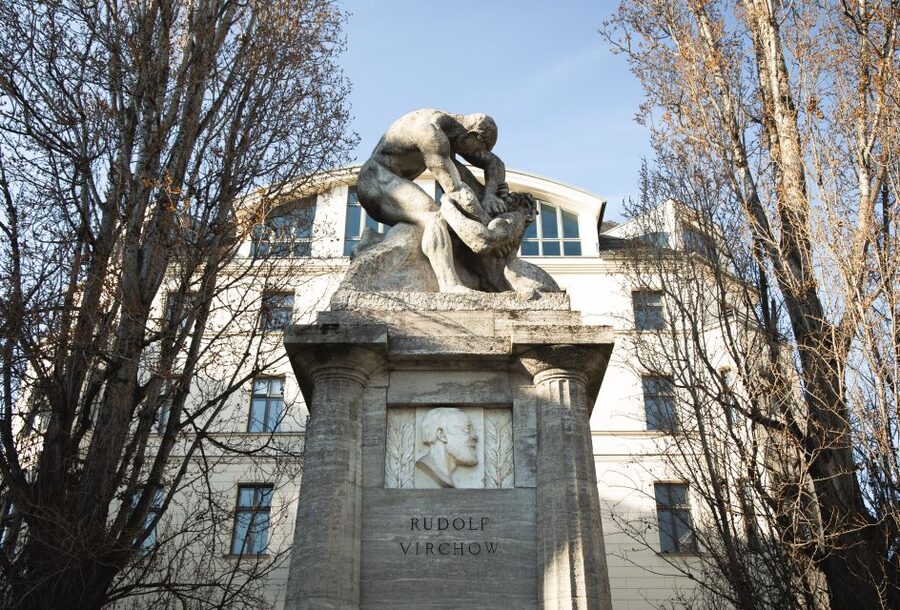
This tour is heavily built around major figures in Berlin medicine. Expect to hear about Rudolf Virchow, Emil von Behring, Robert Koch, and Ferdinand Sauerbruch. These names aren’t just thrown at you—they’re used as entry points into how medicine developed in Germany and why Berlin became a magnet for scientific work.
What makes this part work is the “why” behind the fame. When the guide connects discoveries to the institution’s evolution, you start understanding patterns—how training, research, and clinical practice feed each other. You’ll likely walk away with a clearer mental map of how Charité became one of Europe’s most important medical centers.
And yes, you’ll also leave with a better ability to recognize why Nobel Prize–level science ties back to places like this. The tour turns those names into context, not trivia.
The difficult chapter: doctors’ collaboration with the Nazi regime
Charité’s history also includes dark times, and the guide addresses when doctors collaborated with the Nazi regime. This isn’t handled as a quick moral aside. It’s part of the institution’s story.
I appreciate tours that don’t flatten history into a feel-good arc. Medicine is powerful, and institutions shape what people are allowed to do. When you hear this part clearly, you understand why modern ethics in medicine matters, not just as a lecture topic but as a protection against repeating harm.
The medicine temple moment: Animal Anatomical Theatre (TAT)
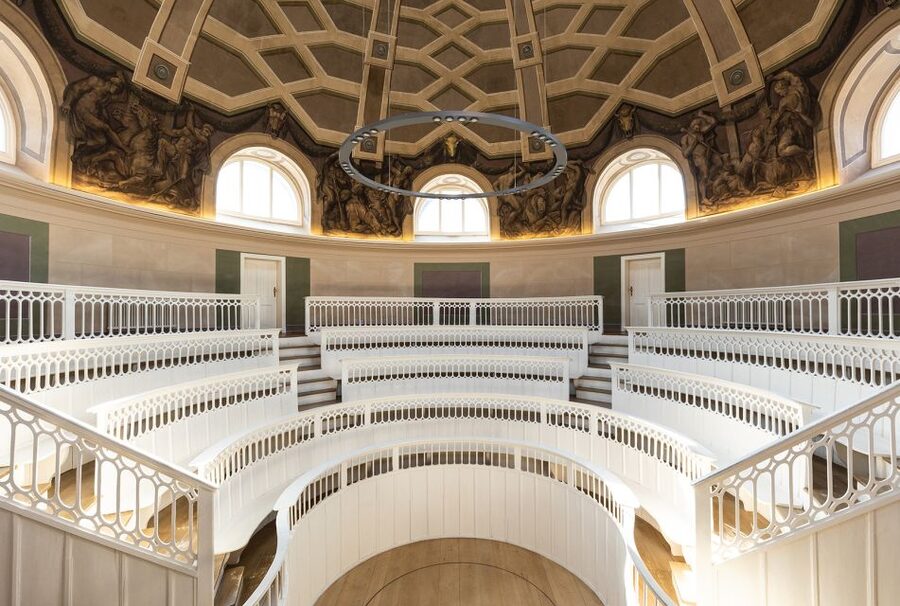
The tour’s standout physical interior is the Animal Anatomical Theatre, often described as a mysterious medicine temple. You’ll visit it during the tour, and it’s also presented as Berlin’s oldest surviving teaching building.
This stop is important for a simple reason: it gives you a physical feeling for how medical training looked long before modern imaging and today’s clinical routines. An anatomical theatre is more than a room. It’s a sign of how learning happened—through observation, structure, and the public-facing rituals of teaching.
You’ll go inside, so this is your chance to see the teaching heritage up close. If you’re the type who remembers better through spaces rather than only through stories, this is the moment that usually clicks.
What you should expect overall: a guided story walk, not a full museum day
This is a 2-hour guided tour with a live guide in German. The structure makes sense: you start with an exterior orientation at Charité, you walk through the university area, you handle the access limits honestly, and you finish with an interior visit to a key teaching site.
If you’re expecting a long, slow museum-style experience, you might want to adjust your expectations. This is more like a focused historical route—designed to give you a lot of narrative in a short window.
Also note the TAT hours can change. The Animal Anatomical Theatre reserves the right to adjust opening hours on short notice due to closed events. The TAT is closed on public holidays, so timing can matter if your trip overlaps with major German holidays.
Price and value: $28 for two hours of high-stakes medical history
At about $28 per person for 2 hours, the price feels fair for what you’re getting: a structured guide-led narrative through 300 years, multiple major doctor/scientist names, and an interior visit to a teaching theatre. You’re paying for context, interpretation, and a guided route that would be harder to stitch together on your own without losing the storyline.
This isn’t a cheap photo walk. It’s a story-focused tour with real institutional weight, including ethically difficult parts. In that light, the cost is less about tickets and more about the value of having someone connect the dots while you’re walking.
If you like city tours where the guide’s delivery matters, this one seems to fit. The guide is described as very knowledgeable with strong rhetoric, and that type of presentation is exactly what makes dense history stick in your brain.
Who should book this Berlin Charité guided history tour
This tour is a great match if you:
- Want a single, efficient way to understand Charité’s role in European medicine
- Like science history but don’t want it to feel like a textbook
- Prefer guided context over self-paced reading
- Enjoy learning from strong delivery (the guide’s communication style seems to be a highlight)
It’s also a smart choice if you’re already familiar with Berlin and want something different from the usual landmarks. Even Berlin locals can find fresh angles here, because the emphasis isn’t just on architecture—it’s on institutional history tied to major medical figures.
Practical tips before you go
- Plan for a walking tour across the university area, with mixed access levels.
- Bring a small amount of flexibility if your schedule overlaps with public holidays, since the TAT is closed then.
- Since the live guide is German, set expectations accordingly. If you don’t speak German comfortably, this may feel harder to follow.
- Wear shoes you can move in. You’ll be walking between points and spending time standing to orient yourself.
Should you book this tour?
If you want a compact, high-value way to understand Charité and Berlin’s medicine—from plague-era beginnings to Nobel-level names and the institution’s darkest chapter—then yes, I’d book it. It’s the kind of tour where the guide’s clarity matters, and the route is structured so you learn a lot without needing special access.
Skip it only if your main goal is to see lots of hospital interiors or if you need an English-language tour. Otherwise, this is a thoughtful way to get under the surface of Berlin’s medical legacy in just two hours.
FAQ
What’s the duration of the Berlin Charité guided history tour?
The tour lasts 2 hours.
How much does the tour cost?
It costs $28 per person.
Where do I meet the guide?
You meet in front of the Charité Tower at the crossroads of Schumannstraße / Charitéplatz / Charitéstraße.
Is the tour guided in English?
No. The live tour guide language is German.
Do we go inside the Charité Bed House?
No. The tour does not go inside the Charité Bed House due to hospital protection and hygiene regulations.
Are the Charité hospital grounds accessible during the tour?
No. The hospital grounds (Charité Campus Mitte) are not accessible for group tours.
What is the Animal Anatomical Theatre (TAT), and can its hours change?
You visit the Animal Anatomical Theatre (TAT). Its opening hours can be adjusted at short notice due to closed events, and it is closed on public holidays.
Can I cancel for a refund?
Yes. You can cancel up to 24 hours in advance for a full refund.
Can I reserve now and pay later?
Yes. You can reserve your spot now and pay later.