REVIEW · BERLIN
Where It All Began: Berlin’s Queer & Trans History Tour
Book on Viator →Operated by BerlinGuide.de · Bookable on Viator
Berlin’s queer history shows up on street corners. This 3.5-hour guided walk follows LGBTQIA+ and trans stories across Berlin with iPad augmented reality and historic photos placed exactly where events happened.
I like two things a lot: the group stays small, capped at 10 people, so questions feel easy. And I love the tech that makes the past concrete, with an iPad AR experience plus Mixies that turn your photos into keepsakes.
One thing to consider: many stops deal with persecution and loss, so it’s not a light walk, even when the guide keeps it funny. Also, it’s an outdoor-style tour, and it runs only in good weather.
In This Review
- Key highlights you should know before you go
- How Berlin turns LGBTQIA+ history into something you can actually see
- Price and logistics: what $83.13 buys you (and what it doesn’t)
- Where you’ll start and end, and how to think about the walking time
- Stop-by-stop: the 10 addresses that tell Berlin’s queer and trans story
- 1) Karl-Heinrich-Ulrichs-Straße 1: the world’s first gay rights advocate
- 2) Nollendorfplatz: Nazi persecution and the pink triangle world
- 3) Schwerinstraße 13: lesbian life, Toppkeller, and resistance through culture
- 4) Nollendorfstraße 17: police history, Isherwood, and queer refuge
- 5) Magnus-Apotheke: Hirschfeld, the Institute, and the fight over Paragraph 175
- 6) Denns BioMarkt: Eldorado, drag nightlife, and ugly contradictions of power
- 7) Prinz Eisenherz: post-war organizing and Charlotte von Mahlsdorf’s safe spaces
- 8) Connection: trans community in West Berlin and Chez Romy Haag
- 9) Internationale Stele GEGEN DAS VERGESSEN: AIDS, Berlin’s split city, and organizing for survival
- 10) Metropol: queer nightlife, Pride, and resisting gentrification
- The iPad AR part: why it works better than phone photos
- Emotional range: fun details, heavy facts, and why the pacing matters
- Who this tour is best for (and who should choose a different style)
- Is $83.13 worth it? My value check
- Should you book this Berlin queer and trans history tour?
- FAQ
- FAQ
- How long is the Berlin LGBTQ+ and trans history tour?
- Where does the tour start and where does it end?
- What time does the tour begin?
- How big is the group?
- What language is the tour offered in?
- Is there an admission ticket fee for the stops?
- Is coffee or tea included?
- Is the tour weather-dependent?
- Do I need to bring a printed ticket?
- Are service animals allowed?
Key highlights you should know before you go
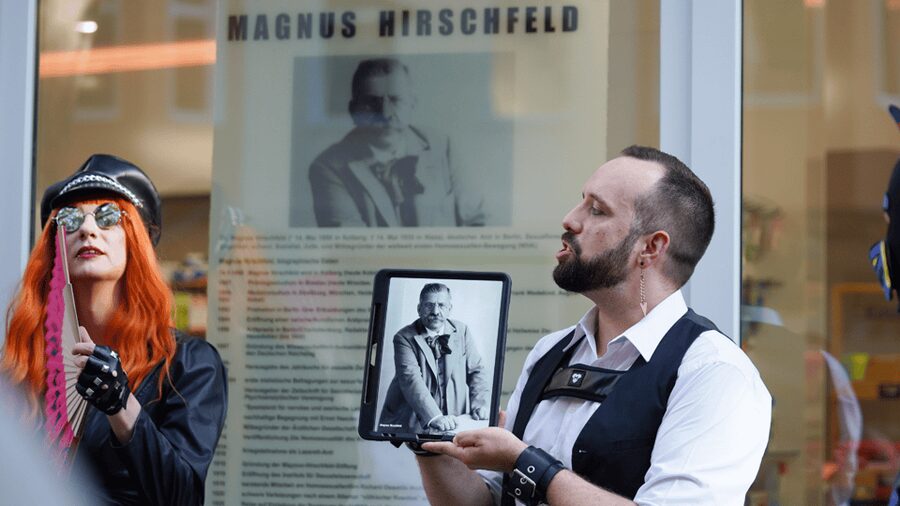
- AR historical photos on the actual street spot so you see the past in-place
- Jeff-led storytelling as a queer activist and gender scholar that mixes facts with real emotion
- Small-group cap of 10 for better pacing and easier Q and A
- Mixies AR group photos so you leave with more than just memories
- 10 stops across eras, from early gay rights organizing to tonight’s queer nightlife and activism
How Berlin turns LGBTQIA+ history into something you can actually see
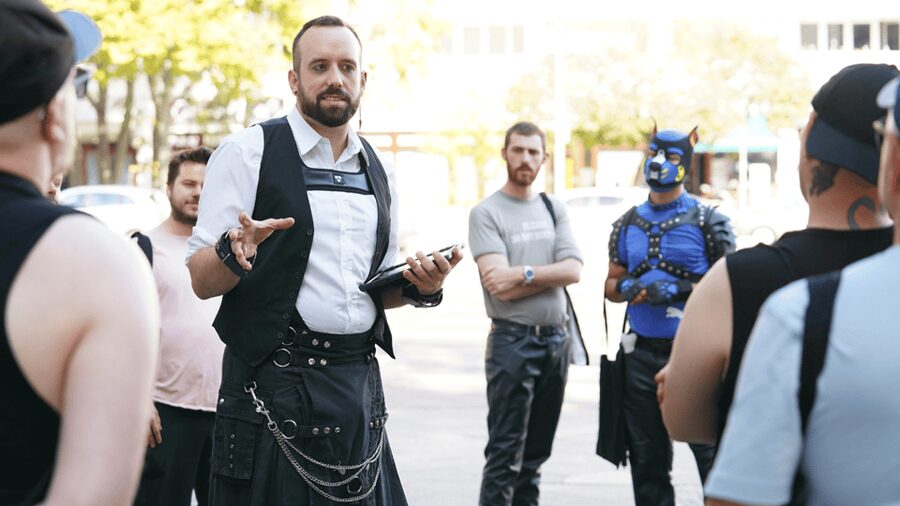
Berlin has a way of teaching history without putting it behind glass. This tour is built for that. You’ll connect names, laws, and nightlife spaces to the street addresses you’re standing at now, which makes the story feel less like a timeline and more like a map you can walk.
The format matters. You’re not just hearing dates; you’re watching how communities formed, pushed back, got punished, and then rebuilt. Even if you already know parts of Berlin’s queer reputation, you’ll likely find new angles, especially around trans visibility and the post-war organizing scene.
You can also read our reviews of more tours and experiences in Berlin.


Price and logistics: what $83.13 buys you (and what it doesn’t)
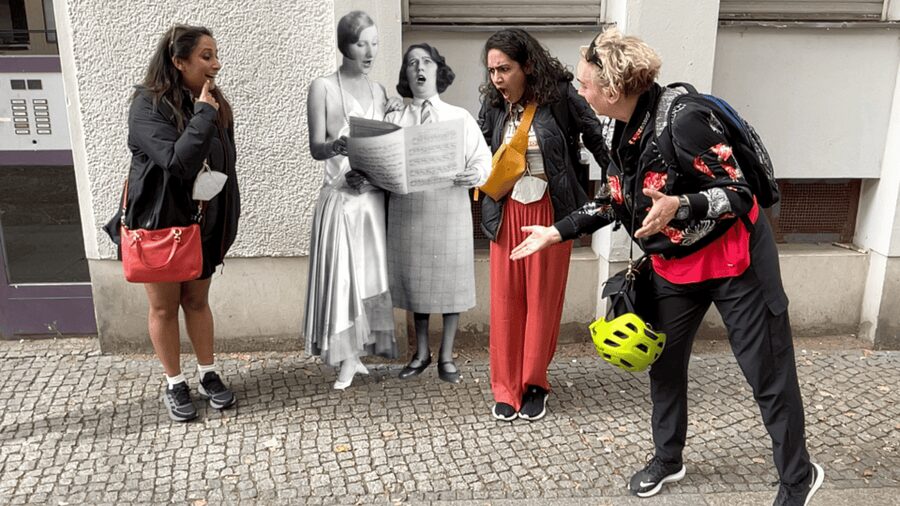
At $83.13 per person for about 3 hours 30 minutes, you’re paying for more than a standard walking guide. You’re getting a guided experience led by a queer activist and gender scholar, plus iPad AR, plus Mixies AR photos, plus a large set of archival media (more than 200 historical photos, videos, and materials).
A small-group cap helps justify that cost. With only up to 10 people, your attention stays on the guide’s pacing instead of dissolving into a big crowd shuffle. You also get practical extras like insider tips on modern queer nightlife and events.
What you should plan for: no coffee or tea is included, so bring a little patience for a break if you need one. The tour also depends on good weather, so if conditions are poor, you’ll be offered another date or a full refund.
Where you’ll start and end, and how to think about the walking time
You’ll meet at Alnatura Super Natur Markt on Else-Lasker-Schüler-Straße 18 (10783 Berlin) at 2:00 pm. The walk ends at Metropol on Nollendorfpl. 5 (10777 Berlin), which is a nice way to close the day if you want to keep the nightlife thread going afterward.
Because the tour is a set of focused stop-and-story moments, the pace feels structured rather than rushed. Still, it’s a 3.5-hour walking experience, so comfortable shoes matter. You’re moving across several neighborhoods tied to queer life and activism, and the addresses are part of the lesson.
If you prefer public transit, you’ll have an easier time getting to the meeting point and leaving from Metropol. Service animals are allowed, and most people can participate.
Stop-by-stop: the 10 addresses that tell Berlin’s queer and trans story
This tour uses each location like a page. Here’s what you can expect at the main stops, and why they matter when you’re standing there.
1) Karl-Heinrich-Ulrichs-Straße 1: the world’s first gay rights advocate
The walk opens at Karl-Heinrich-Ulrichs-Straße 1, tied to Karl Heinrich Ulrichs, often credited as one of the earliest public advocates for decriminalizing homosexuality. What I like about starting here is that it frames queer identity as something people argued for in public long before modern vocabulary existed.
You’ll hear how Ulrichs helped define queer categories and set groundwork for later rights movements. It’s a strong first lesson: political organizing didn’t begin after acceptance; it began alongside risk.


2) Nollendorfplatz: Nazi persecution and the pink triangle world
At Nollendorfplatz, the tone turns darker. This is where the tour connects LGBTQIA+ life to persecution under Nazi Germany, including the stories around Adolf Brand and right-wing gay activists, plus the complicated role of Ernst Röhm and openly gay Nazis.
You’ll also cover the Night of the Long Knives, when Röhm and other queer people connected to the Nazi party were executed. The tour doesn’t stop at ideology—it points you to how Nazi repression reached concentration camps, including forcing many prisoners to wear the pink triangle.
3) Schwerinstraße 13: lesbian life, Toppkeller, and resistance through culture
Schwerinstraße 13 puts lesbian community life front and center. The tour focuses on 1920s Berlin, including the site of Toppkeller, a famous lesbian bar, and how spaces like this could function as safety and social glue.
You’ll also talk about cultural figures like Claire Waldoff, a lesbian cabaret singer whose songs became anthems of defiance. Josephine Baker is part of the conversation too, since she was bisexual and crossed expectations of gender and performance.
4) Nollendorfstraße 17: police history, Isherwood, and queer refuge
At Nollendorfstraße 17, the tour surprises you by looking at the homosexual department of the Berlin police force. It’s the kind of detail that changes your sense of how policing worked, showing that queer identities were tracked rather than ignored.
The story then shifts to gay male life in 1920s Berlin through Christopher Isherwood. His experiences helped inspire Cabaret, and the guide connects this to queer refugee realities—especially his relationship with Heinz Neddermeyer and their escape from Nazi Germany.
5) Magnus-Apotheke: Hirschfeld, the Institute, and the fight over Paragraph 175
Magnus-Apotheke centers on Magnus Hirschfeld and the rights movement he helped build. You’ll learn about the Institute for Sexual Science and the Scientific-Humanitarian Committee, described as the world’s first organization dedicated to queer rights and gender studies.
The tour also covers concepts like sexual intermediaries and Berlin’s idea of a third gender, plus early gender-affirming surgeries associated with people such as Dora Richter, Lili Elbe, and Karl M. Baer. Then it brings the political stakes back: the fight against Paragraph 175, which criminalized homosexuality, and the Nazis’ destruction of Hirschfeld’s Institute. It’s a hard moment in the story, but it’s one that explains why the past got erased.
6) Denns BioMarkt: Eldorado, drag nightlife, and ugly contradictions of power
This stop takes you to the former site of Eldorado, one of Berlin’s famed 1920s drag bars. The tour frames it as a gathering place for gender-nonconforming people and queer performers, including the fact that high-profile Nazis like Ernst Röhm sometimes frequented the club.
That contradiction is uncomfortable, but it helps explain the instability of oppression. People could be visible in one context and criminalized in another, and the tour makes that tension feel real rather than theoretical.
7) Prinz Eisenherz: post-war organizing and Charlotte von Mahlsdorf’s safe spaces
After WWII, the focus shifts to post-war LGBTQIA+ activism. You’ll hear about Homosexuelle Aktion West-Berlin and how early queer rights organizations formed in West Berlin.
The tour also connects Berlin’s culture to organizations like SchwuZ, one of Berlin’s most iconic queer clubs. Charlotte von Mahlsdorf enters as a trans icon who preserved queer history and created safe spaces, especially in East Berlin—an important reminder that survival often included archiving and community-building, not just protesting.
8) Connection: trans community in West Berlin and Chez Romy Haag
This stop highlights the trans community in the 1970s and 1980s, focusing on Chez Romy Haag, a legendary trans-led nightclub. The guide explains how it helped revolutionize Berlin’s nightlife by creating a space where gender-diverse people could exist freely.
Even if you’ve heard of Berlin’s club scene, this adds context: today’s queer nightlife didn’t appear out of nowhere. It grew from people insisting on room to be themselves.
9) Internationale Stele GEGEN DAS VERGESSEN: AIDS, Berlin’s split city, and organizing for survival
At the Internationale Stele GEGEN DAS VERGESSEN, the tour turns to the AIDS crisis in Berlin and how it hit a divided city. You’ll hear how queer communities organized to fight for survival and how activism shaped awareness.
The guide also covers Rita Süssmuth’s advocacy and includes a striking metaphor: the Berlin Wall as the condom of the GDR. It’s the kind of line that stays with you because it links politics, health messaging, and real fear.
10) Metropol: queer nightlife, Pride, and resisting gentrification
The final stop is Metropol, where the tour ties early gay community and techno scene roots to the wider story of today’s Berlin. You’ll hear about connections to places like Berghain and Lab.Oratory, plus stories around SO36’s legendary queer nights and events like Folsom Europe.
The tour also brings activism into the present with Kreuzberg Pride, the Dyke March, and the ongoing fight for an affordable city tied to radical squats like Tuntenhaus. It ends with a sense of direction: the fight doesn’t stop at memory.
The iPad AR part: why it works better than phone photos
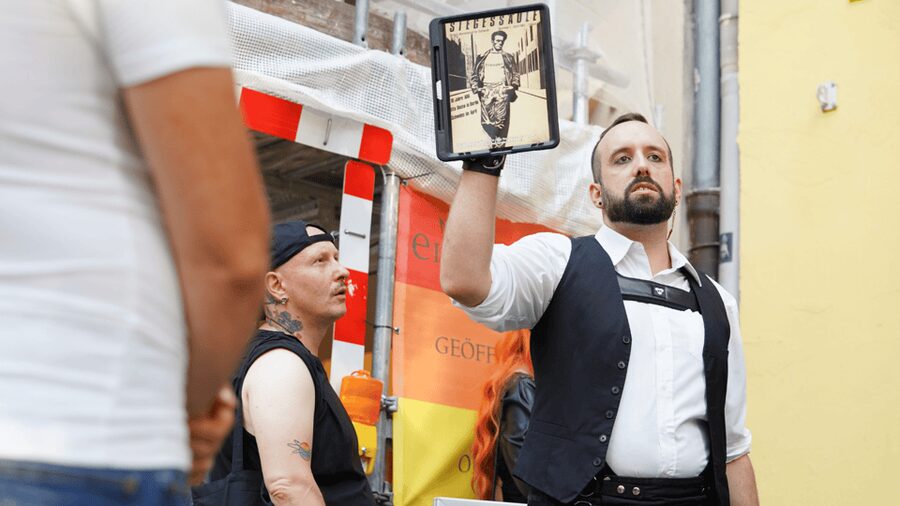
The AR experience is one of the main reasons this tour feels like more than a narration. You’ll be handed an iPad for augmented reality elements, and the effect is simple: you see historic photographs layered over the current street scene.
That matters because you stop treating old photos like distant artifacts. Instead, you’re visually comparing what existed then and what’s here now. It also helps you remember the stops later, since your brain has both the address and the image.
On top of that, Mixies creates personalized AR photos so your group shots feel connected to the locations you visited. If you’ve ever left a tour with generic photos, this is designed to fix that.
Emotional range: fun details, heavy facts, and why the pacing matters
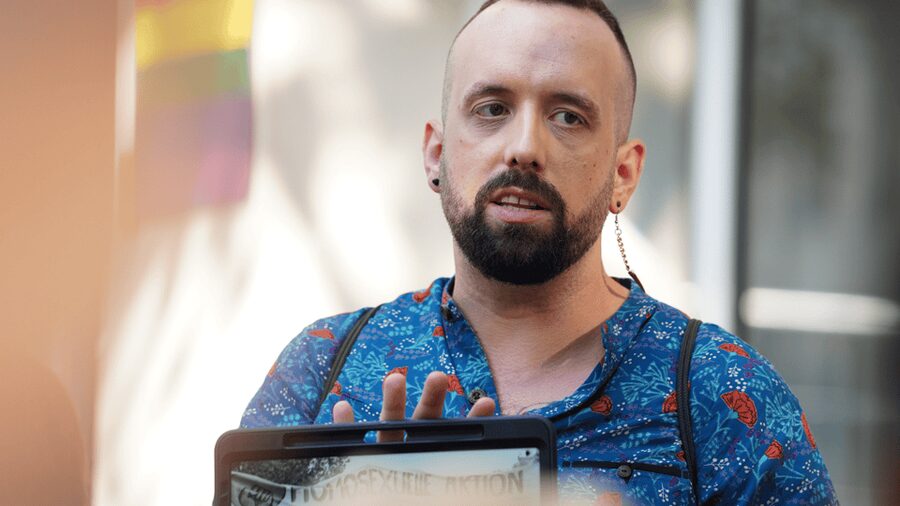
What I appreciate is the tonal control. Some stops are serious, especially those tied to Nazi persecution and the destruction of institutions. But the guide also threads in humor and cultural storytelling, which prevents the walk from becoming one long grim lesson.
That balance is practical. If you’re planning this during a trip week, you don’t want to spend 3.5 hours only processing trauma. You want a guide who can move you from heartbreak to context, and then back to community strength.
Still, the subject matter is heavy. Go into it ready for real history. Think of it as education with human stakes, not entertainment.
Who this tour is best for (and who should choose a different style)
You’ll get the most out of this if you care about LGBTQIA+ and trans history with real place-based detail. It’s also a great pick if you like interactive elements, because the iPad AR and Mixies photos give you an output beyond notes.
If you’re traveling with people who like activism, nightlife culture, and how history shapes modern communities, this tour clicks. It’s not just about famous names; it’s also about organizations, spaces, and the ongoing struggle around belonging and affordability.
If you dislike walking in outdoor weather or prefer purely relaxed sightseeing, you might find the structure and emotional weight less comfortable than a casual museum day.
Is $83.13 worth it? My value check
For $83.13, you’re paying for five things at once: a small-group guide (with activist and gender-scholar focus), iPad AR, Mixies AR photo keepsakes, a large library of historical materials (200+ photos/videos/materials), and stop-by-stop place storytelling that would be hard to piece together alone.
If you’re the kind of traveler who would otherwise spend time researching and building your own route, this is the shortcut. You get the route, the context, and the in-place comparisons, not just a list of monuments.
What you’d still pay yourself: coffee or tea, and any food you want before or after. But the core experience is bundled in a way that makes the price feel more justified than a basic walk.
Should you book this Berlin queer and trans history tour?
I’d book it if you want a guided Berlin experience that treats LGBTQIA+ and trans history as part of the city you’re walking through today. The combination of a small cap (up to 10), an iPad AR layer, and a guide who can make the story both moving and clear is a rare mix.
I’d also book it if you’re the type who likes to connect history to modern places. Ending at Metropol and tying in Pride, techno scene roots, and anti-gentrification fights makes the last stretch feel like more than an ending.
If you’re looking for a light, party-only Berlin outing, this isn’t that. But if you want smart, human, street-level history, this tour is one of the strongest ways to spend an afternoon in Berlin.
FAQ
FAQ
How long is the Berlin LGBTQ+ and trans history tour?
It’s about 3 hours 30 minutes.
Where does the tour start and where does it end?
It starts at Alnatura Super Natur Markt, Else-Lasker-Schüler-Straße 18, 10783 Berlin, and ends at Metropol, Nollendorfpl. 5, 10777 Berlin.
What time does the tour begin?
The start time listed is 2:00 pm.
How big is the group?
The maximum group size is 10 travelers.
What language is the tour offered in?
It’s offered in English.
Is there an admission ticket fee for the stops?
The stops on the itinerary are marked as admission ticket free.
Is coffee or tea included?
No. Coffee and/or tea is not included, and a drink at a café is not included.
Is the tour weather-dependent?
Yes. It requires good weather. If it’s canceled due to poor weather, you’ll be offered a different date or a full refund.
Do I need to bring a printed ticket?
No. A mobile ticket is included.
Are service animals allowed?
Yes, service animals are allowed.