REVIEW · BERLIN
Private Tour: Jewish Heritage Walking Tour of Berlin
Book on Viator →Operated by Insider Tour Berlin · Bookable on Viator
Berlin tells one story in layers. This private 4-hour walk strings together major sites that shaped Jewish life in Berlin and the city’s darkest years, with a private guide to make sense of what you’re seeing. You’ll move between courtyards, memorials, and landmarks at a human pace—no getting lost in facts you can’t connect.
I especially love the way this tour balances everyday Jewish community life with the reality of deportation and persecution. Two stops that hit hard, in a clear and grounded way, are Gleis 17 and the Otto Weidt Museum, where the history isn’t just shown—it’s explained. The main drawback to plan around is that it’s a moderate walking route, and you’ll also need to budget for the Berlin transport ticket since it isn’t included.
The best part is that it’s built for your group only, so you can ask questions without feeling rushed. It runs in all weather, so bring shoes you can stand in and dress like Berlin weather is a sport.
In This Review
- Key things I’d plan around
- Hackesche Höfe courtyards: where Jewish life blended into the city
- The New Synagogue area at Centrum Judaicum: architecture, remembrance, and community memory
- Otto Weidt Museum: the small workshop where rescue looked like paperwork and stubborn courage
- Gleis 17 Memorial: deportation told through names, dates, and the weight of place
- Alter Judischer Friedhof: reading centuries of Jewish names in stone
- Rosenstraße women’s protest memorial: courage under pressure, not a distant lesson
- Holocaust Memorial (Memorial to the Murdered Jews of Europe): what the walking design does to your brain
- How the pacing works (and why private adds value here)
- What this tour is best for
- Should you book the Jewish Heritage Walking Tour of Berlin?
- FAQ
- How long is the Private Jewish Heritage Walking Tour of Berlin?
- What is the price per person?
- Is this a private tour?
- Is pickup available?
- What languages are available for the guide?
- How much walking is involved?
- Are admissions included for the stops?
- Do I need a Berlin transport ticket?
- Does the tour run in bad weather?
- What are my cancellation options?
Key things I’d plan around
- Private guide, real attention: you’re not sharing context with strangers.
- Gleis 17 meaning beyond a plaque: you get the story of what happened at the station area.
- Otto Weidt’s workshop memorial: a focused, personal look at protection and survival.
- New Synagogue area + Missing House sightline: architecture and memory sit side by side.
- Rosenstraße women’s protest memorial: an example of courage when things were crushing down.
- Holocaust Memorial walking layout: the design pushes you to slow down and think.
Hackesche Höfe courtyards: where Jewish life blended into the city
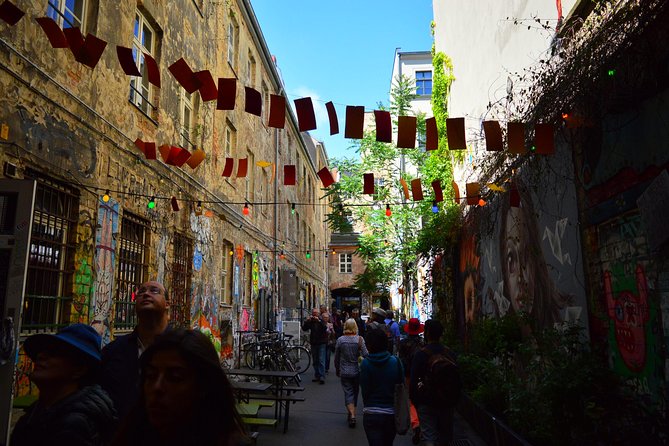
Your walk starts at Die Hackeschen Höfe on Rosenthaler Straße, a set of interconnected courtyards built in the late 19th century. These aren’t just “pretty Berlin buildings.” Your guide helps you see them as a practical hub—where Jewish artisans, merchants, and immigrants helped shape Berlin’s cultural fabric.
This is one of those first stops that makes the rest of the tour easier to understand. After you’ve got a mental picture of how people lived, worked, and mingled in normal city spaces, the later memorials don’t feel like isolated exhibits. They feel like the end of a real story—one that was interrupted.
You’ll likely spend about 15 minutes here, which is just enough time to orient yourself and notice details you might miss if you were wandering alone. No big climb, no pressure—good warm-up energy before the heavier sites.
You can also read our reviews of more tours and experiences in Berlin.


The New Synagogue area at Centrum Judaicum: architecture, remembrance, and community memory
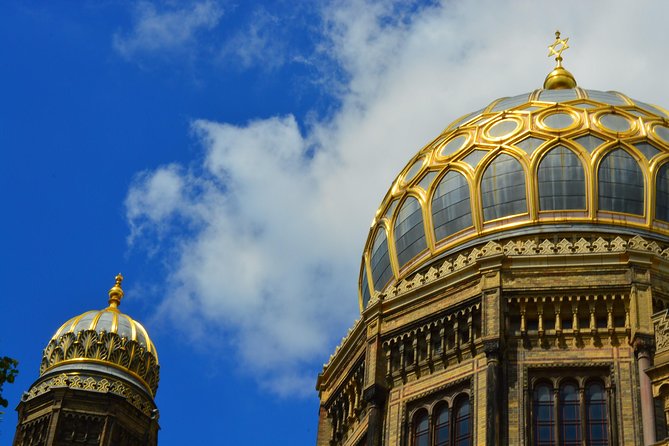
Next you head to the Stiftung Neue Synagoge Berlin – Centrum Judaicum, tied to the restored New Synagogue that originally opened in 1866. Even if you only have time for an exterior moment and a quick orientation, the building’s dome and ornate details make an immediate impression: Jewish life wasn’t a footnote in Berlin. It was visible, designed, and central.
Your guide frames the center as more than a museum. It’s also a place of remembrance and education, built to preserve and promote Jewish heritage in Berlin through exhibitions and learning programs. You also get the chance to view the Missing House site nearby, which adds another layer: memory in the places where something is gone.
This stop runs about 10 minutes in the walking flow. That can sound short, but it works because it pairs architecture with context. If you go in thinking you’ll just “see a synagogue,” you’ll miss the bigger point. The guide pushes you toward understanding what was lost—and how Berlin chooses to mark it.
Practical note: if you’re sensitive to heavy themes, this is the part where you can ask your guide to set the tone for what comes next. A good guide will read your group and pace the emotions.
Otto Weidt Museum: the small workshop where rescue looked like paperwork and stubborn courage
Then it’s Museum Blindenwerkstatt Otto Weidt. This is one of those places where the history feels close to the ground. Otto Weidt was a blind brush maker who protected Jewish workers during the Nazi regime, and the museum is set in the original workshop.
Unlike many memorials that stay broad, this one gets specific about how protection worked. The exhibits tell the stories of the Jewish workers he sheltered and supported, and you’ll learn about the methods Weidt used to keep them safe—down to the kind of false papers and behind-the-scenes influence that could mean survival.
You’ll spend about 25 minutes here, which is perfect. You need time to absorb what the museum is doing: it doesn’t only ask you to feel grief. It shows human decisions—quick thinking, risk, and the cost of helping.
This stop is often described as touching, and it makes sense. It’s not a distant monument. It’s a workplace turned into testimony.
If you’re traveling with kids, this can actually be a strong teaching moment, as long as the group can handle serious topics. Some guides have shown patience with younger travelers on this kind of route, and that matters here.
Gleis 17 Memorial: deportation told through names, dates, and the weight of place
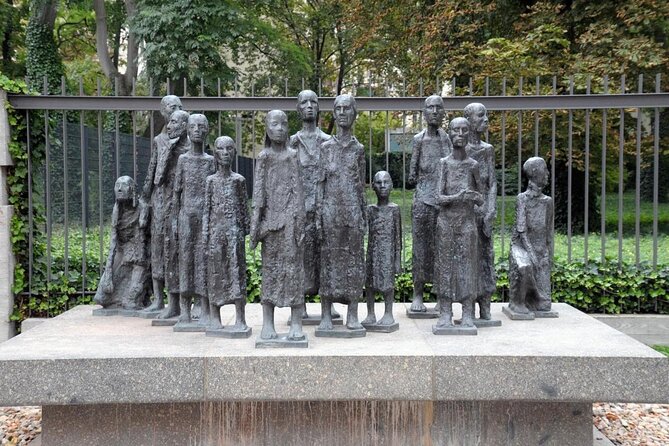
After the workshop, the tour shifts to Gleis 17 Memorial at Grunewald train station. This one is blunt in the best way: it marks the station area where thousands of Jews were forcibly transported to concentration camps and extermination sites between 1941 and 1945.
The installation uses metal plaques embedded in the ground, each bearing names and dates. Your guide helps connect those details to what deportation meant in practice, not just in theory. You’re not asked to guess. You’re given context, so the memorial doesn’t become a vague exercise in sadness.
Time here is about 15 minutes. It’s not long, but it’s intense. If you want to take it in slowly, you can usually ask your guide to pause while you read the plaques or stand still for a minute before moving on.
One thing I like about including Gleis 17 in this kind of private route is that your guide can answer the question everyone has in their head: How did a normal city space become part of that machinery? With a shared-group tour, you might not get enough time for that. Here, you can.
Alter Judischer Friedhof: reading centuries of Jewish names in stone
Next you visit Alter Judischer Friedhof, the Old Jewish Cemetery. The mood shifts again, from forced removal to remembrance that extends across generations.
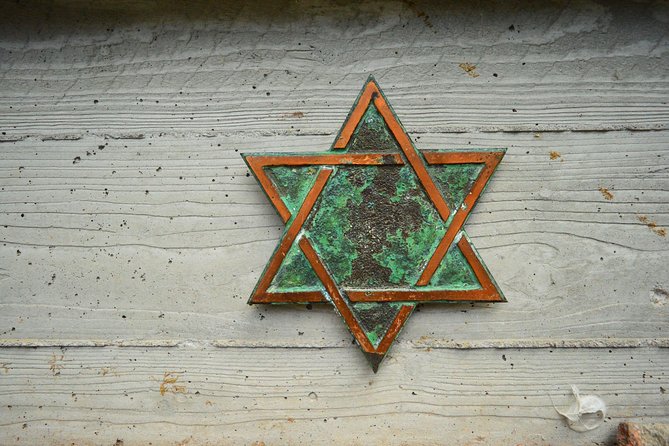
Here you’ll find intricate tombstones and memorials with different artistic styles and epitaphs. Your guide explains that the cemetery is the final resting place of prominent Jewish figures—scholars, philosophers, and community leaders—so it’s not just an old graveyard. It’s an archive you can walk through.
You’ll likely spend around 15 minutes. That’s enough to see the variety of stones and to understand why people come here to reflect. It also helps reset you emotionally before you reach Rosenstraße and the Holocaust Memorial.
If you’ve ever visited cemeteries and wished someone had pointed out what to look for, this is where a guide earns their keep. You’ll be paying attention to lettering, symbols, and the meaning behind the placement—not just standing in silence.



Rosenstraße women’s protest memorial: courage under pressure, not a distant lesson
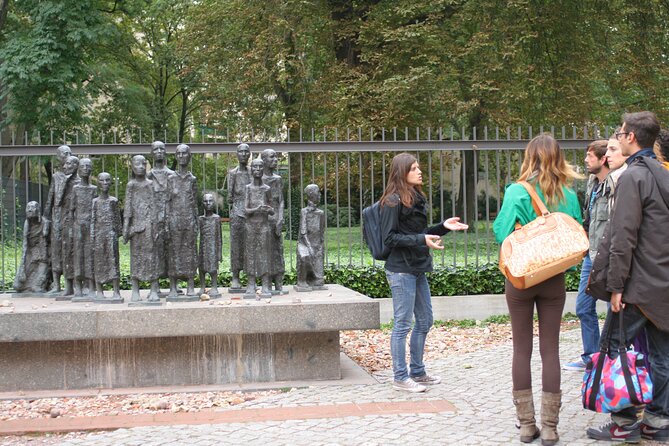
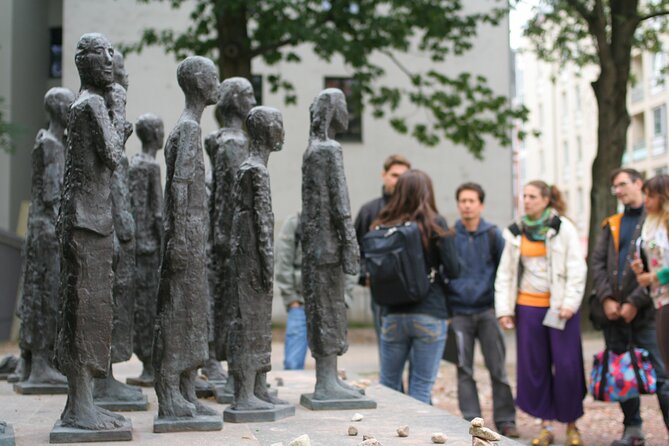
At Rosenstraße you stop at the Block der Frauen memorial, which honours women who protested for the release of their Jewish husbands during the Nazi regime. This is a powerful contrast to a lot of Holocaust-era storytelling that can lean only toward helplessness.
Your guide explains that the protests were in the early months of 1943 and involved days of women demanding their loved ones back. It’s a story of determination in the face of brutality—something that reads differently once you’ve already seen the machinery of persecution at earlier stops.
You’ll spend about 15 minutes here. Expect an inscription describing what happened on the site, giving you the basic timeline and the reasons it matters. The point isn’t to turn away from horror. The point is to show agency—people acting, even when the system was trying to crush every choice.
From a practical standpoint, this is also a good moment for questions. If you want to understand how people could protest in a regime built to prevent dissent, your guide can ground the answer in what was happening on the ground.
Holocaust Memorial (Memorial to the Murdered Jews of Europe): what the walking design does to your brain
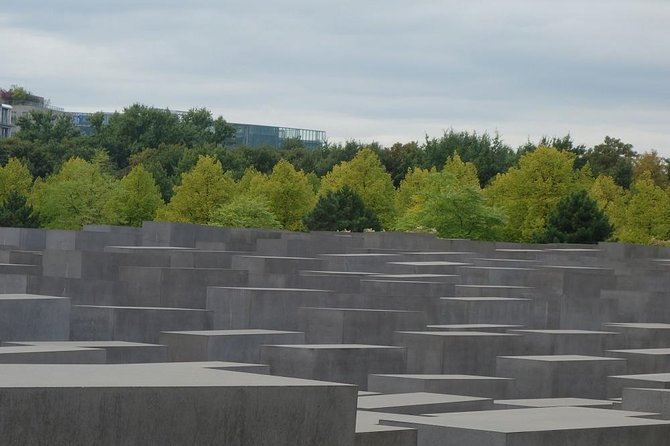
Then you reach Berlin’s Holocaust Memorial, the Memorial to the Murdered Jews of Europe in the center of the city. It was designed by architect Peter Eisenman and opened in 2005, and the layout is a grid of 2,711 concrete slabs with varying heights across a wide, undulating field.
This memorial isn’t about one plaque or one speech. It’s about movement and feeling lost on purpose—then realizing how disorienting that is. As you walk through the slabs, the design encourages introspection. Your guide helps you understand what the design is trying to make you confront, without turning it into a lecture you can’t absorb.
Time here is about 20 minutes. That’s usually enough to walk in, find your way out, and let the emotional impact settle. If you rush, you’ll miss the point. If you slow down, you’ll likely understand why it has such a strong reputation.
If you’re traveling with a group that handles emotions differently, a private guide can flex: one person may want to stand still; another may want to keep moving. You can do both here.
How the pacing works (and why private adds value here)
This tour is about 4 hours of moderate walking, with short stops that add up to a full, connected message. You’re not spending long stretches in transit, and you’re not stuck at one site for so long that the meaning blurs.
The value isn’t only the famous names of the places. It’s the ordering and the explanation that stitches them together: from community spaces to protection stories to deportation mechanisms to remembrance and resistance.
A private guide matters for three reasons:
- You can ask the question you’re afraid to ask. With something this heavy, silence feels heavy too.
- The guide can adjust to your pace. Some guides have adapted the tour in bad weather, so you’re not just pushed along.
- You get a language fit. It’s offered in English, and the experience may be guided in German or Hebrew too.
Also, most stops in this route list admission ticket free, so your money goes toward the guide and time—not extra entry fees at each turn. The one thing to remember: the Berlin transport ticket (AB Zone) isn’t included, and food and drinks aren’t included either. Build that into your day plan.
What this tour is best for
This is a strong pick if you want Jewish heritage in Berlin with clear context, not just a checklist of sights. It’s ideal for first-timers who want the main anchors—Hackesche Höfe, the New Synagogue area, Otto Weidt, Gleis 17, the cemetery, Rosenstraße, and the Holocaust Memorial—put into a timeline you can actually hold in your head.
It can also work well for families with older kids who can handle serious material. Reviews include examples of guides being patient with younger travelers and adjusting for questions, which is a big deal on this kind of route.
If your travel style is more hands-off and you prefer silent sightseeing with audio apps, a private guide may feel like overkill. But if you want guidance to turn places into understanding, you’ll likely feel the payoff.
Should you book the Jewish Heritage Walking Tour of Berlin?
Yes—if you want a focused, private way to understand what Berlin’s Jewish history looks like on the streets today. The strongest reason to book is the combination of undivided attention and stops that connect everyday life, survival efforts, deportation, and remembrance in one coherent flow.
Before you go, be honest about two things: the emotional weight of the memorial sites, and the fact that you’ll do a moderate amount of walking over about four hours. If you bring good shoes and a willingness to slow down at the hard places, this tour earns its price.
If you’d like Berlin’s Jewish heritage to make sense beyond headlines, this is the kind of guided route that turns a city visit into something you actually remember.
FAQ
How long is the Private Jewish Heritage Walking Tour of Berlin?
It runs for about 4 hours.
What is the price per person?
The price is $191.62 per person.
Is this a private tour?
Yes. It’s a private tour/activity, and only your group participates.
Is pickup available?
Pickup is offered.
What languages are available for the guide?
The tour is offered in English, and the guide may be multilingual in English, German, or Hebrew.
How much walking is involved?
There is a moderate amount of walking, so good walking shoes are recommended.
Are admissions included for the stops?
Each stop listed in the route shows admission ticket free, but Berlin Transport AB Zone tickets and food and drinks are not included.
Do I need a Berlin transport ticket?
Yes. A Berlin Transport AB Zone ticket is not included (listed at 2.70 Euro).
Does the tour run in bad weather?
Yes. It operates in all weather conditions, so dress appropriately.
What are my cancellation options?
You can cancel for a full refund up to 24 hours in advance of the experience start time.