REVIEW · ROME
Rome: Ancient Jubilee in the 4 Major Basilicas
Book on GetYourGuide →Operated by Roman Vacations · Bookable on GetYourGuide
Four Holy Doors in one Rome route.
This experience is built for people who want a true Jubilee pilgrimage feel in the middle of a very busy city: since the year 1300, pilgrims have been coming to Rome’s Major Basilicas and entering through their Holy Doors. I like that the goal is simple and concrete, you visit all four official basilicas in one outing. I also like that the guide’s focus turns the sights into a story, from the tomb focus at St. Peter’s to the special Lateran moments tied to 1300. One possible drawback: when you’re inside huge, echoing spaces, you may need to be ready for quiet or muffled guide audio, so plan to stay close and don’t count on hearing every word from far away.
You start near Lungotevere Vaticano at the Fontana di Piazza Giovanni XXIII, then move by air-conditioned private car between the basilicas so you lose less time to traffic. The tour is about 5 hours, and the order can shift with traffic or accessibility, but you’ll cover St. Peter’s, St. Paul Outside the Walls, San Giovanni in Laterano, and Santa Maria Maggiore, each with a guided stop and Holy Door entry support. You’ll also get specific instructions after booking for the pilgrim card and how Holy Door entry will work during the tour—so check your messages after you reserve.
In This Review
- Key Highlights You’ll Care About
- Jubilee Context: Why These Four Basilicas, Why the Holy Doors?
- St. Peter’s Basilica: Holy Door Entry and the Pietà Route
- St. Paul Outside the Walls: Chains, a Newly Excavated Sarcophagus, and a Theodosian Basilica
- San Giovanni in Laterano: Rome’s Cathedral and the 1300-Era Heads of Peter and Paul
- Santa Maria Maggiore: Golden Interiors, Popes Buried Here, and Nativity Relics
- Timing and Logistics: Meeting Point, Dress Code, and Staying in Sync
- Where you meet
- What you must bring / plan
- Weather and pacing
- A heads-up on guide audio
- Transport Included: Why the Car Time Matters in Rome
- Price and Value: What $283.21 Gets You (and What It Doesn’t)
- Who This Tour Fits Best (and Who Might Want to Pass)
- Booking Decision: Should You Book This Four-Basilica Holy Door Tour?
- FAQ
- Which four basilicas are visited?
- How long is the tour?
- Where do I meet the guide?
- What’s included in the price?
- Is food or drink included?
- What should I wear?
- Do I need identification?
Key Highlights You’ll Care About
- Holy Door focus in Rome’s four Major Basilicas: You’re not doing a random church crawl; the route is centered on Jubilee-era entry through the Holy Doors.
- Real guided stops at each basilica: Expect a structured tour at every site, not just time to wander.
- St. Peter’s spotlight: The guide’s route includes Michelangelo’s Pietà and the major saints’ altars and relics, with attention to the High Altar area marking St. Peter’s burial.
- St. Paul’s chains moment: You’ll see the chains associated with St. Paul’s incarceration and also view his newly excavated sarcophagus.
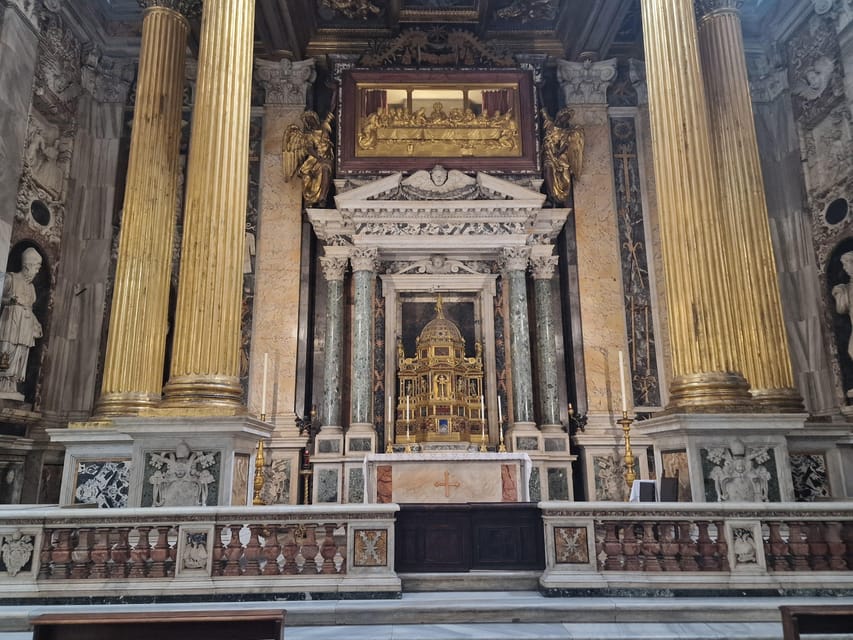
- Lateran’s 1300-era significance: You’ll stand before the heads of Sts Peter and Paul above the altar, connected to the year 1300.
- Santa Maria Maggiore’s standout relics and icons: The tour covers the golden interior, burial sites of various popes, the relics tied to the Nativity crib, and Salus Populi Romani.
Jubilee Context: Why These Four Basilicas, Why the Holy Doors?
The core idea is straightforward. In Jubilee years, the Catholic Church encourages pilgrims to visit the four most important churches in Christendom—Rome’s four Major Basilicas—and to enter them through their Holy Doors. This practice traces back to Pope Boniface VIII and the Jubilee year of 1300, and the whole point is to join a line of pilgrims across centuries, not just tick off famous buildings.
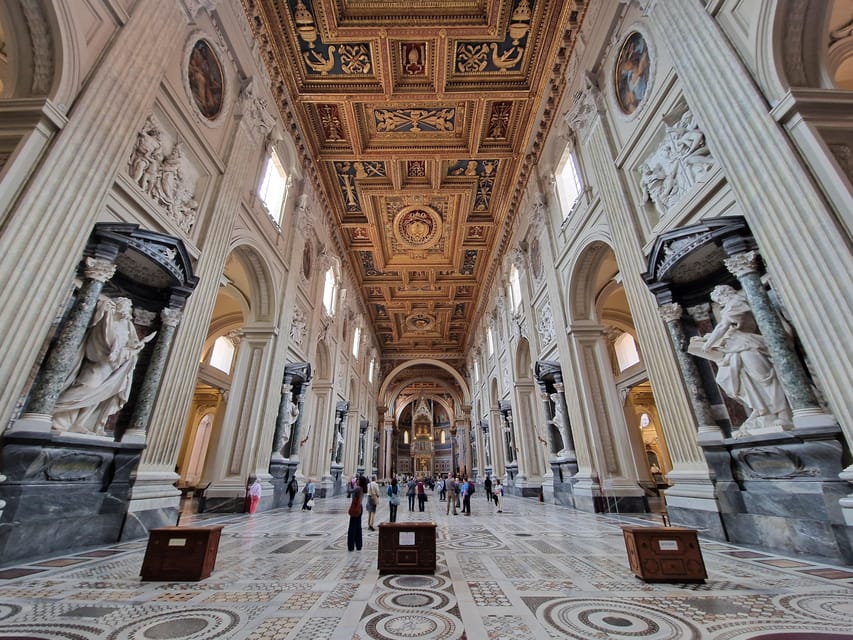
Also, it helps to understand the hierarchy being referenced. There are only four Major Basilicas of this rank, all in Rome. And within them, St. John Lateran (San Giovanni in Laterano) is the top-ranked one—the cathedral of Rome and called the Mother Church of the world. That matters because the Lateran stop isn’t just another ornate interior; it’s treated as the center point of the pilgrimage route.
If you’re coming for meaning as much as for architecture, you’ll probably like how the tour is designed. Each basilica gets a guided explanation tied to the Jubilee purpose, and you’re supported through the official Holy Door entry sequence rather than trying to figure it out solo.
You can also read our reviews of more tours and experiences in Rome.
St. Peter’s Basilica: Holy Door Entry and the Pietà Route
St. Peter’s is where the pilgrimage begins. You start at the Vatican area, then enter through the Holy Door with the guided support. Once inside, the tour is built around key devotional and artistic landmarks, not just big-room sightseeing.
Expect the guide to point out:
- Michelangelo’s Pietà
- Relics and altars tied to major saints
- The way the High Altar area connects with the burial of St. Peter
- The interior history you’ll miss if you just drift
What makes this stop feel special is the combination: you’re seeing art that most people know by name, but you’re also being guided through what it represents within the Catholic story. St. Peter’s can feel overwhelming on your own. With a guide, you’re less likely to spend your time hunting for the right chapel or altar.
Practical note: St. Peter’s can involve security and lines, and you’re moving as a group. Wear clothing that fits the rules (shoulders and knees covered). If you show up in a way that won’t pass the dress code, you’ll lose time.
St. Paul Outside the Walls: Chains, a Newly Excavated Sarcophagus, and a Theodosian Basilica
After St. Peter’s, you’re transported by a private air-conditioned car to St. Paul Outside the Walls, where the remains of St. Paul are kept. This stop is often the most emotionally direct for people because the tour focuses on objects tied to Paul’s imprisonment.
During the guided visit, you’ll see:
- The chains that bound St. Paul during his incarceration and house arrest in Rome
- His newly excavated sarcophagus
- A tour of the rest of the ancient basilica, described as Theodosian in character
Then there’s the feel of it. This church doesn’t try to compete with St. Peter’s scale the same way. Instead, it emphasizes the pilgrimage logic: who Paul was, what happened to him in Rome, and why the site is held in such reverence.
One consideration: because you’re moving through a major church while keeping a group pace, it helps to be ready to listen, not stare. If you’re the type who needs long silent time, you may want to plan a bit of personal reflection before or after the official tour portion.
San Giovanni in Laterano: Rome’s Cathedral and the 1300-Era Heads of Peter and Paul
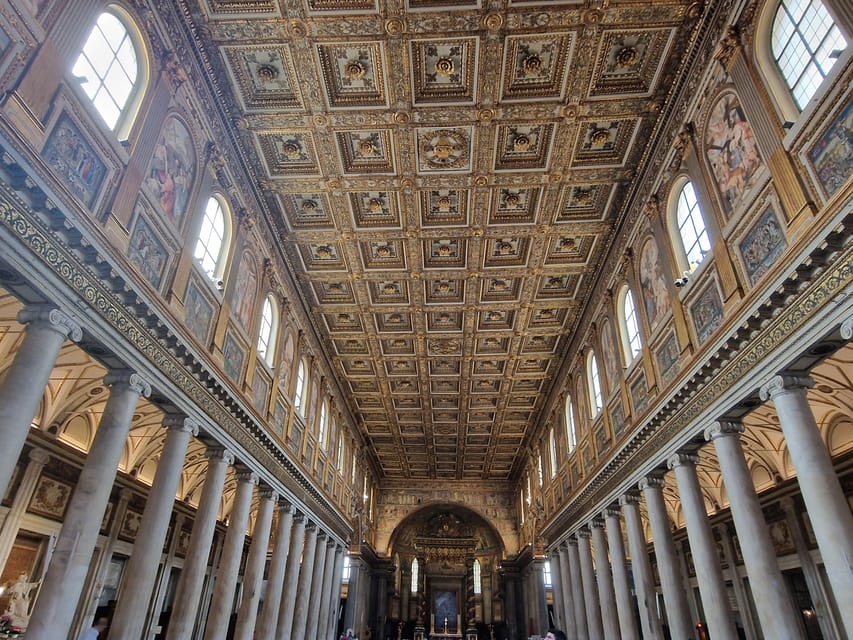
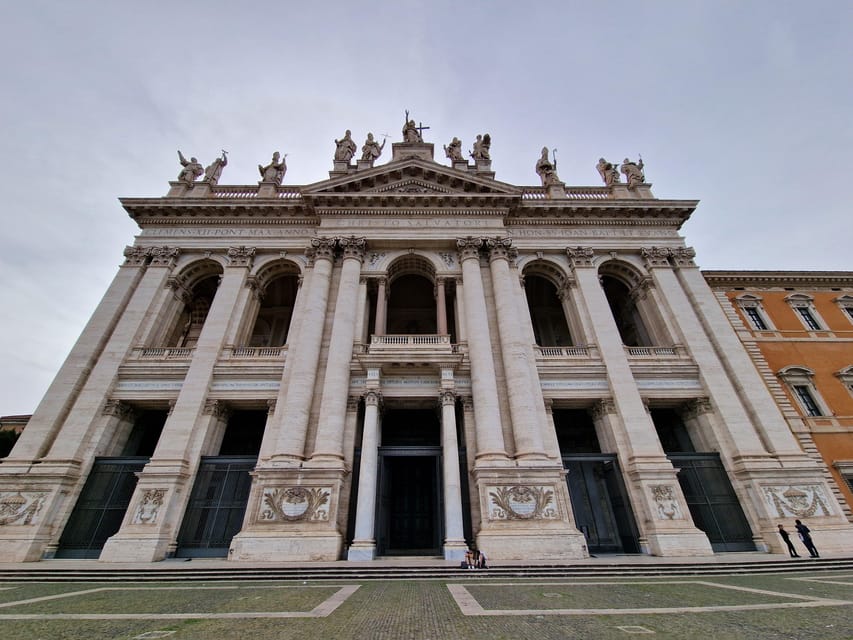
Next comes San Giovanni in Laterano, the Arch-Basilica and the cathedral of Rome. If you want the pilgrimage structure to make sense, this is the anchor stop.
Here, the guide’s tour includes:
- The story of the ancient mosaics
- A guided look at the interior history
- A moment where you stand before the heads of Sts Peter & Paul, brought into the basilica and placed above the altar in 1300
This is the point where the Jubilee theme stops being abstract. The 1300 reference isn’t just a date in a guidebook—it’s built into what you’re being shown, and why your route includes Lateran as the top-ranked major basilica.
If you like religious art and symbolism, this stop will likely reward you. If you prefer pure sightseeing, you might still enjoy it because it gives you a clear reason to be there beyond the walls and columns.
Santa Maria Maggiore: Golden Interiors, Popes Buried Here, and Nativity Relics
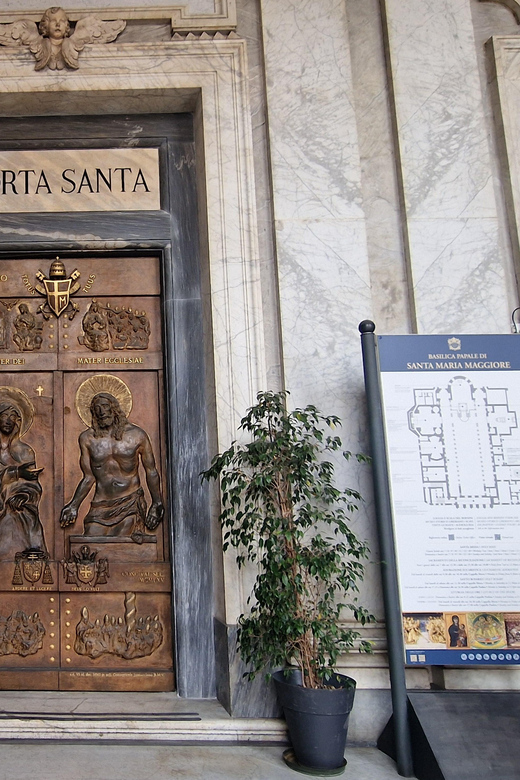
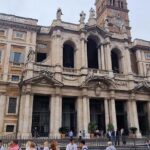
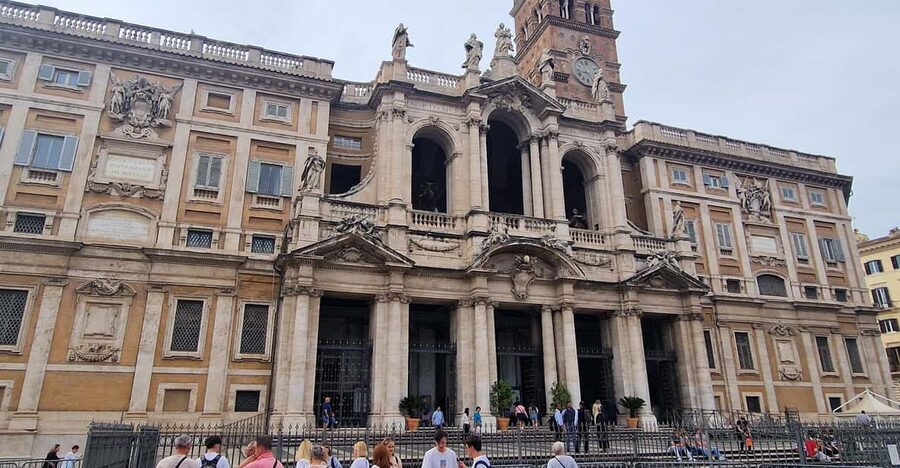
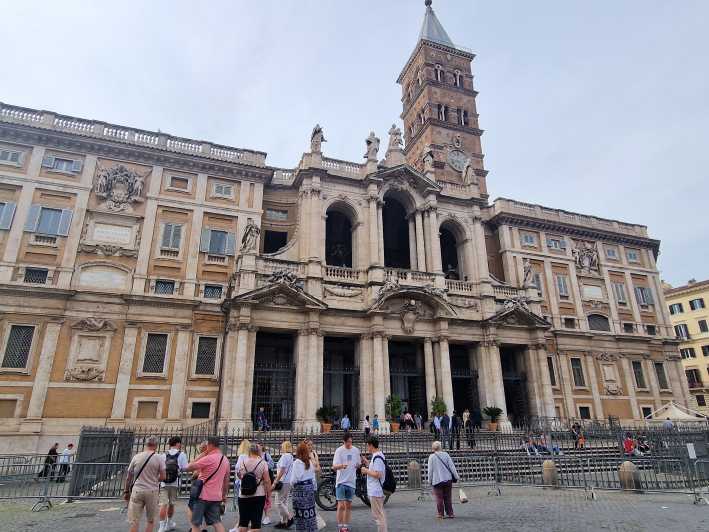
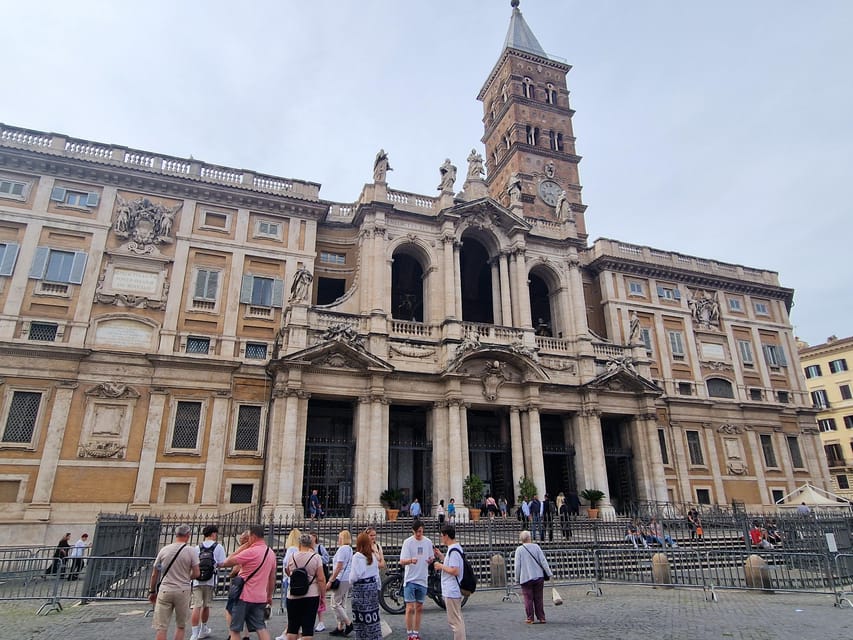
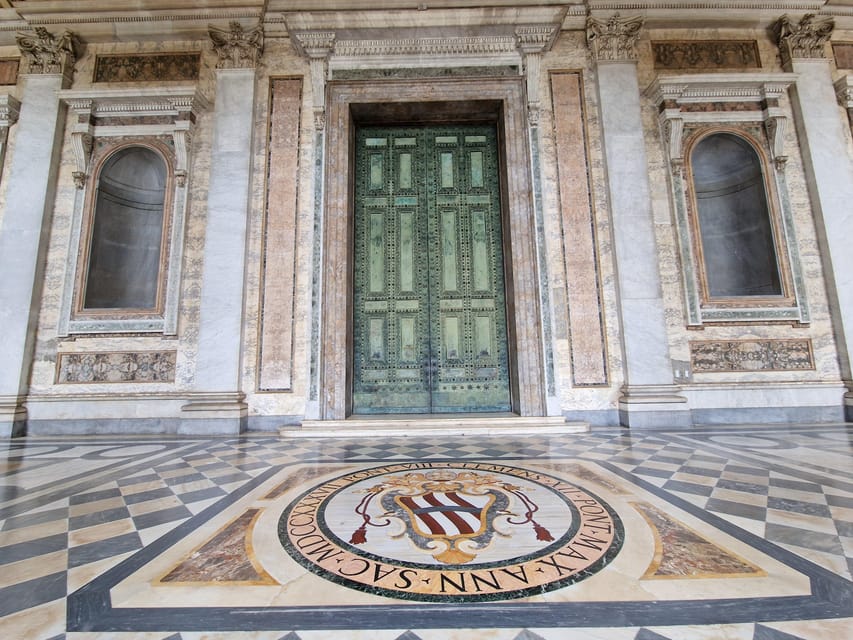
Then you head to Basilica Papale di Santa Maria Maggiore. The tour frames it as one of Rome’s most important Marian churches, and it leans into the visual impact.
The guide route covers:
- The golden interior
- Key features and what they mean
- Different popes buried here
- Relics connected to the crib of the nativity of Christ
- The miraculous icon Salus Populi Romani
What I like about this last basilica stop is that it rounds out the pilgrimage story. You get the St. Peter foundation, the St. Paul “Roman witness” thread, the Lateran cathedral role, and then a strong Marian and nativity connection through Santa Maria Maggiore.
Also, finishing at this basilica means the route lands on a church that many people find visually “complete.” It’s a satisfying close to the four Holy Door goal.
Timing and Logistics: Meeting Point, Dress Code, and Staying in Sync
The tour is about 5 hours. Check availability for starting times, and remember the order can shift due to traffic or accessibility, or closures by authorities.
Where you meet
You meet at the fountain on the wall of Piazza Giovanni XXIII, nearby Lungotevere Vaticano. Look for the guide holding an orange sign with a lion head.
What you must bring / plan
- Bring a valid form of photo ID for each guest, if proof is required.
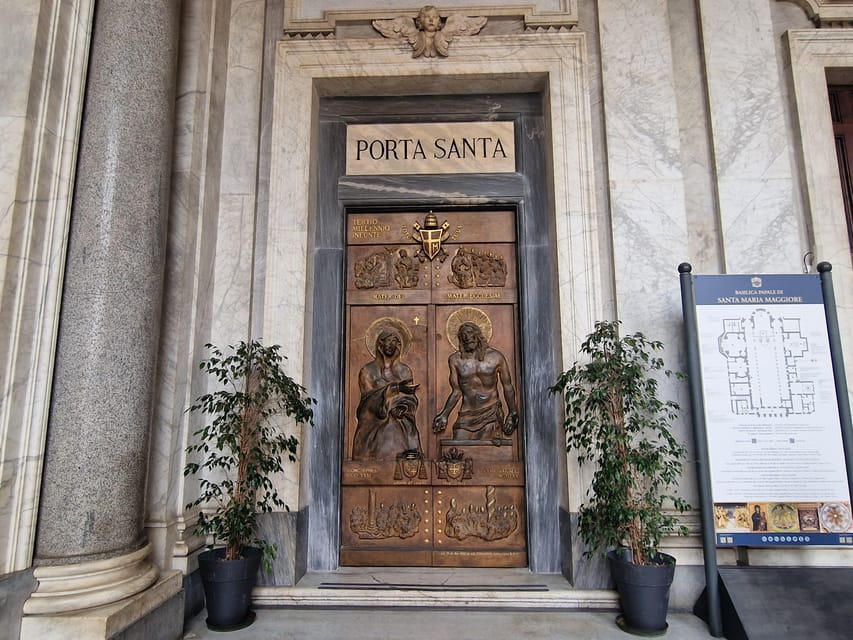
- You’ll get communication after booking with detailed instructions about the pilgrim card and Holy Door entry during the tour.
- Wear clothing that covers shoulders and knees. Sleeveless shirts and short skirts aren’t allowed.
- Pets are not allowed.
Weather and pacing
Tours proceed in all weather unless a site is closed by authorities for safety. Bring bottled water, sunscreen, a hat, and even an umbrella if rain is possible.
A heads-up on guide audio
One real downside to be aware of is that some basilicas can make it hard to hear the guide clearly, especially if you’re not right next to them. In my view, this tour rewards staying attentive and close to the front during the quieter interior sections. If you’re sensitive to audio, arrive early, stay near the guide, and don’t assume you’ll catch every word from the back.
A related practical tip: don’t wait until you’re desperate to handle restroom needs. If you want clear timing, ask early where bathroom breaks fall, because the tour pace can be tight inside.
Transport Included: Why the Car Time Matters in Rome
This is not just four churches with walking between them. You’ll use private air-conditioned chauffeured transport between stops, which matters in Rome.
Why? Because you’re dealing with:
- Timing windows inside major basilicas
- Crowd flow and security areas
- Traffic and the reality of moving a group
If you tried to do this on your own, you’d likely lose time figuring out transit and how the Holy Door entry works each day. Here, the transport is part of the value package, and it keeps the pilgrimage feeling intact instead of turning into logistics.
Price and Value: What $283.21 Gets You (and What It Doesn’t)
At $283.21 per person for about 5 hours, you’re paying for coordination more than for souvenirs.
Included:
- Entry to each site
- An expert local guide
- Transport during the tour
Not included:
- Food and drink
- Any temporary exhibitions or special events that may be excluded
Here’s how I’d judge the value. If your main objective is the Holy Doors experience across all four basilicas, having a guide to run the route and handle the official entry process is the big benefit. You’re also getting structured guided content at each stop, which is where self-guided visits often feel flat.
Where value might feel lower is if you’re expecting lots of extra comfort (like audio devices) or more frequent breaks. If clear communication and rest planning are high priorities for you, go in with a flexible mindset and be proactive about asking.
Who This Tour Fits Best (and Who Might Want to Pass)
This tour is a strong match if:
- You want the Jubilee pilgrimage experience, not just architecture
- You care about the religious significance behind the art and relics
- You’d rather have a guide connect the dots between St. Peter, St. Paul, Lateran, and Santa Maria Maggiore
- You appreciate a route that reduces Rome transit stress
It may be less ideal if:
- You need very frequent breaks or highly planned restroom timing
- You know you struggle to hear in large interior spaces and don’t like whisper-level audio
- You’re looking for a casual, slow museum-style day
Booking Decision: Should You Book This Four-Basilica Holy Door Tour?
If your goal is to do Rome’s four Major Basilicas in a Jubilee-style way, with Holy Door entry and guided help at each stop, I think this is a smart booking. The route is purposeful, and the guide-driven storytelling turns the day from a checklist into something closer to what pilgrims came for.
On the flip side, don’t treat this like a leisurely stroll. It’s a concentrated pilgrimage day in four major churches, with strict clothing rules and a pace you’ll need to match. If you’re prepared for that—and you value the official Holy Door experience—this is the kind of tour that can leave you feeling like you really participated, not just observed.
FAQ
Which four basilicas are visited?
The tour includes St. Peter’s Basilica, St. Paul Outside the Walls, Basilica di San Giovanni in Laterano (San Giovanni in Laterano), and Basilica Papale di Santa Maria Maggiore.
How long is the tour?
It lasts about 5 hours. Starting times vary, so check availability for the day you want.
Where do I meet the guide?
You meet at the fountain on the wall of Piazza Giovanni XXIII, near Lungotevere Vaticano. Look for the guide holding an orange sign with a lion head.
What’s included in the price?
The tour includes entry to each site, an expert local guide, and transport during the tour.
Is food or drink included?
No. Food and drink are not included.
What should I wear?
You must wear clothing suitable for church visits: shoulders and knees must be covered. The tour also lists restrictions like no short skirts and no sleeveless shirts.
Do I need identification?
Proof of identification may be required, so bring a valid form of photo ID for each guest.