REVIEW · KATHMANDU
UNESCO Five World Heritage Tour in Kathmandu
Book on Viator →Operated by Himalayan Advisor Pvt. Ltd. · Bookable on Viator
Swayambhunath to Boudhanath in one long day. This private UNESCO tour strings together Kathmandu’s most important Hindu and Buddhist landmarks with entry fees handled and hotel transfers within the Ring Road area (including Bouddha). I like that the route is built for first-timers who want a lot of meaning per hour, not just photos. The trade-off is the schedule is tight, so you’ll want comfortable shoes and a patient mindset for absorbing lots of history.
Two things I especially like: you don’t have to negotiate taxi rides, and your guide keeps the story clear across very different sacred sites. One possible drawback is that food and drinks aren’t included, so you’ll need to manage your energy during a 7 to 8 hour day.
In This Review
- Why this Kathmandu Valley UNESCO day is a standout
- Price and what $130 buys you (and why it can be good value)
- How the day actually flows: from Swayambhunath to Boudhanath
- Swayambhunath and Amideva Buddha Park: the sacred “overlap” moment
- Kathmandu Durbar Square: royal spaces, rebuilding, and a living goddess
- Patan’s royal palace area: where Newar artistry shows up fast
- Pashupatinath and Boudhanath: two pilgrimage anchors, two different atmospheres
- Guides are the difference maker here (Tej, Shanti, Sarita, and more)
- Practical tips so you don’t feel rushed
- Who this tour suits best (and who should consider a lighter option)
- Should you book this UNESCO Kathmandu Valley tour?
- FAQ
- What time does the UNESCO Five World Heritage Tour start?
- How long is the tour?
- Which areas are covered on this tour?
- Is hotel pickup and drop-off included?
- Are entry fees included?
- Is this a private tour?
- What transportation is provided?
- Is food included?
- What if I need to cancel?
Why this Kathmandu Valley UNESCO day is a standout
- Private car pickup/drop-off inside the Ring Road (including Bouddha) means less time wrangling transport
- Seven to eight hours that hits both Kathmandu and Patan’s UNESCO hotspots in a single stretch
- Admission tickets included across the sites, so you’re not paying multiple times or searching for ticket counters
- A guide who connects architecture to belief, from Buddhist stupas to Hindu pilgrimage complexes
- A focus on the Kathmandu Valley blend of cultures, so you’ll understand why these places feel both shared and distinct
Price and what $130 buys you (and why it can be good value)
At $130 per person for a full-day private tour, the value hinges on what’s covered. This price includes transport by private car, a professional guide, entry fees for all heritage sites, and hotel pickup/drop-off within the Ring Road area (including Bouddha). For Kathmandu, that combination matters because your time is limited, and entry fees plus a guided route can add up fast if you plan it alone.
Also, it’s typically booked about 55 days in advance, which is a quiet signal that the demand is real. When a tour like this fills, it’s usually because people want the convenience plus the context—the two things that are hard to recreate when you’re juggling tuk-tuks and ticket lines.
The main reason I think this price can make sense for you is simple: you’re paying for a structured day. If you enjoy taking your time, you might find it a bit packed. If you’re on a short trip and want maximum payoff, it’s a strong deal.
You can also read our reviews of more tours and experiences in Kathmandu.
How the day actually flows: from Swayambhunath to Boudhanath
You start at 9:00 am, then you’re out for roughly 7 to 8 hours. It’s one of those days where the rhythm is more important than the exact minute: arrive, look, listen, move. The tour covers 16 stops, but they’re paced with short visits inside larger sites, so you get variety without only seeing one courtyard or one temple complex.
Here’s the general arc:
1) Start with viewpoints and sacred symbols at Swayambhunath, then take a quick sidestep to a nearby Buddha-focused park
2) Work through Kathmandu Durbar Square and its tightly packed royal and religious structures
3) Cross into Patan (Lalitpur) for Durbar Square, the royal palace area, and the Patan Museum
4) Finish with the two big pilgrimage anchors: Pashupatinath (Shiva/Hindu complex) and Boudhanath (Buddhist stupa)
This flow is smart because it mirrors the way many people actually experience the valley: a high-energy blend of lookouts, courtyards, and pilgrimage sites, with different artistic styles showing up block after block.
Swayambhunath and Amideva Buddha Park: the sacred “overlap” moment
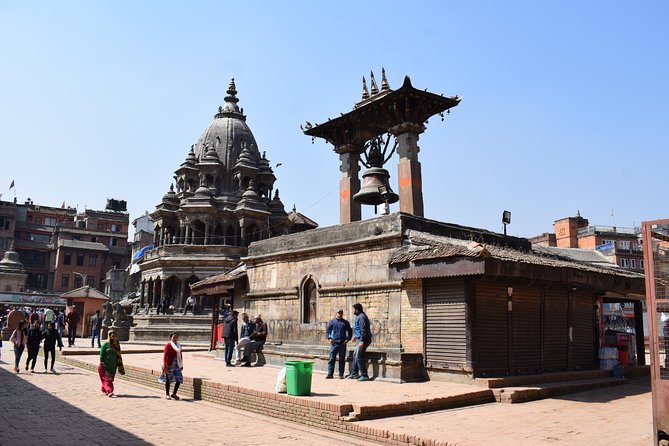
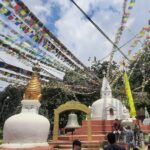
The first stop is Swayambhunath, where the sacred ground matters to both Buddhist and Hindu communities. That dual importance is the point here. The site isn’t just a single-faith museum piece; it’s a living example of how Kathmandu’s religious life has braided together over time.
Right near Swayambhunath is Amideva Buddha Park, a short stop (about 15 minutes) with three large statues of Shakyamuni Buddha. I like this break because it shifts your eyes from the main stupa complex to a more open, restful area. You get a reset before the day turns into courtyards and dense temple clusters.
A practical consideration: these early stops set the tone for the whole day. If you’re already tired, it can still be worth leaning in—this is where the guide’s explanations can make everything else click.
Kathmandu Durbar Square: royal spaces, rebuilding, and a living goddess
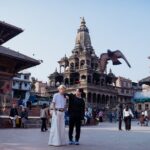
Next comes Kathmandu Durbar Square, one of the royal squares of the Kathmandu Valley. It’s also a place where you’ll notice things are still being reconstructed, so it doesn’t feel like a sealed-off relic. That matters because it makes the architecture feel real. You’re not only seeing what’s old—you’re seeing what’s been repaired and kept alive.
Within the square, the tour adds several focused stops:
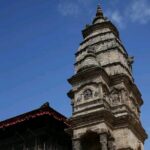
- Basantapur Tower: a quick, scenic stop tied to the Durbar Square landscape
- Degu Taleju Temple: connected to the area’s long royal timeline, built in 1564
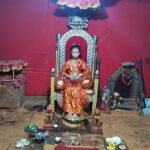
- Kumari Chowk: the courtyard associated with the Kumari, the girl chosen as the town’s living goddess until puberty
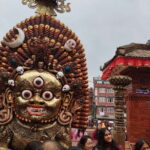
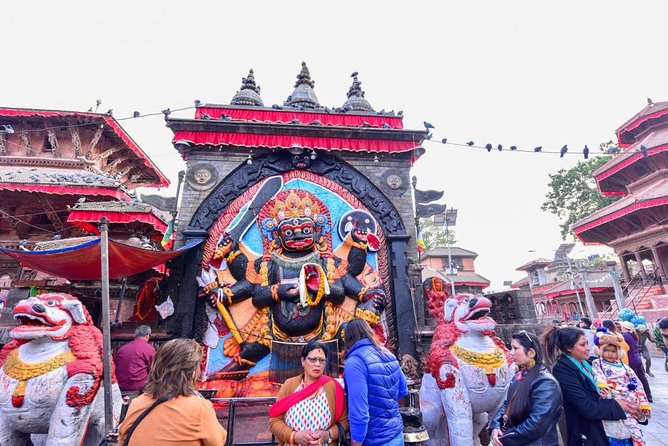
- Kaal Bhairab: a statue of Bhairav within Kathmandu Durbar Square
If Kumari Chowk is on your must-see list, treat this as your “slow down and look” moment. Even with short time here, it’s one of those places where the symbolism is as important as the stones.
Possible drawback to plan for: Durbar Square is compact and information-heavy. If you go in expecting only sweeping views, you may miss some of the details that make it special. Let your guide set the pace, and you’ll get more out of the short visits.
Patan’s royal palace area: where Newar artistry shows up fast
The route continues into Patan (Lalitpur). Start with the Patan Royal Palace area around Durbar Square. It’s described as among the oldest royal palaces in Patan, and the site area points you toward key temple and cultural landmarks like Krishna Temple and Tulaja Devi Temples, plus the Patan Museum area.
After that, you go into Patan Durbar Square, where the focus shifts to Newar architecture. This is a good stop for you if you like seeing how a local community’s style shapes sacred spaces—temples, artistic creations, and the broader “royal courtyard” layout all reinforce that the city has its own visual language.
Then you’ll hit a few more fast but meaningful points:
- Taleju Mandir Temple: rebuilt after a fire in 1676 by Srinivasa Malla
- Patan Museum: worth it if you want context. It’s described as a place with old statues, carved windows, and wooden pillars—exactly the kind of details that help you understand what you just saw outside
- Golden Temple (Hiranya Varna Mahavihar): a 12th-century pagoda-style temple with bronze statues, described as covered in silver and golden decorations, with a golden image associated with Lord Buddha
- Vishwanath Mandir Temple: built during the reign of Siddhi Narsingh Malla, dedicated to Shiva
- Bhimsen Temple: built in 1680 by Srinivasa Malla, worshiped as a god of business and trade by the Newar community
I like that Patan doesn’t just feel like a second round of Kathmandu. The sites here feel more “craft-forward.” Even when the tour keeps moving, you’re constantly being pointed toward specific things to notice: the temple style, who the space honors, and which historical ruler tied their name to it.

Pashupatinath and Boudhanath: two pilgrimage anchors, two different atmospheres
The final stretch leans big and iconic.
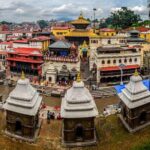
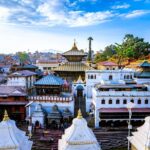
First is Pashupatinath Temple, a Hindu temple complex with over 500 shrines and temples and described as the main temple for Shiva devotees. It’s not just one building—it’s a whole complex, so the guide’s storytelling matters because your eyes can only catch so much at once.
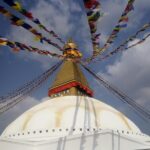
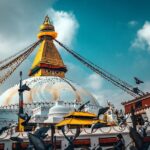
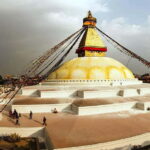
Then comes Boudhanath Stupa, one of the best-known Buddhist landmarks in the Kathmandu Valley. This stupa is described as 36 meters high, dome-shaped, surrounded by prayer wheels and picture carvings of Buddha. Boudhanath is usually the kind of place where you realize how Buddhism looks when you’re surrounded by it: the repetition, the symbols, the steady rhythm.
Why this ending works: after a long day of courtyards and multiple temples, these two pilgrimage anchors give you scale. You can feel the difference between a complex meant for a huge Shiva tradition and a stupa designed for Buddhist devotion and meditation routines.
Guides are the difference maker here (Tej, Shanti, Sarita, and more)
The biggest praise across guides is consistent: people love how the guide turns stones into stories. Names you’ll see in feedback include Tej, Shanti (also spelled Shanthi), Sarita, and Rabina. The common thread is service-minded professionalism and the ability to answer questions with real confidence.
That matters for you because many of these sites can feel like an overload if nobody explains the connections. A good guide helps you understand what you’re looking at in Kathmandu Durbar Square versus Patan, and how a place like Swayambhunath can feel Hindu and Buddhist at the same time.
You’ll also hear from past guests about guides being flexible with timing, patient when questions stretch the day, and keeping everything stress-free even when the itinerary is packed. If you tend to ask lots of questions—or if you just like learning as you walk—this is the kind of tour that rewards your curiosity.
Practical tips so you don’t feel rushed
This is a lot of stops in one day, and the goal is to make the day feel smooth. You can help by planning a few basics:
- Wear shoes that handle uneven stone and lots of walking between temple clusters
- Plan for food since food and drinks aren’t included. A simple snack strategy can prevent a late-day energy crash
- Bring a charging plan for photos. You’ll likely want to capture stupa and square details, not only wide angles
- Expect a short look at many highlights. The best mindset is curiosity, not checking off a checklist
- Use the guide’s timing. If you try to rush ahead, you’ll miss the explanations that make the sites make sense
If you’re the kind of traveler who likes religion-and-architecture context, you’ll love the pacing. If you prefer slow museum-style sightseeing, you may find it too “move, look, move” for your taste.
Who this tour suits best (and who should consider a lighter option)
This tour fits you best if you:
- are in Kathmandu for a short stay and want a curated day of UNESCO sites
- care about how Hindu and Buddhist traditions show up in architecture and public space
- want private transport plus a guide and don’t want to spend your day organizing logistics
- like learning from guides who can handle questions and connect the dots
You might want something lighter if you:
- need lots of downtime between major stops
- don’t enjoy dense, information-heavy days
- are very sensitive to long walking and constant movement
Should you book this UNESCO Kathmandu Valley tour?
My take: if you’re trying to make the most of limited time and you value context over wandering, this is a solid booking. The combination of private car, hotel pickup/drop-off within the Ring Road, entry fees included, and a professional guide creates a smooth day that’s hard to replicate on your own.
Book it if your priority is a high-signal tour: the main sacred sites, strong explanations, and a route that covers both Kathmandu and Patan without wasting hours figuring things out. Skip it only if you know you’ll struggle with a packed schedule or you prefer food breaks and downtime as part of the experience.
FAQ
What time does the UNESCO Five World Heritage Tour start?
The start time is 9:00 am.
How long is the tour?
It runs about 7 to 8 hours.
Which areas are covered on this tour?
The tour focuses on the Kathmandu Valley’s UNESCO-listed World Heritage Sites, including Kathmandu Durbar Square, Patan Durbar Square and Royal Palace area, Swayambhunath, Pashupatinath, and Boudhanath.
Is hotel pickup and drop-off included?
Yes. Pickup and drop-off are included inside the Ring Road area, including Bouddha.
Are entry fees included?
Yes. Entry fees for all heritage sites are included.
Is this a private tour?
Yes. It’s a private tour/activity, and only your group participates.
What transportation is provided?
Transport is by private car.
Is food included?
No. Food and drinks are not included.
What if I need to cancel?
Free cancellation is available up to 24 hours in advance for a full refund. If you cancel less than 24 hours before the start time, the amount paid is not refunded.