REVIEW · SIEM REAP
Siem Reap: Banteay Srei and Grand Circuit Heritage Tour
Book on GetYourGuide →Operated by Journey Cambodia · Bookable on GetYourGuide
Angkor without the usual crush. This Siem Reap day tour is built for people who want more than the main Angkor hits, with Banteay Srei carvings and a calmer feel thanks to small-group attention. I also like the practical care on the ground: air-con transport, bottled water, and cool towels that make the walking part way easier.
The one catch is the money math. The $18 tour price is only part of the story because temple/Angkor access fees run extra at about $37 per person, and the day is long enough that heat and insects can become the main opponents.
In This Review
- Key things I’d watch for before you go
- Price and logistics: the real value check
- Your first big stop: Preah Khan’s “ruins with a pulse”
- Neak Pean: a water-temple break that isn’t just scenery
- Lunch in the middle of the day: plan for heat and refuel
- Banteay Srei: the smaller temple that hits hardest
- Pre Rup for sunset: the atmospheric end to the day
- What the guides and drivers add (and why small groups matter)
- Walking and comfort: what to expect during the 9-hour day
- Who this tour fits best (and who should skip it)
- Should you book the Banteay Srei and Grand Circuit Heritage Tour?
- FAQ
- What temples are included on this tour?
- How long is the tour?
- What is the price, and are temple fees included?
- What does the tour include besides the guide?
- Where do pickups happen?
- Is this tour suitable for kids or wheelchair users?
Key things I’d watch for before you go
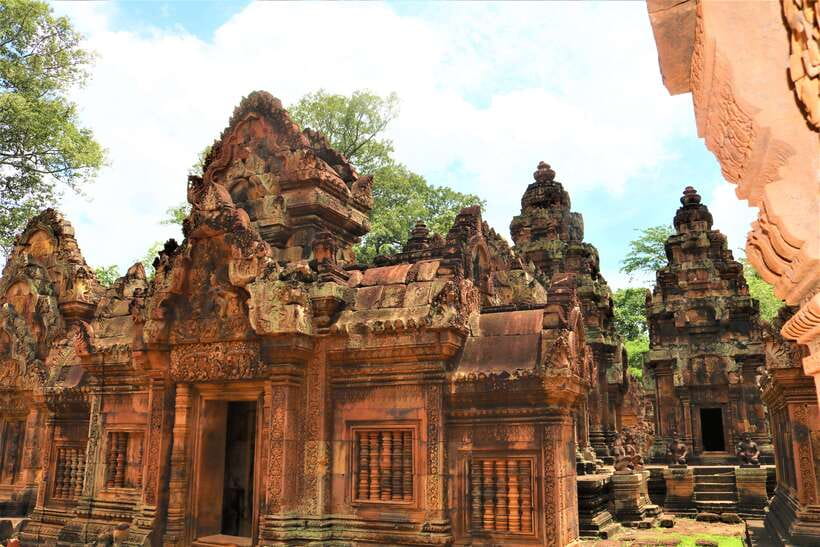
- Banteay Srei’s sandstone reliefs: smaller site, but the carving detail is the whole point.
- Preah Khan’s root-and-ruin atmosphere: a visual contrast to the big, famous temples.
- Neak Pean and Jayatataka Baray: the “water-temple” feeling makes this stop memorable.
- Pre Rup sunset timing: you’ll end with views, and rain can shift how long you stay.
- Guide tech and photo help: many guides use tablets to explain what you’re seeing and where to stand.
Price and logistics: the real value check
At $18 per person, the headline price looks like a bargain. The value shows up in the day design: you’re not just being dropped at sites. You get an experienced English-speaking guide, air-conditioned van rides between temples, plus bottled water and cool towels. There’s also a lunch stop included, with beer, coffee, and tea listed as part of the day.
Now do the math. Temple entrance fees are not included, and you’ll need to plan for about $37 per person on top of the tour cost for the Angkor Pass/temple access. If you’re already buying an Angkor multi-day pass, you might still see an additional surcharge linked to your Angkor access on the day of this activity—so treat the total as tour price plus Angkor access.
Practical timing: plan for a full day. You leave your hotel around 8:00 am and return after about 9 hours. One nice touch is that the exact pickup time depends on where your hotel is in Siem Reap city, and you’ll be told the day before.
One more practical note: shorts aren’t allowed. Bring outdoor clothing and plan for a lot of sun exposure. Sunglasses, a hat, and insect repellent are worth packing.
You can also read our reviews of more tours and experiences in Siem Reap.
Your first big stop: Preah Khan’s “ruins with a pulse”
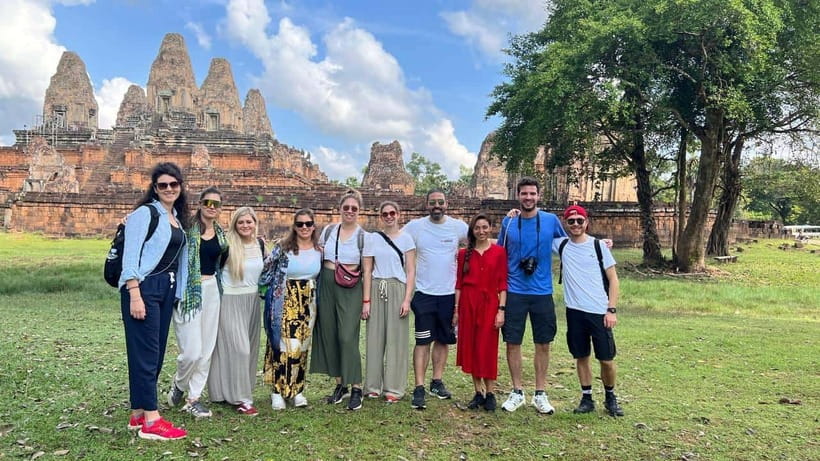
Preah Khan is a strong start because it feels different from what most people expect from Angkor. You’ll arrive for a photo stop and then a guided visit with time for walking. The site reads like a mix of carvings and collapse: stone structures in various states of ruin, plus the signature look of tree roots working their way into the temple.
What makes this stop work for me is the contrast factor. You’ll be seeing the Grand Circuit outside the main Angkor core, but Preah Khan still has that dramatic “this place is alive” feel. It’s also historically important: the construction is commissioned by Jayavaraman VII, built in honor of his father. So even when you’re looking at roots and crumbling blocks, the guide can anchor you in the why.
Preah Khan is also currently being restored by the World Monument Fund. That matters because you’re likely to notice different restoration stages across the complex. When stone is stabilized, it changes how you read the architecture in the moment—so pay attention to what looks newly tended versus what feels more weathered.
If you’re a photographer, you’ll probably appreciate that most guides take time to point out picture spots. Several guide reviews mention photo support and best-angle guidance, and some even show old images on a tablet so you can compare how things look now.
Neak Pean: a water-temple break that isn’t just scenery
After Preah Khan, you’ll head to Neak Pean for another photo stop and guided walk. This is one of those stops that can be easy to skip if you’re chasing only the biggest names—but it’s exactly the kind of “why is this here” temple that makes a heritage circuit worth doing.
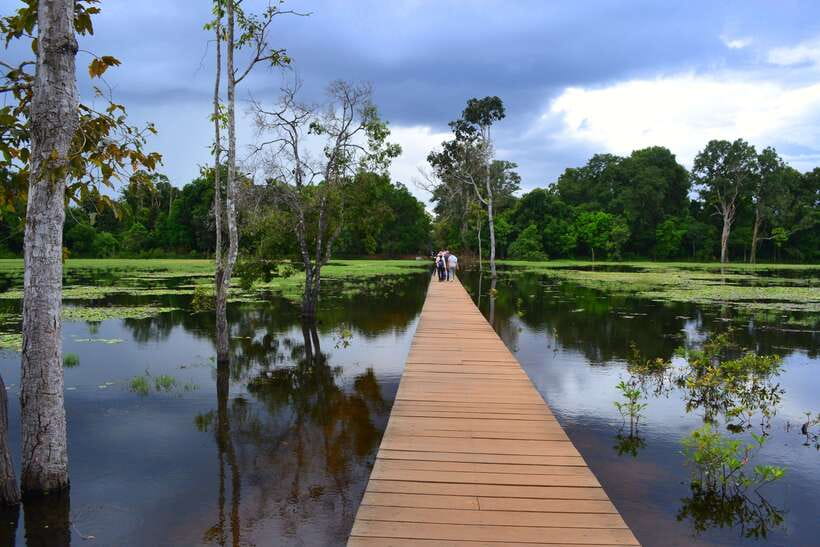
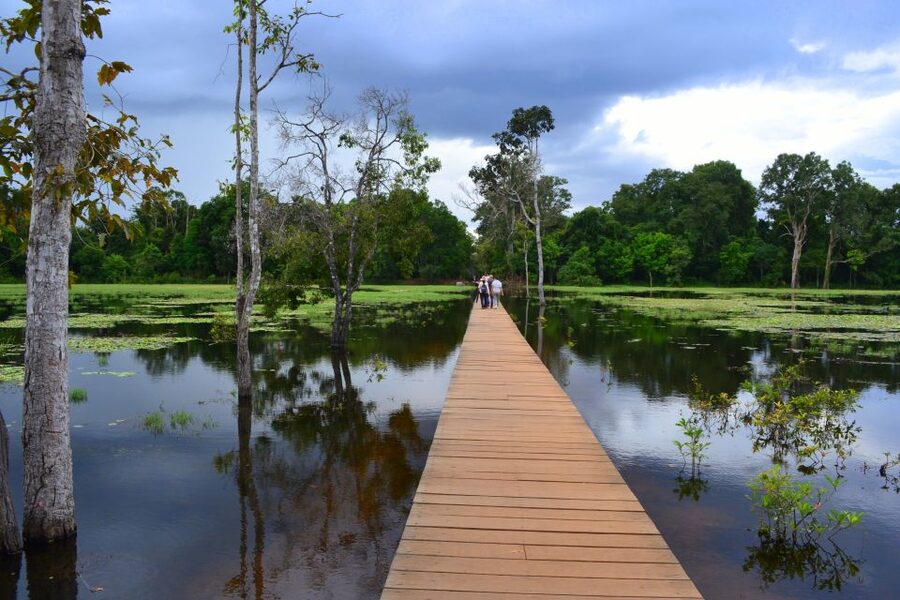
Neak Pean sits on an artificial island with a Buddhist temple on a circular island in Jayatataka Baray. That single detail changes the whole mood. Instead of feeling like you’re walking through a classic stone courtyard, you’re reading a temple-plan built around water and reflection, where the geography is part of the design.
In practical terms, Neak Pean is also a good pacing reset. You’re still walking and exploring, but it’s usually less exhausting than some larger, hotter circuits. If you’re traveling in dry season, it can feel bright and open. If you’re in rain season, you’ll want to watch your footing.
Lunch in the middle of the day: plan for heat and refuel
Between temples you’ll stop at a local restaurant for lunch. Lunch is included, and beer, coffee, and tea are listed too, so it’s not just a quick snack break.
Keep your expectations realistic. This is still Cambodia, still Siem Reap, and it can still be hot and humid. If you want to keep enjoying the temples instead of rushing through them, use this as your reset: hydrate, eat something filling, and use the break to check your camera batteries and refill water when you’re back in the van.
One small tip that helps: wear breathable outdoor clothing and keep your hat. The morning starts early, and the afternoon sun can feel more intense than you expect.
Banteay Srei: the smaller temple that hits hardest
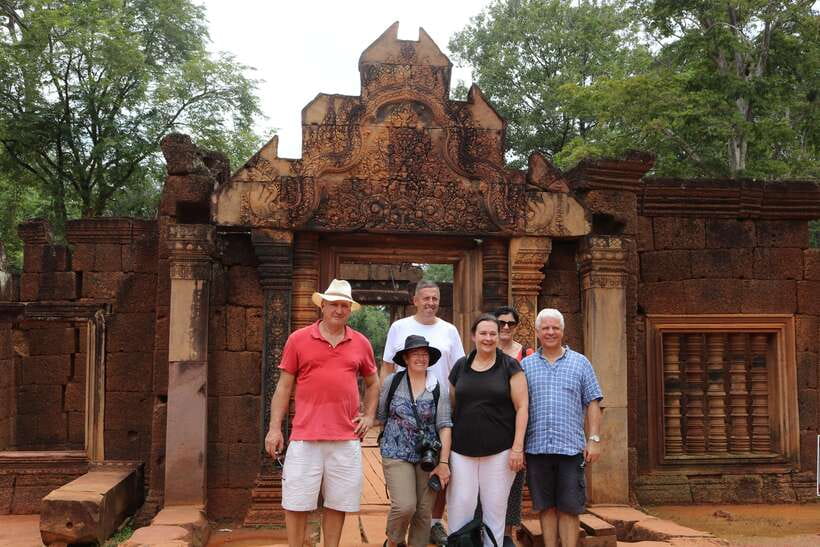
Banteay Srei is the emotional highlight for a reason. This is the stop that keeps getting called out because it’s smaller, but the carving work is on another level.
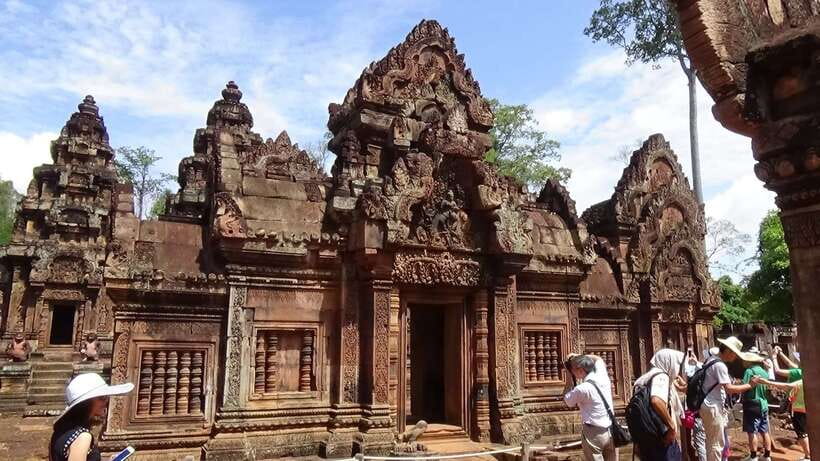
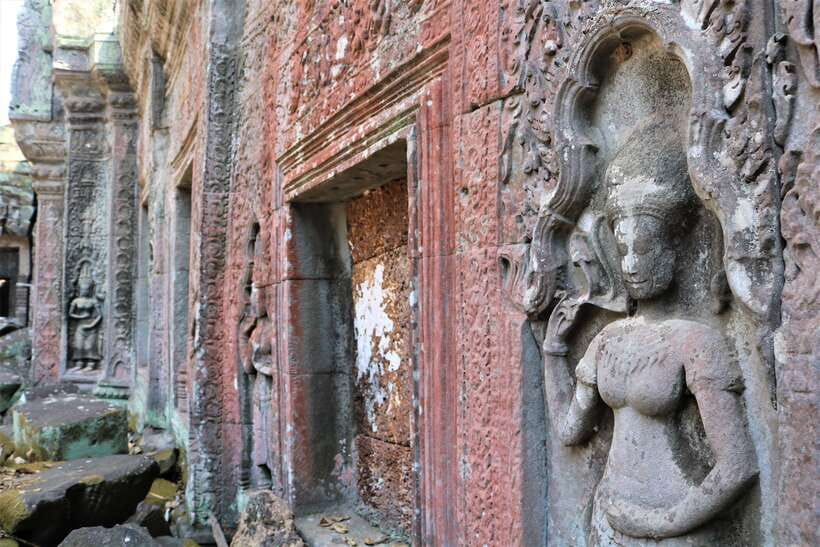
The temple is described as a delicately carved and well-preserved sandstone structure. The reliefs are regarded as among Cambodia’s finest. And yes, you’ll see a lot of tiny details—scenes, faces, ornamentation—so it helps if your guide slows you down long enough to actually look.
There’s also an important modern history detail that adds weight to the visit. Banteay Srei was only accessible again starting in the late 1990s, after the Khmer Rouge left the area. That means your visit is not just about art; it’s also about a site that reopened to the public after a period of devastation and disruption.
If you’ve already been to Angkor Wat and Ta Prohm, Banteay Srei can feel like a different genre of greatness. Big temples give you scale. Banteay Srei gives you precision.
A practical caution: because you’re looking at fine carving detail, you’ll probably want to slow your pace. Don’t try to power through. This is a place where you’ll enjoy the experience more if you take time at fewer spots instead of sprinting for photos.
Pre Rup for sunset: the atmospheric end to the day
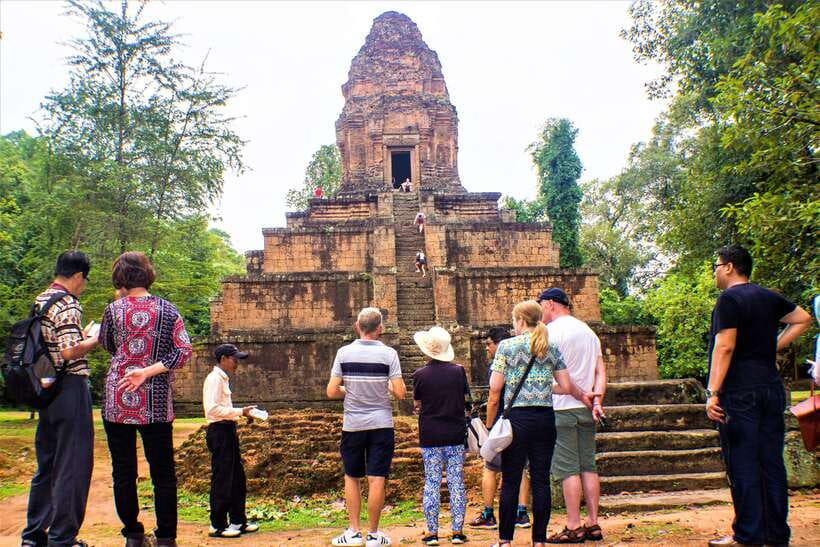
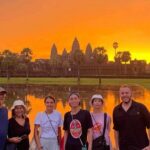
The final major temple stop is Pre Rup. You’ll arrive for a photo stop and guided visit, and then you’ll get time targeted for sunset views from the atmospheric setting.
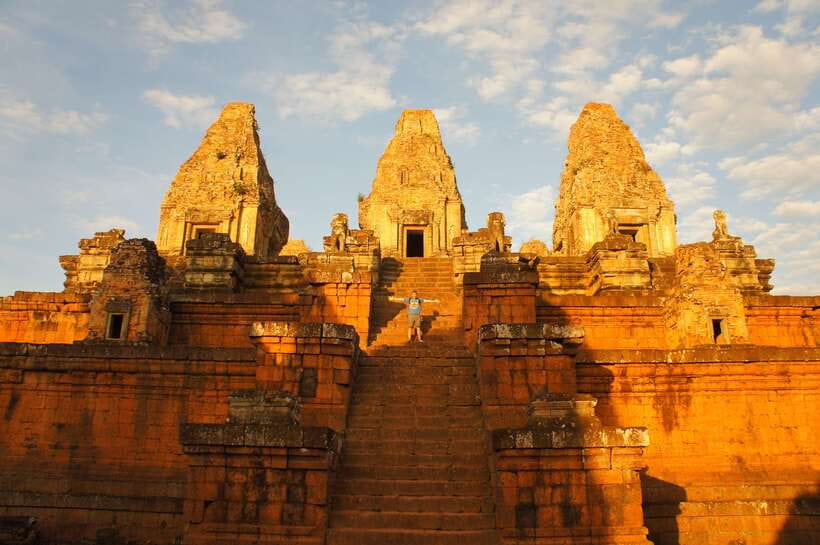
Pre Rup is a temple mountain built as the state temple of Khmer king Rajendravarman, dedicated in 961 or early 962. It uses a mix of brick, laterite, and sandstone. That mix is one reason it can look so textured, especially near sunset when the light changes the surface colors.
This is also one of the best parts of the day to test your patience with weather. In rain season, skies can change quickly, and at least one past guest noted the final sunset stop got shortened due to incoming rain. The tour can also adjust to keep you comfortable and get you back earlier if needed, so don’t treat sunset as a guarantee—treat it as the goal.
When the light is good, this is the point where the whole day clicks. You’ve seen carvings, water-temple geometry, and dramatic roots. Then you end on a temple mountain with views that feel calmer and more spacious than the core Angkor crowds.
What the guides and drivers add (and why small groups matter)
This tour’s biggest difference isn’t just which temples you see. It’s how you experience them.
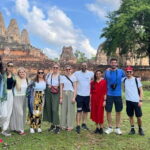
With a small group, you tend to get more attention for questions and more time to find good viewpoints without waiting in a long queue. The day also benefits from the guide style. Many guides use tablets to show photos or videos of the temples, which helps when you’re trying to understand carvings, gods, kings, and the shift between Hindu and Buddhist themes.
You’ll also notice consistency in the practical side. Reviews repeatedly mention drivers coming back to the van with cold bottled water and cool towels after stops. Some drivers even carry umbrellas during rain, which can be a lifesaver when you’re juggling temple walks and weather.
Guide names that show up frequently in feedback include Pal Saroun, Bun, Sak (Sakriya), and Sokpee, among others. In other words: you’re likely to get someone who can explain what you’re looking at in plain language and then point out where to stand for pictures.
Walking and comfort: what to expect during the 9-hour day
Even though you’re in an air-conditioned van, plan on real outdoor time. Temple visits include photo stops and walking segments, with guided tours at each site.
What helps most:
- Sunscreen hat and sunglasses (sun hits fast)
- Insect repellent (even if you’re only outside for short bursts)
- Outdoor clothing (and no shorts, since that’s not allowed)
- Comfortable shoes you don’t mind getting dusty
If it’s rainy, bring a backup layer and be ready for slippery patches. The tour can be flexible with timing depending on weather, but your best move is to dress for the day you actually get.
Who this tour fits best (and who should skip it)
This is a good choice if you want more than a single day of Angkor headlines. It’s especially appealing if you’ve already visited the big stars like Angkor Wat and Ta Prohm and you’re craving temples that are less packed, more atmospheric, and different in style.
It also fits well if you enjoy history in a story format. Guides can explain Hinduism and Buddhism, and how the sites relate to Khmer kings and religious shifts. That makes the carvings more than decoration.
On the flip side:
- It’s not suitable for children under 8.
- It’s not suitable for wheelchair users.
- The day is long, so if heat is a major concern for you, plan your comfort seriously (hat, water, and pace).
Should you book the Banteay Srei and Grand Circuit Heritage Tour?
Book it if you want a smarter use of your Siem Reap time: you’ll see Banteay Srei and Preah Khan without spending all day inside the most famous Angkor bottlenecks. The small group setup, plus the consistent cool towels and water, makes the long hours feel manageable.
Hold off or adjust expectations if you’re trying to keep costs minimal. The $18 tour price is strong, but the Angkor Pass/temple entrance fees add about $37 per person, and bad weather can shorten sunset time.
If you can handle a full day of walking in the sun and you want temples that feel more personal than the main sites, this is one of the best “second or third Angkor day” moves you can make.
FAQ
What temples are included on this tour?
You visit Preah Khan, Neak Pean, Banteay Srei, and Pre Rup for sunset.
How long is the tour?
The duration is listed as 9 hours.
What is the price, and are temple fees included?
The tour price is $18 per person. Temple entrance fees are not included, and you should budget about $37 per person for the Angkor Pass/temple access on the day of your activity.
What does the tour include besides the guide?
You get hotel pickup and drop-off in Siem Reap city, transportation in an air-conditioned vehicle, complimentary bottled water and cool towels, and lunch at a local restaurant (with beer, coffee, and tea listed).
Where do pickups happen?
Hotel pickup is included for hotels in Siem Reap city, with the exact pickup time based on your hotel location. The tour also lists a pickup location at 57 2 Thnou St.
Is this tour suitable for kids or wheelchair users?
No. It isn’t suitable for children under 8, and it’s not suitable for wheelchair users.