Varanasi’s sacred lanes teach fast. This is a focused old-city walk where you get the meaning behind what you’re seeing, not just a list of places. I especially love the religion and tradition explanations from guides like Suhail and Aman, and the way the route blends big-name stops with deeper moments like Manikarnika Ghat.
One possible drawback: parts of this walk can feel intense and emotionally heavy, since it includes a major cremation area along the Ganges. If you’re sensitive to that, go with the right mindset—respectful quiet, steady nerves, and a willingness to look away when you need to.
At about 2–3 hours for $28.35 per person, it’s also good value. Entrance fees are included, plus you get water bottles and tea, and you’ll start at 9:30am near Man Singh Observatory and end back there.
In This Review
- Key highlights to know before you go
- Why this Varanasi walking route makes sense
- Entering Varanasi’s old-city lanes: narrow streets, guided context
- Meer Ghat panoramic views: start with the Ganges first
- Vishalakshi Temple (Shakti Peeth): understanding the feminine divine
- Kashi Vishwanath Temple: outside-only views that still help
- Nepali (Kathwala) Temple: wooden craft with 19th-century roots
- Manikarnika Ghat: the sacred cremation ground you can’t ignore
- Manikarnikeshwar Mahadev Temple (Kashi Khand): life and death connected
- Ratneshwar Mahadev Temple: a quieter Shiva tribute
- Beyond the listed stops: corridor, underground temple, mosques, and markets
- Guide quality: Suhail and Aman’s patient, flexible style
- Blue lassi shop: a small break with local confidence
- Price and value: $28.35 for sights, stories, and included extras
- Logistics that matter: timing, weather, and how to plan your day
- Who should book this tour (and who might not)
- Should you book this Varanasi walk?
- FAQ
- How long is the tour?
- What is the price per person?
- Do I need to buy entrance tickets separately?
- Is the tour ticket digital?
- Where do we meet, and where does it end?
- What time does the tour start?
- Is GST included in the price?
- Is it suitable for most people?
- Is there free cancellation?
- What if weather is bad?
Key highlights to know before you go
- Small group size (max 10) makes it easier to hear your guide and move through tight lanes
- Meaning over sightseeing: culture, religion, traditions, and Hindu gods explained in plain language
- Major ghats and temples in one route including Meer Ghat, Vishalakshi Temple, and Manikarnika Ghat
- Outside views where needed (Kashi Vishwanath Temple is viewed from outside only)
- Rest stops are part of the experience, with tea/chai and water included, plus flexible pacing
- Good local flavor break at a Blue Lassi shop that’s singled out as a top choice
Why this Varanasi walking route makes sense
Varanasi is one of those places where seeing everything on your own can turn into confusion fast. The streets are narrow, people move in every direction, and the religious sights aren’t always labeled in a way that helps you understand them. This walk solves that problem with a simple approach: you follow a route through key spiritual spots, while your guide connects the dots—gods, rituals, architecture, and local belief.
What makes it click is the guide-driven tone. In the feedback I saw, Suhail and Aman keep coming up for strong English, patience, and flexibility. That matters here because Varanasi is not a “march and move” city. You want someone who can slow down when you need it, answer questions, and handle real-life changes smoothly.
For your money, it’s also practical. The tour includes admission fees across the route, plus complimentary water bottles and tea. When entrance costs stack up in a city like this, it’s not just about paying for a guide—it’s about reducing the extra friction you’d otherwise face.
You can also read our reviews of more tours and experiences in Varanasi.


Entering Varanasi’s old-city lanes: narrow streets, guided context
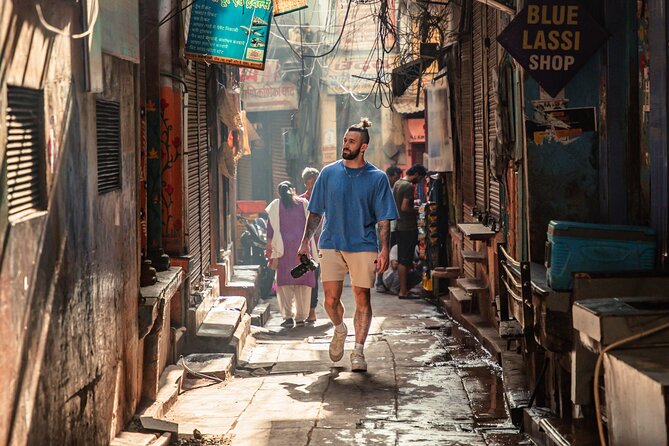
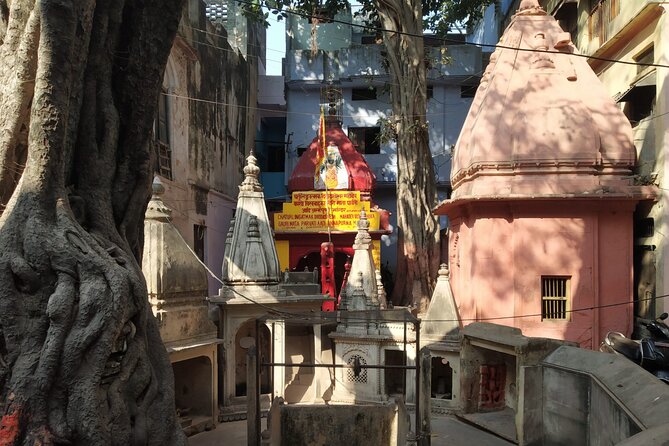
You’ll begin near Man Singh Observatory (Man मंदिर ghat, Dashashwamedh Ghat Rd area) at 9:30am, and you’ll return to the same meeting point. Expect a walking experience through labyrinth-like alleys—heritage buildings, older temples, and religious sites that sit close together.
This route is designed to help you “read” the city while you walk. You’ll hear about Hindu gods and goddesses, plus small but important details tied to each stop—why the place matters, how worship works, and what people are doing there.
A practical point: the tour is listed as suitable for most travelers, and the group stays under 10 people. That keeps it manageable through crowd pressure and narrow corners, especially when you’re trying to take photos without blocking others.
Meer Ghat panoramic views: start with the Ganges first
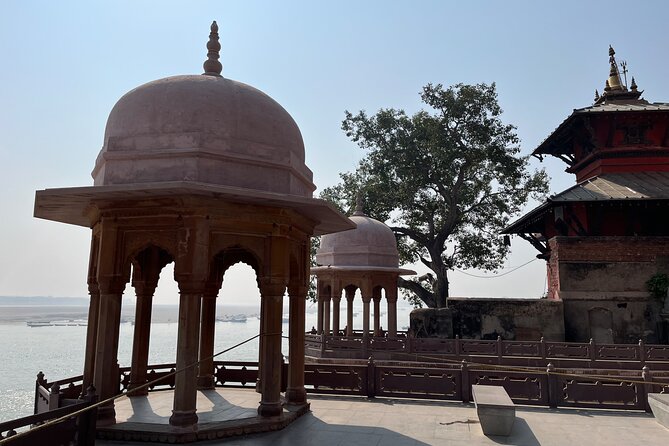
You kick things off at Meer Ghat, with about 20 minutes there. This is a great early stop because it gives you a reference point for everything that follows. Once you’ve got a good view of the ghats and the Ganges setting, later spiritual sites feel less random.
The view angle is the point: you get one of the better panoramic looks along the riverfront. Even if you’re not a “ghat person,” it helps you understand how the city is organized—life and worship running alongside the water.
Tip for your comfort: wear shoes you can trust. Ghat areas can be uneven and busy, and you’ll be walking again right after.
Vishalakshi Temple (Shakti Peeth): understanding the feminine divine
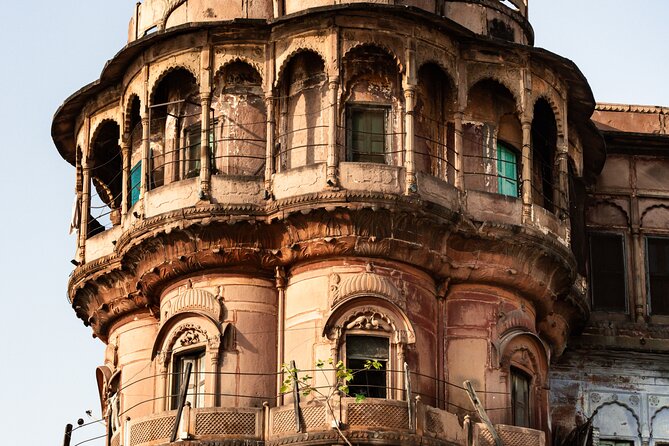
Next comes Vishalakshi Temple, about 15 minutes and free admission. The key idea here is that Vishalakshi is a form of the divine feminine, and this temple is recognized as one of the 51 Shakti Peethas.
Why this is worth a stop: a lot of visitors rush through Varanasi’s temples without knowing the bigger religious map. A Shakti Peetha connection gives you context for why certain shrines feel especially revered. Your guide’s role is important here—explaining what Shakti means in lived religious practice, not just as a label.
Also, this area tends to be active around the temple zone. That means you’ll feel the city’s energy in a real way, not staged. For photography, just be mindful of worshippers and movement.
Kashi Vishwanath Temple: outside-only views that still help
The walk then reaches Shri Kashi Vishwanath Temple, often called the Golden Temple. Here you’ll see it from the outside only, for around 20 minutes.
That sounds limiting, but it can actually be a good match for this tour style. You’re not trying to spend time stuck in ticket lines or rules that change from day to day. Instead, you’ll learn what the temple represents and what to notice from the exterior—then move on while the route is still flowing.
If this is your first time in Varanasi, I like the outside-only approach because it reduces stress. You get a strong first impression, plus the guide context that helps you appreciate what’s behind the walls.




Nepali (Kathwala) Temple: wooden craft with 19th-century roots
Your next temple stop is the Nepali Temple, also known as Kathwala Temple. You get about 20 minutes here, with admission included.
This one stands out for architecture: it was built in the 19th century by the King of Nepal, and it’s known for detailed wooden work and intricate carvings. Even if you aren’t studying architecture, you’ll likely notice the difference in texture and design compared to simpler stone-focused areas.
One more reason this stop matters: it shows that Varanasi isn’t only about one era or one community. The religious city has layers, and this temple is a visible sign of that.
Manikarnika Ghat: the sacred cremation ground you can’t ignore
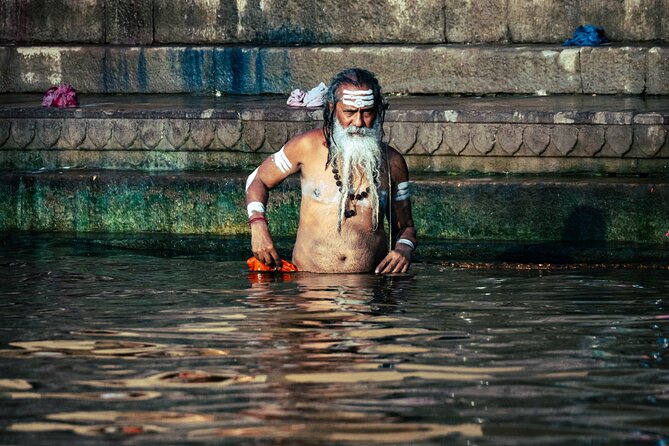
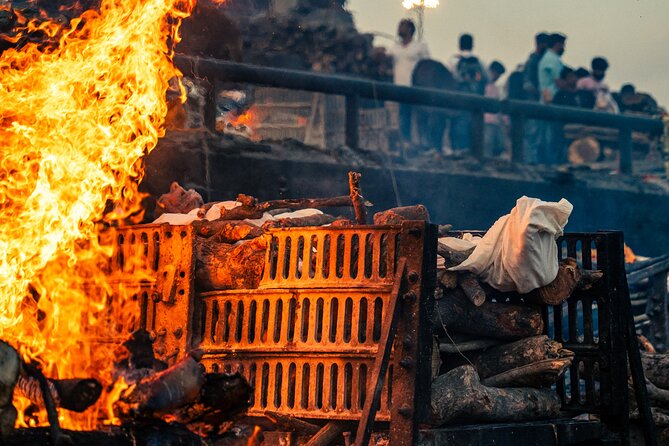
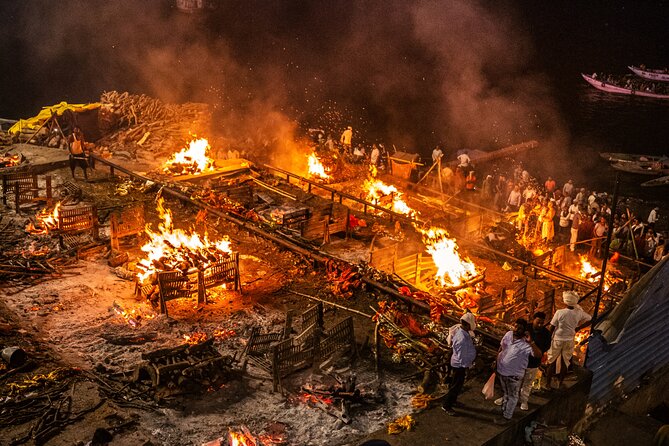
Then the tour moves to the heart of Varanasi’s most powerful symbolism: Manikarnika Ghat. Plan for around 30 minutes, with admission included.
This is one of the most significant and sacred cremation sites in Varanasi, along the Ganges. The belief tied to it is that cremation here helps the soul achieve liberation (moksha). That’s big spiritual meaning, and it’s exactly why your guide’s tone matters. You’ll get explanations so you understand what you’re witnessing within the local worldview.
A respectful note (and a practical one): this area can be emotionally intense. If you’re the type who needs time to process, give yourself it. You don’t have to force eye contact or stay where you feel overwhelmed.
Manikarnikeshwar Mahadev Temple (Kashi Khand): life and death connected
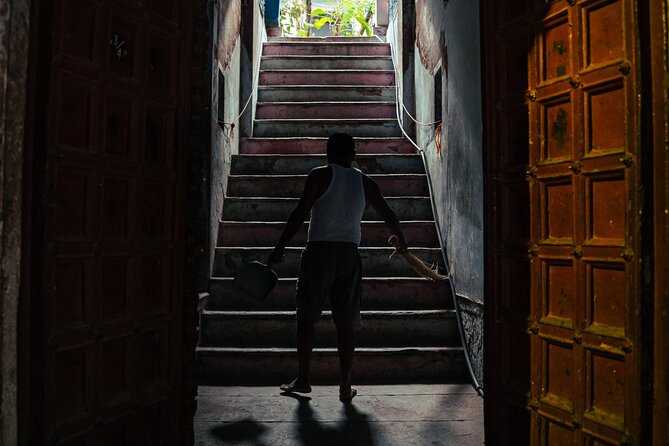
After Manikarnika Ghat, there’s a nearby stop at Manikarnikeshwar Mahadev Temple in the Kashi Khand area, about 15 minutes with admission included.
The connection here is symbolic: the temple is believed to link directly with Manikarnika Ghat. So instead of the experience ending at the cremation site, you get a religious “bridge” between life and death through Shiva-centered devotion.
This is the kind of stop that makes the walking route feel like more than checkboxes. It’s a way to keep the meaning moving, not just hitting a dramatic landmark and rushing away.
Ratneshwar Mahadev Temple: a quieter Shiva tribute
Next is Ratneshwar Mahadev Temple, around 15 minutes, with free admission. This shrine is believed to date back to the 18th century, connected to a local king who built it as a tribute to Lord Shiva.
If you like “why this temple exists” stories, this is a nice contrast. Big public sites tend to dominate the conversation, but legends like this show how deeply local decisions and beliefs shape the city.
Even if you only catch a few moments, don’t treat this as a throwaway stop. In Varanasi, small temples can feel personal and close in a way that larger shrines sometimes don’t.
Beyond the listed stops: corridor, underground temple, mosques, and markets
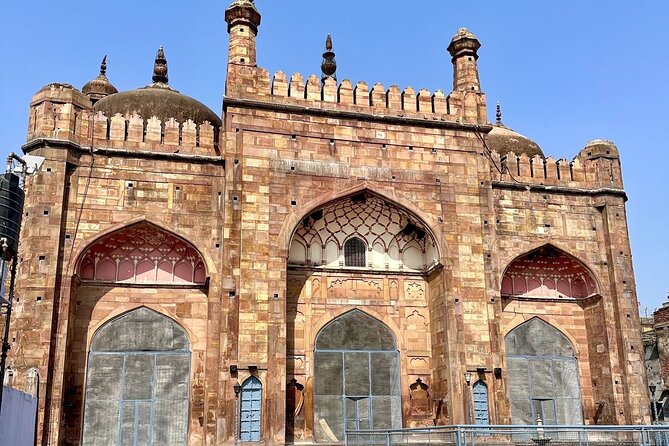
One of the strengths of this tour is that it doesn’t confine itself to the main monuments. Along the way, your guide takes you through the old markets, the Kashi Vishwanath Corridor, and mentions other religious landmarks including an Alamgir Mosque and an underground temple.
The big value here is learning how different religious traditions share space and influence the feel of the city. You’ll also hear interesting facts and stories as you move through the labyrinth lanes—so you’re not just looking at buildings, you’re understanding why the city is arranged the way it is.
Practical advice: expect people, vendors, and turning corners into sudden crowd density. That’s normal here. Your guide’s job is to keep you oriented without rushing you.
Guide quality: Suhail and Aman’s patient, flexible style
A walking tour lives or dies on the guide, especially in a place where the cultural stakes are high. From the feedback, names like Suhail and Aman come through clearly.
What you can reasonably expect from the better guides on this route:
- Good English and a willingness to explain the “why,” not just the “what”
- Patience and care, including slowing down when needed
- Flexibility when circumstances change
- Time for small breaks—like chai or snacks—if you want them
If you’re not traveling with a group of young, fast walkers, that kind of pacing is a real comfort.
Blue lassi shop: a small break with local confidence
In the course of the walk, there’s time to consider a Blue lassi shop stop. It’s highlighted as one of the best places to drink lassi in Varanasi.
Whether you order there or not, the idea is smart: Varanasi walking can get hot and intense. Having a scheduled chance for a cool drink makes the overall experience more enjoyable, not just intense.
One practical caution: if you have a sensitive stomach, stick to what you’re comfortable with and drink in moderation.
Price and value: $28.35 for sights, stories, and included extras
The price is $28.35 per person, for about 2 to 3 hours. For that, you get a guided route through major sacred and heritage stops, plus all entrance fees are covered and you receive complimentary water bottles and tea.
The value logic is simple: in Varanasi, temple entry and ghats aren’t always free for every site. Paying a single fixed amount that includes entrances reduces decision fatigue and keeps you moving.
The only financial detail to watch: GST is not included. So your final total may be a bit higher depending on how it’s calculated at checkout.
Logistics that matter: timing, weather, and how to plan your day
This tour starts at 9:30am and ends back at the meeting point near Man Singh Observatory. It uses a mobile ticket and runs with a maximum of 10 travelers.
It’s also weather-dependent. If conditions are poor, you may be offered a different date or a full refund. That’s important because ghats and walking lanes don’t stop being difficult just because clouds roll in.
Also note: it’s described as near public transportation, which helps if you want to combine the day with other sights.
Who should book this tour (and who might not)
This walk is a strong fit if you:
- Want context for Varanasi’s religion and traditions
- Prefer a small-group experience through older lanes
- Want to see major places like ghats and Shakti Peeth temples without trying to self-navigate the whole city
You might think twice if:
- You’re strongly uncomfortable with cremation-area contexts
- You need a quiet, low-stimulation experience all the way through
Should you book this Varanasi walk?
I’d book it if you want a guided, meaning-first overview of Varanasi that still includes some of the most unforgettable sites—Meer Ghat, Vishalakshi Temple, Kashi Vishwanath (outside), and Manikarnika Ghat—with a guide who can explain the beliefs behind the scenes. The price is fair for what you get, especially with entrances and basic refreshment handled.
My decision tip: if you’re emotionally sensitive, come prepared for Manikarnika Ghat. If you’re okay with that, this is one of the smarter ways to see Varanasi without getting lost in the noise.
FAQ
How long is the tour?
The tour lasts about 2 to 3 hours.
What is the price per person?
The price is $28.35 per person.
Do I need to buy entrance tickets separately?
No. All entrance fees are included in the experience.
Is the tour ticket digital?
Yes. The tour uses a mobile ticket.
Where do we meet, and where does it end?
You start at Man Singh Observatory (Man मंदिर ghat, Dashashwamedh Ghat Rd area) and the tour ends back at the meeting point.
What time does the tour start?
The start time listed is 9:30am.
Is GST included in the price?
GST (Goods and Services Tax) is not included.
Is it suitable for most people?
It’s described as a tour where most travelers can participate.
Is there free cancellation?
Yes. You can cancel for a full refund up to 24 hours in advance. If you cancel less than 24 hours before the start time, the amount paid is not refunded.
What if weather is bad?
The experience requires good weather. If it’s canceled due to poor weather, you’ll be offered a different date or a full refund.