REVIEW · ROME
VIP Colosseum & Ancient Rome Guided Tour
Book on Viator →Operated by Maya Tours · Bookable on Viator
Few places teach Rome fast. I like the small group size and the art historian guide with headsets, and you’ll get a clear path through three must-see sites in about 3 hours. One real drawback: the timing rules are strict, and you need a photo ID to get into the Colosseum.
This is built for people who want more than selfies and short facts. The stops are focused—Colosseum first, then the Roman Forum, then Palatine Hill—so your guide can connect the dots between architecture, political life, and everyday Roman routines. And with a cap of 15 travelers or fewer, it’s easier to ask questions and stay on track.
Just keep your expectations realistic. Each site is covered in limited time, so you may not see everything at a slow pace. Still, if you want the big picture and the best viewing spots without getting swallowed by crowds, this format works.
In This Review
- Key things I’d plan around
- How the Colosseum–Forum–Palatine route makes sense
- Meeting outside the Colosseum: the part that matters most
- Entering the Colosseum with real skip-the-line value
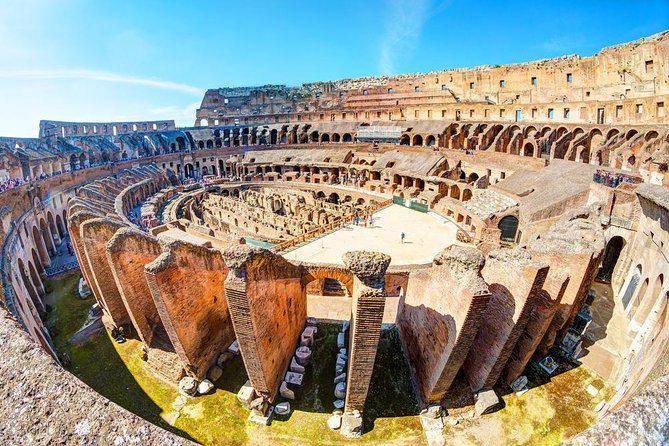
- Inside the Colosseum: architecture you can actually read
- Roman Forum stop: the political brain of ancient Rome
- Palatine Hill: where Rome’s earliest stories took root
- Headsets, group size, and why the pace feels calmer
- Value: is about $34 a good deal?
- Who should book this tour (and who should rethink it)
- Should you book the VIP Colosseum & Ancient Rome Guided Tour?
- FAQ
- What time and where do I meet for the tour?
- Is skip-the-line access included?
- Do I need a photo ID to enter?
- How big is the group?
- What’s included in the price?
- Can I get a refund if I cancel?
Key things I’d plan around
- Skip-the-line entry with a timed Colosseum reservation, plus headsets so you can hear the guide clearly.
- Art historian commentary that helps you read what you’re looking at instead of just walking past stones.
- Three connected neighborhoods of Rome: amphitheater → political center → original settlement hill.
- Small group (15 or fewer) for easier pace control and more personal attention.
- Strict entry requirements: photo ID is mandatory, and late arrivals can mean no entry and no reschedule.
How the Colosseum–Forum–Palatine route makes sense
Rome’s ancient center can feel like a blur if you’re sightseeing on your own. This tour’s strength is that it follows a logical storyline. You start at the Colosseum, the headline stage for public spectacle. Then you move to the Roman Forum, the practical hub where power, religion, commerce, and politics all rubbed shoulders. Finally, you end at Palatine Hill, tied to Rome’s earliest settlement stories and the elite residences that grew from there.
The pacing is also something I appreciate. The guided time is about 2.5 hours, split roughly into: 1 hour at the Colosseum, 45 minutes at the Forum, and 45 minutes on Palatine Hill. That structure gives you enough time to grasp the main ideas at each place, then you’re free after the tour to wander where you want. For many people, that balance is the sweet spot: guidance up front, choice later.
You’ll also benefit from the fact that the tour is designed to reduce friction. It includes skip-the-line access via reservation, and you’re given headsets so you don’t have to constantly angle your body to hear over the noise. If you’ve ever spent half your visit straining to hear a guide while trying not to get stuck behind someone filming, you’ll appreciate this setup.
If you’re the type who likes slow museum-style reading, note that this isn’t built for that. It’s built to get you oriented fast and help you make sense of what you’re seeing.
You can also read our reviews of more tours and experiences in Rome.
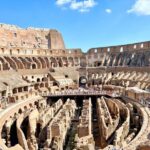
Meeting outside the Colosseum: the part that matters most
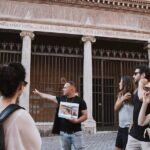
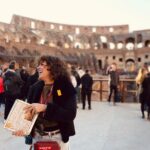
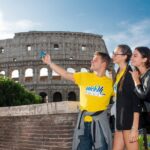
This tour runs like a timed machine, and the start controls everything that follows. You meet at Piazza del Colosseo, 21 outside the Colosseum, near the Green Kiosk at the Colosseo Metro ground floor entrance. Your guide is set to be holding a Maya Tours flag.
That said, the information for start times shows options that may use a different meeting location: Via Frangipane 30 is also listed for some options, depending on whether you booked a 12pm or 1pm slot. So the smartest move is to treat your confirmation as the final word and double-check which meeting point matches your entry time.
Plan to arrive early. You’re asked to show up 20 minutes before your booked entry time. There’s no flexibility mentioned for late arrivals. If you’re late, it may not be possible to join the group or reschedule, and entry timing is described as strict because the Colosseum reservations have limited windows.
Two other start-related items are not optional:
- Bring a photo ID. Photo ID is mandatory for entry, and you can be denied entry without it.
- Use the exact traveler names as written on your identification documents. If names don’t match, entry can be denied.
Also, keep baggage simple. Large bags/backpacks/suitcases aren’t permitted inside the monument. You can still carry a small day bag, but don’t show up with a suitcase and hope for the best. And there are restrictions on what you can bring inside (including items like sharp objects and glass).
Entering the Colosseum with real skip-the-line value
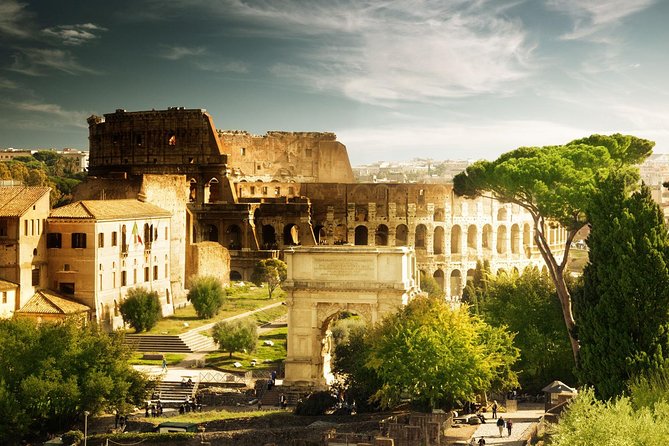
Skip-the-line doesn’t always mean much in practice—sometimes it’s just a different line. Here, the value comes from the timed Colosseum reservation and the escort through the early steps.
The tour includes the Colosseum entrance ticket plus a reservation fee, which is listed as valued around €18 for the ticket and €2 for the reservation. That means your money isn’t only buying access; it’s paying for the coordination and guided service that uses that access well.
Once you’re with the guide, the process is meant to be straightforward:
- you’ll be taken through security,
- you’ll be provided your ticket,
- and then you’ll start the guided visit.
This is where headsets help a lot. The Colosseum is loud and busy, and the headset means you can listen without constantly losing your spot. It’s also useful if your group ends up moving at slightly different speeds.
One more practical point: plan around what the Colosseum does to your energy. Even a short visit is step-heavy, and the ground can be uneven. The tour calls for a moderate physical fitness level, so if you know stairs and long walking are hard for you, you’ll want to think carefully.
Inside the Colosseum: architecture you can actually read
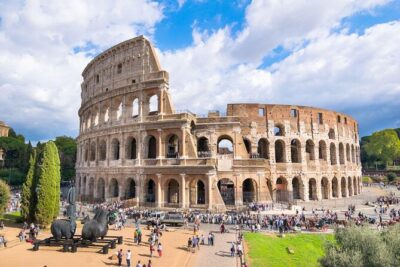
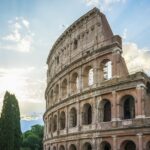
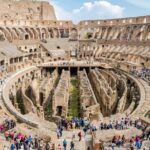
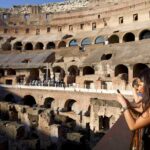
At the Colosseum stop, you get about 1 hour of guided time. That’s enough to understand how the amphitheater worked and why it looked the way it did—without pretending you can absorb everything in one go.
An art historian guide is the big advantage here. Instead of only telling you what happened, you’ll likely learn how the building was designed to shape crowds, visibility, and movement. The tour is also framed around major historical events and the Colosseum’s role in the day-to-day life of ancient Romans—not just as a landmark, but as a working part of society.
What I’d expect you to take away:
- what the Colosseum was built to do,
- what visitors in ancient Rome would have experienced there,
- and which features matter most when you’re trying to picture the original spectacle.
You’ll also appreciate the time management. It’s easy to get stuck wandering and lose the thread. A guided hour keeps you anchored on the story.
If you’re the type who likes photos, there’s a nice bonus in the overall experience: guides have helped with quick photos using your own camera. It’s not a formal promise in the facts provided, but it aligns with the personal attention the small-group format is built for.
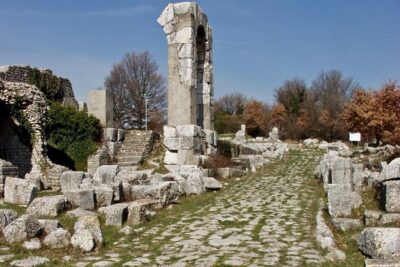
Roman Forum stop: the political brain of ancient Rome
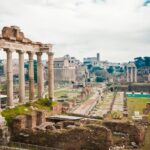
Next up is the Roman Forum, with about 45 minutes of guided touring. This is the stop where you start feeling the scale of Roman ambition.
The Forum is packed with landmarks close together, which can overwhelm you if you’re going solo. The guided approach helps you keep track of what’s what—so you’re not just looking at scattered ruins and guessing their purpose.
The story you’ll be guided through focuses on two key ideas:
1) architecture and history of the Forum’s spaces, and
2) how everyday Roman life played out amid political power.
The Forum is also where the guide’s explanations make the stones feel less random. It’s one thing to read about temples, offices, and public space. It’s another to stand there with an order to the way you’re seeing it. With headsets, you can listen while looking, which is the whole point.
There’s also a human side. The Forum is where the Romans gathered—so your guide can turn it from a history lesson into a sense of movement and routine. That’s the value of connecting it to the Colosseum right before: public events in one place, political and civic life in the next.
One practical note: the Forum can be tiring underfoot. The tour calls for moderate fitness, so pace yourself and keep moving with the group.
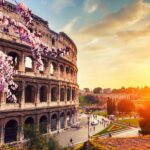
Palatine Hill: where Rome’s earliest stories took root
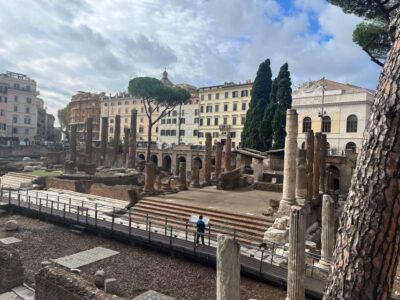
The final guided stop is Palatine Hill, also about 45 minutes. The hill matters because it’s tied to one of Rome’s origin stories: it’s connected to where the city was first settled, and it became a magnet for elite power as Rome grew.
This is not just a “pretty overlook” stop. When it’s done well, Palatine Hill gives you context for how Rome transformed from beginnings into rule by the powerful. You’re looking at terrain and viewpoints that help you imagine how an early city might have expanded, and why these spots mattered strategically and socially.
With a guide, you’re not just scanning ruins—you’re learning what the locations signaled in Roman terms, and how they connect back to the broader city picture you built at the Forum.
A plus of the tour’s structure: you’re finished while your energy still has some runway. After about 2.5 hours of guided time, the tour ends and you’re free to explore on your own at leisure.
That means you can:
- return to areas that caught your attention,
- spend extra time at viewpoints,
- or simply slow down where your brain needs a minute.
Headsets, group size, and why the pace feels calmer
This tour caps at 15 travelers or fewer, which changes how the experience feels. In a big crowd, you spend time dodging and guessing where your guide has gone. In a small group, you tend to move together, and your guide can adjust pacing without the whole line collapsing.
Headsets make it easier to follow the commentary too. You’re not constantly trying to locate the guide’s voice from the wrong side of a doorway or behind someone’s hat. That also helps if you’re stopping at multiple viewpoints and architectural features in quick succession.
There’s also a personal attention factor that shows up in how guides handle small needs during the walk. In similar experiences with this tour style, guides have been helpful with practical points like steering the group toward toilets and water refills. And some guides have gone the extra mile with quick photos on your own camera. You should still plan as if you’re responsible for your own comfort, but it’s a good sign that this group format supports that kind of helpful care.
Value: is about $34 a good deal?
At about $34, you’re getting a mix of paid components and guidance. The ticket and reservation portion is listed as valued at roughly €18 + €2 (so about €20 total). The rest of what you pay covers the guided service—headsets, the art historian, and the coordination that helps you get through the Colosseum entry process efficiently.
Is it cheap? Not the way a DIY ticket is cheap. But you’re not paying only for entry. You’re paying for:
- an informed guide who can connect sites into a story,
- headset audio so you don’t miss details,
- and a small-group flow that keeps you from spending your visit in crowd math.
If your time is limited, this is often the best value way to see the top anchors in Rome’s ancient center in a short window. If you have a lot of time and you love wandering without structure, then a self-guided approach can be cheaper. But if you want meaning while you’re standing in the ruins, this price starts to make sense fast.
Who should book this tour (and who should rethink it)
This tour fits best if you want:
- a guided introduction to the Colosseum, Roman Forum, and Palatine Hill,
- a clear explanation of what you’re seeing,
- and a format that avoids losing time in crowds.
You’ll likely be happy if you’re comfortable with walking and have moderate fitness. You’ll especially like it if you’re visiting for the first time and want the “Rome basics” done with context.
You might rethink it if:
- strict entry rules would stress you out (arrive late and it can mean losing your spot),
- you don’t have photo ID handy,
- or you want a long, slow experience at each site.
Also, note that hotel pickup and drop-off aren’t included, and you’ll need to handle transportation to the meeting point and back on your own.
Should you book the VIP Colosseum & Ancient Rome Guided Tour?
I’d book it if you want your time in Rome to feel organized and meaningful, not chaotic and loud. The small group size (15 or fewer), the art historian guide, and the headsets are the key strengths. They turn three major landmarks into a connected story rather than separate stops.
Before you commit, make sure you can meet the requirements: bring photo ID, use the exact names on your ID, and show up 20 minutes early because the Colosseum reservation timing is unforgiving. If that sounds doable, this is a strong way to get a lot of value out of a short visit.
If you’re even a little unsure, consider this your practical rule: the more you care about understanding what you’re looking at, the more this tour pays off.
FAQ
What time and where do I meet for the tour?
You meet outside the Colosseum at Piazza del Colosseo, 21 near the Green Kiosk (Colosseo Metro ground floor entrance). Some options also list Via Frangipane 30 as a meeting point. The exact time depends on the entry option you chose, with start times shown as 10:30am, and other options at 12pm or 1pm.
Is skip-the-line access included?
Yes. The tour includes skip-the-line entry with a timed Colosseum reservation, plus help from your guide through the entry steps.
Do I need a photo ID to enter?
Yes. A photo ID is mandatory to be allowed into the Colosseum, and you may be denied entry without it.
How big is the group?
The group size is 15 travelers or fewer, so you’ll have a small-group experience.
What’s included in the price?
You get headsets, a professional art historian guide, and the Colosseum entrance ticket plus the Colosseum reservation fee. The remaining cost covers other services.
Can I get a refund if I cancel?
No. This experience is non-refundable and cannot be changed for any reason.