REVIEW · ACCRA
10 Days Ghana Cultural and Heritage Trip
Book on Viator →Operated by Freelancenana Travel And Tours · Bookable on Viator
Ghana feels personal on this small-group route. I like the air-conditioned ride with wifi, and I love how the trip includes both a naming ceremony and the Assin Manso walk of return. One thing to think about: parts of the program focus on slavery-era history, so plan for emotional weight and long travel days.
This is a guided, heritage-first itinerary with stops that connect architecture, markets, language, and ritual. It’s also built around a manageable pace for a group of up to 10, which helps you hear your guide and ask questions without feeling rushed.
In This Review
- Key things I’d focus on before you go
- Setting out from Accra, and why this route makes sense
- Accra highlights: Kwame Nkrumah, Independence Square, Makola Market, and the National Museum
- Aburi Botanical Gardens and the W.E.B. Du Bois Center: a thoughtful cultural pause
- Cape Coast Castle: the “Door of No Return” and the moment history lands
- Elmina’s layered history: walking the town and touring Elmina Castle
- Kakum Rainforest canopy walk: nature time that actually feels different
- Elmina naming ceremony and Assin Manso: culture as a lived ritual
- Kumasi days: Ashanti power, Kente meaning, and the Okomfo Anokye sword site
- Markets, arts center, and buying with confidence
- Price and value: what $3,500 buys in real-world comfort and included access
- Who this trip fits best, and who should reconsider
- Should you book this Ghana Cultural and Heritage Trip?
- FAQ
- Where does the tour start, and what time does it begin?
- Is airport pickup included?
- How many people are in the group?
- What languages is the tour offered in?
- What meals are included during the trip?
- Are admission fees included for the main attractions?
- Can I bring a service animal?
- What is the cancellation policy?
- What happens if weather is poor?
Key things I’d focus on before you go

- Small group size (max 10) keeps the day-to-day experience personal
- Kakum canopy walk gives you a rare view of Ghana’s rainforest from above
- Cape Coast and Elmina castles are handled as concentrated, guided history stops
- Naming ceremony in Elmina turns culture from a concept into a moment
- Assin Manso bare-foot walk adds a powerful, symbolic ritual element
- English/Spanish/French options make it easier to travel comfortably
Setting out from Accra, and why this route makes sense
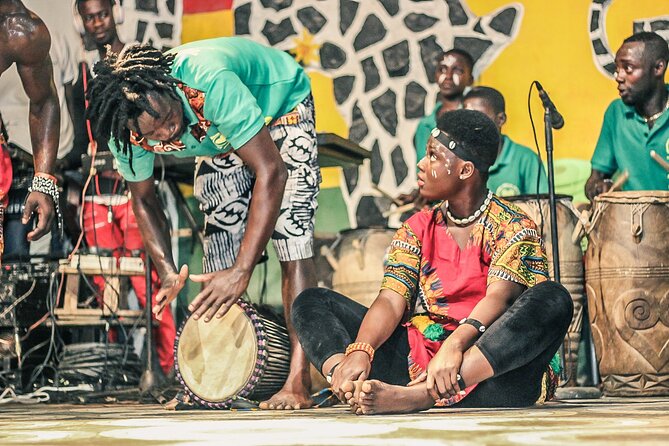
This trip starts in Accra and builds outward in a logical arc: you get Ghana’s present-day identity first, then shift toward the coastal history of Cape Coast and Elmina, and finally head inland to Ashanti culture in Kumasi. That order matters, because it helps you connect political history, everyday life, and spiritual-cultural traditions into one story.
You’ll travel in an air-conditioned vehicle with wifi, and the fact that it’s small-group travel (maximum 10) makes a difference. When you’re moving between busy markets, museums, and castles, you’ll appreciate having a comfortable base to reset, especially on longer days.
You can also read our reviews of more tours and experiences in Accra.


Accra highlights: Kwame Nkrumah, Independence Square, Makola Market, and the National Museum
Your first full day is a classic Accra mix: big story, public space, real life, then culture in a building.
At the Kwame Nkrumah Memorial Park, you’ll see the final resting place of Ghana’s first president, plus personal items like the smock tied to independence, along with photos and correspondence. It’s not just museum stuff. It’s a fast track to understanding how independence is remembered.
Then you head to Independence Square—Black Star Square—where Ghana’s independence parade happens every year on March 6. You’ll see the Independence Arch and other monuments tied to the independence struggle. If you like history that you can point at in real time, this stop is satisfying.
Next is Makola Market, and this is where you feel Accra’s daily rhythm. It’s an open-air market with narrow alleyways, crowds, and loads of goods carried in true West African style (the head-loads are impossible to ignore). You’ll want to go with a shopping mindset and patience, because it can feel intense fast—but it’s also one of the best places to absorb how people actually live and buy.
Finally, the National Museum of Ghana helps you slow down and make sense of what you just saw. Expect displays tied to chiefs’ regalia, musical instruments, gold-weights, beads, textiles, pottery, and traditional dance and agriculture. The museum also includes exhibits about the slave trade in Ghana and other cultural artifacts from across the region, including masks and figures. For many people, this is the pivot point where the rest of the journey turns from “interesting sites” into something heavier and more personal.
Aburi Botanical Gardens and the W.E.B. Du Bois Center: a thoughtful cultural pause
Day 3 gives you a break from monuments and marketplaces. At Aburi Botanical Gardens, you focus on African herbs and plants, including their medicinal properties and how they connect to society. Even if you’re not a plant nerd, the way it ties everyday health and traditions to specific species makes it feel practical.
Then you go to the W.E.B. Du Bois Center, a Pan-Africanism memorial center focused on Du Bois and his ideas. This is one of those stops that can change how you interpret the rest of the trip. When you understand the broader intellectual thread of Pan-Africanism, the coastal history sites later on hit differently—not just as events, but as part of a larger movement.
Cape Coast Castle: the “Door of No Return” and the moment history lands
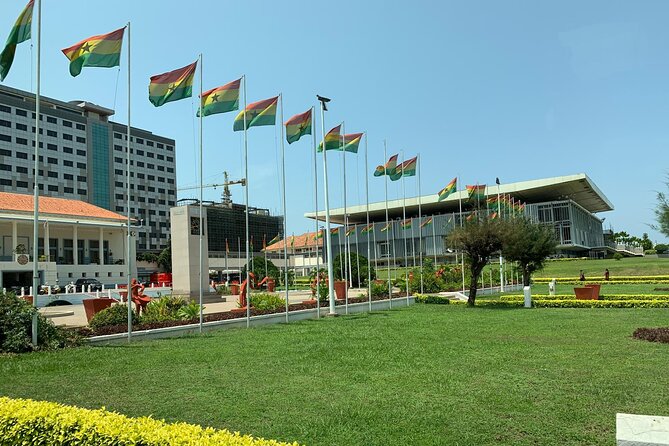
Cape Coast is the kind of place where your guide’s pacing matters. Your visit includes the slave dungeons and the Door of No Return, where enslaved Africans were processed before ships left for the unknown. The time on site is listed as about an hour, but don’t mistake that for being “quick.” It’s concentrated.
This stop is valuable for two reasons. First, you get direct, guided context rather than wandering through on your own. Second, the program ties the architecture to the lived reality—how people were held, the sequencing of the process, and what the site represents today.
A practical note: this day can feel mentally demanding. Plan for slower energy after you leave the castle grounds.
Elmina’s layered history: walking the town and touring Elmina Castle
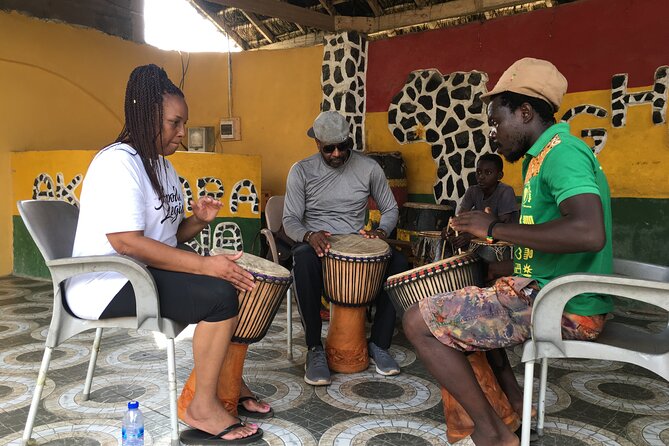
Elmina is often where the trip starts feeling more textured. You’ll do a walking tour of the historical center, with stops like the 17th-century Dutch Cemetery, the Posuban Shrine, and the Asafo post. Even when the sites are brief, they help you understand that Elmina’s story isn’t only about one era. It’s religious, civic, and social too.
After that, you’ll visit Elmina Castle, including the slave dungeon areas, the forecourt, and again the Door of No Return concept in a different setting. The castle stop also runs about an hour, with admission included.
What I like about handling both Cape Coast and Elmina in one trip is that you can compare how history is presented through different walls and different buildings. The names and details stay in your head because your guide keeps the focus tight.
Kakum Rainforest canopy walk: nature time that actually feels different
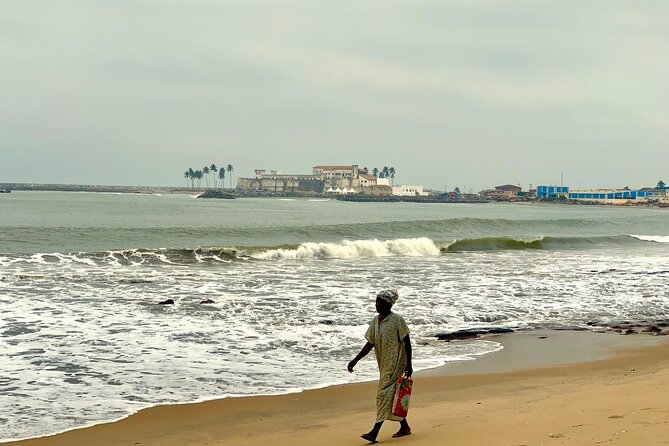
After the castles, Kakum National Park is a reset—but not a throwaway. The Kakum Rainforest Canopy Walk is one of the main reasons people go, and it’s different from typical sightseeing because you see the forest from a high, suspended perspective.
Your visit time is about 1 hour 30 minutes, including time to get situated and move along the walkway. If the weather is good, you’ll get a rare view into the canopy. If rain or wind shows up, this is one of the moments where conditions can affect the experience—so keep a flexible mindset for the day.
This nature stop also balances the emotional weight of the coast. You’re not switching topics randomly; you’re shifting from human history to the living environment that surrounds it.
Elmina naming ceremony and Assin Manso: culture as a lived ritual
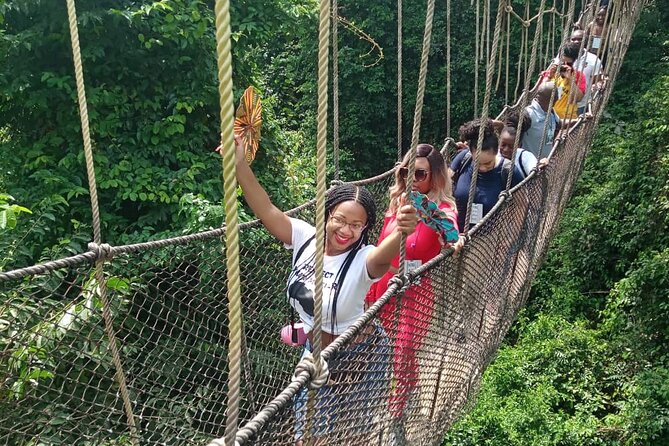
Day 6 includes a traditional stop tied to Elmina’s local community and leadership structures. You’ll visit the chief palace to learn about local traditions, then you’ll take part in a traditional naming ceremony. The ceremony includes you receiving a name based on the day you were born, and you’ll be dressed in Ghanaian clothing for the occasion.
This is one of those experiences that can feel surreal in a good way. A naming ceremony turns culture into something you’re doing, not just watching. And because it’s personal (your birth day links to your name), you’ll remember it long after the photo set.
Then comes Day 7, and it’s the most symbolic moment in the whole trip. At Assin Manso, you visit a place described as the final bathing point before people were taken to the castles and shipped away. The experience includes the reverential walk of return, including a walk to the slave river where the journey is done bare-foot as a sign of reconnecting and paying respect.
You also visit the Memorial Wall of Return, where names are written as a way of signaling the ability to return home. The total time listed is about one hour, but I’d mentally budget more for how it stays with you after the walk ends.
If you’re considering this trip, be honest with yourself: this is not the “fun photos and snacks only” version of Ghana. It’s a pilgrimage-style cultural journey.
Kumasi days: Ashanti power, Kente meaning, and the Okomfo Anokye sword site
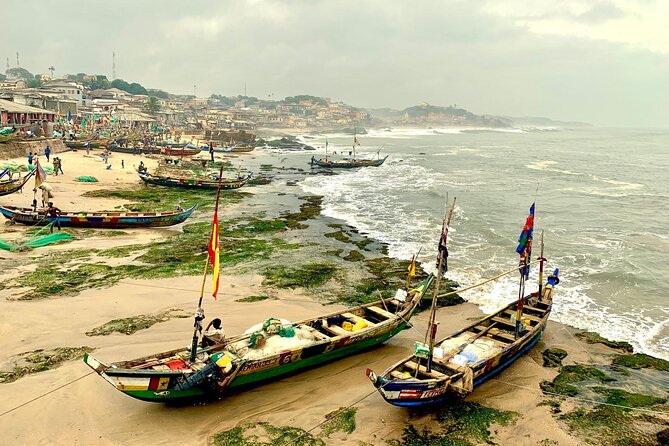
Once you’re inland, the tone shifts from coastal history to Ashanti culture and creative identity.
At Manhyia Palace Museum, you’ll learn about the seat of the King of the Ashanti Kingdom and explore the Asante Empire through the lens of the royal story. It’s a strong way to understand how kingdoms organize power, culture, and tradition over time.
Later, you visit the Okomfo Anokye Sword site from the Kumasi Cultural Center. The stop includes learning the history behind the sword said to have been planted and left unmoved for centuries. The time listed for this segment is about 45 minutes, and it’s a short, focused introduction that’s easier to carry with you than a long lecture.
Then you move into creativity and cloth at Bonwire Kente Weaving Centre. Kente here isn’t only about color—it’s about symbols and what they mean. You’ll learn about different kinds of cloth and the significance of the symbols in Ghanaian culture, in about one hour.
Kente is also practical for you as a traveler. If you want to buy something that isn’t just a souvenir, this is where you’ll understand what you’re looking at.
Markets, arts center, and buying with confidence
Shopping is part of the trip, but it’s not random. You hit Makola Market in Accra for everyday goods, scents, and street-level energy. You’ll have a guide to help you spot interesting sections and find vantage points for photos, which is handy because markets can be overwhelming if you go without local direction.
On the last day, you finish with the Accra Arts Center for souvenir shopping. You’ll have about 45 minutes there, and since it’s your final stop, it’s smart to have your priorities in mind early. If you’re buying larger items, plan to do your careful checking sooner rather than later.
For kente and cloth items, your best strategy is to treat them like culture you’re purchasing. Ask what the symbols mean if your guide can help, because the point isn’t just the fabric—it’s the story inside the design.
Price and value: what $3,500 buys in real-world comfort and included access
At $3,500 per person for 10 days, this is not a bargain tour. But it’s also not a bare-bones budget week. The value shows up in three places.
First, you get air-conditioned transportation with wifi for the whole journey. That’s a real quality-of-life upgrade when you’re moving between distant coastal sites and inland stops.
Second, the schedule includes many admission tickets. Stops like Kwame Nkrumah Memorial Park, Independence Square, the National Museum, Aburi Botanical Gardens, the W.E.B. Du Bois Center, Cape Coast Castle, Kakum National Park, Elmina Castle, Manhyia Palace Museum, Okomfo Anokye Sword site, and the Bonwire Kente Weaving Centre all list admission tickets included. A few key experiences are free in the plan, including the Elmina walking tour segment, the naming ceremony segment, Assin Manso, and the Accra Arts Center.
Third, the group size is limited (max 10). Small groups mean fewer compromises—more time to ask questions, more attention on your schedule, and better pacing.
Who should consider it? If you want Ghana that goes beyond photos, focuses on people and places with context, and mixes emotional history with nature and culture, you’ll likely feel it was worth your money. If you’re hoping for a mostly light, beach-only pace, this itinerary may feel too serious.
Who this trip fits best, and who should reconsider
This tour fits best if you:
- Like guided history you can actually follow, not just a list of stops
- Want a small group experience with experienced in-country leaders
- Are open to moments of reflection tied to the legacy of slavery
- Enjoy both city culture (markets and museums) and nature (canopy walk)
You might reconsider if you:
- Want a trip that avoids heavy themes entirely
- Get worn down by longer days and multiple structured visits
- Prefer a lot of free time with no guided content
One more thing: the experience is offered in English, Spanish, and French, so you can choose the language that helps you absorb details comfortably.
Should you book this Ghana Cultural and Heritage Trip?
I’d recommend booking this trip if you want Ghana with meaning, not just landmarks. The combination of Accra’s national story, Cape Coast and Elmina’s slavery-era sites, Kakum’s canopy walk, and the Elmina naming ceremony and Assin Manso walk gives you a full picture—politics, culture, nature, and remembrance in one flow.
Before you commit, be honest about your comfort level with emotional history. This isn’t a carnival route. It’s a guided, respectful journey where you’re expected to feel and think.
If you’re ready for that, this tour is well matched to the way many people want to experience Ghana: with structure, local insight, and memorable moments you can’t easily replicate on your own.
FAQ
Where does the tour start, and what time does it begin?
The meeting point is Kotoka Airport in Accra, Ghana, with a start time of 8:30 am.
Is airport pickup included?
Yes. You’ll be picked up at the airport on arrival, transferred to your hotel, and the tour includes pickup offered.
How many people are in the group?
The tour has a maximum of 10 travelers.
What languages is the tour offered in?
The experience is offered in English, Spanish, and French.
What meals are included during the trip?
Dinner is included, along with breakfast (8) and lunch (4).
Are admission fees included for the main attractions?
Many of the major sites list admission tickets as included, while a few experiences are listed as free in the plan.
Can I bring a service animal?
Yes, service animals are allowed.
What is the cancellation policy?
Cancellation is free up to 24 hours in advance for a full refund.
What happens if weather is poor?
The experience requires good weather. If it’s canceled due to poor weather, you’ll be offered a different date or a full refund.