REVIEW · ACCRA
Assin Manso Slave River, Cape Coast & Elmina Castle History Tour
Book on Viator →Operated by Best of Africa Travels Ltd · Bookable on Viator
History hits different when you follow the route. This tour strings together three major sites tied to the transatlantic slave trade, so you can understand how captives were processed, moved, and remembered along the coast. I like the Assin Manso start because it sets context before the castles, and I also like that you get a smooth circuit with admission tickets built in.
The biggest plus is the guide-led storytelling, which helps the sites connect into one clear narrative instead of three separate stops. The main drawback to plan for is the emotional weight and the long day: expect 10 to 16 hours on the go, starting at 7:30 am, with lunch not included.
In This Review
- Key highlights you’ll feel right away
- Your day on Ghana’s coast: serious history, smart pacing
- Getting to the start: Accra pickup and what the 7:30 am means
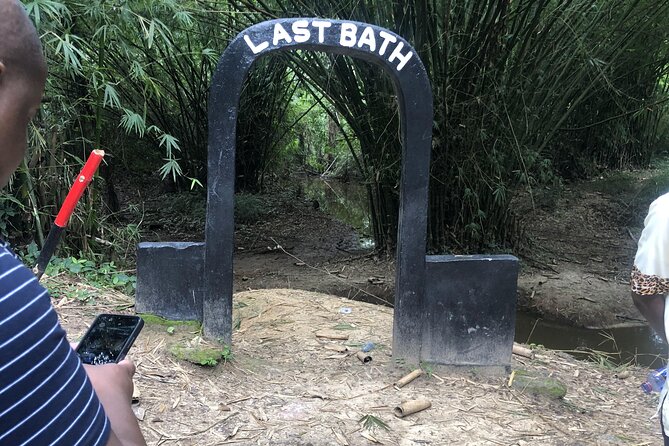
- Assin Manso Ancestral Slave River Park: the final bath and the names that return
- Elmina Castle: Portuguese 1482 origins plus a real working village next door
- Cape Coast Castle: UNESCO recognition and the Cape Coast Walk by the sea
- Guide-led learning: where the day can go from good to memorable
- Comfort and logistics that actually matter
- Value check: is $260 a fair deal for this route?
- What to pack (and how to pace yourself)
- Who this tour suits best
- Should you book this tour?
- FAQ
- What does the tour price include?
- Is lunch included?
- How long is the tour?
- Where does the tour start and end?
- What time does the tour start?
- How big is the group?
- What are the main stops?
- Can I cancel for a full refund?
- Is this tour suitable for most travelers?
Key highlights you’ll feel right away
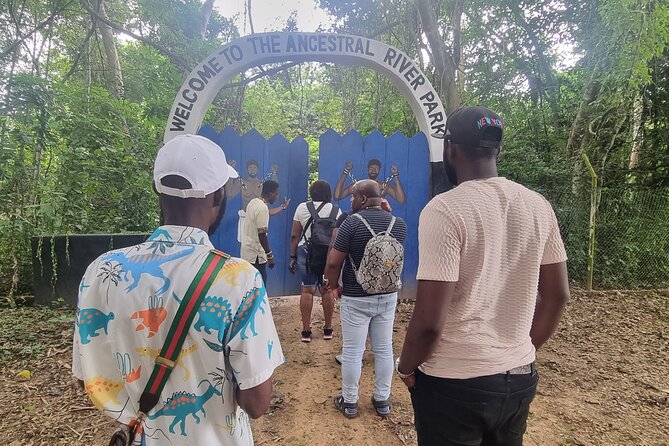
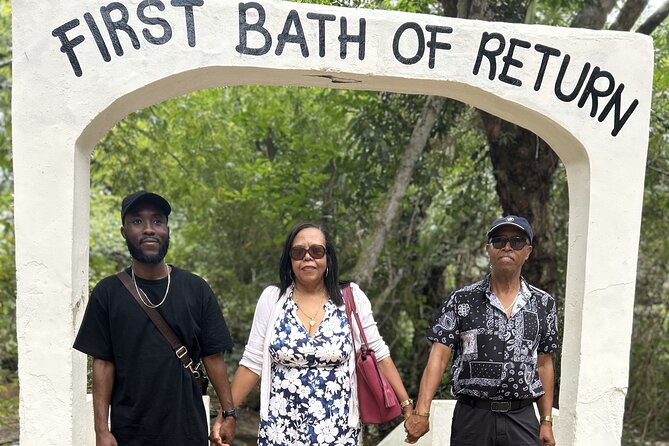
- Assin Manso’s final-bath site and reburial locations (Carson from New York and Lady Crystal from Jamaica) make this more than a photo stop
- Elmina Castle’s Portuguese roots in 1482 connect trade, empire, and the slave era in one place
- Cape Coast Castle’s UNESCO setting gives scale to what happened and how it’s preserved today
- Fishing market + coastal views add everyday Ghana texture to the heavy history
- Small group size (max 15) and a guided pace help you absorb what you’re seeing
Your day on Ghana’s coast: serious history, smart pacing
This is a long, meaningful route through Accra to Elmina and Cape Coast, with built-in time to learn at each site. The order matters. Starting with Assin Manso helps you understand the process before you walk through castles where enslaved people were held, traded, and shipped.
You’re also not stuck in silence or at the mercy of random pacing. With a guide, each location gets explained in a way that helps your brain connect details instead of just collecting facts. And because transport is included in an air-conditioned vehicle, you can focus when you’re on-site and recharge during the drives.
You can also read our reviews of more tours and experiences in Accra.

Getting to the start: Accra pickup and what the 7:30 am means
The tour begins at Accra Mall (Plot C11) at Tetteh Quarshie Interchange, Spintex Rd, with a 7:30 am start. That early departure is the tradeoff for covering three major locations in one day without rushing every single moment.
The vehicle setup helps. You get bottled water, WiFi on board, and air-conditioning, which is especially helpful on a hot coast day. The group stays limited to up to 15 travelers, so you’re not fighting for space around the guide or waiting forever to enter the next stop.
Assin Manso Ancestral Slave River Park: the final bath and the names that return
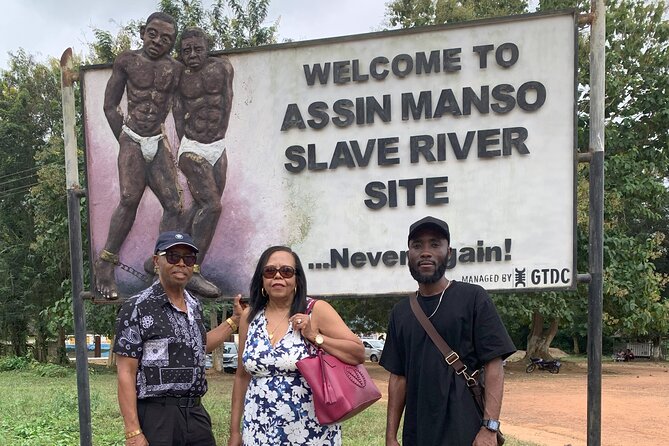
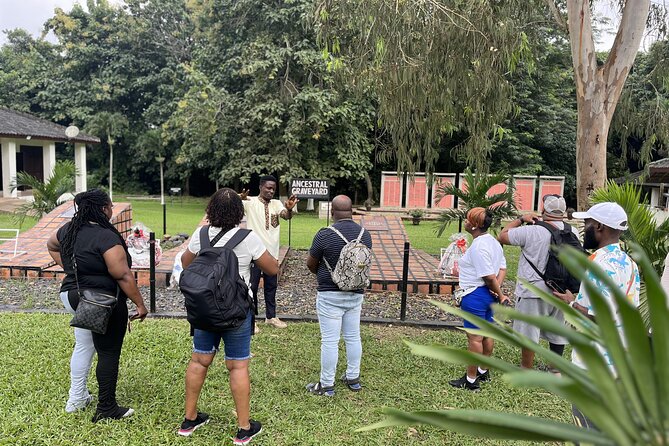
Assin Manso is where the story turns from history lessons into something more personal and grounded. This park is described as one of the biggest slave markets where people were assembled to be sold into slavery during the transatlantic slave trade.
The detail I find most important is the idea of a final bath. It’s a specific, human act placed right inside the machinery of exploitation. That contrast is exactly why I think this stop works as a prelude. You arrive at Cape Coast and Elmina with better context for what captives went through and what the castles were in the broader system.
You’ll also see the reburial site connected to repatriated remains of two diasporas: Carson from New York and Lady Crystal from Jamaica. That matters because it links Ghana’s coastal history to people whose lives later unfolded far away—then returned through remembrance and restoration.
Practical consideration: this stop can hit hard. If you’re the kind of traveler who likes to process quietly, build in a slower pace here and don’t feel pressured to rush to the next photo moment.
Elmina Castle: Portuguese 1482 origins plus a real working village next door
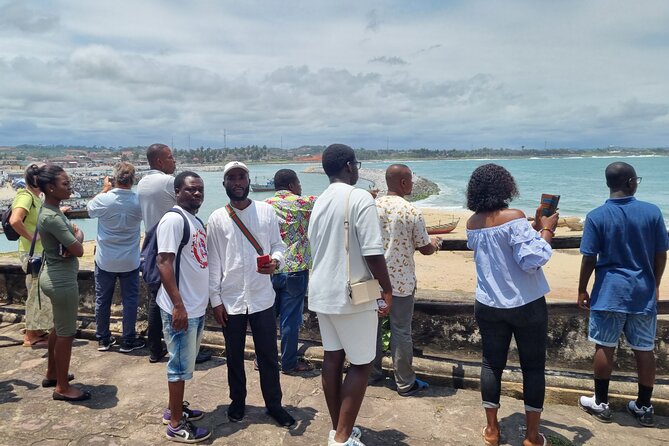
Elmina Castle is the next step, and it adds a different kind of learning. The Portuguese built Elmina Castle in 1482, and it was the Gulf of Guinea’s first trading post established in that region.
That framing gives you a wider lens than just the slave-trade story. You’re learning how power, commerce, and empire shaped what took place along the coast. Even though the focus is the tragic period, understanding Elmina as a trading post helps you see how the system operated, not only what it did to individuals.
A nice practical touch: there’s time to stroll the nearby fishing market. It gives you a contrast that isn’t disrespectful—it’s grounding. You can see Elmina as a living coastal town, not just a memorial site.
What to watch for: the combination of castle steps and market walking means you’ll want comfortable shoes. You don’t need hiking gear, but you do need grip and support.
Cape Coast Castle: UNESCO recognition and the Cape Coast Walk by the sea
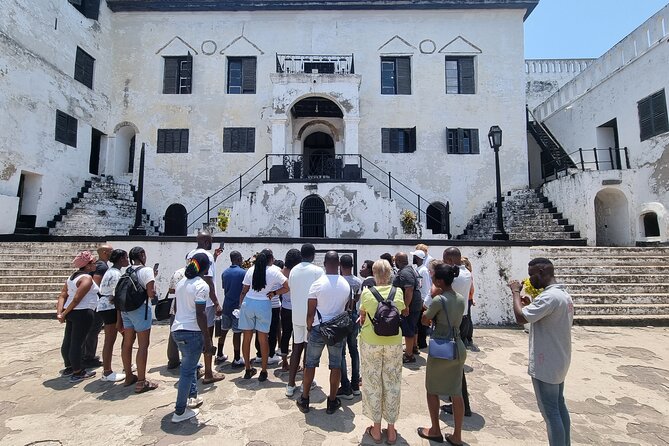
Cape Coast Castle is a UNESCO World Heritage site that once functioned as a slave castle. Like Elmina, it teaches you about slave trade activities and the lasting impacts on communities and countries.
The way this stop tends to land is about scale and atmosphere. Even when you know the basics, seeing the castle setting helps you understand why it became so central to the shipping of enslaved people. The walls and rooms do something words can’t.
Then there’s the Cape Coast Walk. This is where the day balances slightly. You’ll have time for fresh Ghanaian cuisine by the seaside (lunch itself isn’t listed as included in the package details, so plan to pay for it), and you’ll get conversation time at Castle Beach.
From what I’ve learned about how people experience this area, the coastal views and the sense of port activity near the castle can make the place feel real rather than frozen in time. It’s one more reason to appreciate the guided structure: you get history, then you get a bit of normal life right after.
Tip: if you prefer fewer crowds at memorial sites, consider being ready to follow your guide quickly and stay attentive rather than lingering just to take pictures.




Guide-led learning: where the day can go from good to memorable
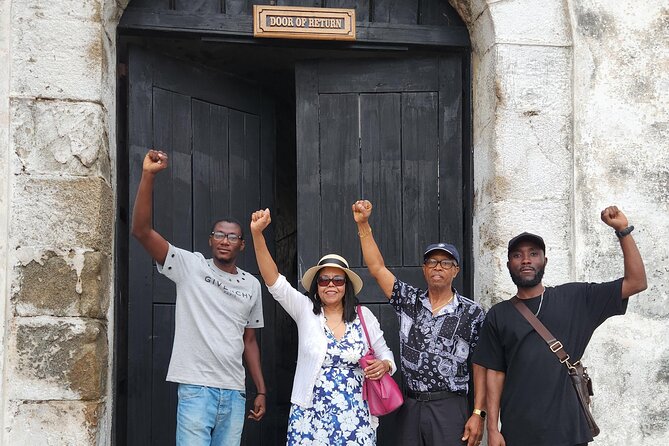
This kind of history tour rises or falls on interpretation. When the guide can connect details—how people were processed, what the castles were used for, and what changed afterward—the day becomes coherent.
The best examples of this style of guiding include a team led by a guide named Enoch (noted for professionalism and kindness). That tone matters. You’ll be dealing with painful subject matter, and a respectful guide helps keep the pace steady and the information clear.
I also like the way the day is set up so you’re not just “looking.” You’re learning why each place matters. And you’re not stranded between stops; the driver handles the movement so you can focus on the learning.
Comfort and logistics that actually matter
Beyond history, you’ll care about how your day feels. This tour includes:
- Air-conditioned vehicle
- WiFi on board
- Bottled water
- Pickup offered
- Mobile ticket
- Group discounts
- Admission tickets included for Assin Manso, Elmina Castle, and Cape Coast Castle
Maximum group size is 15 travelers, which usually helps keep the experience personal enough for questions without feeling cramped.
Duration is listed as 10 to 16 hours. That’s a wide window, and the reason is simple: traffic, time for entry and explanations, and how long you naturally need to absorb each site. I treat the long end as the safer expectation.
Value check: is $260 a fair deal for this route?
At $260 per person, the value depends on what you’d otherwise pay and how much you’d end up paying for entries and transport separately. Here, admission tickets are included for all the main historical stops, and you also get air-conditioned transport with water and WiFi.
For many travelers, that makes it feel like the “real cost” is mostly the tour price rather than surprise add-ons at each gate. And because it’s a single-route day—Assin Manso, Elmina, Cape Coast—you’re paying for efficiency.
The one clear cost mismatch to watch: lunch isn’t listed as included in the package details. Even if you’ll have time set aside for seaside food, you should budget for your meal on the coast.
What to pack (and how to pace yourself)
For a day like this, I pack for both comfort and respect:
- Comfortable walking shoes (castles plus uneven ground can tire you fast)
- A light layer for morning and air-conditioned breaks
- Water is provided, but bringing a small personal snack can help if you’re sensitive to long gaps
- Something practical for sun and dust (hat or cap works)
Emotionally, give yourself permission to slow down at Assin Manso and Cape Coast. This isn’t a “see and forget” kind of tour. It’s the type of day where your own notes and quiet moments are part of the value.
If you like structure, you’re in good hands. If you prefer fully self-guided travel, this might feel like you’re being pushed through time—so be ready to follow the group schedule.
Who this tour suits best
This works best for:
- Travelers who want a connected narrative instead of isolated attractions
- People making a first visit to Cape Coast and Elmina and want context before the castles
- Anyone comfortable with a serious historical focus and prepared for a long day
If you’re traveling with limited interest in history or you want mostly scenery and leisure time, this itinerary will feel heavy. But if you want to understand the coast as a story of forced movement, you’ll likely feel that the structure is worth it.
Should you book this tour?
I’d book it if you want a guided, admission-included route that links the slave-trade system from Assin Manso to Elmina and on to Cape Coast, with a bit of coastal life added through the fishing market and Cape Coast Walk. The small group size and the practical comfort perks (water, WiFi, air-conditioning) make a long day easier to handle.
I’d think twice if you’re sensitive to long drives plus emotionally heavy sites, or if you hate the idea of a schedule that you don’t control. In that case, consider whether you can emotionally pace yourself and whether you’re okay paying for lunch separately.
FAQ
What does the tour price include?
The tour includes an air-conditioned vehicle, WiFi on board, bottled water, and admission tickets for the main sites. It also lists pickup as offered and includes a mobile ticket.
Is lunch included?
Lunch is not listed as included in the package details. The day includes time for lunch during the Cape Coast Walk, but you should plan to pay for your meal.
How long is the tour?
It runs about 10 to 16 hours.
Where does the tour start and end?
It starts at Accra Mall, Plot C11 at Tetteh Quarshie Interchange, Spintex Rd, Accra, and it ends back at the meeting point.
What time does the tour start?
The start time is 7:30 am.
How big is the group?
The tour has a maximum of 15 travelers.
What are the main stops?
The main stops are Assin Manso Ancestral Slave River Park, Elmina Castle, Cape Coast Castle, and a Cape Coast Walk.
Can I cancel for a full refund?
Yes. You can cancel up to 24 hours in advance for a full refund.
Is this tour suitable for most travelers?
Most travelers can participate, and service animals are allowed.