REVIEW · ACCRA
Full-Day Private Culture and History Tour of Accra
Book on Viator →Operated by NYONKOPA ECO TOURS · Bookable on Viator
Accra’s big ideas show up fast. This private culture-and-history route strings together independence symbolism, pan-African thought, and everyday city life so you get context, not just photos. I especially like the private guide setup and the fact that admission fees are handled for you. The one thing to consider is that it’s a long day outside, and you’ll have limited time to slow down at each stop.
You also get a smart mix of places: official landmarks plus a real market where you can feel the pace of local commerce. I like that Makola Market is built into the day, because it turns Accra from a backdrop into a working city you can understand. One more consideration: lunch and snacks aren’t included, so plan for food breaks on your own around the tour timing.
This is priced like a focused, high-touch tour rather than a cheap bus ride. If you want a clear narrative through Accra’s major stories, and you value convenience, this works well. And if you’re traveling with someone who wants flexibility, a good guide can help set the rhythm so the day doesn’t feel rushed.
In This Review
- Key highlights worth clocking
- A one-day Accra route that connects independence, ideas, and daily life
- Independence Square and the Eternal Flame of African Liberation
- Makola Market: seeing Accra as a working city
- Jamestown drive-through: old town roots and European influence
- Kwame Nkrumah Memorial Park: the story behind Ghana’s independence struggle
- W.E.B. Du Bois Center: modern pan-africanism made human
- What the private guide setup changes for you
- Price and what $85 really buys in Accra
- Practical tips for a smooth 5 to 6 hour day
- Who should book this tour, and who might skip it?
- Should you book this Accra private culture and history tour?
- FAQ
- How long is the Full-Day Private Culture and History Tour of Accra?
- Is pickup offered?
- Are admission fees included?
- What stops are included in the tour?
- What’s not included in the tour price?
- What is the cancellation policy?
Key highlights worth clocking
- Independence Square’s Eternal Flame and the symbolism behind Ghana’s liberation story
- Makola Market for a real look at how people shop and trade day to day
- Jamestown drive-by history that connects local neighborhoods to broader European influence
- Kwame Nkrumah Memorial Park with a longer stop where ideas get explained
- W.E.B. Du Bois Center for grounded context on modern pan-africanism
- All admission fees included, plus bottled water, so you can budget cleanly
A one-day Accra route that connects independence, ideas, and daily life
This tour is built for people who want a coherent story in just a few hours. Instead of doing five “photo stops,” you get a guided link between major national milestones and the people and places around them. That matters in Accra, where modern Ghana sits close to older neighborhoods, and where context changes how you read what you’re seeing.
The pace is clearly designed for a 5 to 6 hour window. You spend time where it counts: Independence Square first, then Makola Market, then a couple of deeper cultural and historical stops with proper museum time at the Kwame Nkrumah Memorial Park and the W.E.B. Du Bois Center. The rest is travel and city viewing—enough to orient you, not so much that the day feels like commuting.
Price-wise, this is $85 per person. That’s not “budget.” It is, however, structured to include the admissions and taxes, plus bottled water, which helps you avoid the usual add-on creep that can quietly turn a day tour into an expensive day. If you’re trying to see the right places with the least hassle, the format has real value.
You can also read our reviews of more tours and experiences in Accra.

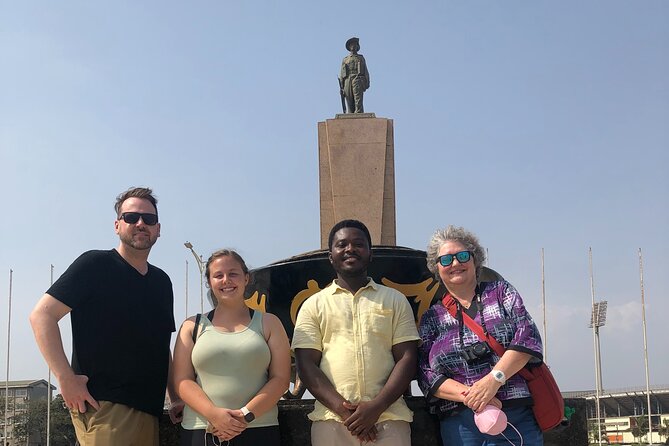
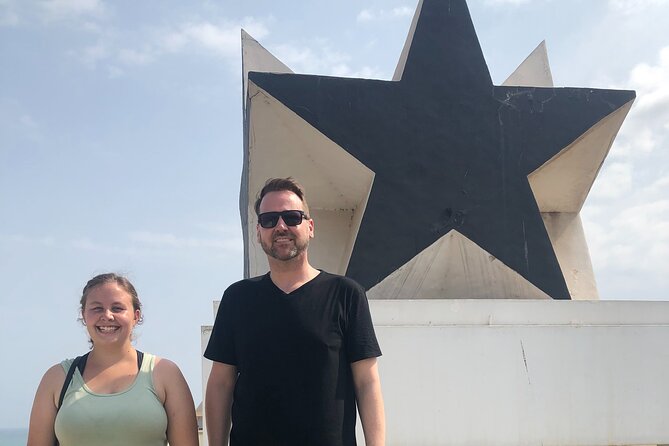
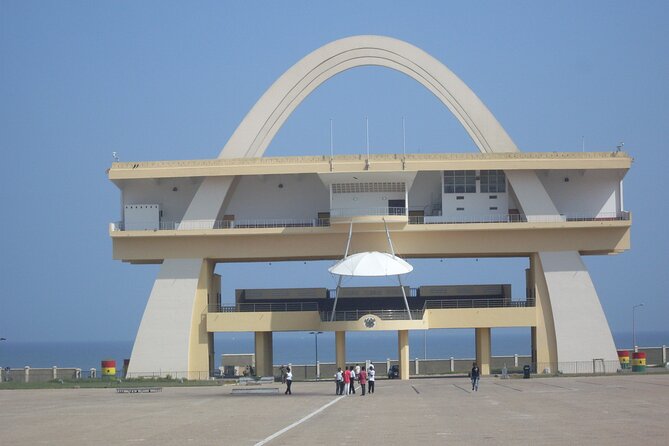
Independence Square and the Eternal Flame of African Liberation

You start at Independence Square, a place that does what it’s supposed to do: it sets the political and emotional tone of the day. The highlight here is the Eternal Flame of African Liberation, described as being lit first by Osagyefo Dr Kwame Nkrumah, Ghana’s first President. That detail isn’t just trivia. It helps you understand the flame as a living symbol of the liberation era, not just a monument.
Plan for about 30 minutes. That’s long enough to take in the setting, let a guide explain the meaning, and get your bearings before you move on. You won’t get a long, slow wander through the whole complex, so treat this as your “anchor stop.” After Independence Square, your brain will already be organizing everything you see into themes: freedom, nationhood, and who gets remembered.
Practical tip: bring something light for the sun and keep water handy. Bottled water is included, but Accra weather can still be warm during the day, and you’ll be outside between stops.
Makola Market: seeing Accra as a working city
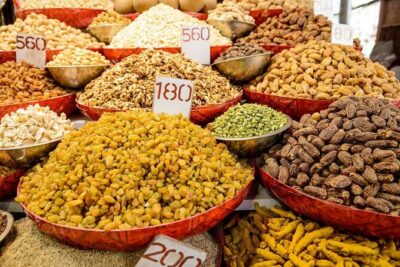
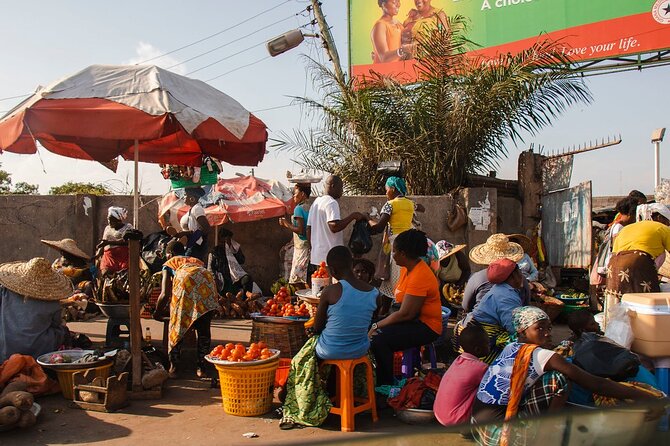
Next comes Makola Market, and this is where the tour turns from national story into everyday life. Makola is described as Accra’s largest open market, overflowing with goods, people, scents, and sounds. In plain terms, this is not a quiet museum corridor. It’s a place where you’ll see how shopping works when it’s part of daily routine.
You get about 30 minutes here. That’s just enough to walk a route with your guide, notice what people are buying, and understand the market’s role in local life. The tour also frames it as a chance to shop for local products and souvenirs. If you’re careful and price-aware, this is one of the more authentic places in Accra to pick up items with a story attached.
What you can take from Makola even if you don’t buy much:
- You’ll see the mix of goods and the flow of shoppers.
- You’ll understand that markets are social spaces, not just transaction points.
- You’ll pick up on what kinds of products locals seem to prioritize day to day.
A possible drawback: markets move fast. If you hate crowds or you’re sensitive to noise, focus on smaller, calmer browsing moments with your guide instead of trying to see everything.
Jamestown drive-through: old town roots and European influence
Then you head through Jamestown by car. This stop is shorter because it’s a drive-through rather than a long walk, but it can still be one of the most memorable parts if your guide tells the story well.
Jamestown is described as both a fishing community and one of Accra’s historic old towns. The tour also ties its history to European influence. Even without getting out for an extended stroll, you’ll get a sense of how geography, trade, and outside forces shaped the area over time.
How to get more out of this segment:
- Pay attention to what your guide emphasizes, because that’s where the meaning lives.
- Use it to connect the dots between national history (Independence Square and memorial sites) and how older communities formed before modern Ghana took its current shape.
Because this is a drive-by, don’t expect a “walk through.” If you want that kind of exploration, you can treat this as the orientation chapter and consider adding time later in Jamestown on your own.
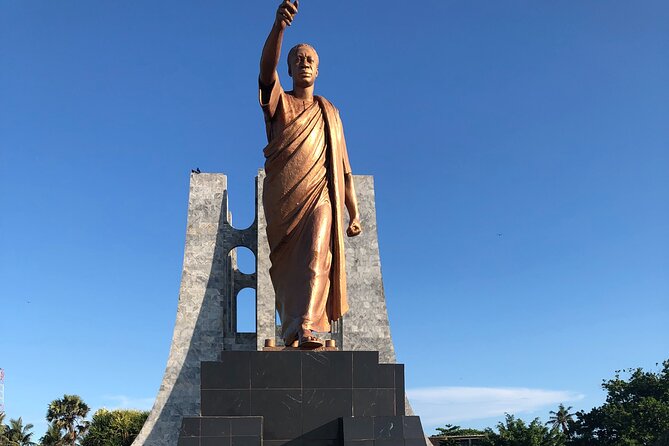
Kwame Nkrumah Memorial Park: the story behind Ghana’s independence struggle
One of the real value blocks on the day is the Kwame Nkrumah Memorial Park, with about 2 hours on site. This is your longer stop, and it’s where a lot of the day’s emotional weight lands.
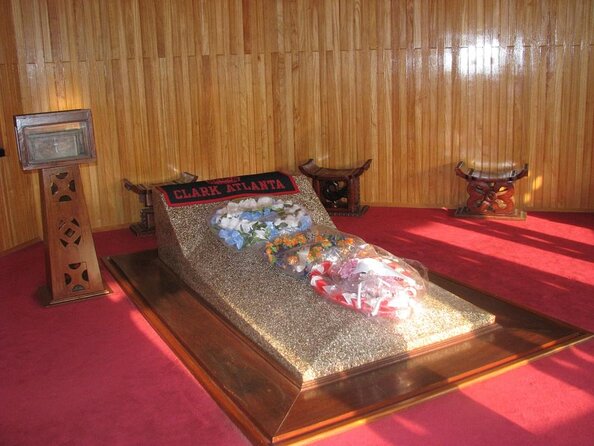
Here, you visit a site built and dedicated to Osagyefo Dr Kwame Nkrumah for his struggle for Ghana’s Independence. Two hours is a good length because it’s enough time for a guided museum-style experience without feeling like you’re rushing from one object to the next. It’s also long enough to ask questions if your guide is open to it.
Why this stop matters: Nkrumah shows up in multiple parts of Ghana’s story, and the earlier image of the Eternal Flame connects back to him. Seeing his legacy in this dedicated setting helps you understand him not just as a historical name, but as a central figure in Ghana’s independence narrative.
Tip: If you tend to absorb history better when you can slow down, this is the stop where you’ll feel the most benefit from the guide.
W.E.B. Du Bois Center: modern pan-africanism made human
After the memorial park, you move to the W.E.B. Du Bois Center, which focuses on the Father of Modern Pan-Africanism. This stop runs about 1 hour and includes a guided tour of the museum.
The strength here is perspective. Independence-era symbols and national leadership are one layer. Pan-African thought is another, and it helps you understand how Ghana’s story connects to wider movements across the continent. Even in a short time, a guided visit can help you grasp why Du Bois matters and how his ideas shaped people and political thinking beyond borders.
This is also a good stop for travelers who like their culture learning to be more than dates and buildings. A museum visit with a guide usually turns the material into something you can remember later: themes, names, and why certain concepts gained traction.
If you’re short on time in Accra, this center is a strong choice because it complements the Nkrumah focus with a different kind of intellectual legacy.
What the private guide setup changes for you
The private format is more than a marketing term. It changes how you experience the day because you’re not fighting for group pacing or waiting for someone who’s off-task.
You also get room for real-world adjustments. In past feedback, guides like Kofi were praised for being super friendly and for letting the day shift based on what guests wanted to prioritize. Another named guide, Kweku, was praised for knowing how to judge the rhythm of the day and add small “little gems” between major sites to fit the individual.
That adaptability matters because a 5 to 6 hour tour is tight. You want your guide to manage timing, explain what you see clearly, and keep you from feeling like you’re just passing through.
Who this suits best:
- First-time visitors who want a structured introduction to Accra
- Travelers who prefer personal pacing over group schedules
- Families and solo travelers who want a guide who can tailor attention
Price and what $85 really buys in Accra
Let’s talk value. At $85 per person, you’re paying for:
- A private guide
- Pickup offered
- Admissions and museum entry fees included
- Bottled water
- All fees and taxes
Lunch and snacks are not included, so you should budget for food separately. But admissions often eat away at the “cheap tour” illusion. When admissions are covered up front, your day stays predictable.
You’ll get the most value from this tour if you’re the kind of traveler who would otherwise spend time figuring out:
- which sites are worth your time,
- how to get from point to point,
- and what you can realistically see in half a day without burning energy.
If you’re comfortable doing independent visits and you’re already familiar with Ghana’s key figures and sites, this might feel pricier than you need. But for most people, it’s a practical way to get the story organized, with fewer headaches.
Also note: you can sometimes get group discounts, and there’s mobile ticket use mentioned. If you’re traveling with others, ask whether the pricing shifts for your group size when you book.
Practical tips for a smooth 5 to 6 hour day
This tour is built around a half-day schedule, but with enough museum time to matter. Here’s how to set yourself up.
Plan for gaps where you’ll want snacks. Lunch and snacks aren’t included, so you may want to eat before you start or carry a small snack with you in case the day’s timing runs long.
Wear shoes you can move in. You’ll be walking some at Makola Market and inside museum spaces. Also, markets mean uneven ground and lots of foot traffic.
Keep your expectations realistic. Independence Square and Jamestown are shorter segments, so don’t treat them as opportunities for a deep, slow exploration. Treat them as context-setting chapters.
Bring cash if you plan to shop at Makola Market. The tour encourages souvenir shopping, and open markets often work best with physical payment. The exact payment methods aren’t specified in the data you provided, so I’d keep a bit of cash on hand as a safe move.
If you want flexibility, tell your guide early. In the feedback tied to Kofi and Kweku, guides were praised for adjusting the itinerary. Even if you don’t change the big stops, you can often adjust pacing: more time looking, less time moving, and the chance to focus on what you personally care about.
Who should book this tour, and who might skip it?
Book this tour if you want:
- a guided route that explains what you’re seeing,
- the key Ghana independence and pan-Africanism sites in one day,
- and a market stop that shows Accra as a working city, not just a sightseeing list.
You might skip it if:
- you hate guided museum pacing and prefer to wander alone,
- you need a longer lunch-heavy day,
- or you’re only interested in one narrow theme and you don’t want to split your attention across multiple stops.
If you’re trying to get your bearings in Accra quickly and you care about the meaning behind landmarks, this is the kind of tour that makes the city feel less confusing on day one.
Should you book this Accra private culture and history tour?
I think it’s a strong pick for most first-timers to Accra who want real context without spending hours planning. The big wins are practical: private guidance, included admissions, and a schedule that balances national landmarks with local street-level life at Makola Market. If you’re okay handling food outside the tour and you can handle a few outside hours, you’ll likely feel it’s worth the money.
If you tell me your travel month, where you’re staying in Accra, and whether you prefer museums or street life, I can help you judge whether the pacing fits your style.
FAQ
How long is the Full-Day Private Culture and History Tour of Accra?
It runs about 5 to 6 hours.
Is pickup offered?
Yes, pickup is offered.
Are admission fees included?
Yes. All admission fees are included, along with all fees and taxes.
What stops are included in the tour?
You’ll visit Independence Square, Makola Market, Kwame Nkrumah Memorial Park, and the W.E.B. Du Bois Center, plus you’ll drive through Jamestown.
What’s not included in the tour price?
Lunch and snacks are not included.
What is the cancellation policy?
You can cancel for a full refund up to 24 hours before the experience’s start time. If you cancel less than 24 hours before, the amount you paid is not refunded.