REVIEW · NEW DELHI
6- Days Private Heritage Golden Triangle Tour
Book on Viator →Operated by BOUT INDIA TOURS · Bookable on Viator
Three cities, one smooth plan. If you want the Golden Triangle without the headache of planning routes and bookings, this private heritage tour strings Delhi, Agra, and Jaipur into a tight, logical flow, with guided sights, covered entrance fees, and a driver handling the big stuff.
I like two things a lot. First, the door-to-door private car transfers mean you’re not juggling taxis, timetables, or finding meeting points in chaotic traffic. Second, the trip includes monument entrance passes for the sights in the plan, so you’re not constantly pulling out your wallet for fees.
One consideration: you’ll do early starts and long road days between cities. It’s worth it for the big monuments, but if you hate waking up before sunrise, plan on trading comfort for access.
In This Review
- Key highlights you’ll feel on the ground
- The value of a private Golden Triangle plan (and what you’re really paying for)
- Day 1 in Delhi: India Gate, Old Delhi highlights, and a smooth airport landing
- Day 2 in Delhi: Jama Masjid, Chandni Chowk rickshaw ride, Humayun’s Tomb, and Qutb Minar
- Day 3: Agra Fort, local markets, and the road-to-Taj energy
- Day 4: Taj Mahal at sunrise hours, plus Chand Baori on the way to Jaipur
- Day 5 in Jaipur: Hawa Mahal, Jantar Mantar, City Palace, Jal Mahal, and Amber/Amer Fort
- Day 6: back to Delhi with a driver drop-off you control
- Where this tour fits best (and who might want a different style)
- Practical tips to make the whole trip feel easier
- Should you book this Golden Triangle private tour?
- FAQ
- How long is the Golden Triangle tour?
- Where does the tour start and end?
- Is hotel accommodation included?
- Are entrance fees for monuments included?
- What meals are included during the trip?
- Do I get an English-speaking guide?
- Will I have a private vehicle and driver?
- Is this a private tour or shared with other people?
- What is not included in the price?
- What is the cancellation refund policy?
Key highlights you’ll feel on the ground
- Private air-conditioned vehicle with driver throughout the trip keeps time tight and stress low
- UNESCO-listed monuments are built into the schedule, with admission passes included
- English-speaking monument guides for the main historic stops, so you get meaning, not just photos
- Chandni Chowk rickshaw ride and a guided walk in Jaipur’s Pink City markets for street-level India
- Select included meals: breakfast most mornings plus two lunches, and one traditional-style Rajasthani dinner vibe is part of the deal
- 4/5-star hotel stays (double/triple sharing) reduce the guesswork of where to sleep
The value of a private Golden Triangle plan (and what you’re really paying for)
At $1,224 per person, this isn’t a budget tour. But you’re not just buying sightseeing. You’re buying time, logistics, and access.
Here’s what your money covers based on the details you get: hotel stays for 5 nights in 4/5-star properties (or similar), private air-conditioned transfers with a driver, English-speaking guides at monuments, and entry passes for the sites named on the schedule. On a Golden Triangle trip, those items are usually what snowball in cost when you self-plan—especially if you’re paying separately for drivers, tickets, and guides.
You also get structure. That matters because Delhi, Agra, and Jaipur move at different speeds, and traffic can make a simple plan feel messy. A private car with a driver keeps you anchored, and the hotel check-in and check-out moments are handled with the flow of the day.
Still, it’s good to sanity-check your style. If you love solo wandering with total freedom, a private schedule may feel less flexible. If you want comfort and clear pacing, this kind of planning is a strong fit.
You can also read our reviews of more tours and experiences in New Delhi.



Day 1 in Delhi: India Gate, Old Delhi highlights, and a smooth airport landing
You start at Indira Gandhi International Airport. The big win on Day 1 is how quickly you get to comfortable mode: you’re picked up and driven straight to your hotel for check-in, so you’re not negotiating transport after landing.
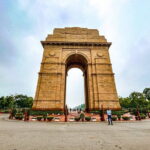
Once you’re settled, you head out for a first taste of the capital. You’ll drive past Rashtrapati Bhavan (President of India’s residence), then visit India Gate. It’s more than a photo stop. India Gate is a memorial for 82,000 Indian Army soldiers who died from 1914–1921 during the First World War period. It gives you an easy entry point into Delhi’s layered story—political power, empire-era monuments, and modern national identity all in the same skyline.
Practical note: this is the first day, so don’t pack it too tightly in your own mind. The value of this day is the reset: land, check in, then see one meaningful monument without burning your whole day.
Day 2 in Delhi: Jama Masjid, Chandni Chowk rickshaw ride, Humayun’s Tomb, and Qutb Minar
Day 2 is where Delhi starts feeling real. You’ll skip the stress of arranging transport between major zones, because you move by private car and go stop-by-stop with guides.
Old Delhi set-up
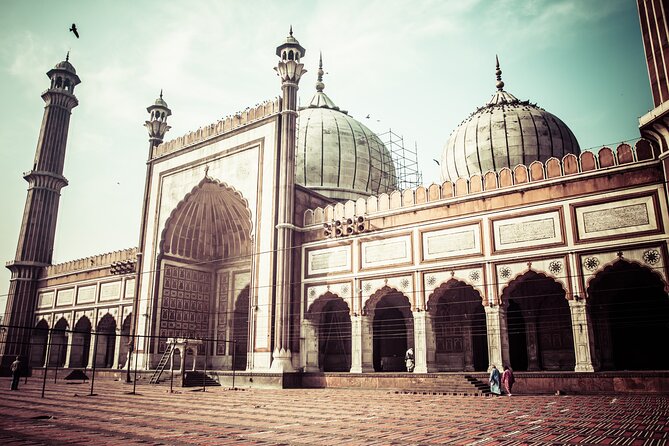
- You visit Jama Masjid, the largest mosque in India.
- Then it’s Chandni Chowk, one of the oldest and busiest markets in Old Delhi.
- You also get a rickshaw ride through Chandni Chowk, which is one of those experiences that’s hard to recreate if you’re trying to do it on your own.
This combo is smart. Jama Masjid gives you architectural and cultural weight. Chandni Chowk gives you sound, motion, and street-level life. Put together, you get both sides of Old Delhi: the ceremonial and the everyday.
UNESCO garden-tomb moment
After lunch, you go to Humayun’s Tomb (a UNESCO World Heritage Site). Built in 1570, it’s especially meaningful because it was the first garden-tomb on the Indian subcontinent. That detail matters. It’s not just a pretty monument—it’s a clue to how Mughal funerary architecture evolved.
Then comes Qutb Minar (UNESCO), a towering 73-metre tapering structure. It’s a vertical landmark that makes you look up and slow down, because you naturally want to trace its tiers with your eyes.
Timing reality check: Day 2 is long. You’ll go from markets to large-scale monuments, then to another UNESCO site. Build in patience, especially if you’re sensitive to crowds in Old Delhi.
Day 3: Agra Fort, local markets, and the road-to-Taj energy
Day 3 starts with a check-out and a drive to Agra. Agra is the “Taj Mahal day” city, so even if the main show isn’t until the next morning, the afternoon landing matters. You arrive by afternoon, have lunch, check in, then go sightseeing.
Agra Fort is the key stop here. This fort was the main residence of Mughal emperors until 1638, when the capital shifted to Delhi. That timeframe helps you understand the place: it’s not just a defensive wall. It’s a statement of rule, movement of power, and architectural scale built for an imperial world.
In the evening, you’ll have time to hang around local markets. This is a good buffer if you want to feel the city without turning the day into a sprint. Just remember: markets can be sensory overload. It’s fine to browse without buying. Your feet will thank you.
Day 4: Taj Mahal at sunrise hours, plus Chand Baori on the way to Jaipur
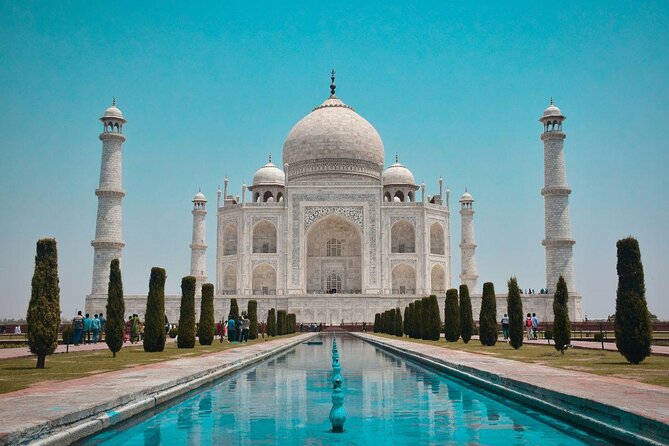
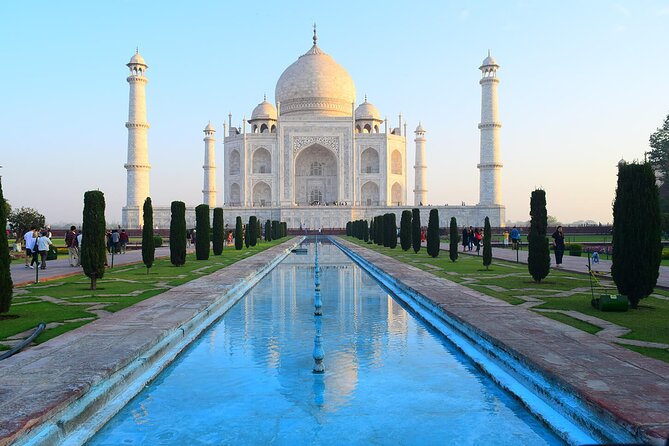
Early in the morning, you visit the Taj Mahal (UNESCO). It was built by Shah Jahan in memory of his queen Mumtaz Mahal, to house her mortal remains. If you only ever see one monument in India and it’s this, you’ll understand why people keep coming back—because the Taj is designed for emotional impact, not just sightseeing.
Practical tip: mornings help you in two ways. The first is lighting for photos. The second is that it can feel more manageable than later-day crowds.
After breakfast, you check out and head for Jaipur, the Pink City. En route, you stop at Chand Baori, a famous stepwell in Abhaneri village. It’s described as having 13 floors of steps and being over a thousand years old, and it’s one of the largest stepwells in the world. Even if you’re not a “tomb and temple” person, stepwells are fascinating because they connect architecture to water systems and everyday survival.
Then Jaipur hits you in the afternoon light. You check in, then head out in the evening for a guided walk-tour in the Pink City market area. This is the part that helps you move from “big monuments” to real local texture.



Day 5 in Jaipur: Hawa Mahal, Jantar Mantar, City Palace, Jal Mahal, and Amber/Amer Fort
Day 5 is the full Jaipur toolkit: street icon, scientific relics, royal spaces, and a fort that makes you slow down.
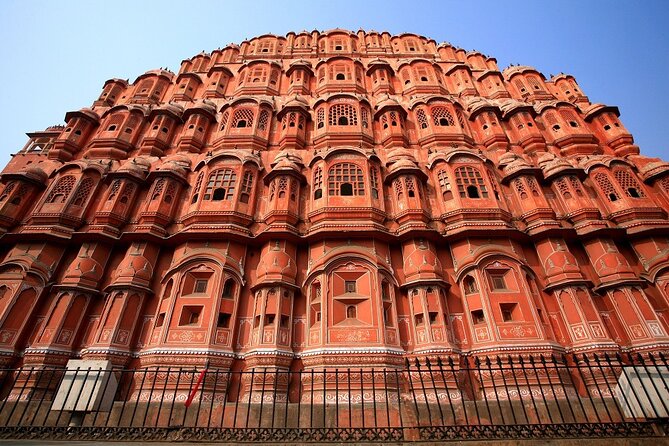
Start with Hawa Mahal (Palace of Winds). Even if you’ve seen pictures, seeing it in person helps you notice how the façade is built for airflow and viewing—small openings, intricate design, and a sense of purpose behind the surface.
Next is Jantar Mantar (UNESCO), with nineteen architectural astronomical instruments, completed in 1738 CE. This stop is one of the best arguments for travel with a guide: without explanations, you can miss what you’re looking at. With them, you start to see the city’s relationship to science, time, and astronomy.
After that, you visit City Palace, centered in Old City Jaipur. It’s a complex of courtyards, gardens, and buildings, which means you don’t just walk one hallway—you get a sense of how royalty used space across different functions.
Then there’s Jal Mahal, the palace located in the middle of a lake. It’s visually striking because it looks half-floating when you’re near the viewpoints. It’s also a good pause between heavier walking sections.
Finally, you reach Amer Fort / Amber Fort (UNESCO). It’s a principal tourist attraction in Jaipur, and the structure dates to the period after the fort’s earlier history. On a day like this, forts work as the payoff: your feet get a workout, but your brain gets the reward.
One warning: this is a long day of high-impact stops. Comfortable shoes matter. So does pacing—take breaks when you can, especially after walking sections in heat.
Day 6: back to Delhi with a driver drop-off you control
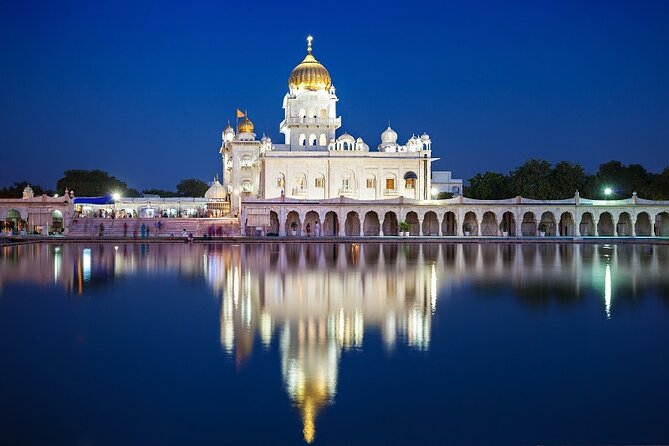
On Day 6, after breakfast, you check out and drive back toward Delhi. The car drops you at your desired location in Delhi, which is a practical detail. It means you’re not stuck choosing a single drop-off point far from where you actually want to be.
You finish back at the meeting point as the tour ends. The overall feeling is that you’ve done the core Golden Triangle loop without chaos. That’s the point.
Where this tour fits best (and who might want a different style)
This private heritage Golden Triangle tour is a great match if:
- You want UNESCO highlights in Delhi, Agra, and Jaipur without planning every ticket and transfer.
- You like a guide’s explanations at major monuments.
- You want comfort in transit and predictable hotel stops.
- You enjoy a mix of big icons (Taj Mahal) and street moments (Chandni Chowk rickshaw ride, Pink City market walk).
It might be less ideal if:
- You want maximum free time for independent wandering without a timed structure.
- You’re very sensitive to early mornings or long road days.
- You prefer fully unscheduled travel where you decide each turn day-by-day.
Family note: kids below 5 years are complimentary when sharing the same bed, and the tour requires a minimum of two adults to book. If you’re traveling as a couple, this still works well. If you’re solo, you may need a second adult traveler due to the minimum requirement.
Practical tips to make the whole trip feel easier
A few “bring it, don’t bargain with it” ideas based on what the tour requires:
- For religious sites (Jama Masjid and other visits), plan for conservative dress. You don’t want to be stuck improvising.
- Keep water and small snacks handy during long days. Two lunches and five breakfasts are included, but that doesn’t cover every moment.
- Wear shoes that handle uneven sidewalks. Markets and forts both mean you’re walking more than you think.
- If you care about photos at the Taj, treat the morning start as part of the experience. It’s not optional if you want the best lighting and timing.
Should you book this Golden Triangle private tour?
I’d book it if you want the Golden Triangle done with private logistics, guides, and entrance fees handled, and you’re happy trading some freedom for reliability. At $1,224 per person, it’s not cheap, but the cost tends to make more sense when you factor in 5 nights in 4/5-star hotels, a driver-driven schedule, and paid monument access.
I wouldn’t book it if you’re chasing a DIY adventure where you control every stop. The structure here is the product. If you want maximum flexibility, you’ll probably feel boxed in.
If you want a classic first-time Golden Triangle experience with less friction and more meaning at each stop, this one is built for that.
FAQ
How long is the Golden Triangle tour?
The tour runs for 6 days (approximately), covering Delhi, Agra, and Jaipur with 5 nights of accommodation.
Where does the tour start and end?
It starts with pickup at Indira Gandhi International Airport in New Delhi. It ends back at the meeting point.
Is hotel accommodation included?
Yes. The tour includes 5 nights’ accommodation in double or triple sharing at 4/5-star hotels (or similar).
Are entrance fees for monuments included?
Yes. Entry passes for all monuments mentioned in the schedule are included.
What meals are included during the trip?
Breakfast is included for 5 days, and lunch is included for 2 days. A traditional Rajasthani dinner is also part of the included meal highlights, with food and drinks otherwise not included unless specified.
Do I get an English-speaking guide?
Yes. The tour includes English-speaking guides for the monuments.
Will I have a private vehicle and driver?
Yes. You’ll use a private AC car with a driver available for sightseeing and transfers according to the schedule.
Is this a private tour or shared with other people?
This is a private tour/activity, so only your group participates.
What is not included in the price?
Not included are flights and tourist visa, travel insurance, and food and drinks unless specified in the inclusions.
What is the cancellation refund policy?
You can cancel up to 6 days in advance for a full refund. Cancel 2–6 days before for a 50% refund. If you cancel less than 2 days before, no refund is available. The timing is based on local time at the experience.