REVIEW · ATHENS
Acropolis & Ancient Agora Guided tour included all Entrances
Book on GetYourGuide →Operated by Athens Walks Tour Company · Bookable on GetYourGuide
Four hours can change how you see Athens. This Acropolis and Ancient Agora tour pairs skip-the-line access with a licensed guide, so you spend more time at the monuments and less time stuck in lines. I also like that the route uses the Acropolis South Slopes for a more scenic, less-crowded climb, and the sights come thick and fast without feeling rushed.
The big trade-off is simple: it’s still a walk. In hot months or very busy periods, the crowd energy and sun can make the pace feel tougher, especially on the climb and around the Agora.
If you want the why behind what you’re seeing, this format works well: you’ll get clear context at each stop, plus wireless headsets to keep the story audible even when the group and crowds get loud. And yes, you’ll finish with practical food and café tips near the Ancient Agora so you can keep the Athens day going.
In This Review
- Key highlights I think you’ll care about
- Why the Acropolis-and-Agora combo works so well in 4 hours
- Meeting at Office of Athens Walks near Porinou 5 (and what it changes)
- The Dionysus start: Theatre of Dionysus and the Odeon of Herodes Atticus
- Getting to the Acropolis: Temple of Athena Nike and the Propylaea approach
- Erechtheion and Parthenon: the stops you’ll keep talking about later
- The 15-minute Acropolis break: use it for water, photos, and sanity
- Ancient Agora: Stoa of Attalos, Temple of Hephaestus, and civic Athens
- Price and value: why $126 can make sense for this day
- Who this tour is best for (and who should pick another option)
- Tips to make it smoother in heat and crowds
- Should you book this Acropolis & Ancient Agora guided walk?
- FAQ
- What sites are included in the tour?
- Are entrance tickets included?
- How long is the tour?
- Where do I meet the guide?
- Is skip-the-line access included?
- What language is the tour guide?
- What should I bring?
- Is flash photography allowed?
- Is the tour suitable for people with mobility impairments or wheelchairs?
- Is hotel pickup included?
Key highlights I think you’ll care about
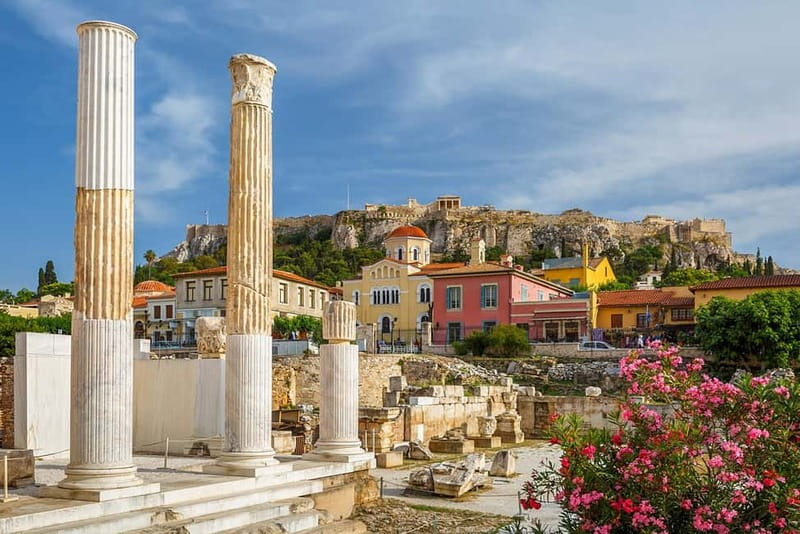
- South Slopes approach on the Acropolis for a scenic route with better views
- Wireless headsets so you don’t lose the guide when the crowds surge
- All entrances included for the Acropolis and the Ancient Agora
- Major monuments in one run: Parthenon, Erechtheion, Athena Nike, plus Agora highlights
- Stoa of Attalos museum stop to connect ruins with real finds
- A licensed archaeologist or historian style of commentary (seen across guides like Kostas, Yannis, Artemis, and Anastasia)
Why the Acropolis-and-Agora combo works so well in 4 hours
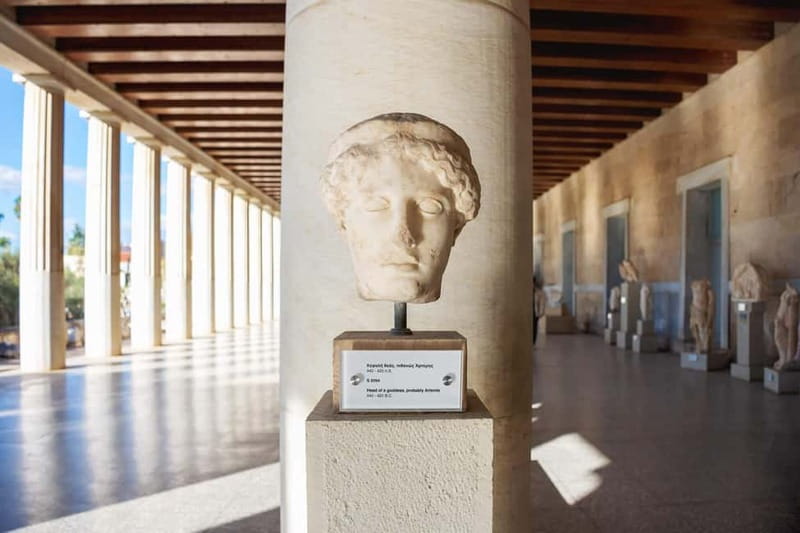
The Acropolis is the headline, but the Ancient Agora is where Athens felt like a city. You get both in one half-day loop, and that matters because the monuments stop being just postcard shapes. With a guide, you connect civic life, religion, art, and politics across the same day.
In practical terms, 4 hours is the sweet spot. Long enough to cover the Parthenon, Erechtheion, Temple of Athena Nike, then walk into the Agora and see the big civic-temple anchors. Short enough that you’re not exhausted before you reach the best photo points.
You’ll also get a structured flow that helps your brain organize Athens. You start with the area tied to performance and worship (Dionysus and theater spaces), move into the main Acropolis entry and temple complex, then shift down into the Agora’s public-life grid. It’s a satisfying arc.
You can also read our reviews of more tours and experiences in Athens.


Meeting at Office of Athens Walks near Porinou 5 (and what it changes)
You meet at Porinou 5 at the office for Athens Walks. It’s a central launch point and about a 2-minute walk from the Acropolis Metro Station, which is handy if you’re staying nearby or using public transport.
The most underrated part is the setup: your guide gives a quick overview before you start, and everyone gets wireless hearing headsets. That’s not just comfort. It turns crowded ruins into a clearer conversation, so you can actually follow the details while walking and looking up.
One more detail that helps: the tour is designed for English commentary by a live licensed guide. In other words, you’re not relying on a phone app while trying to read stone and skyline at the same time.
The Dionysus start: Theatre of Dionysus and the Odeon of Herodes Atticus
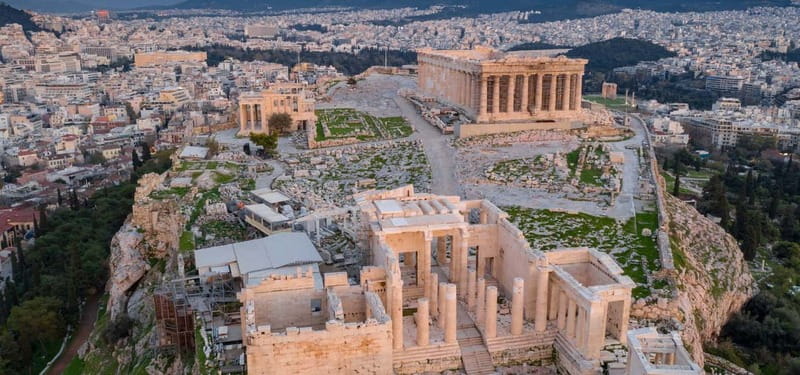
Right out of the gate, you touch the area tied to performance and civic gatherings. First comes the Theatre of Dionysus for about 15 minutes with guided context. This is a great start because it sets a theme: Athens didn’t just build temples, it staged ideas. Even if you know little about ancient drama, you’ll get the connections your later stops will reference.
Then you walk to the Odeon of Herodes Atticus area for about 15 minutes. You’ll see how that space relates to public life in Athens and how the city used architecture to host crowds and events. It’s also a nice way to ease into the Acropolis zone before you feel the full climb.
If you’re the kind of traveler who likes to understand what you’re standing on, this first chunk pays off later. It gives you a mental map for why Athens feels so intentionally planned.
Getting to the Acropolis: Temple of Athena Nike and the Propylaea approach
Before you hit the main temple zone, you pause at the Temple of Athena Nike. It’s only a short walk (about 5 minutes), but it’s a smart move because it’s “small but sharp.” You can appreciate the craftsmanship and the idea of Athena as protector and symbol of victory before you’re overwhelmed by the scale of the Parthenon area.
Next comes the Propylaea (the grand gateway) with guided time. This is where you start feeling the transition from normal city movement to the sacred, ceremonial heart of the Acropolis.
The route up matters too. The tour uses the South Slopes, which is both scenic and often less crowded than other approaches. For photos, the timing and angle can be a big deal. For your legs, it’s still a climb, but the path feels more like a guided walk with viewpoints than a straight uphill grind.
Erechtheion and Parthenon: the stops you’ll keep talking about later
The Erechtheion is a highlight for a reason. You’ll get guided time (about 15 minutes) at one of the Acropolis’ most distinctive architectural stories. The tour points out the famous Caryatids, and the context helps you see them as more than decorative figures. You learn how the design ties into worship, mythology, and the identity of the space.
Then you reach the Parthenon, where you’ll spend about 30 minutes with the guide. This is the moment most people come for, and what makes it worthwhile on a guided tour is how the explanation gives structure to what you’re seeing: how and why it was built, and what it represented as a symbol tied to civic identity and cultural pride.
I like how the tour doesn’t treat the Parthenon like a museum label. It’s explained as part of Athens’ public voice. Once you hear that framing, the building stops being just impressive and starts feeling meaningful.
You should also know the guides often pace the experience so you can look, listen, and photograph without constant stopping. That balance is part of why these tours score so well with people who usually get impatient around crowds.






The 15-minute Acropolis break: use it for water, photos, and sanity
You get a 15-minute break time on the Acropolis. Use it wisely. This is the moment to refill water, grab shade if you can, and reset your eyes for the next big section.
Practical move: if you’re planning photos, do the “wide shot” stuff here while you have a breather. After that, you’ll shift downhill into the Agora where the angles change and the light can feel different.
Also, bring the basics. The tour guidance specifically recommends comfortable walking shoes, a hat, sunscreen, and water, and flash photography isn’t allowed. That matters because it keeps the experience respectful and distraction-free for others, but it also means you’ll want your camera ready for natural light.
Ancient Agora: Stoa of Attalos, Temple of Hephaestus, and civic Athens
Once you step into the Ancient Agora, the feeling shifts. The Acropolis is power and symbolism. The Agora is activity and decision-making.
You’ll have guided time of about 30 minutes here, with stops that include the Stoa of Attalos, which now functions as a museum space showcasing artifacts from the site. This is one of the best transitions on the tour: you see ruins, then you get a dose of what the place looked like through objects and evidence. Even if you’re not a museum person, it helps the Agora click.
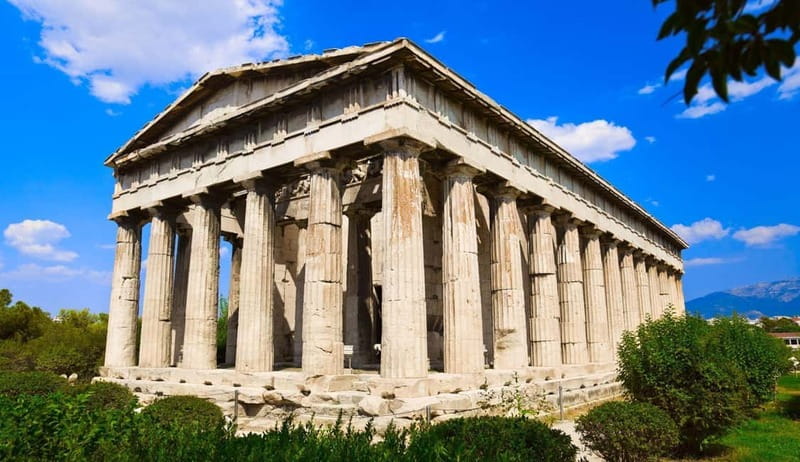
The guide also points out key civic anchors, including the Temple of Hephaestus, which is among the best-preserved ancient temples. You’ll hear about its dedication to Hephaestus (connected to craftsmanship), and that religious tie adds another layer to the Agora story: it wasn’t just politics and trade, it was also values you could point to in stone.
If you’re a “words matter” traveler, this is where you’ll feel it most. The Agora is where public life lived: meeting, debating, trading, and building reputations. A good guide helps you see those routines in the arrangement of spaces.
One consideration: the Agora section can feel a bit long for some people because it includes a museum component toward the end. If you’re visiting when it’s very hot or very crowded, that extra indoor time might either be a relief or a drag. I’d bring your patience and treat it like a mental “cool-down.”
Price and value: why $126 can make sense for this day
At $126 per person, you’re paying for more than narration. You’re paying for time, access, and audio clarity.
Here’s where the value comes from:
- All entry tickets included for both the Acropolis and the Ancient Agora, so you’re not chasing multiple purchases mid-day.
- Skip-the-line access through a separate entrance at both major sites, which can be the difference between enjoying the monuments and fighting queues.
- Wireless headsets included, which improves the experience immediately in busy areas.
- Licensed expert guidance by an archaeologist or historian type, which changes how you interpret the stones.
If you were to tackle the Acropolis plus Agora on your own, you’d likely spend time figuring out routes, buying tickets, and then dealing with lines. This tour compresses that stress into a guided flow and hands you context so you don’t need to become an expert before you arrive.
Who this tour is best for (and who should pick another option)
This works best if you want a structured walk with meaningful stops. It’s also a good fit for people who prefer learning in small chunks while moving, not in one long lecture.
It’s not suitable for:
- Children under 6
- Wheelchair users and people with mobility impairments
- Anyone who struggles with moderate walking and uneven ancient terrain
If you love monuments but also care about the story behind them, the Acropolis-to-Agora pairing is a strong match. And if you’re trying to see Athens without burning a whole day, the 4-hour format is a practical choice.
Tips to make it smoother in heat and crowds
Athens can be both stunning and exhausting, especially around the Acropolis. The tour’s own guidance is clear about what helps, and I’d follow it closely:
- Wear comfortable shoes (you’ll be moving enough that blisters would ruin the day).
- Bring a hat, sunscreen, and water.
- Plan for no flash photography.
- Arrive at the meeting point about 15 minutes early so you can get set up without stress.
Crowd reality check: even with skip-the-line entry, the Acropolis and Agora can be packed when cruise groups and peak visitors arrive. Your advantage here is the wireless headsets and the guide’s ability to keep you moving to good vantage points. Still, if you’re sensitive to congestion, aim for earlier starts in your schedule.
Should you book this Acropolis & Ancient Agora guided walk?
Book it if you want the classic Athens highlights with real context, not just sightseeing. The combination of licensed guidance, wireless headsets, and included entrances with skip-the-line access is exactly how you turn a half-day into a memorable one.
Skip it (or consider another format) if you know you struggle with sustained walking on stone terrain, or if you’re expecting a fully relaxed stroll. There’s enough movement that you’ll want solid shoes and a clear plan for hydration and shade.
If you’re deciding based on guide quality, the pattern in the guide names people praise is consistent: guides like Kostas, Yannis, Artemis, Anastasia, Demos, Hermes, and Alia get called out for being energetic, organized, and able to explain what you’re seeing without turning it into a nonstop information dump. That’s the difference between seeing Athens and understanding Athens.
FAQ
What sites are included in the tour?
You’ll visit the Acropolis (including the Parthenon, Erechtheion, and Temple of Athena Nike) and the Ancient Agora (including major Agora highlights such as the Temple of Hephaestus and the Stoa of Attalos).
Are entrance tickets included?
Yes. Acropolis entrance tickets and Ancient Agora entrance tickets are included, with no extra fees mentioned.
How long is the tour?
The tour lasts about 4 hours.
Where do I meet the guide?
You meet at Office of Athens Walks, at Porinou 5.
Is skip-the-line access included?
Yes. The tour includes skip-the-line access using a separate entrance for both the Acropolis and the Ancient Agora.
What language is the tour guide?
The tour is in English.
What should I bring?
Bring comfortable walking shoes, a hat, camera, sunscreen, and water (a water bottle is recommended).
Is flash photography allowed?
No, flash photography is not allowed.
Is the tour suitable for people with mobility impairments or wheelchairs?
No. It is not suitable for wheelchair users and is not designed for people with mobility impairments.
Is hotel pickup included?
No. Hotel pickup and drop-off are not included.