REVIEW · ATHENS
“All Day Tour Athens & Corinth:Highlights & Path of Apostle Paul”
Book on Viator →Operated by Greece Athens Taxi GAT · Bookable on Viator
Acropolis to Corinth in one long day. I like that this is built as a private group experience with hotel-to-hotel pickup, so you’re not juggling schedules or sprinting between stops. The day ties big-name Classical Athens sites to Corinth’s early-Christian story, with plenty of walking at the places that matter.
I also appreciate the practical comfort built into the plan: an air-conditioned Mercedes, WiFi, bottled water, and even mobile chargers for the hours in transit. One consideration: entry tickets are not included, so your day cost can rise fast—plus this route is site-heavy, not museum-heavy.
In This Review
- Key highlights worth planning around
- A private Athens-to-Corinth route that respects your time
- What to watch for
- Athens first: how the Acropolis stop really plays out
- Parthenon, built to last (and still telling the story)
- Erechtheion and the Karyatids
- Temple of Athena Nike + Propylaea + major theatres
- A practical timing note
- National Garden, Panathenaic Stadium, and Olympian Zeus: classic Athens beyond the top hill
- National Garden and the Parliament backdrop
- Panathenaic Stadium: the marble stadium that’s older than your memories
- Temple of Olympian Zeus and Hadrian’s Gate
- Syntagma Square: the Unknown Soldier and the Greek Parliament area
- Monument to the Unknown Soldier and the Euzones
- Hellenic Parliament and Syntagma Square context
- Plaka and Monastiraki: where the day turns into Athens street life
- Plaka: the old district under the Acropolis
- Monastiraki, Hadrian’s Library, the Agora, and Stoa of Attalos
- The Corinth Canal and the road to Akrokorinthos
- Corinth Canal: a strategic choke point
- Akrokorinthos: views and a long list of eras
- Archaeological Museum of Ancient Corinth: what’s worth your hour
- Value and the practical math of your ticket costs
- Who this tour suits best (and who should adjust expectations)
- Should you book this tour?
- FAQ
- How long is the Athens and Corinth tour?
- Where can pickup happen?
- Is this tour private?
- What language is provided?
- Is a licensed tour guide included?
- Are skip-the-line tickets included?
- Are entrance fees included?
- What Athens sights are included in the route?
- What Corinth sights are included?
- Can I cancel for a full refund?
Key highlights worth planning around
- Private group pacing: you stay together and the driver can adjust to your timing.
- Acropolis architecture in one sweep: Parthenon, Erechtheion, Temple of Athena Nike, plus the theatres.
- Real politics stops: Hellenic Parliament, Syntagma Square, and the Unknown Soldier ceremony area.
- Panathenaic Stadium at close range: white marble, Olympics hosted three times.
- Corinth Canal + Akrokorinthos: the Isthmus of Corinth followed by the Apostle Paul step area.
- Skip-the-line help: the driver assists with purchases, but ticket fees are paid by you.
A private Athens-to-Corinth route that respects your time
This is the kind of day trip that works because it’s not a random checklist. You’re moving between two regions with a tight loop: major monuments in Athens, then the long but meaningful hop to Corinth. Since it’s private, you don’t get thrown into the slow bits of other groups (and you can spend a little extra time where you care most).
The logistics are straightforward. You get pickup from wherever you’re staying (hotel, Airbnb, or the Port of Piraeus if you’re on a cruise), and you get dropped back afterward. On board, you’ll have comfort items that actually help on a long day: air conditioning, WiFi, bottled water, and mobile chargers. Add in the fact that the vehicle is a Mercedes with child seats available, and it’s an easier day for families.
In my experience with drivers on this route, the real difference is how well they handle the tricky parts of Athens roads and timing around crowds. One driver I had—Bledi—was prompt and attentive about our available time, including matching the schedule to boarding needs at the port. That kind of timing awareness matters when you’re doing this as a full-day itinerary.
You can also read our reviews of more tours and experiences in Athens.

What to watch for
Your day can run long because there are a lot of iconic stops. Also, the driver is not a licensed guide at museums and archaeological sites. You’ll get English-speaking history context from the driver, and you can request a licensed tour guide depending on availability, but you should be ready to handle the “who explains what” piece yourself if you want deep narration inside sites.
And yes: tickets for archaeological places and museums are not included (more on that below). If you’re budgeting, plan for the big ticket items up front so you don’t feel surprised later.
Athens first: how the Acropolis stop really plays out
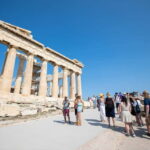
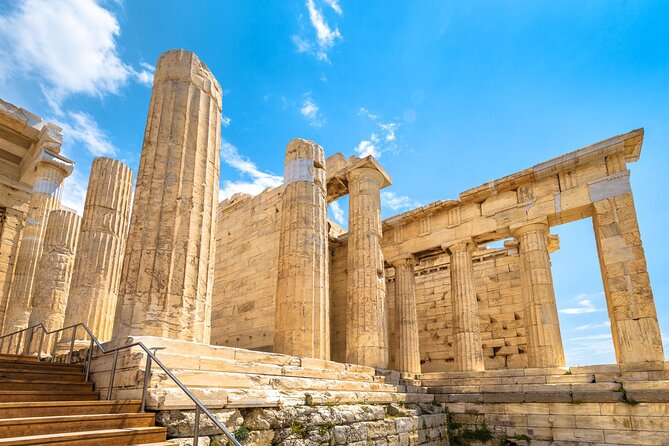
The day starts with the Acropolis, a rocky hill rising about 156 meters above sea level—roughly 70 meters above the city. It’s the kind of place where you understand why people built sacred spaces on high ground: views, drama, and sheer scale.
Parthenon, built to last (and still telling the story)
You’ll see the Parthenon, dedicated to Athena. Construction began in 447 BC and finished in 438 BC, with decorative work continuing until 432 BC. The builders associated with the project include Iktinos and Kallikratis, with Phidias often linked to the sculptural program. If you want a simple way to read what you’re looking at: the Parthenon is generally considered the culmination of the Doric order, and its sculptures are a top highlight of Classical Greek art.
Even if you’ve seen photos, the scale hits harder in person. The best way to enjoy it is to move slowly through the key viewpoints: take a breath, then look back at what you’ve already climbed.
Erechtheion and the Karyatids
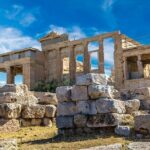
From there, you’ll reach the Erechtheion on the north side of the Acropolis. It’s an Ionic temple dedicated primarily to Athena, and it’s famous for its Karyatids—those sculpted female figures that act as columns. This stop is worth it because it shows how Greek design could shift styles without losing the overall sacred identity of the hill.



Temple of Athena Nike + Propylaea + major theatres
The itinerary also includes the Temple of Athena Nike, plus the Odeon of Herodes Atticus and the Theatre of Dionysus (built on the south slope of the Acropolis as part of Dionysus Eleuthereus’ sanctuary). Seeing these in the same “session” helps you connect two things:
- the Acropolis as a religious center
- and Athens as a political and cultural powerhouse, where drama and public life weren’t separated from civic identity
A practical timing note
The Acropolis portion is listed at about 1 hour 15 minutes, and admission isn’t included. That means you’ll want to treat this as a guided entry to the highlights—not a deep slow climb. If you want extra time for photos or for reading site panels, you’ll need to manage your energy early in the day.
National Garden, Panathenaic Stadium, and Olympian Zeus: classic Athens beyond the top hill
After the Acropolis, you move into spots that round out the city instead of repeating it.
National Garden and the Parliament backdrop
You’ll pass through the National Garden (also known as the Royal Garden), located behind the Greek Parliament building (the Old Palace). It’s about 38 acres and includes some ancient ruins, plus several busts honoring Greek figures like Ioannis Kapodistrias (Greece’s first governor) and Jean-Gabriel Eynard, a prominent Philhellene.
This stop works because it gives you a breather. It also sets up the political portion next—your eyes go from ancient power to modern power fast.
Panathenaic Stadium: the marble stadium that’s older than your memories
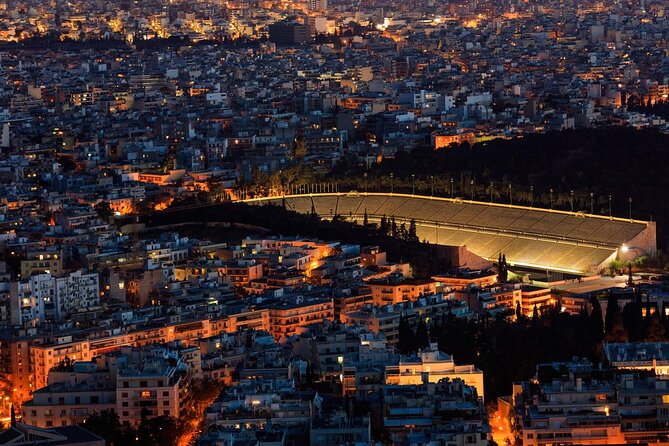
The Panathenaic Stadium (Kallimarmaro) is an old-school Athens anchor. It’s the oldest stadium still in operation, and the Olympics were held there three times. It’s also the only major stadium built entirely from white marble. Even if you don’t care about sports, standing in a stadium built of marble gives you a different angle on how Athens linked culture, athletics, and identity.
Temple of Olympian Zeus and Hadrian’s Gate
You’ll see the Temple of Olympian Zeus—dedicated to Zeus, with a half-complete feel that makes it easier to understand how time wrecks grand plans. The pillars you see are major visual evidence of its original scale.
Nearby, you’ll also catch the Arch of Hadrian (Hadrian’s Gate), a monumental gateway spanning an ancient road linking central Athens to the eastern complex tied to the Temple of Olympian Zeus.
Syntagma Square: the Unknown Soldier and the Greek Parliament area
This part of the day is about modern Athens, but it’s still tied to symbolism and public ritual.
Monument to the Unknown Soldier and the Euzones
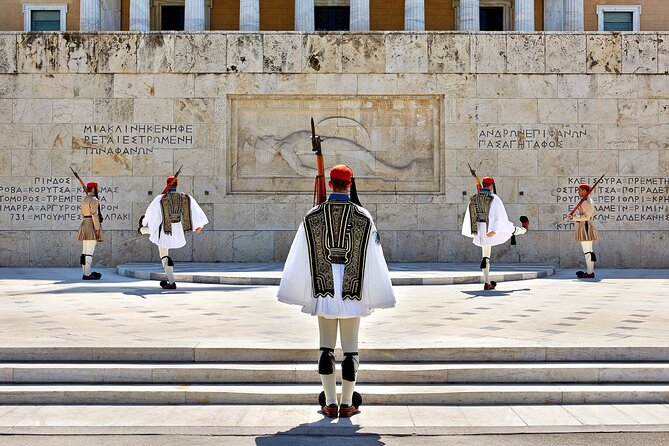
In front of the old palace—now Parliament House—you’ll see the changing of the guard by the Euzones. The guard is described as watching 24 hours a day by the Presidential Guard. It’s a short stop, but it’s one of those street-level moments that feels instantly real, not staged for tourists.
Hellenic Parliament and Syntagma Square context
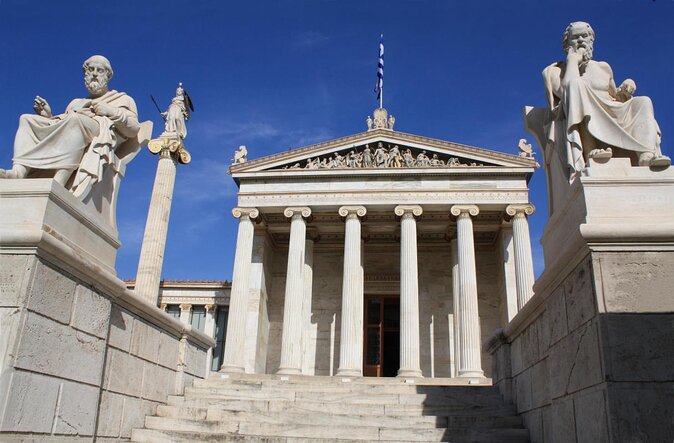
The Hellenic Parliament building overlooks Constitution Square (Syntagma Square). The square is named for the constitution Otto, the first King of Greece, was forced to grant after unrest in 1843. You’ll also get time around the National Library (Vallianeion), the National and Kapodistrian University of Athens, and the Academy of Athens.
The National Library detail is striking: the reading room once housed over 2 million books and manuscripts, including about 5,200 Greek New Testament manuscripts and handwritten works tied to Aristotle, Plato, and Homer. Even if you can’t go inside, knowing that scale makes the architecture feel less like decoration and more like national infrastructure for learning.
Plaka and Monastiraki: where the day turns into Athens street life

After the big monuments, the itinerary shifts toward classic neighborhoods.
Plaka: the old district under the Acropolis
Plaka is described as the oldest and most charming district, sitting right below the Acropolis. Expect medieval winding alleys, small steps, neoclassical houses, red tiles, and balconies with colorful flowers. This is the part of the day where you’ll likely want to slow down, grab a quick snack, and take your time between photo stops.
Monastiraki, Hadrian’s Library, the Agora, and Stoa of Attalos
Then you move into the Monastiraki area, tied to ancient public life. You’ll see:
- Hadrian’s Library (built around AD 132, with an internal courtyard and pool bordered by 100 columns)
- the Agora area as a “gathering place” for the polis
- the rebuilt Stoa of Attalos (built for and named after King Attalos II of Pergamon)
This combination is good because it gives you both the “public meeting” idea and the physical spaces where it happened. It also breaks up the long Athens climb earlier with lighter walking and a more human-scale feel.
The Corinth Canal and the road to Akrokorinthos
Leaving Athens in a private car means you can settle into transit time without worrying about trains. But the payoff is that you arrive at Corinth with context instead of as an isolated stop.
Corinth Canal: a strategic choke point
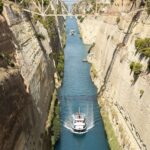
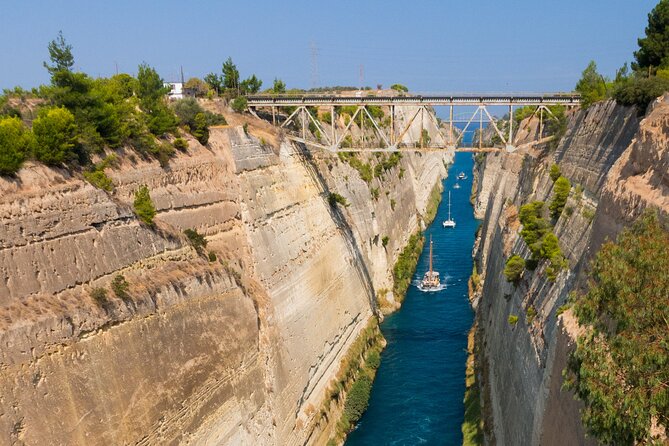
You’ll see the Isthmus of Corinth and the Corinth Canal itself. The canal connects the Saronic Gulf to the Gulf of Corinth. It’s about 6 kilometers long, and the narrowest point is where the canal was built between 1880 and 1893.
The area has long been strategic. An earlier wall—the Hexamilion—was preserved through Byzantine times, which is a reminder that control of this strip of land has mattered for centuries.
Akrokorinthos: views and a long list of eras
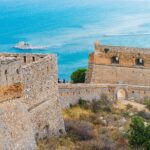
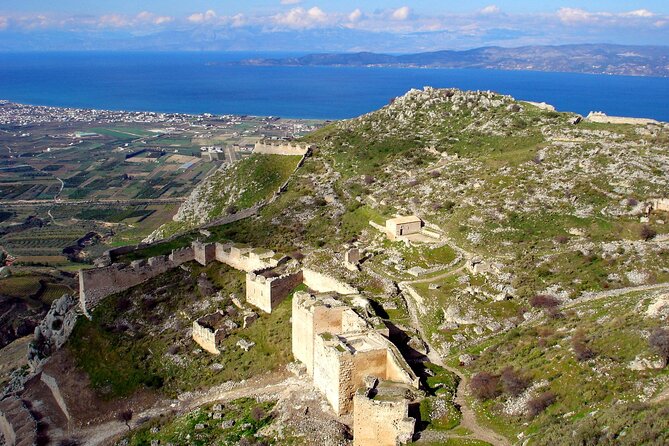
Then comes the main Corinth hilltop: Akrokorinthos (Acrocorinth), a steep rock about 575 meters high. It’s been used as a fortress and viewpoint against raids, including raids from central Greece or the sea.
The itinerary’s “Apostle Paul” theme is connected to a stop labeled Apostle Paul’s step, plus several other ancient and early Christian sites you may see, such as:
- Amphitheater
- Sanctuary of Asclepius
- Sanctuary of Demeter and Koris
- Fountain Glavki
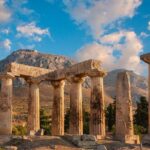
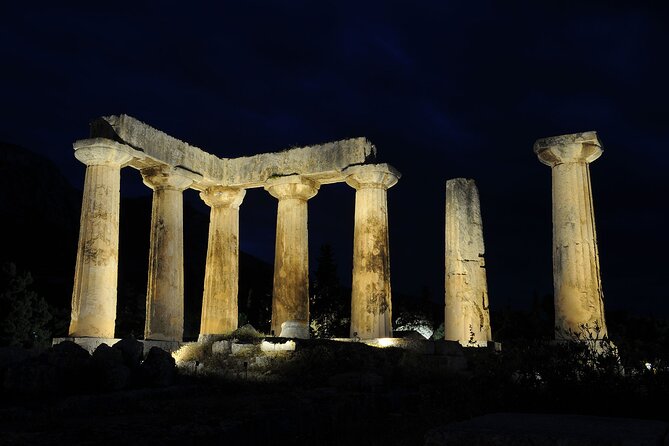
- Temple of Apollo
- Temple of Octavia
- Early Christian Basilicas, including the Basilica of the Skull and the Basilica of Lechai
There’s also mention of Pirine and the Conservatory. Even if you’re not an architecture nerd, the hilltop logic is easy: you’re standing at the geographic center of control and movement, where different cultures layered their sacred and civic spaces over time.
Archaeological Museum of Ancient Corinth: what’s worth your hour
You’ll finish the Corinth portion at the Archaeological Museum of Ancient Corinth, located in the archaeological site of ancient Corinth. It’s described as built in 1932 by the American School of Classical Studies.
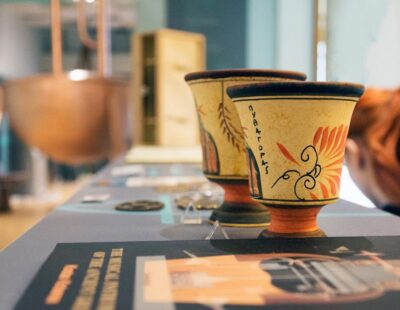
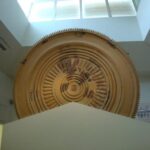
This museum stop is allocated about 1 hour, but entrance fees are not included. Based on the listed fee, you should plan around €20 per person for the museum. Inside, you can expect collections covering prehistoric times, finds from the Asklepieion, and artifacts from Geometric periods through Byzantine. It also includes items like the Twin Kouroi from ancient Tenea, noted as archaic plastic art.
If you want the most value, think of the museum as your “translation tool.” It helps you connect what you saw on the hilltop to objects you can actually study up close.
Value and the practical math of your ticket costs
The tour price is $307.39 per person for a private experience with pickup and return. That price feels fair if you’ll appreciate the comfort and time savings: private transportation, A/C, WiFi, chargers, and a driver who can help with skip-the-line ticket purchases.
But it’s not a fully “tickets-included” tour. You’ll need to budget for archaeological admissions. The Acropolis ticket is listed as €30 per person, and the Archaeological Museum of Ancient Corinth is listed as €20 per person. The tour notes that ticket prices vary depending on season (winter vs. summer), so treat those as baseline expectations rather than guarantees.
If your priority is maximum historical depth in museums, note that the driver isn’t a licensed guide at sites. You can request a licensed tour guide on availability, but if that’s important to you, plan to ask ahead.
Who this tour suits best (and who should adjust expectations)
This experience is a strong fit if you want a single-day plan that connects Athens and Corinth without stress. You’ll love it if:
- you like structure and clear stop-by-stop priorities
- you want the Acropolis monuments plus the political Athens highlights around Syntagma
- you’re interested in Corinth’s early Christian context, including the Apostle Paul theme
It might not be perfect if:
- you expect a museum-heavy day focused on galleries and collections beyond the Corinth museum
- you want a licensed guide inside every archaeological site without relying on availability for upgrades
- you’re sensitive to walking time, because this is built around multiple landmark clusters
Should you book this tour?
I’d book it if you want an efficient, comfortable way to cover the biggest Athens hits and then add Corinth without losing an entire second day. The private pickup and the focus on key monuments make it feel like a plan, not a gamble.
Before you confirm, do two quick checks:
- confirm that the Athens museum time (if you care about it) matches your expectations, because the day is structured around major ruins and neighborhoods
- budget for entrance fees, starting with the Acropolis and the Corinth museum since those are explicitly listed
If you do those two things, you’ll end the day with the kind of contrast that Athens-to-Corinth tours are good at: ancient power, modern ritual, and an early Christian thread you can actually see in the places you visit.
FAQ
How long is the Athens and Corinth tour?
It runs about 10 to 11 hours.
Where can pickup happen?
You can be picked up from any location you prefer, including a hotel, Airbnb, the Port of Piraeus (right outside your cruise ship with a sign), or a metro or bus station. You can customize the pickup time.
Is this tour private?
Yes. It’s a private tour/activity, and only your group participates.
What language is provided?
The driver is listed as English speaking and the tour is offered in English.
Is a licensed tour guide included?
An English-speaking driver with history knowledge is included, but the driver is not a licensed tour guide to accompany you inside sites. A licensed tour guide can be requested depending on availability.
Are skip-the-line tickets included?
The tour includes assistance with purchasing skip-the-line tickets. You cover the ticket cost.
Are entrance fees included?
No. Tickets for archaeological places and museums are not included. The Acropolis is listed at €30 per person and the Archaeological Museum of Ancient Corinth is listed at €20 per person.
What Athens sights are included in the route?
The itinerary includes the Acropolis highlights (including Parthenon, Temple of Athena Nike, Erechtheion, Odeon of Herodes Atticus, and Theatre of Dionysus), plus stops around the National Garden, Panathenaic Stadium, Temple of Olympian Zeus, Hadrian’s Arch, Zappeion, Syntagma Square, the Hellenic Parliament area, National Library (Vallianeion), the university, the Academy of Athens, Plaka, and Monastiraki.
What Corinth sights are included?
The tour includes the Corinth Canal, Akrokorinthos (including Apostle Paul’s step and various listed sanctuaries and temples), and the Archaeological Museum of Ancient Corinth.
Can I cancel for a full refund?
Yes. You can cancel up to 24 hours in advance for a full refund. If you cancel less than 24 hours before the experience starts, the payment is not refunded.