REVIEW · ATHENS
Ancient Corinth, Mycenae, Epidaurus, Nafplio Full Day Private Tour From Athens
Book on Viator →Operated by CRISPY LOCAL MONOPROSOΡΙ Ι.Κ.Ε. · Bookable on Viator
Big ruins, low stress.
This private Peloponnese loop is built for getting a lot done without juggling trains or schedules, and it hits major UNESCO classics in one long day. You start with a dramatic canal overlook, then move into Ancient Corinth, Mycenae, and Epidaurus before finishing with Nafplio’s Venetian views.
What I really like is the mix of “see it fast” and “sit with it.” I love the pickup-and-return convenience from anywhere in Athens, and I also like that the driver shares history facts while you ride so you understand what you’re looking at before you reach the ruins. That makes the day feel less like running and more like a guided story.
One thing to think about: the biggest archaeological admission fees aren’t included, so you should budget extra cash in euros for Corinth, Mycenae, and Epidaurus. It’s still good value, but it’s not a one-price-all-day situation.
In This Review
- Key things to know before you go
- Private Peloponnese Day: What 9 to 10 Hours Really Gives You
- Corinth Canal at the Start: A Tiny Stop with Big Theater
- Ancient Corinth and Its Paul Connection: Where the Story Gets Personal
- Mycenae Citadel and the Museum: Bronze Age Power in a Fortified Shell
- Treasury of Atreus and the Lion Gate Moment: Stone That Refuses to Impress From a Distance
- Epidaurus Theatre and Asclepius Sanctuary: Acoustics, Healing, and Time That Slows Down
- Nafplio After Dark Energy: Harbor Views, Coffee Time, and Fortress Steps
- Price and Budget Reality: What You Pay, What You’ll Still Need
- The Driver Factor: Why the Stories on the Road Matter
- Who Should Book This Day Trip From Athens
- Should You Book This Athens-to-Corinth-Mycenae-Epidaurus Tour?
- FAQ
- How long is the private tour?
- Is pickup included, and where does the tour start?
- Are entry tickets to the archaeological sites included?
- What parts of the day are free entry?
- Will we have a licensed guide inside the sites?
- Is this a private tour or shared group?
- What happens if the weather is bad?
Key things to know before you go
- Private transport with a luxury car or minivan, so your group stays together all day
- Three UNESCO World Heritage stops checked off without changing hotels or routes
- Driver-led storytelling on the road, with site time that won’t feel rushed
- Ticket strategy matters: Mycenae, Corinth, and Epidaurus have separate entry fees
- Nafplio time is real: harbor photos, a break for lunch, and a fortress with big views
- Epidaurus is the acoustic star, and you get the time to experience it as more than scenery
Private Peloponnese Day: What 9 to 10 Hours Really Gives You
This is the kind of day trip that works when you want depth, not just photos. You’re in a car all morning and early afternoon, but the schedule is built around short, focused stops at the major classical sites, then a breather in Nafplio.
You start at 8:00 am with pickup from your Athens accommodation, then spend the day moving through several eras: Roman-era destruction and rebuilding at Corinth, Bronze Age power at Mycenae, and the healing-cult world around Epidaurus. By the time you reach the seaside town of Nafplio, the day shifts from archaeology mode to viewpoints, coffee, and lingering streets.
The private format is a big part of the value. Your group doesn’t have to wait for a large bus rhythm, and you can usually spend extra minutes where your interests land—like the Lion Gate area at Mycenae or the theatre seats at Epidaurus.
You can also read our reviews of more tours and experiences in Athens.


Corinth Canal at the Start: A Tiny Stop with Big Theater
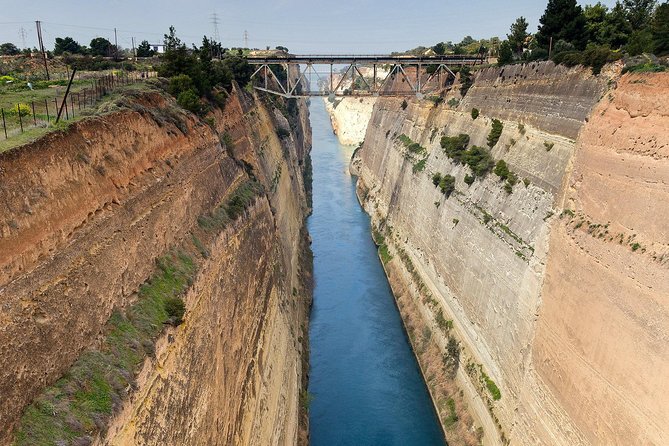
The morning begins with the Corinth Canal, a quick photo break that actually sets the tone for the whole day. The canal connects the Gulf of Corinth in the Ionian Sea with the Saronic Gulf in the Aegean Sea, cutting through the narrow Isthmus of Corinth. There are no locks, it’s dug at sea level, and it’s only about 21.4 meters wide at the base—so modern ships can’t just pass through easily.
If you catch the views from higher ground, you’ll see the steep limestone walls and boats threading through below. It’s brief—around ten minutes—but it helps you visualize why the Peloponnese feels like its own world. That “peninsula as an island” feeling is a useful mental map for everything you’ll see later.
Tip: treat this as orientation, not as a destination. Take a few wide shots, then move on before the day gets too long.
Ancient Corinth and Its Paul Connection: Where the Story Gets Personal
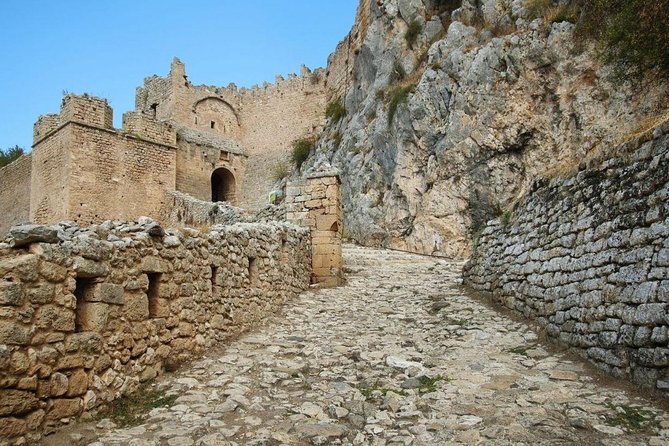
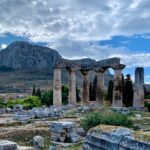
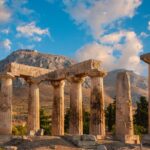
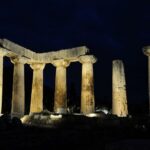
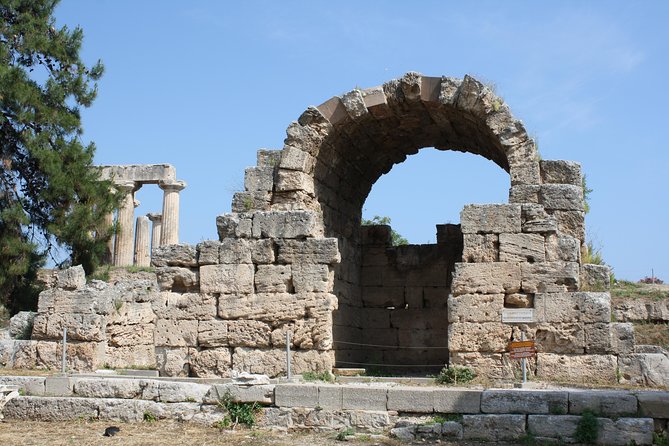
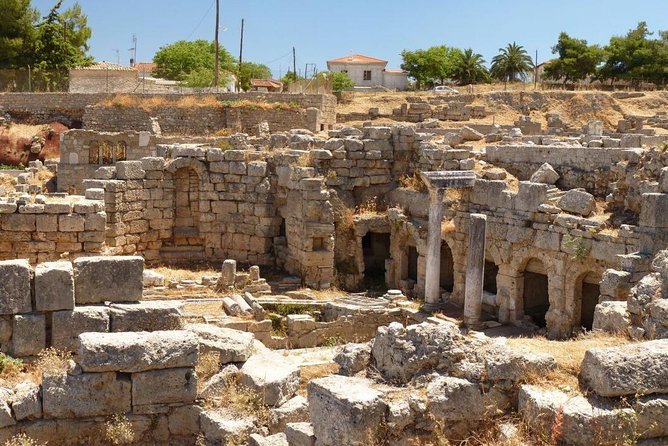
Next comes Ancient Corinth, the major city-state on the isthmus—roughly halfway between Athens and Sparta. This is where the day gains emotional weight, because Corinth shows up in Christian texts through Saint Paul’s letters to the Corinthians and his missionary travel described in Acts.
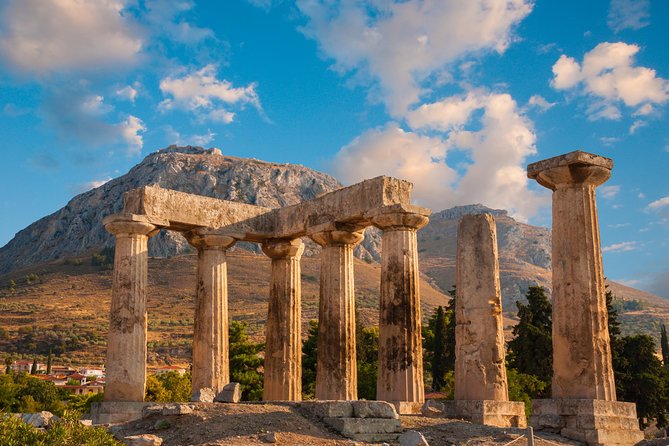
But even if you’re not chasing that connection, Corinth is still a heavy hitter. Ancient Corinth was one of the biggest and most important cities of Greece, with a population around 90,000 in 400 BC. The Romans demolished it in 146 BC, rebuilt a new city in 44 BC, and later made it the provincial capital.
You’ll have about an hour here, which is enough time to get your bearings among the remains and understand how the ancient city would have functioned. The museum on-site comes next (about 30 minutes). It was built between 1931 and 1932 specifically to display discoveries from recent excavations, so it’s a handy way to turn what you saw outside into something you can picture more clearly.
One drawback: this area can feel spread out, and without a licensed guide you’ll want to rely on the driver’s explanations and your own questions. If you’re the kind of person who loves names, dates, and specific functions of each ruin, consider asking in advance whether you can arrange a licensed guide.
Mycenae Citadel and the Museum: Bronze Age Power in a Fortified Shell
Mycenae is the moment when the day becomes unmistakably physical. The fortified citadel sits like a crown over the landscape, tied to the mythical King Agamemnon. And beyond the myth, Mycenae is linked to a whole civilization—the Mycenaean period—roughly 1600 BC to 1100 BC.
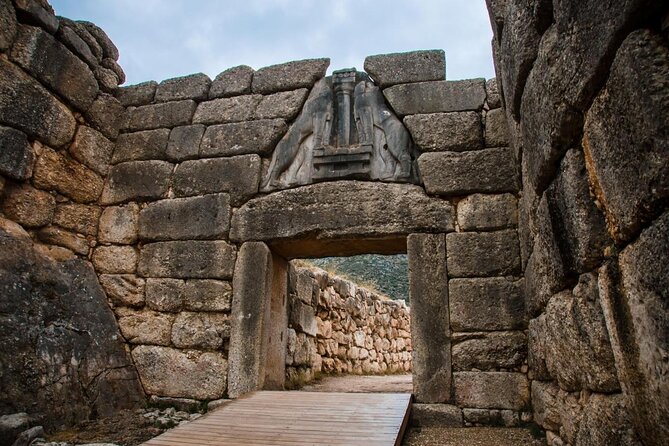
You’ll spend about an hour at the site, giving you time to focus on key features like the Lion’s Gate, the Cyclopean walls, and notable tomb-related areas such as the Tomb of Clytemnestra. Mycenae wasn’t just a local fortress either. At its peak around 1350 BC, the citadel and lower town had an estimated population of 30,000 and covered about 32 hectares. The reach of its culture extended across southern Greece, Crete, the Cyclades, and into parts of southwest Anatolia.
Right at the entrance, there’s also the Archaeological Museum of Ancient Mycenae (about 30 minutes). Because it’s located just a few steps before Lion Gate, it works well for a quick pairing: outdoor “wow” first, then artifacts and context without needing to backtrack.
A small practical note: Mycenae’s layout encourages you to keep looking upward and outward. Wear shoes with grip and be ready for uneven ground. You don’t need hiking gear, but you do need steady footing.
Treasury of Atreus and the Lion Gate Moment: Stone That Refuses to Impress From a Distance
After you’ve built the big picture at Mycenae, you get one of the day’s most specific highlights: the Citadel and Treasury of Atreus. This is the Tomb of Agamemnon, a large tholos—often described as a beehive tomb—constructed around 1250 BC.
Here’s the kind of detail that makes your brain click: the stone lintel above the doorway weighs about 120 tons, and the recorded approximate dimensions are 8.3 x 5.2 x 1.2 meters. It’s the largest lintel dimension mentioned in the tour info, and once you see the structure, that number stops being abstract.
The stop is brief—around ten minutes—but it’s long enough to understand what you’re looking at: a Bronze Age monumental tomb built for power and memory, not convenience. Also, Pausanias mentions it in the 2nd century AD, and it was still visible in 1879 when Heinrich Schliemann discovered the shaft graves under what was described as the agora at Mycenae. That timeline helps you connect the site’s survival with modern archaeology.
If you want more time, this is the place to ask. The day is long, and the best use of extra minutes is usually here, because the structure is so distinctive.



Epidaurus Theatre and Asclepius Sanctuary: Acoustics, Healing, and Time That Slows Down
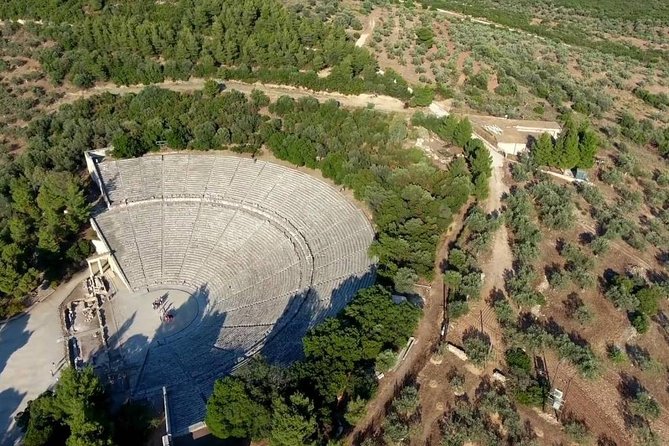
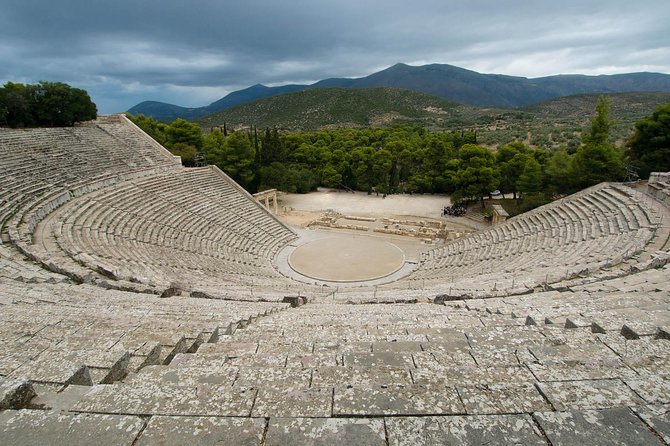
Epidaurus is one of those places that works even if you normally rush. The Ancient Theatre of Epidaurus is widely considered the most perfect ancient Greek theatre for its acoustics and aesthetics. It retains a tripartite Hellenistic theatre structure: the theatron, the orchestra, and the skene.
You’ll have about an hour at the theatre, which is perfect for taking in the shape, then settling into your seat time. The Roman period is also important here: unlike many Greek theatres, it didn’t suffer modifications during Roman times. That helps it feel more intact and less “repaired into something else.”
After the theatre, you move to the Sanctuary of Asklepios, with the Temple of Asclepius as the main holy site. This sanctuary competed with other major cult centers like Olympia and Delphi. The temple was built in the early 4th century BC.
You’ll have around 20 minutes here, which is best for understanding the sanctuary as a ritual space. The tour info also notes that if the temple had still been in use by the 4th century AD, it would have been closed during the late Roman persecution of pagans, when Christian emperors issued edicts prohibiting non-Christian worship. Even if you treat it as history rather than belief, it adds context for why sacred spaces changed over time.
Practical tip: don’t plan your Epidaurus time like a museum visit. Plan to look, then pause. The quiet between stops is part of the payoff.
Nafplio After Dark Energy: Harbor Views, Coffee Time, and Fortress Steps
Once you get to Nafplio, the pace changes. This is the “Naples of the East” style of vibe the tour info points out—Venetian architecture, cobbled squares, and castles with commanding views over the Argolic Gulf.
You’ll get about two hours for Nafplio itself, which sounds short until you realize that the goal here is exactly the right kind of rest. You can grab lunch or coffee (food and drinks aren’t included), browse, and wander the back streets without feeling like you have to hit every corner.
You also get photo time at the harbor’s water castle of Bourtzi, a Venetian castle located in the middle of the harbor. Even if you don’t take dozens of photos, it’s a strong visual anchor for the town’s character.
Then comes Palamidi Castle. It sits east of Acronauplia on a 216-meter hill and was built by the Venetians during their second occupation between 1686 and 1715. You’ll have about 30 minutes at Palamidi, with the big thing to know: the climb involves roughly 913 steps from town. Locals say there are 999 steps. Either way, your calves will learn something.
The views over Nafplio and the Argolic Gulf are the whole point, so if your legs feel shaky, slow down, take breaks, and treat it as a leg-stretching break from ruins.
Acronauplia is the oldest part of Nafplion, originally a separate town until the 13th century. It became part of the town’s fortifications, was used as a prison, and later a hotel complex was built there so people could benefit from the view. Even if your time is limited, it helps you understand why Nafplio feels like a fortress town rather than a beach stop.
Price and Budget Reality: What You Pay, What You’ll Still Need
The listed price is $259.03 per person for a private full-day outing, lasting about 9 to 10 hours. For Athens, that’s not cheap—but it’s also not just a random car ride. You’re paying for a full route, private vehicle time, and a driver who provides historical facts during travel.
Here’s where the value math changes: admission fees for the major archaeological sites are not included. You’ll need to budget:
- Mycenae: €20.00 per person
- Corinth: €15.00 per person
- Epidaurus: €20.00 per person
The tour includes bottled water and air-conditioned transport, plus a culinary gift. You’re also getting mobile ticket convenience and the fact that three UNESCO-listed classical sites are handled in one day, with no hotel moves.
In my view, this pricing fits best when:
- you value private timing over group-bus logistics,
- you’re a small group (the private feel really matters),
- you want the route design efficiency more than you want to spend hours planning.
If you’re traveling solo and comparing against self-guided public transport, your costs might look different. But if the real goal is to make the day smooth from pickup to drop-off, private usually earns its keep.
The Driver Factor: Why the Stories on the Road Matter
A quiet but important difference here is that the driver gives you history facts as you move between sites. The tour info also clarifies that the driver isn’t a licensed guide inside archaeological spaces. In other words, you’re not getting a museum-lecture model. You’re getting the story set-up so the ruins land with context.
That’s what many people remember most from this style of tour: the schedule stays on track, and you don’t feel left behind when you step into a site that would be hard to read alone. Past experiences mention drivers such as Dimitris or George, praised for clear English and keeping things moving without rushing.
My advice: treat the ride time as part of the attraction. Ask a question while you’re driving—about the Lion Gate, Roman Corinth, or why Epidaurus theatres are so carefully designed acoustically. You’ll likely get better answers than you’d expect.
Who Should Book This Day Trip From Athens
This is a great fit if you want:
- the Peloponnese highlights without the stress of transit planning,
- a day that balances multiple sites instead of forcing one “big museum day,”
- a private format that keeps your group comfortable.
It’s also a good choice if you like mythology plus archaeology. Mycenae and the Treasury of Atreus are steeped in myth, but the tour gives you enough context to connect the story to the physical remains.
It may not be ideal if you hate long car days. The route is packed: canal, Corinth, Corinth Museum, Mycenae and its museum and tomb focus, Epidaurus theatre and sanctuary, then Nafplio with fortress steps. You’re busy all day, and the day asks you to keep moving.
Weather matters too. The experience notes that it requires good weather, and if it gets canceled because of poor conditions you’ll be offered a different date or a full refund.
Should You Book This Athens-to-Corinth-Mycenae-Epidaurus Tour?
Yes, if you want a one-day strategy that covers huge ground with minimal friction. The biggest strengths are the private pickup and transport, the fact that the itinerary hits three major classical UNESCO areas, and the way the driver’s on-the-road facts help you read each site faster.
Before you book, do two things. First, budget for the archaeological site tickets in euros so you don’t get surprised. Second, be honest about your energy for steps—Palamidi can be a workout, even if it’s only a short visit.
If you like structure, clear timing, and big classical highlights in one day, this is a strong bet.
FAQ
How long is the private tour?
The tour runs about 9 to 10 hours, depending on conditions and timing.
Is pickup included, and where does the tour start?
Yes. The tour starts with pickup from any accommodation in Athens at 8:00 am. Airport or airport area pickup/drop-off costs extra.
Are entry tickets to the archaeological sites included?
No. Admission fees are not included for Corinth, Mycenae, and Epidaurus. The listed fees are €15.00 for Corinth, €20.00 for Mycenae, and €20.00 for Epidaurus.
What parts of the day are free entry?
The Corinth Canal stop is listed as free. Mycenae’s site and the Ancient Corinth overview stops are described with admission tickets not included or free entry as indicated, but the main museum and major sites have separate fees as noted.
Will we have a licensed guide inside the sites?
Not automatically. The driver provides historical facts, but the tour info says a licensed tour guide is available upon request and depending on availability.
Is this a private tour or shared group?
It’s private. Only your group participates.
What happens if the weather is bad?
The experience requires good weather. If it’s canceled due to poor weather, you’ll be offered a different date or a full refund.