REVIEW · BUDAPEST
Jewish Heritage in Hungary with a Historian
Book on Viator →Operated by Budapest Explorers · Bookable on Viator
Budapest’s Jewish story starts on everyday streets. This 2.5-hour walk links major Jewish sites across Pest with a historian guide, so you get context instead of just a photo stop. I especially like the small group size (up to 10) and the chance to move from squares and streets into bigger themes like Raoul Wallenberg’s life-saving work and what changed over centuries.
A heads-up: you’ll pass key synagogues and learn from outside, and some synagogue areas are not included in the price (so you may need separate admissions if you want to go inside certain buildings). The upside is that you still get a tight, well-paced route plus a local Jewish cake (Flódni) stop that’s included.
In This Review
- Key things to know before you go
- A Small-Group Walk with a Historian Guide
- Starting at Erzsébet tér: Medieval Market Square Energy
- Raoul Wallenberg’s Statue: A Public Marker with Real Weight
- Szimpla Kert and Gozsdu Udvar: When Budapest Reinvents Old Buildings
- Kazinczy Street Synagogue: Orthodox Jewish Community Insights
- Great / Central Synagogue Area: Europe’s Largest, Seen from Outside
- Solinfo Café and the Flódni Stop: Food That Makes the Story Stick
- Timing, Route Flow, and What to Expect Day-of
- Price and Value: What $64.71 Covers (and What It Doesn’t)
- Who This Tour Fits Best
- Should You Book This Jewish Heritage in Hungary Tour?
- FAQ
- How long is the Jewish Heritage in Hungary with a Historian tour?
- What time does the tour start?
- Where does the tour start and where does it end?
- How much does the tour cost?
- Is the tour offered in English?
- Is the ticket mobile?
- How many people are in the group?
- Do I get to go inside the Great / Central Synagogue?
- Is food included?
- What about cancellation?
Key things to know before you go
- Historian-led pacing that connects streets, institutions, and major turning points
- Small group experience (10 max) for questions and real interaction
- Szimpla Kert: the first ruin bar in Budapest, and the trend’s early signal
- Raoul Wallenberg’s statue: a focused moment on saving Jewish lives
- Food included at Solinfo Café with the Hungarian Jewish cake Flódni
A Small-Group Walk with a Historian Guide
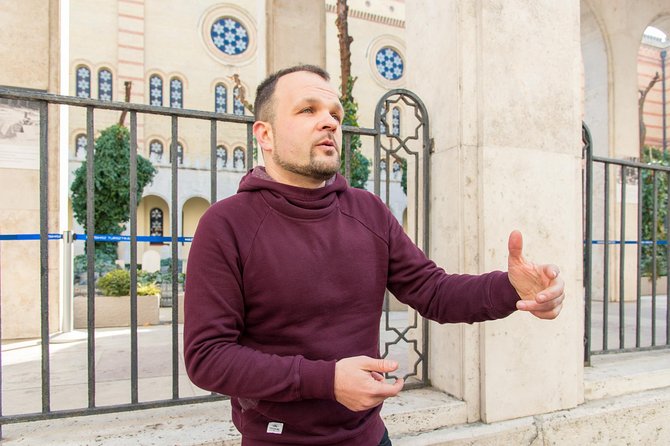
This is the kind of tour you choose when you want the story to make sense. Instead of bouncing between landmarks, you follow a route that keeps returning to one big idea: Budapest’s Jewish history isn’t one chapter. It’s layers—some joyful, some brutal—and you’ll see how the city’s streets reflect that.
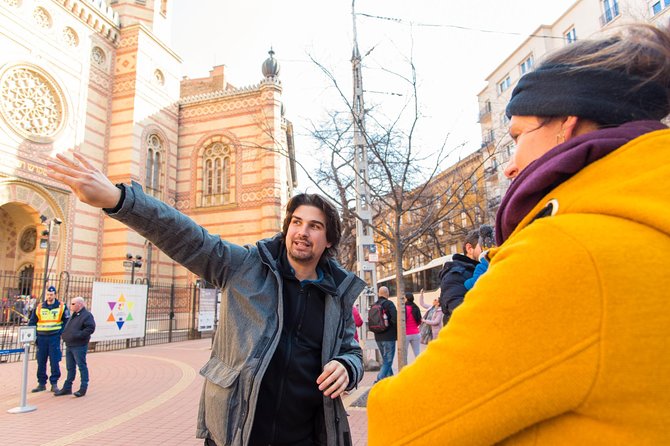
I like the human scale here. With a maximum of 10 people, you don’t spend the whole time straining to hear over foot traffic. It also means the historian guide can answer follow-up questions and adjust the pace if your group wants more time on a specific topic.
Guides connected to this experience are repeatedly praised for being patient and for handling both the good and bad parts of Hungary’s history honestly. Names like Andrea, Gabor, Barbi, Noémi, and Andras show up in past feedback, which matches the kind of tone you want on a sensitive subject: clear, thoughtful, and not rushing anyone.
You can also read our reviews of more tours and experiences in Budapest.


Starting at Erzsébet tér: Medieval Market Square Energy
The tour begins at Kempinski Hotel Corvinus Budapest, on Erzsébet tér. Your first stop is this square’s core identity: it started as a medieval market square and today it functions as one of Pest’s main squares.
What I like about beginning here is that it helps you get your bearings fast. You’re not thrown immediately into monuments. Instead, you start with a public place where daily life happens—exactly the kind of setting where Jewish communities in a major city would have intersected with the broader rhythm of Budapest.
This also matters for timing. The tour runs about 2 hours 30 minutes, so the early part is designed to set context without dragging. You get your first historical anchor quickly, then the route starts widening.
Raoul Wallenberg’s Statue: A Public Marker with Real Weight
Next up is a statue of Raoul Wallenberg. He’s described here as a key diplomat who saved Jewish lives, and that framing isn’t casual. This is the moment when the tour clearly signals: you’re going to talk about the darker periods too, with care and clarity.
A statue can feel like a quick photo moment. But on this kind of historian-led route, it usually turns into a discussion point: why Wallenberg matters, and how his story fits into the bigger arc of Jewish life and survival in Hungary.
If you care about understanding modern history without getting lost in too many names, this stop is a good signal. It gives you a concrete person to connect to the 20th-century tragedy that the tour emphasizes.
Szimpla Kert and Gozsdu Udvar: When Budapest Reinvents Old Buildings
Then the tour pivots to something that makes Budapest feel alive in the present: the ruin bar scene. You’ll visit Szimpla Kert, highlighted as the first ruin bar in Budapest—and therefore the trend’s early global shape.
I love this contrast. Jewish heritage tours can sometimes feel like a one-note museum day. Here, you get a real city hangout tied to how Budapest repurposes old spaces. Even if you don’t plan to party, it’s still worth seeing because it shows how the city’s architecture and neighborhoods evolve.
You also pass through Gozsdu Udvar, described as one of Budapest’s most international streets. That matters because Jewish history in a big city isn’t only about religious buildings. It’s also about everyday commerce, culture, and the cross-currents that show up on streets.
This pair of stops helps you connect past and present without pretending the past was simple. It’s more like: the city changes, people continue, and places keep getting new meanings.
Kazinczy Street Synagogue: Orthodox Jewish Community Insights
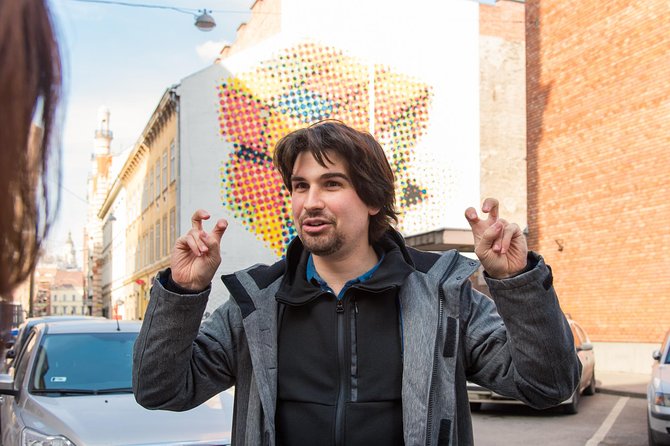
After walking through these street-level scenes, the tour returns to Jewish religious life. On Kazinczy Street, you learn about the Orthodox Jewish community.
Two practical notes. First, this stop’s admission is not included. Second, you’re there to learn and observe, not to force everyone into an indoor visit. The tour is structured around passing the major landmarks and giving context in the open air.
Why it’s valuable: Orthodox Jewish life is often misunderstood when people only connect Jewish heritage to one era or one set of symbols. Having a guide explain what the Orthodox community represents in Budapest adds nuance, and it helps you understand why certain buildings and neighborhoods carried meaning for generations.
If you’re hoping for a full inside visit at every synagogue, this may not be your best match. But if you want the story and the geography together, you’ll appreciate how the route keeps returning you to the same theme: identity shows up in places.
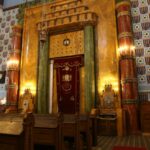

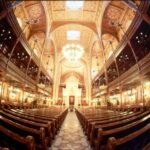
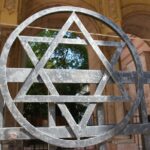

Great / Central Synagogue Area: Europe’s Largest, Seen from Outside
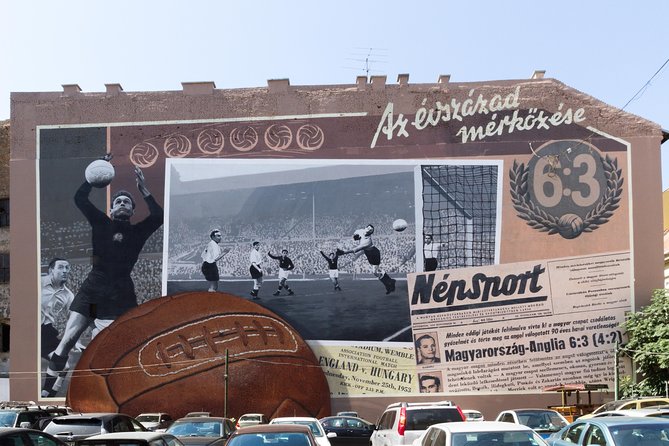
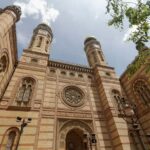
You’ll also spend time near the Great / Central Synagogue (Nagy Zsinagóga). This building is described as Europe’s largest synagogue, with historical connotations from roughly the last 200 years.
Important: the tour notes that you do not visit the Great Synagogue inside. So think of this stop as an exterior orientation plus historical framing, not an interior tour of the building’s interior spaces.
Is that a drawback? It can be, depending on what you want. If interior access is your top priority, you may want to plan a separate visit on your own when you can buy tickets directly.
But for many people, the exterior view works well because the guide can point out the building’s significance and connect it to the longer story arc covered on the walk. If you’re learning how Budapest’s Jewish history stretches across time, the route still gives you what you need—you just won’t get the extra layers that come from being inside the synagogue.
Solinfo Café and the Flódni Stop: Food That Makes the Story Stick
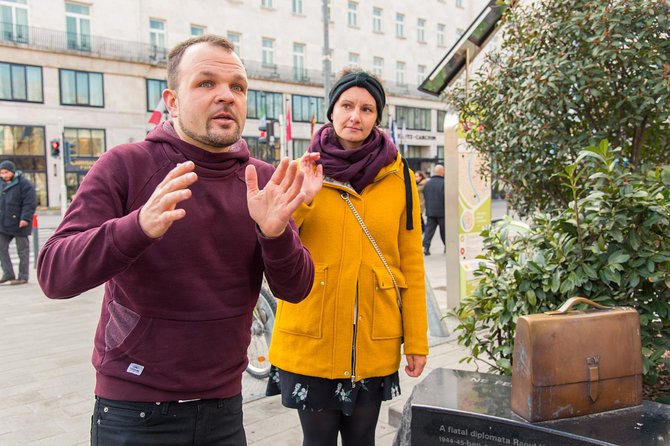
One of the nicest surprises on this tour is the stop at Solinfo Café, where you try the local Jewish cake called Flódni. Here, admission is included.
This is a smart design choice for a couple reasons. First, it’s a break without pulling you away from the theme of the day. Second, Flódni is a direct taste connection to local Jewish food culture in Hungary, not just a historical talking point.
I also like that it’s positioned as a favorite of both Jews and non-Jews in Hungary. That helps the tour avoid the feeling of being locked into a single demographic. Food becomes a bridge, and you end the tour with a memory you can actually use after you get home.
Practical note: if you have dietary restrictions, it’s worth checking ahead with the café staff when you arrive. The tour data confirms Flódni is included, but it doesn’t list alternatives.
Timing, Route Flow, and What to Expect Day-of
The tour runs about 2 hours 30 minutes and typically starts at 10:00 am. It’s also offered in English and uses a mobile ticket.
You’ll be doing a walking loop across central Budapest. It’s not described as long and punishing, but you should still wear comfortable shoes. Jewish heritage sites in the city center are spread along streets and squares, so you’ll be on your feet more than you might expect from the word tour.
The group size helps with comfort: with up to 10 people, you move more like a conversation than a herd. Also, since the route includes several stops that aren’t included for entry, you’ll have time to linger outside and ask questions without feeling like you’re missing some timed ticket window.
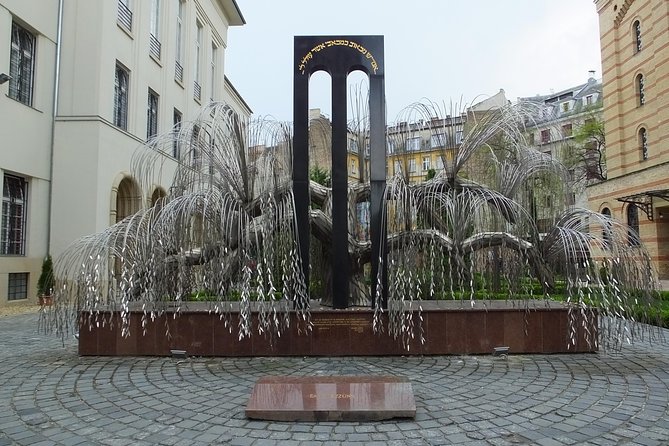
The end point is outside Dohány Street Synagogue, at Wesselényi utca 1 (1077). That’s a strong finish because you end at another major symbol of the district, and you can decide what to do next based on how much energy you have.
Price and Value: What $64.71 Covers (and What It Doesn’t)
At $64.71 per person, this tour isn’t trying to be the cheapest way to walk past buildings. You’re paying for a historian guide, a small-group format, and a structured route that connects the major landmarks into a narrative.
Included value you’re getting:
- The historian-led walk and explanations
- The Flódni tasting at Solinfo Café
Not included (and noted in the tour details):
- Admission for Kazinczy Street Synagogue
- Admission for the Great / Central Synagogue (and you don’t visit inside)
So the value depends on your travel style. If you want the story and you’re fine viewing the synagogues from outside, this is likely a good deal. If you want interior access at multiple sites, you may spend extra during the day.
One more detail that signals real demand: the experience is typically booked about 42 days in advance on average. If your dates are fixed, don’t wait until the last minute.
Who This Tour Fits Best
This is a strong match if you want:
- A historians-plus-streets approach, not just a building-by-building list
- A group format small enough for questions
- A route that doesn’t only focus on the 1940s tragedy, but also traces earlier periods and the evolution of Jewish life in Budapest
It’s also ideal if you appreciate guides who are willing to discuss both positives and hardships. Past feedback highlights that some guides focus on Hungary’s story honestly, including the good and bad, and they answer questions without dismissing concerns.
If your priority is interior synagogue access at every site, you’ll need to plan add-ons. The tour’s model is exterior viewing plus interpretation, with one food experience built in.
Should You Book This Jewish Heritage in Hungary Tour?
Yes—if you want a guided walking story you can feel in your legs, with a historian explaining why the streets matter as much as the buildings.
Book it if:
- You like small groups and real interaction
- You want context that goes beyond only the most famous dark chapters
- You’re happy with exterior views where noted, and you still want to learn
Consider skipping or pairing it with self-planned visits if:
- You mainly want interior access to synagogues
- You hate any chance of paying extra for admissions at certain stops
It’s also a smart choice for first-time visitors to Budapest who want to understand the city’s Jewish landmarks quickly—then decide later how deeply you want to go into any single site.
FAQ
How long is the Jewish Heritage in Hungary with a Historian tour?
It runs for about 2 hours 30 minutes.
What time does the tour start?
The start time is 10:00 am.
Where does the tour start and where does it end?
It starts at Kempinski Hotel Corvinus Budapest, Erzsébet tér 7-8, 1051 Hungary. It ends outside Dohány Street Synagogue, at Wesselényi utca 1, 1077 Hungary.
How much does the tour cost?
The price is $64.71 per person.
Is the tour offered in English?
Yes, it’s offered in English.
Is the ticket mobile?
Yes, the tour uses a mobile ticket.
How many people are in the group?
The tour has a maximum of 10 travelers.
Do I get to go inside the Great / Central Synagogue?
No. The tour notes that you do not visit the Great Synagogue inside.
Is food included?
Yes. You try the local Jewish cake Flódni at Solinfo Café, and that is included.
What about cancellation?
You can cancel for a full refund if you cancel up to 24 hours in advance of the experience start time.